Tramadol Capsule: Uses, Dosage, Side Effects, Precautions and Alternates
| Generic name | tramadol |
|---|---|
| Drug class | Opioids |
| Forms | Oral tablets, Extended-release tablets, Extended-release capsules, Oral solution/liquid, Suspension, Orally disintegrating tablet |
Quick overview
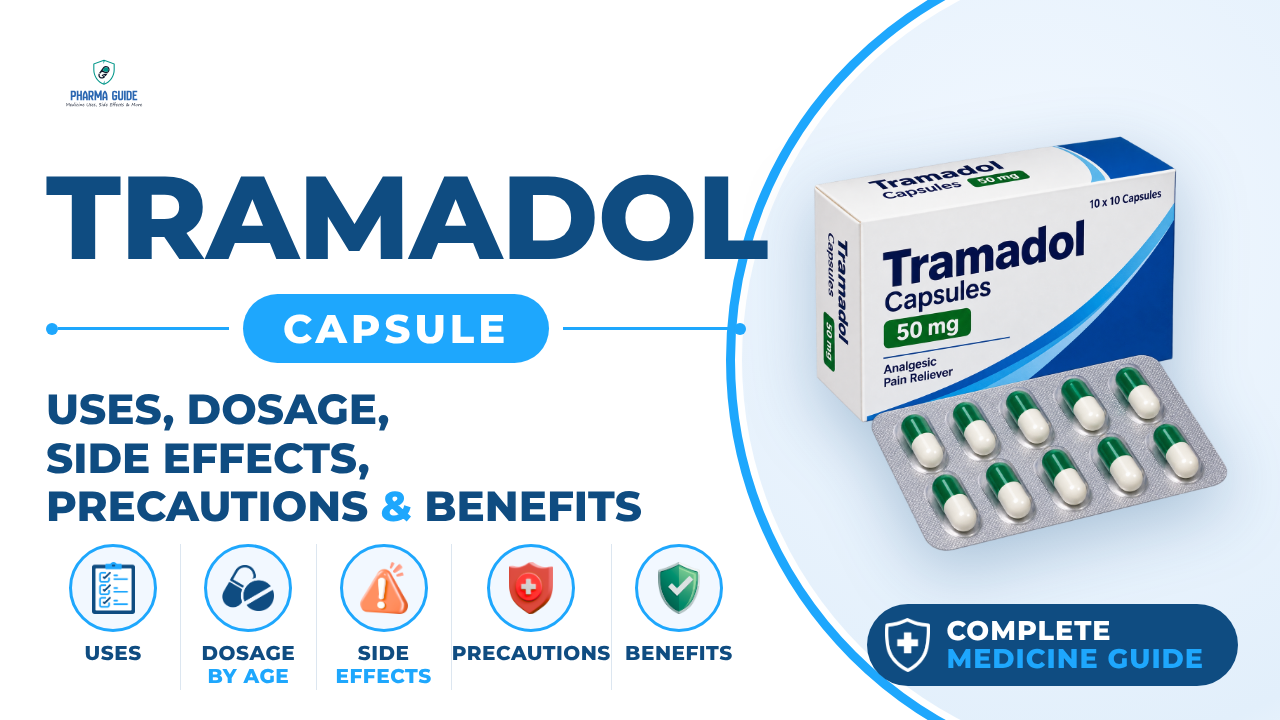
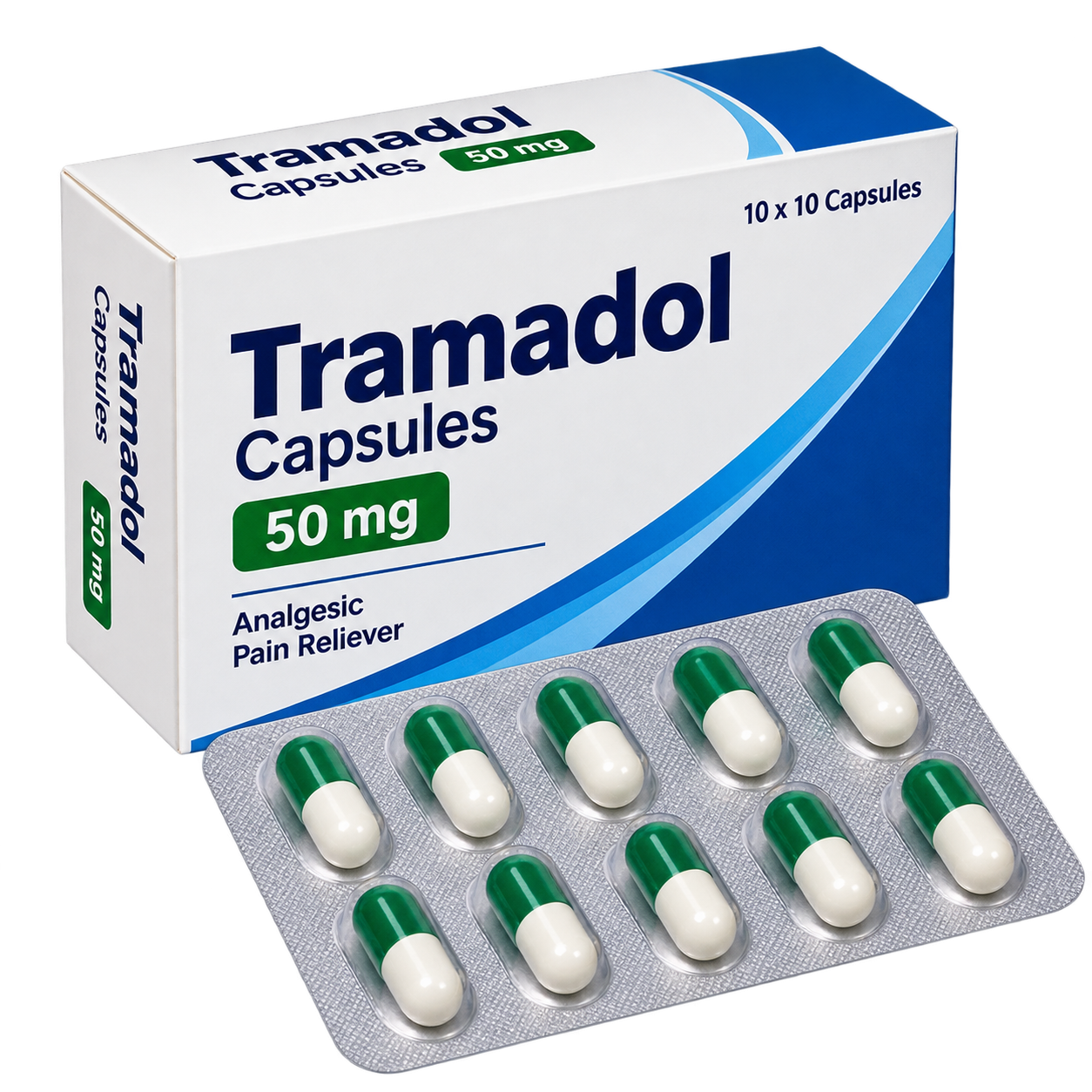
Tramadol Capsule is an opioid pain medicine used to treat moderate to moderately severe pain in adults. It works in the central nervous system to relieve pain and may be used when other pain medicines do not work well enough or cannot be tolerated. Extended-release capsules are used for ongoing chronic pain that needs around-the-clock treatment. Tramadol belongs to the opioid drug class.
What is Tramadol Capsule
Tramadol is an opioid pain medicine used to treat moderate to moderately severe pain in adults. It acts in the central nervous system to relieve pain, and may be used when other pain medicines do not work well enough or cannot be tolerated. Extended-release capsules are used for ongoing (chronic) pain that needs around-the-clock treatment.
Tramadol Capsule uses
- Managing moderate to moderately severe pain in adults
- Treating pain after surgery (postoperative pain)
- Treating pain severe enough to require an opioid when other pain medicines did not work well or were not tolerated
- Extended-release capsules for around-the-clock treatment of chronic pain in adults
Benefits of Tramadol Capsule
- Relieves moderate to moderately severe pain
- Extended-release forms give longer-lasting pain relief for ongoing pain
- Can provide better pain relief when combined with acetaminophen, ibuprofen, or aspirin
How Tramadol Capsule works
Tramadol is an opioid that works by changing how your brain senses pain. It acts in the central nervous system and binds to opioid receptors, which lowers the pain messages your body sends to your brain.
Tramadol Capsule dosage
- Take tramadol exactly as prescribed. Use the lowest dose possible for the shortest time needed.
- Swallow the capsule or tablet whole.
- Do not crush, chew, break, open, or dissolve it, as this can cause a potentially fatal overdose.
- Never crush or break tramadol to inhale the powder or mix it into a liquid to inject — this has resulted in death.
- Tramadol may be taken with or without food.
- If you miss a dose, skip the missed dose and take your next dose at your usual time.
- Do not take two doses at once.
- Do not stop taking tramadol suddenly after long-term use; talk to your doctor first to avoid withdrawal symptoms.
- Call your healthcare provider if the dose you are taking does not control your pain, and do not take more without talking to your doctor.
- Elderly patients may be more sensitive to the effects of pain medicines and may need extra caution.
| Age group | Dose |
|---|---|
| Under 12 years | Not recommended |
| 12–17 years | Not routinely recommended; use only when specifically prescribed by a doctor |
| 18–64 years | 1–2 capsules (50–100 mg) every 4–6 hours as needed; maximum 8 capsules (400 mg) in 24 hours |
| 65–74 years | 1–2 capsules (50–100 mg) every 4–6 hours as needed; maximum 8 capsules (400 mg) in 24 hours |
| 75 years and older | 1–2 capsules (50–100 mg) every 4–6 hours; maximum 6 capsules (300 mg) in 24 hours |
Available forms and strengths
- Oral tablets
- Extended-release tablets
- Extended-release capsules
- Oral solution/liquid
- Suspension
- Orally disintegrating tablet
Side effects of Tramadol Capsule
Common
- Nausea
- Constipation
- Dry mouth
- Drowsiness
- Dizziness
- Vomiting
- Headache
- Lack of energy or weakness
- Sweating
- Itching or skin rash
Serious
- Slowed or stopped breathing
- Slow heart rate or weak pulse
- Feeling light-headed like you might pass out
- Seizures (convulsions)
- Low cortisol/adrenal problems (nausea, vomiting, loss of appetite, dizziness, worsening tiredness or weakness)
- Serotonin syndrome (agitation, hallucinations, fever, sweating, shivering, fast heart rate, muscle stiffness, twitching, loss of coordination, nausea, vomiting, diarrhea)
- Serious allergic reactions including anaphylaxis and angioedema
- Severe skin reactions such as Stevens-Johnson syndrome
- Physical dependence and withdrawal when stopping the drug
- Low sodium levels (hyponatremia)
- Low blood sugar (hypoglycemia)
- Addiction, misuse, or overdose
Warnings and precautions
- Tramadol can slow or stop your breathing and may be habit-forming. Misuse can cause addiction, overdose, or death, especially in a child or someone using it without a prescription.
- Do not take more than prescribed.
- Never give anyone else your tramadol.
- They could die from taking it. Selling or giving it away is against the law.
- Taking tramadol with other opioids, benzodiazepines, gabapentinoids, alcohol, or other central nervous system depressants can cause severe drowsiness, decreased awareness, breathing problems, coma, and death.
- Do not take tramadol if you have severe breathing problems, a head injury or increased pressure inside your skull, a stomach or intestinal blockage, or if you have recently used alcohol, sedatives, tranquilizers, narcotics, or an MAO inhibitor.
- If anyone, especially a child, accidentally takes even one dose of tramadol, it can cause death. Store it out of reach of children.
- Do not use tramadol in children younger than 12 years, in anyone younger than 18 who has had tonsil or adenoid surgery, or in children 12 to 18 with risk factors for breathing problems.
- Extended-release forms should not be used by anyone younger than 18.
- Tramadol can cause withdrawal symptoms if stopped suddenly after long-term use.
- Do not stop taking it without talking to your doctor.
- Some people process tramadol very quickly (ultra-rapid metabolizers), which can lead to too much of a strong form of the drug in the body and cause serious breathing problems or death, especially in children.
- Using tramadol for a long time during pregnancy can cause life-threatening withdrawal symptoms in the newborn baby.
- Fetal death and miscarriage have also been reported.
- It should not be used in pregnancy unless the benefits outweigh the risks.
- Tell your doctor right away if you are or may become pregnant.
- Tramadol is not recommended while breastfeeding as it may harm your baby.
- Watch your baby closely for increased sleepiness, breathing difficulties, or limpness, and seek immediate medical care if you notice these signs.
- Use tramadol with caution if you have kidney disease, as the medicine may be removed from your body more slowly and its effects may be increased.
- Extended-release forms should not be used by people with severe kidney disease.
- Use tramadol with caution if you have liver disease, as the effects may be increased because the medicine is removed from the body more slowly.
- Do not drink alcohol while taking tramadol.
- Dangerous side effects or death could occur, including slowed breathing, decreased heart rate, decreased blood pressure, or confusion.
- Tramadol may cause drowsiness, dizziness, or affect your ability to drive or do hazardous tasks.
- Do not drive or do anything dangerous until you know how the medicine affects you.
Storage
- Store at room temperature away from moisture, heat, and direct light. Keep from freezing.
- Store securely, out of sight and reach of children, and in a location not accessible by others, including visitors.
- Do not keep outdated medicine or medicine no longer needed, and do not share with others.
- Do not keep leftover tramadol.
- Ask your pharmacist where to find a drug take-back disposal program.
- If there is no take-back program, mix the leftover medicine with cat litter or coffee grounds in a sealed plastic bag and throw the bag in the trash, or flush unused narcotic medicine down the toilet.
When to see a doctor
- Get emergency help right away if you take too much tramadol.
- Overdose can cause serious or life-threatening breathing problems that may lead to death.
- A caregiver should give naloxone and get emergency medical help if you have slow breathing with long pauses, blue-colored lips, or are hard to wake up.
- Seek medical attention right away if you have symptoms of serotonin syndrome, such as agitation, hallucinations, fever, sweating, shivering, fast heart rate, muscle stiffness, twitching, loss of coordination, nausea, vomiting, or diarrhea.
- Call your doctor at once if you have noisy or shallow breathing, breathing that stops during sleep, a slow heart rate or weak pulse, a light-headed feeling like you might pass out, seizures, or signs of low cortisol.
- Get emergency medical help if you have signs of an allergic reaction such as hives, difficulty breathing, swelling of the face or throat, or a severe skin reaction with fever, sore throat, burning eyes, skin pain, or a spreading red or purple rash that blisters and peels.
- If you think you or someone else may have taken an overdose, get emergency help at once or contact your local poison control center.
- Overdose signs include seizures, trouble breathing, pale or blue lips or skin, and pinpoint pupils.
Alternatives
- ConZip
- Qdolo
- Ultram
- Ultram ER
- Ultracet
FAQs
What is Tramadol Capsule used for?
It is used to manage moderate to moderately severe pain in adults, including postoperative pain, and extended-release capsules treat chronic pain needing around-the-clock care.
How should Tramadol Capsule be taken?
Swallow the capsule whole with or without food. Do not crush, chew, break, open, or dissolve it, as this can cause a potentially fatal overdose.
What is the maximum Tramadol dose for adults?
Adults 18-64 and 65-74 may take 1-2 capsules (50-100 mg) every 4-6 hours as needed, up to a maximum of 8 capsules (400 mg) in 24 hours.
What are the serious side effects of Tramadol Capsule?
Serious effects include slowed or stopped breathing, slow heart rate, seizures, serotonin syndrome, severe allergic reactions, low sodium or blood sugar, and risk of addiction or overdose.
Can Tramadol Capsule be stopped suddenly?
No, stopping tramadol suddenly after long-term use can cause withdrawal symptoms, so you should talk to your doctor before stopping.
Sources
- Drugs.com — Tramadol (https://www.drugs.com/tramadol.html)
- Mayo Clinic — Tramadol (oral route) (https://www.mayoclinic.org/drugs-supplements/tramadol-oral-route/description/drg-20068050)
- Medical News Today — Tramadol, oral tablet (https://www.medicalnewstoday.com/articles/tramadol-oral-tablet)
- Tramadol Extended Release Package Insert / Prescribing Information / Medication Guide
- Edinoff et al. (2021). Full Opioid Agonists and Tramadol: Pharmacological and Clinical Considerations. Anesthesiology and Pain Medicine, 11(4), e119156.