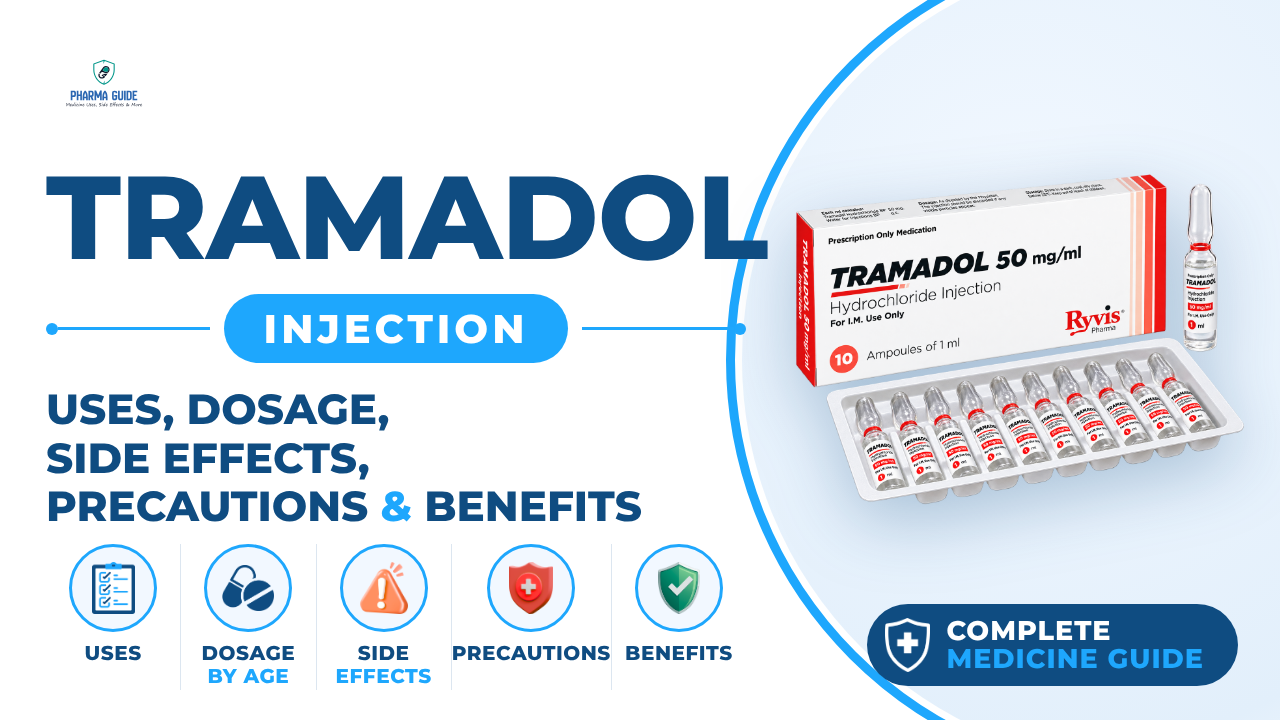
Tramadol Injection: Uses, Dosage, Side Effects, Precautions and Alternates
| Generic name | Tramadol hydrochloride |
|---|---|
| Drug class | Opioids |
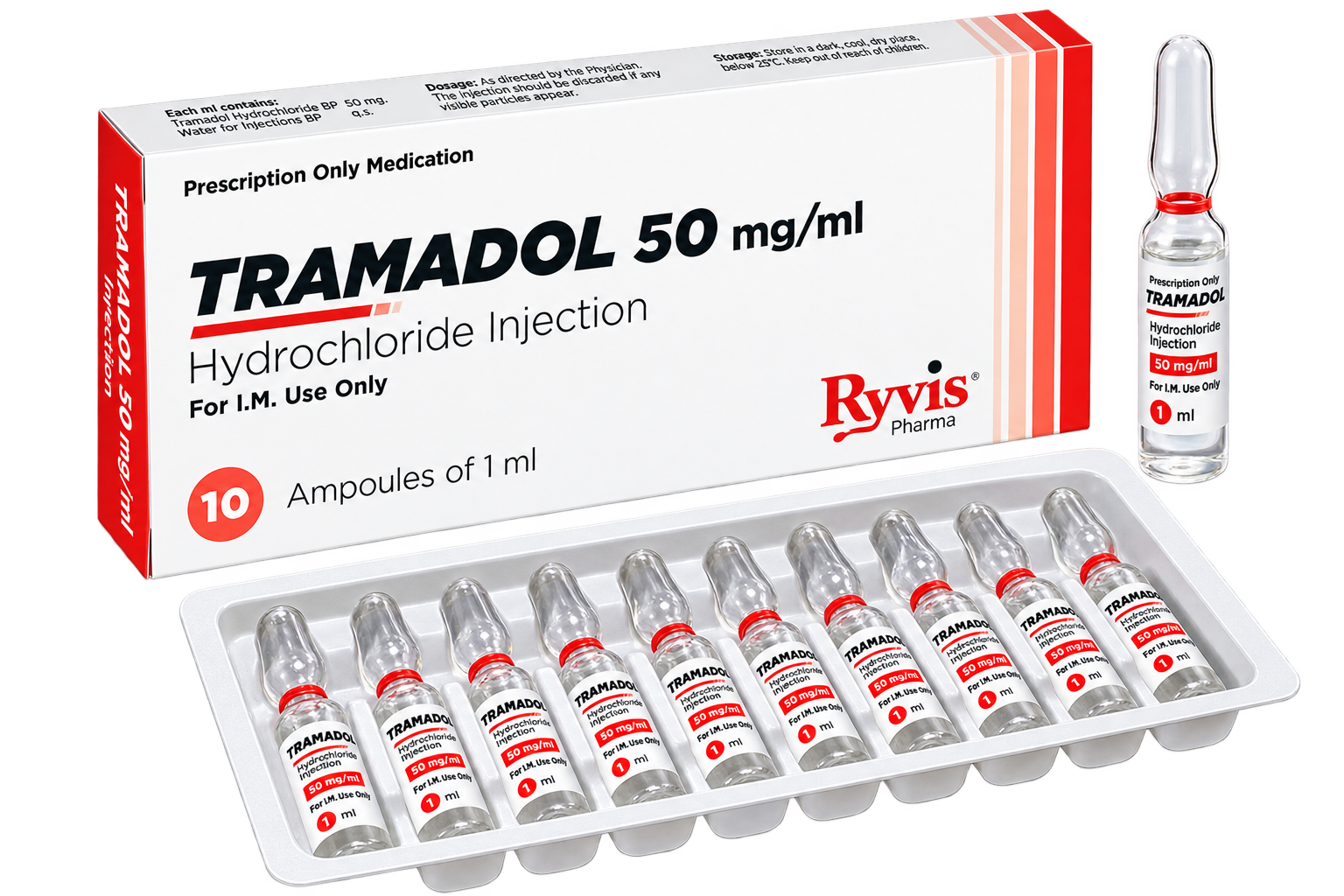
| Forms | Solution for injection/infusion (1 ml ampoule), Solution for injection/infusion (2 ml ampoule) |
Quick overview
Tramadol Injection contains tramadol hydrochloride, an opioid painkiller used to treat moderate to severe pain. It is given as an injection into a vein, muscle, or under the skin, or as an infusion, and works by acting on opioid receptors in the brain and spinal cord. It should be used exactly as prescribed, and carries risks of dependence, breathing problems, and other serious side effects that require medical attention.
What is Tramadol Injection
Tramadol is a painkiller (analgesic) of the opioid group. Its pain-relieving effect is due to its influence on specific nerve cells in the spinal cord and in the brain. It is given as an injection or infusion.
Tramadol Injection uses
- Treatment of moderate to severe pain
Benefits of Tramadol Injection
- Relieves moderate to severe pain
- Can be used for pain after surgery
How Tramadol Injection works
Tramadol is a centrally acting opioid painkiller. It works on opioid receptors in the brain and spinal cord and also affects certain brain chemicals (noradrenaline and serotonin) to reduce pain.
Tramadol Injection dosage
- Always use this medicine exactly as your doctor has told you.
- This medicine is given by injection into a vein, muscle, or under the skin, or as an infusion (drip). When given into a vein, the injection must be given slowly.
- In hospital you may be given it through a drip or from a small machine that lets you use it when you feel you need it; your doctor or nurse will explain how to use the machine.
- Do not use this medicine for longer than absolutely necessary.
- Do not suddenly stop using this medicine unless your doctor tells you to; your doctor may lower the dose gradually to reduce withdrawal symptoms.
| Age group | Dose |
|---|---|
| Under 12 years | Not recommended |
| 12–17 years | 50–100 mg (1–2 mL) every 4–6 hours |
| 18–75 years | 50–100 mg (1–2 mL) every 4–6 hours |
| Over 75 years | 50–100 mg (1–2 mL), with a longer interval between doses if needed |
Available forms and strengths
- Solution for injection/infusion (1 ml ampoule)
- Solution for injection/infusion (2 ml ampoule)
Side effects of Tramadol Injection
Common
- Feeling sick (nausea)
- Dizziness
- Headache
- Drowsiness
- Being sick (vomiting)
- Constipation
- Dry mouth
- Sweating
- Fatigue
Serious
- Serious allergic reactions such as sudden wheezing, difficulty in breathing, dizziness, or swelling of the face or throat
- Slow or shallow breathing, confusion, sleepiness, small pupils, feeling or being sick, constipation, lack of appetite (signs of opioid toxicity)
- Epileptic-like seizures
- Serotonin syndrome (mental status changes, agitation, hallucinations, fever, fast heart rate, unstable blood pressure, twitching, muscle stiffness, lack of coordination, or gastrointestinal symptoms)
- Adrenal insufficiency (extreme fatigue, lack of appetite, severe abdominal pain, nausea, vomiting, or low blood pressure)
- Drug dependence (addiction) and withdrawal symptoms when treatment is stopped
- Sleep-related breathing disorders such as sleep apnoea
Warnings and precautions
- There is very little information about the safety of tramadol in pregnancy, so it should not be used in pregnant women. Long-term use during pregnancy may lead to withdrawal symptoms in the newborn baby.
- Tramadol passes into breast milk. You should not use it more than once during breastfeeding, or if you use it more than once you should stop breastfeeding.
- People with severe kidney problems should not use this medicine without talking to their doctor. If your kidney problem is mild or moderate, your doctor may recommend increasing the time between doses.
- People with severe liver problems should not use this medicine without talking to their doctor. If your liver problem is mild or moderate, your doctor may recommend increasing the time between doses.
- Do not drink alcohol while using this medicine, as it could enhance the effects of the medicine.
- This medicine may cause drowsiness and dizziness. If this happens, do not drive or use tools or machines, and do not perform any hazardous tasks. It is an offence to drive while under the influence of this medicine.
- Repeated use of this medicine can lead to tolerance, dependence, abuse and addiction, which may result in life-threatening overdose. The risk is higher with a higher dose and longer use.
- Do not use this medicine at the same time as monoamine oxidase inhibitors (MAOIs), or if you have taken one in the past 2 weeks, as this could cause a serious, potentially life-threatening interaction.
- Using this medicine together with sedative medicines such as benzodiazepines or gabapentinoids increases the risk of drowsiness, breathing difficulties, coma, and may be life-threatening.
- Do not use this medicine if you have epilepsy that is not controlled with your medicine, or as a substitute in drug withdrawal treatment.
- Never give this medicine to anyone else; it can cause serious harm and be fatal to people it was not prescribed for.
- Seizures (fits) have been reported at recommended doses. The risk is higher if the daily dose limit is exceeded or if you take other medicines that lower the seizure threshold.
Storage
- Do not store above 25°C.
- Do not refrigerate or freeze.
- Keep this medicine out of the sight and reach of children.
- Store this medicine in a safe and secure place where other people cannot access it, as it can cause serious harm and be fatal to people it was not prescribed for.
- Once an ampoule has been opened, the product should be used immediately.
- Do not use after the expiry date printed on the carton and label.
- Do not throw away any medicines via wastewater or household waste; ask your pharmacist how to throw away medicines you no longer use.
When to see a doctor
- Seek medical advice immediately if you have any symptoms of serotonin syndrome, a serious condition.
- Tell your doctor straight away if you have signs of a serious allergic reaction such as sudden wheezing, difficulty breathing, dizziness, or swelling of the face or throat.
- Stop using this medicine and seek immediate medical advice if you notice slow or shallow breathing, confusion, sleepiness, small pupils, feeling or being sick, constipation, or lack of appetite.
- If you observe signs of overdose such as pin-point pupils, vomiting, a fall in blood pressure, rapid heartbeat, collapse, disturbed consciousness including coma, seizures, or difficulty breathing, or if a child accidentally takes this medicine, immediately contact the nearest doctor or hospital for help.
- Contact your doctor if you have extreme fatigue, lack of appetite, severe abdominal pain, nausea, vomiting or low blood pressure, as this may indicate adrenal insufficiency.
Alternatives
- Morphine Injection
- Fentanyl Injection
- Ketorolac Injection
- Diclofenac Injection
- Pethidine Injection
FAQs
What is Tramadol Injection used for?
It is used to treat moderate to severe pain, including pain after surgery.
How is Tramadol Injection given?
It is given as an injection into a vein, muscle, or under the skin, or as an infusion. When given into a vein, the injection must be given slowly.
Can I drink alcohol while using Tramadol Injection?
No, you should not drink alcohol while using this medicine, as it could enhance the effects of the medicine.
Is Tramadol Injection safe to use during pregnancy?
There is very little information about its safety in pregnancy, so it should not be used in pregnant women, as long-term use may lead to withdrawal symptoms in the newborn baby.
What are the common side effects of Tramadol Injection?
Common side effects include nausea, dizziness, headache, drowsiness, vomiting, constipation, dry mouth, sweating, and fatigue.