
Safety
General information, not medical advice
Your prescriber and the leaflet in your pack know your situation. This page does not.
- Follow your prescriber and the leaflet
- Don't start, stop, or change a dose on your own
- Doses and warnings differ by country and product
Triesence Injection: Uses, Dosage, Side Effects, Precautions and Alternates
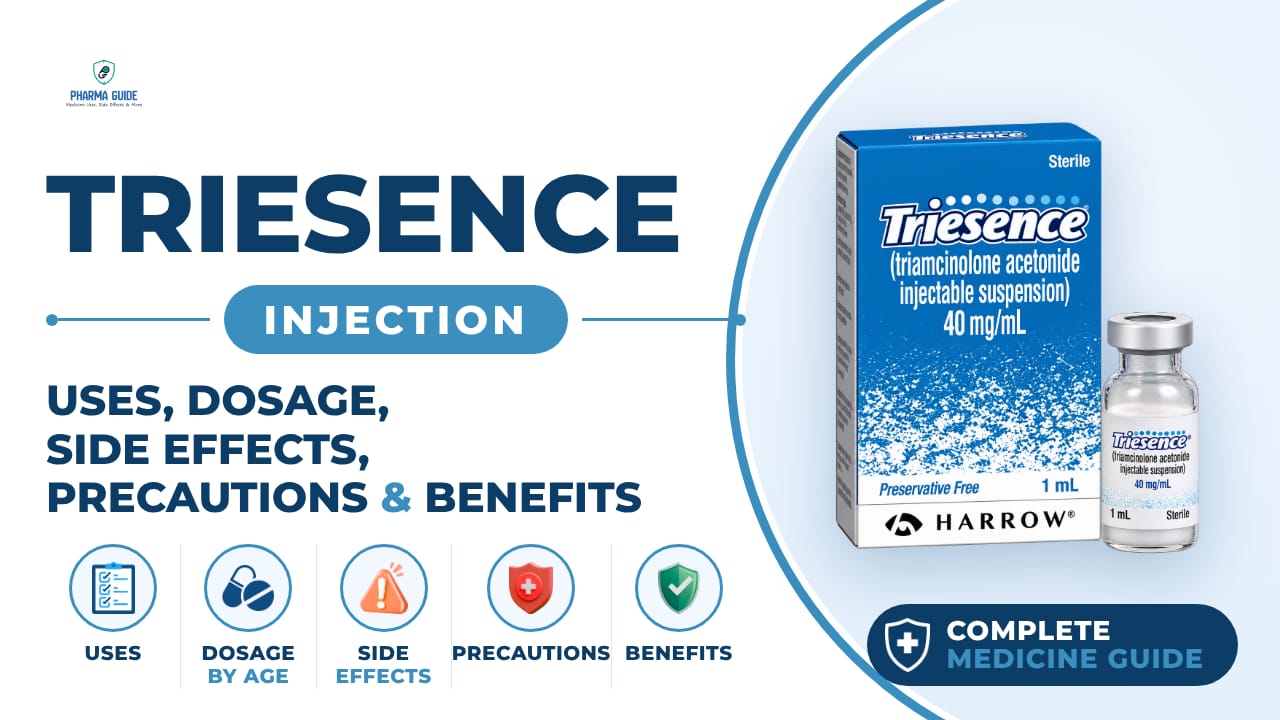
| Generic name | triamcinolone acetonide |
|---|---|
| Drug class | Ophthalmic steroids |
| Forms | injectable suspension |
Quick overview
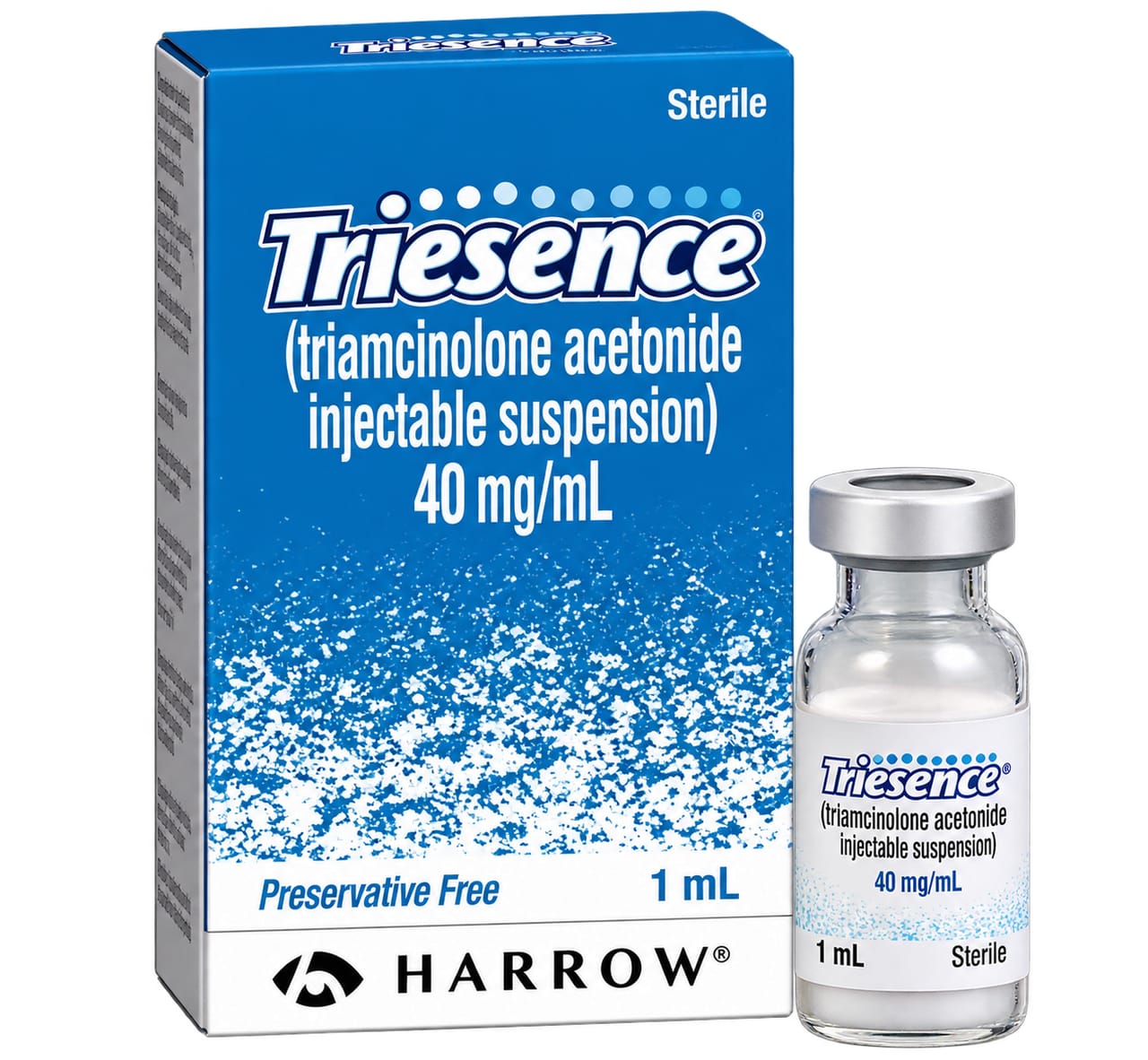
Triesence Injection contains triamcinolone acetonide, an ophthalmic corticosteroid given as a preservative-free injectable suspension. It is injected into the eye to treat inflammation or used during vitrectomy surgery to help the surgeon see inside the eye. It works by stopping the body from releasing substances that cause inflammation. It is given by a healthcare professional in a clinic setting, and patients require close monitoring afterward.
What is Triesence Injection
Triesence contains triamcinolone, a corticosteroid, given as a preservative-free injectable suspension. It is injected into the eye to treat inflammation, or used during a type of eye surgery called vitrectomy to help the surgeon see inside the eye.
Triesence Injection uses
- Treats uveitis, which is inflammation of the middle layer of the eye
- Treats sympathetic ophthalmia and temporal arteritis
- Treats severe eye inflammation that has not improved with steroid eye drops
- Used as a visual aid during vitrectomy eye surgery to help the surgeon see inside the eye
Benefits of Triesence Injection
- Rapidly reduces swelling, redness, fluid buildup, and immune-related tissue damage inside the eye
- Helps surgeons see eye structures more clearly during vitrectomy surgery
How Triesence Injection works
Triesence contains a corticosteroid that stops the body from releasing substances that cause inflammation.
Triesence Injection dosage
This medicine is given by injection into the eye by a healthcare professional in a clinic setting. Your eye will be numbed before the injection. You will be watched closely afterward for swelling, inflammation, or increased eye pressure. You will need frequent medical tests and eye exams. Your doctor may tell you to limit salt intake or take potassium supplements. Do not resume wearing contact lenses until your doctor says it is okay. The vial must be shaken well before use and checked for clumping before the injection is given.
| Age group | Dose |
|---|---|
| Under 17 years | No established pediatric dosage; treatment requires specialist assessment |
| 18–64 years | Eye inflammation: 4 mg initially; surgical visualization: 1–4 mg intravitreally |
| 65–74 years | No separate age-specific dose; adult reference of 4 mg for inflammation or 1–4 mg for visualization |
| 75 years and older | No separate geriatric dosage; ophthalmologist-selected treatment based on eye condition and risk factors |
Available forms and strengths
Injectable suspension.
Side effects of Triesence Injection
Common
- Increased eye pressure
- Cataracts (clouding of the eye's lens) with long-term or repeated use
- Blurred or reduced vision, or eye discomfort
- Increased appetite
- Nausea, bloating, or appetite changes
- Stomach or side pain
- Headache
- Trouble sleeping
- Acne or other skin changes
- Slow-healing wounds
- Thinning hair
- Bruising or swelling
- Sweating more than usual
- Irregular menstrual periods
Serious
- Endophthalmitis, a severe infection inside the eye
- Retinal artery occlusion, a rare blockage of blood flow to the retina
- Signs of eye infection such as swelling, redness, severe discomfort, crusting, or drainage
- Blurred vision, tunnel vision, eye pain, or seeing halos around lights
- Unusual changes in mood or behavior
- Swelling, rapid weight gain, or feeling short of breath
- Muscle pain or weakness
- Large red or purple spots on the skin
- A wound that will not heal
- Increased thirst or urination
- Severe stomach pain, bloody or tarry stools, coughing up blood, or vomit that looks like coffee grounds
- Low potassium signs such as leg cramps, constipation, irregular heartbeats, fluttering in the chest, numbness or tingling, or limp feeling
- Signs of low adrenal gland hormones such as flu-like symptoms, headache, weakness, tiredness, diarrhea, vomiting, craving salty foods, and feeling light-headed
- Severe allergic reaction: hives, difficulty breathing, swelling of face, lips, tongue, or throat
Warnings and precautions
- Do not receive this medicine if you are allergic to triamcinolone or if you have a fungal infection anywhere in your body.
- Tell your doctor before treatment if you have any bacterial, fungal, parasite, or viral infection, tuberculosis, herpes eye infection, cataracts or glaucoma, a thyroid disorder, high blood pressure, heart failure or heart attack, diabetes, osteoporosis or low bone density, stomach or intestinal ulcers or surgery, diverticulitis, or a muscle disorder like myasthenia gravis.
- Talk to the doctor treating you with this medicine before getting any vaccine, since some vaccines may not work as well or could cause harmful effects during steroid treatment.
- This medicine can lower the blood cells that help fight infection, so avoid close contact with people who are sick or have infections. Contact your doctor if you are exposed to chicken pox or measles.
- Do not receive a smallpox vaccine or any other live vaccine while using this medicine, since it may not work as well and may not fully protect you from disease.
- If you currently have an eye infection or a body-wide fungal infection, this medicine should not be used.
- This medicine is not recommended during pregnancy because it could harm the unborn baby. Tell your doctor if you are or might become pregnant.
- It may not be safe to breastfeed while using this medicine. Ask your doctor about any risks.
- Corticosteroids may cause fluid retention and electrolyte disturbances. Patients with kidney disease require careful assessment, particularly if systemic corticosteroid effects develop.
- Significant liver disease may alter corticosteroid metabolism. No specific numerical hepatic dosage adjustment is established for Triesence.
- No major direct interaction is established for ophthalmic treatment, but alcohol may worsen certain existing medical conditions.
- Eye surgery can temporarily affect your vision and your ability to drive or use machines. Do not drive or operate machinery until your vision has returned to normal.
Storage
- Your doctor or nurse will store TRIESENCE at 4°C – 25°C.
When to see a doctor
- Get emergency medical help right away if you have signs of an allergic reaction, such as hives, trouble breathing, or swelling of your face, lips, tongue, or throat.
- Contact your doctor right away if you notice signs of eye infection, blurred or tunnel vision, eye pain, seeing halos around lights, mood or behavior changes, sudden weight gain or shortness of breath, muscle pain or weakness, unusual skin spots, a wound that won't heal, increased thirst or urination, severe stomach pain, bloody or tarry stools, coughing up blood, signs of low potassium, or signs of low adrenal hormone levels.
- After the injection, see your doctor right away if you develop intense inflammation or infection in or around the eye, eye discharge, severe vision loss, or severe eye pain or irritation.
- If your child is being treated with this medicine, tell the doctor if your child is not growing at a normal rate, since the medicine can affect growth in children.
Alternatives
- Difluprednate ophthalmic emulsion
- Prednisolone acetate ophthalmic suspension
- Dexamethasone ophthalmic preparations
Watch the video
FAQs
What is Triesence Injection used for?
It treats uveitis, sympathetic ophthalmia, temporal arteritis, and severe eye inflammation that hasn't improved with steroid eye drops. It's also used as a visual aid during vitrectomy eye surgery to help the surgeon see inside the eye.
How is Triesence Injection given?
It is given by injection into the eye by a healthcare professional in a clinic setting after numbing the eye. Patients are monitored afterward for swelling, inflammation, or increased eye pressure and need frequent medical tests and eye exams.
What is the dosage of Triesence Injection?
For adults, the dose for eye inflammation is 4 mg initially, while surgical visualization uses 1–4 mg intravitreally. There is no established pediatric dosage, and dosing for older adults is based on the same adult reference amounts.
What are the serious side effects of Triesence Injection?
Serious side effects include endophthalmitis (severe eye infection), retinal artery occlusion, blurred or tunnel vision, eye pain, halos around lights, mood changes, swelling or rapid weight gain, muscle pain or weakness, slow-healing wounds, and signs of low potassium or low adrenal hormone levels.
Can Triesence Injection be used during pregnancy?
It is not recommended during pregnancy because it could harm the unborn baby. Patients should tell their doctor if they are or might become pregnant, and it may not be safe to breastfeed while using this medicine.
General information, not medical advice
Your prescriber and the leaflet in your pack know your situation. This page does not.
- Follow your prescriber and the leaflet
- Don't start, stop, or change a dose on your own
- Doses and warnings differ by country and product
Sources
Video
Related medicines
Pred Forte Eye Drops: Uses, Dosage, Side Effects, Precautions and Alternates
Ophthalmic steroids
Pred Forte Eye Drops contain prednisolone acetate to treat eye inflammation from allergies, injury, or shingles. Learn uses, dosage, and side effects.

Injectafer Injection: Uses, Dosage, Side Effects, Precautions and Alternates
Iron products
Injectafer (ferric carboxymaltose) treats iron deficiency anemia and heart failure-related iron deficiency via IV. Learn uses, dosage, side effects, and