
Safety
General information, not medical advice
Your prescriber and the leaflet in your pack know your situation. This page does not.
- Follow your prescriber and the leaflet
- Don't start, stop, or change a dose on your own
- Doses and warnings differ by country and product
Varenicline Tablet: Uses, Dosage, Side Effects, Precautions and Alternates
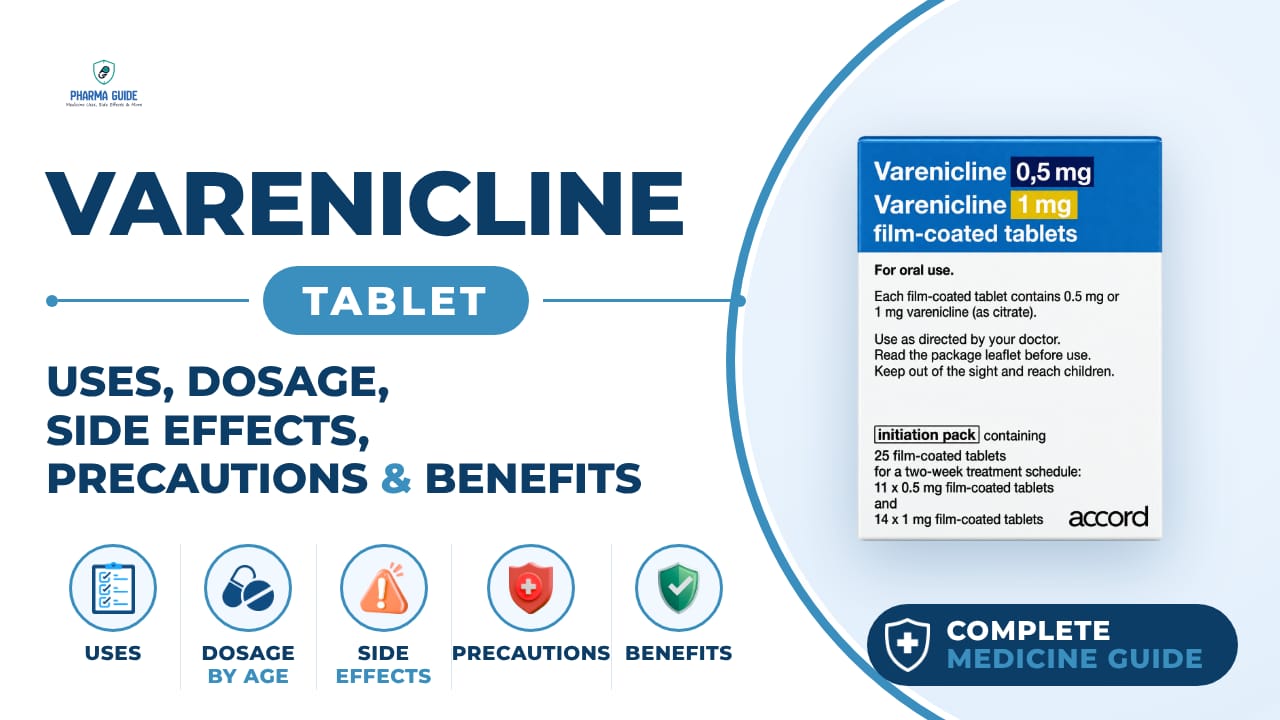
| Generic name | varenicline tartrate |
|---|---|
| Drug class | nicotinic receptor partial agonist |
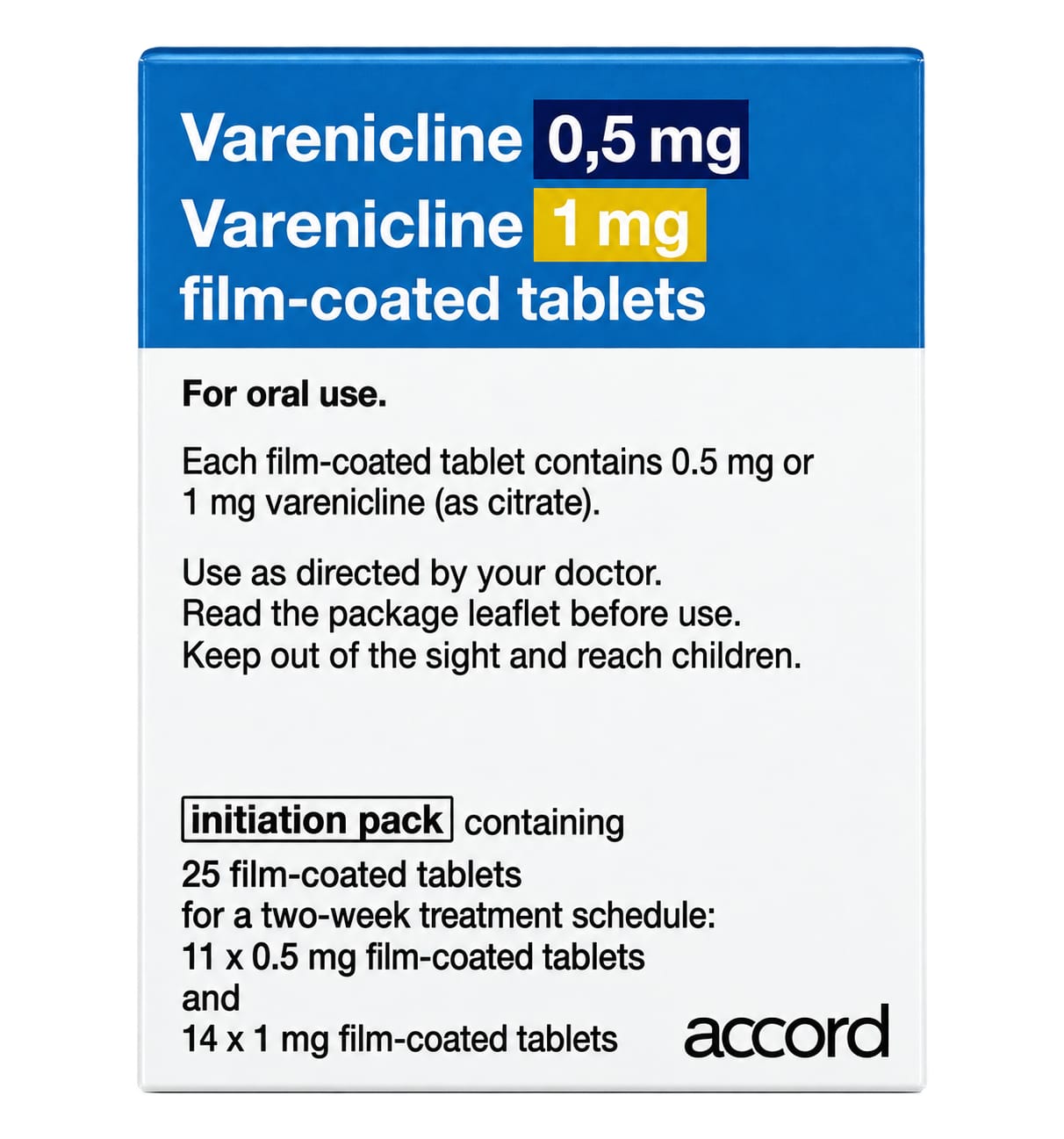
| Forms | Film-coated tablets (0.5 mg and 1 mg) |
Quick overview
Varenicline Tablet (varenicline tartrate) is a prescription medicine belonging to the nicotinic receptor partial agonist drug class, used as an aid to help adults stop smoking. It works on the same brain receptors that nicotine affects, easing cravings and withdrawal symptoms while reducing the rewarding effects of smoking. It is typically used for 12 weeks, often alongside behavioral counseling and support.
What is Varenicline Tablet
Varenicline tablets are a prescription medicine used to help people stop smoking. It is a nicotinic receptor partial agonist, which means it works on the same brain receptors that nicotine affects.
Varenicline Tablet uses
- Aid to smoking cessation treatment in adults
- Helps adults quit smoking
- Reduces nicotine cravings
- Decreases withdrawal symptoms associated with quitting smoking
- Helps reduce the urge to smoke
- Supports smoking cessation alongside behavioral counseling and support
Benefits of Varenicline Tablet
- Helps with smoking cessation
- Reduces nicotine cravings
- Helps reduce withdrawal-related urges
- Reduces the rewarding effects associated with smoking
- Can improve quit success when combined with counseling and support
How Varenicline Tablet works
Varenicline attaches strongly to certain nicotine receptors in the brain. It mildly activates these receptors to ease cravings and withdrawal, while also blocking nicotine from fully activating them, which reduces the pleasurable reward from smoking.
Varenicline Tablet dosage
Take after eating, with a full glass of water. Set a quit date and begin taking varenicline one week before that date, or start taking it and choose a quit date between days 8 and 35 of treatment. For those not ready to quit abruptly, a gradual approach is an option: reduce smoking over the first 12 weeks, aiming for complete abstinence by week 12, then continue treatment for an additional 12 weeks.
Take at around the same time(s) each day, usually once daily at first then twice daily (morning and evening). Treatment usually lasts 12 weeks; people who successfully quit may continue for another 12 weeks to help maintain abstinence.
If a dose is missed, take it as soon as remembered unless it is almost time for the next dose, in which case skip the missed dose and do not double up.
No dosage adjustment is needed for elderly patients, but care should be taken when choosing a dose because older adults are more likely to have reduced kidney function. Not recommended for use in children or teenagers 16 years of age or younger because it has not been shown to work in this age group.
| Age group | Dose |
|---|---|
| 18–64 years | Days 1–3: 0.5 mg once daily; Days 4–7: 0.5 mg twice daily; Day 8 onward: 1 mg twice daily |
Available forms and strengths
- Film-coated tablets (0.5 mg and 1 mg)
Side effects of Varenicline Tablet
Common
- Nausea
- Abnormal, vivid, unusual, or strange dreams
- Constipation
- Flatulence (gas)
- Vomiting
- Headache
- Insomnia (trouble sleeping)
- Dry mouth
- Abdominal pain
- Dysgeusia (bad or unusual taste in mouth)
- Increased or decreased appetite
- Toothache
- Back, joint, or muscle pain
- Abnormal menstrual cycles
- Lack of energy
Serious
- Seizures
- Changes in mood including depression and mania
- Psychosis, hallucinations, paranoia, delusions
- Homicidal ideation, aggression, hostility, agitation, anxiety, panic
- Suicidal ideation, suicide attempt, or completed suicide
- Heart attack (myocardial infarction) or stroke
- Sleepwalking (somnambulism) with possible harmful behavior
- Angioedema (swelling of face, mouth, throat, neck) and other hypersensitivity reactions
- Serious skin reactions including Stevens-Johnson syndrome and erythema multiforme
Warnings and precautions
Some people taking this medicine have had serious mental health changes including depression, mania, hallucinations, paranoia, aggression, and suicidal thoughts or actions. These can happen with or without a prior history of mental illness. Stop the medicine and contact a doctor right away if such symptoms occur.
New or worsening seizures have occurred in people taking this medicine, most often within the first month of treatment. Use caution if you have a history of seizures.
People with existing heart or blood vessel disease may have a higher risk of serious cardiovascular events while taking this medicine, although quitting smoking has its own health benefits.
Sleepwalking has been reported, sometimes leading to harm to oneself, others, or property. Stop the medicine and tell a doctor if this happens.
Serious allergic reactions, including life-threatening swelling of the face and throat, have occurred. Stop the medicine and get medical help immediately if this happens.
Rare but serious skin reactions can occur. Stop the medicine and contact a doctor immediately if a rash with mouth sores develops.
Do not take this medicine if you have had a serious allergic or skin reaction to it in the past.
Available data have not shown an increased risk of major birth defects from varenicline use during pregnancy compared to women who smoke, but smoking itself carries risks to the pregnancy. Tell your doctor if you are pregnant or planning pregnancy.
It is not known if varenicline passes into human breast milk. If you breastfeed while taking this medicine, watch your baby for seizures and excessive spitting up or vomiting, and contact your doctor if these occur.
People with severe kidney problems need a lower starting dose, and those on dialysis may need an even smaller dose. Tell your doctor if you have kidney problems or receive dialysis.
No dose adjustment is needed for people with liver problems, since the drug is not substantially processed by the liver.
Varenicline can increase the intoxicating effects of alcohol, sometimes with unusual or aggressive behavior and memory loss of the event. Reduce how much alcohol you drink until you know how this medicine affects you.
This medicine can cause sleepiness, dizziness, trouble concentrating, or loss of consciousness, which may affect your ability to drive safely or operate machinery. Use caution with these activities until you know how the medicine affects you.
Storage
- Store at room temperature, between 68°F to 77°F (20°C to 25°C)
- Keep varenicline tablets and all medicines out of the reach of children
- Do not use if the blister is torn or broken
- Dispose of unneeded medication through a medicine take-back program rather than throwing it in household trash or flushing it
When to see a doctor
- Get emergency help right away if you notice signs of a heart attack, such as chest discomfort, pain spreading to the arms, back, neck or jaw, shortness of breath, sweating, nausea, or lightheadedness
- Stop the medicine and seek medical care immediately if you experience swelling of the face, mouth, throat or neck, trouble breathing, rash with peeling skin, or blisters in the mouth
- Stop taking the medicine and contact your healthcare provider immediately if you or your family notice new or worsening depression, agitation, aggressive or unusual behavior, or thoughts of suicide
- Stop taking the medicine and contact your doctor right away if you have a seizure while on treatment
- Stop the medicine and tell your healthcare provider if you experience sleepwalking
Alternatives
- Bupropion SR
- Behavioral counseling
- Cognitive behavioral therapy
Watch the video
FAQs
What is Varenicline Tablet used for?
It is used as an aid to help adults stop smoking by reducing nicotine cravings and withdrawal symptoms, often alongside behavioral counseling and support.
How does Varenicline Tablet work?
It attaches strongly to certain nicotine receptors in the brain, mildly activating them to ease cravings and withdrawal while blocking nicotine from fully activating them, reducing the pleasurable reward from smoking.
How long do you take Varenicline Tablet?
Treatment usually lasts 12 weeks, and people who successfully quit may continue for another 12 weeks to help maintain abstinence.
What are the serious side effects of Varenicline Tablet?
Serious side effects include seizures, mood changes like depression and mania, psychosis, suicidal thoughts, heart attack or stroke, sleepwalking, and serious allergic or skin reactions.
Can Varenicline Tablet be used in children?
No, it is not recommended for use in children or teenagers 16 years of age or younger because it has not been shown to work in this age group.
General information, not medical advice
Your prescriber and the leaflet in your pack know your situation. This page does not.
- Follow your prescriber and the leaflet
- Don't start, stop, or change a dose on your own
- Doses and warnings differ by country and product
Sources
Video
Related medicines
Chantix Tablet: Uses, Dosage, Side Effects, Precautions and Alternates
Nicotinic receptor partial agonist
Chantix Tablet (varenicline) helps adults quit smoking by reducing cravings and withdrawal. Learn dosage, side effects, warnings, and precautions.

Injectafer Injection: Uses, Dosage, Side Effects, Precautions and Alternates
Iron products
Injectafer (ferric carboxymaltose) treats iron deficiency anemia and heart failure-related iron deficiency via IV. Learn uses, dosage, side effects, and