
Safety
General information, not medical advice
Your prescriber and the leaflet in your pack know your situation. This page does not.
- Follow your prescriber and the leaflet
- Don't start, stop, or change a dose on your own
- Doses and warnings differ by country and product
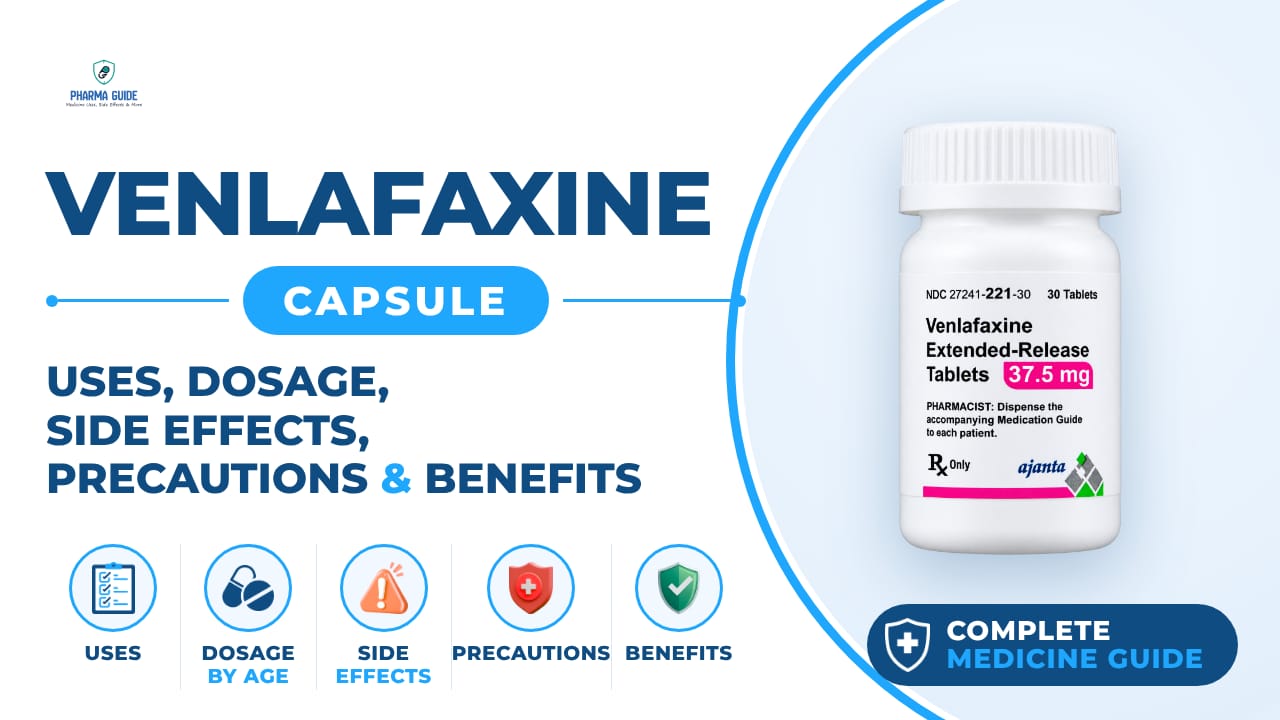
Venlafaxine Capsule: Uses, Dosage, Side Effects, Precautions and Alternates
| Generic name | Venlafaxine |
|---|---|
| Drug class | Serotonin-norepinephrine reuptake inhibitor (SNRI) |
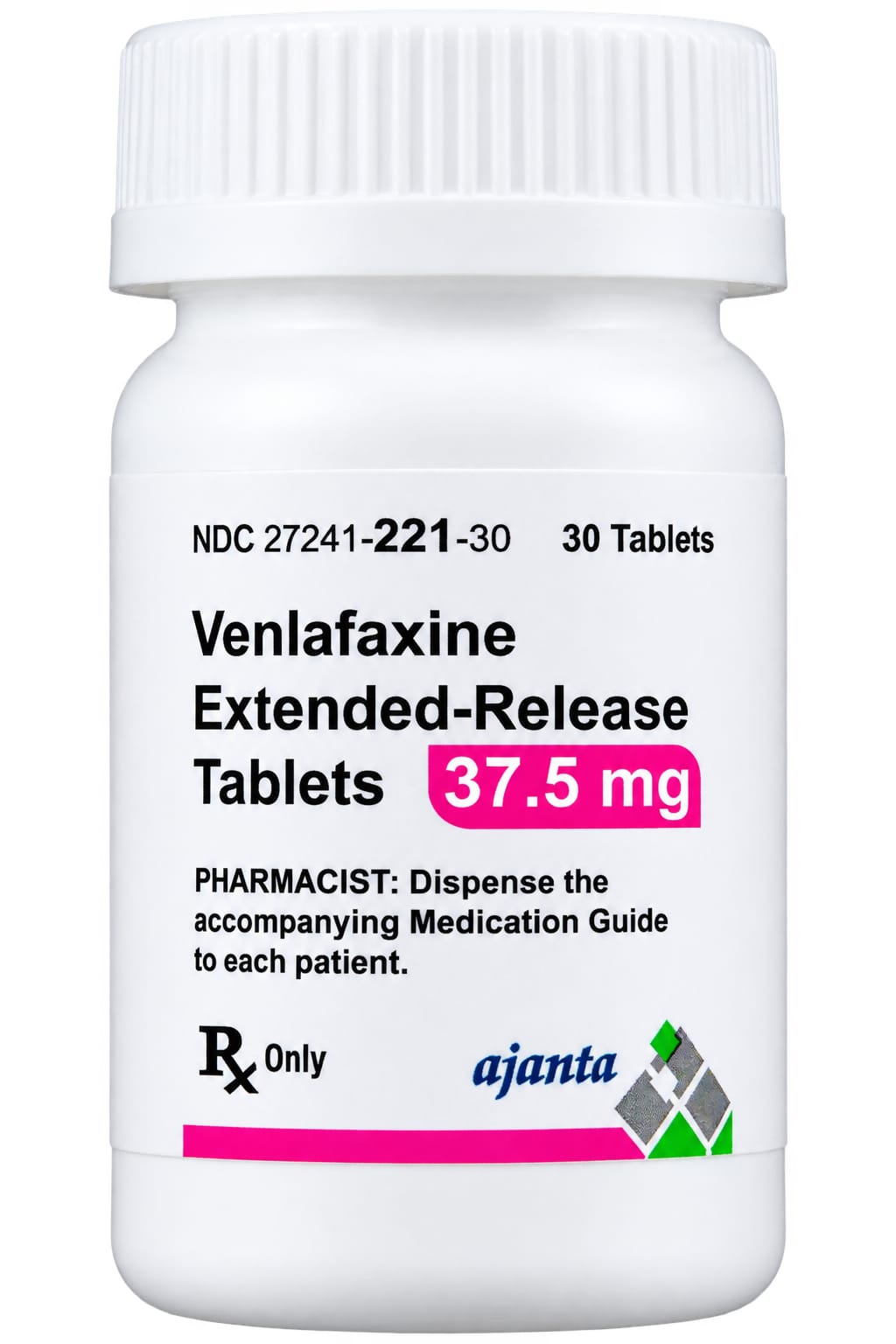
| Forms | Tablet, Extended-release tablet, Extended-release capsule |
Quick overview
Venlafaxine Capsule contains venlafaxine, a prescription antidepressant from the SNRI (serotonin-norepinephrine reuptake inhibitor) class. It is used to treat depression and certain anxiety disorders, and is sometimes used for menopause-related hot flashes. It works by increasing levels of serotonin and norepinephrine in the brain to help balance mood. It comes with important warnings, including a risk of suicidal thoughts, and should be used exactly as prescribed.
What is Venlafaxine Capsule
Venlafaxine is a prescription antidepressant that belongs to a group of medicines called SNRIs. It is used to treat depression and certain anxiety disorders.
Venlafaxine Capsule uses
- Depression (major depressive disorder)
- Generalized anxiety disorder (GAD)
- Social anxiety disorder
- Panic disorder
- Sometimes used for hot flashes in women who have had menopause or who are being treated for breast cancer
Benefits of Venlafaxine Capsule
- Can reduce feelings of sadness and loss of interest that come with depression
- Can lessen excessive worry from generalized anxiety disorder
- Can reduce fear of social situations from social anxiety disorder
- Can reduce sudden attacks of fear from panic disorder
How Venlafaxine Capsule works
Venlafaxine increases the levels of two natural brain chemicals, serotonin and norepinephrine, which help keep your mood balanced.
Venlafaxine Capsule dosage
Take the extended-release capsule once daily in the morning or evening with food, at about the same time each day. Swallow the extended-release capsule whole; do not split, chew, or crush it, or place it in water. If you cannot swallow the capsule whole, you may carefully open it and sprinkle the contents on a spoonful of applesauce, then swallow right away without chewing, followed by a glass of water.
Your doctor will likely start you on a low dose and increase it gradually, not more often than once every 4 to 7 days. It may take several weeks or longer to feel the full benefit of this medicine. Do not stop taking this medicine suddenly without talking to your doctor; your dose will likely be lowered gradually. Continue your normal diet unless your doctor tells you otherwise. This medicine is not recommended for use in children.
| Age group | Dose |
|---|---|
| Under 18 Years | Not recommended unless prescribed by a specialist |
| Adults (18–64 Years) | 37.5–75 mg daily initially; adjusted based on condition |
| Older Adults (65+ years) | Lower starting dose may be considered; adjusted based on response and health condition |
Available forms and strengths
- Tablet
- Extended-release tablet
- Extended-release capsule
Side effects of Venlafaxine Capsule
Common
- Nausea
- Dry mouth
- Loss of appetite
- Sweating
- Drowsiness
- Dizziness
- Headache
- Constipation
- Diarrhea
- Vomiting
- Trouble sleeping or changes in sleep habits
- Unusual dreams
- Yawning
- Tremors or shaking
- Blurred vision
- Increased heart rate
- Sexual problems (decreased interest in sex, erectile dysfunction, delayed or absent orgasm)
- Weight or appetite changes
- Ringing in the ears
Serious
- Suicidal thoughts or behaviors, especially in children, teens, and young adults
- New or worsening depression or anxiety, agitation, panic attacks, aggressive or impulsive behavior
- Serotonin syndrome (agitation, hallucinations, fast heart rate, muscle stiffness or twitching, loss of coordination, nausea, vomiting, diarrhea, fever, sweating)
- Severe allergic reaction (rash, hives, itching, difficulty breathing or swallowing, swelling of face/lips/tongue/throat)
- Fast, pounding, or irregular heartbeat
- Difficulty breathing, cough, chest pain (possible sign of lung problems)
- Seizures
- Unusual bruising or bleeding
- Signs of low sodium (headache, trouble concentrating, memory problems, confusion, weakness, feeling unsteady)
- Eye pain, vision changes, seeing halos around lights, or eye swelling/redness (possible angle-closure glaucoma)
- Mania (severe trouble sleeping, racing thoughts, reckless behavior, excess energy or irritability)
- Hallucinations
- Coma
Warnings and precautions
- This medicine may increase the risk of suicidal thoughts and actions, especially in children, teens, and young adults under 24. This risk is higher in the first few months of treatment and when the dose is changed. Call your doctor right away if you notice new or worsening depression, thoughts of harming yourself, extreme worry, agitation, panic attacks, trouble sleeping, aggressive behavior, irritability, acting without thinking, severe restlessness, or unusual excitement.
- Do not take this medicine with, or within 14 days of stopping, a monoamine oxidase (MAO) inhibitor. You must also wait at least 7 days after stopping this medicine before starting an MAO inhibitor. Combining them can cause dangerous reactions such as confusion, agitation, high body temperature, extremely high blood pressure, or severe seizures.
- This medicine can cause a serious condition called serotonin syndrome when combined with certain other medicines, including some pain and migraine medicines, other antidepressants, lithium, and St. John's wort.
- Do not stop taking this medicine suddenly without talking to your doctor, as this can cause serious withdrawal symptoms.
- This medicine may raise blood pressure, so your doctor will likely check it regularly during treatment.
- This medicine may increase your risk of bleeding, especially if you also take blood thinners or pain relievers like aspirin, ibuprofen, or naproxen.
- This medicine may cause a sudden, severe increase in eye pressure (angle-closure glaucoma). Talk to your doctor about an eye exam before starting treatment.
- This medicine should not be used if you have uncontrolled narrow-angle glaucoma.
- Taking this medicine during pregnancy could affect the baby, and taking it close to delivery may increase the risk of bleeding after childbirth. Do not start or stop this medicine during pregnancy without talking to your doctor first.
- This medicine may pass into breast milk and could affect a breastfeeding baby. Talk with your doctor about whether to continue breastfeeding or continue taking this medicine.
- People with kidney problems may need a lower dose because the medicine may not be cleared from the body as quickly.
- People with liver problems may need a lower dose because the medicine may not be cleared from the body as quickly.
- It is best to avoid alcohol while taking this medicine, as it can make side effects like drowsiness worse.
- This medicine can cause drowsiness and affect your judgment, thinking, and reaction time. Do not drive or operate machinery until you know how it affects you.
Storage
- Keep this medication in the container it came in, tightly closed, and out of reach of children
- Store it at room temperature and away from excess heat and moisture (not in the bathroom)
- Keep all medication out of sight and reach of children
- Dispose of unneeded medications in a way so that pets, children, and other people cannot take them
- Do not flush this medication down the toilet; use a medicine take-back program
When to see a doctor
- Call your doctor right away if you have new or worsening depression, thoughts of harming yourself, extreme worry, agitation, panic attacks, trouble sleeping, aggressive behavior, irritability, acting without thinking, severe restlessness, or unusual excitement.
- Get emergency help right away for signs of a severe allergic reaction, such as hives, difficulty breathing, or swelling of the face, lips, tongue, or throat.
- Seek medical help right away if you notice symptoms of serotonin syndrome, such as agitation, hallucinations, fever, sweating, shivering, fast heart rate, muscle stiffness, twitching, loss of coordination, nausea, vomiting, or diarrhea.
- Call your doctor right away if you have blurred vision, eye pain or redness, or see halos around lights.
- Call your doctor right away if you have cough, chest tightness, or trouble breathing.
- Call your doctor right away if you have a seizure.
- Call your doctor right away if you have unusual bleeding such as nosebleeds, bleeding gums, abnormal vaginal bleeding, or any bleeding that will not stop.
- Call your doctor right away if you have signs of low blood sodium, such as headache, confusion, problems with thinking or memory, weakness, or feeling unsteady.
- Call your doctor right away if you have a severe nervous system reaction with very stiff muscles, high fever, sweating, confusion, fast or uneven heartbeats, tremors, or feeling like you might pass out.
- If you think you have taken too much of this medicine, seek emergency medical attention or contact poison control right away.
Alternatives
- Sertraline
- Escitalopram
- Citalopram
Watch the video
FAQs
What is Venlafaxine Capsule used for?
It is used to treat depression, generalized anxiety disorder, social anxiety disorder, and panic disorder, and is sometimes used for hot flashes in women who have had menopause or are being treated for breast cancer.
How should I take the Venlafaxine extended-release capsule?
Take it once daily in the morning or evening with food at about the same time each day. Swallow it whole; if you cannot, open it and sprinkle the contents on applesauce and swallow right away without chewing, followed by water.
What are the common side effects of Venlafaxine Capsule?
Common side effects include nausea, dry mouth, loss of appetite, sweating, drowsiness, dizziness, headache, constipation, diarrhea, vomiting, sleep changes, unusual dreams, tremors, blurred vision, increased heart rate, and sexual problems.
Can I stop taking Venlafaxine Capsule suddenly?
No, you should not stop taking this medicine suddenly without talking to your doctor, as this can cause serious withdrawal symptoms; your dose will likely be lowered gradually.
Is Venlafaxine Capsule safe during pregnancy?
Taking this medicine during pregnancy could affect the baby, and taking it close to delivery may increase the risk of bleeding after childbirth, so you should not start or stop it during pregnancy without talking to your doctor first.
General information, not medical advice
Your prescriber and the leaflet in your pack know your situation. This page does not.
- Follow your prescriber and the leaflet
- Don't start, stop, or change a dose on your own
- Doses and warnings differ by country and product
Sources
- Mayo Clinic - Venlafaxine (oral route)
- MedlinePlus - Venlafaxine
- Healthline - Venlafaxine, Oral Tablet
- Drugs.com - Venlafaxine
- StatPearls - Venlafaxine (NCBI Bookshelf)
Video
Related medicines
Pristiq Tablet: Uses, Dosage, Side Effects, Precautions and Alternates
Serotonin-norepinephrine reuptake inhibitor (SNRI)
Pristiq Tablet (desvenlafaxine) is an SNRI used to treat major depressive disorder in adults. Learn its dosage, side effects, and warnings.
Savella Tablet: Uses, Dosage, Side Effects, Precautions and Alternates
Serotonin-norepinephrine reuptake inhibitor (SNRI)
Savella Tablet (milnacipran) is an SNRI used to treat chronic fibromyalgia pain. Learn how it works, dosage, side effects, and safety precautions.