
Safety
General information, not medical advice
Your prescriber and the leaflet in your pack know your situation. This page does not.
- Follow your prescriber and the leaflet
- Don't start, stop, or change a dose on your own
- Doses and warnings differ by country and product
Veramyst Nasal Spray: Uses, Dosage, Side Effects, Precautions and Alternates
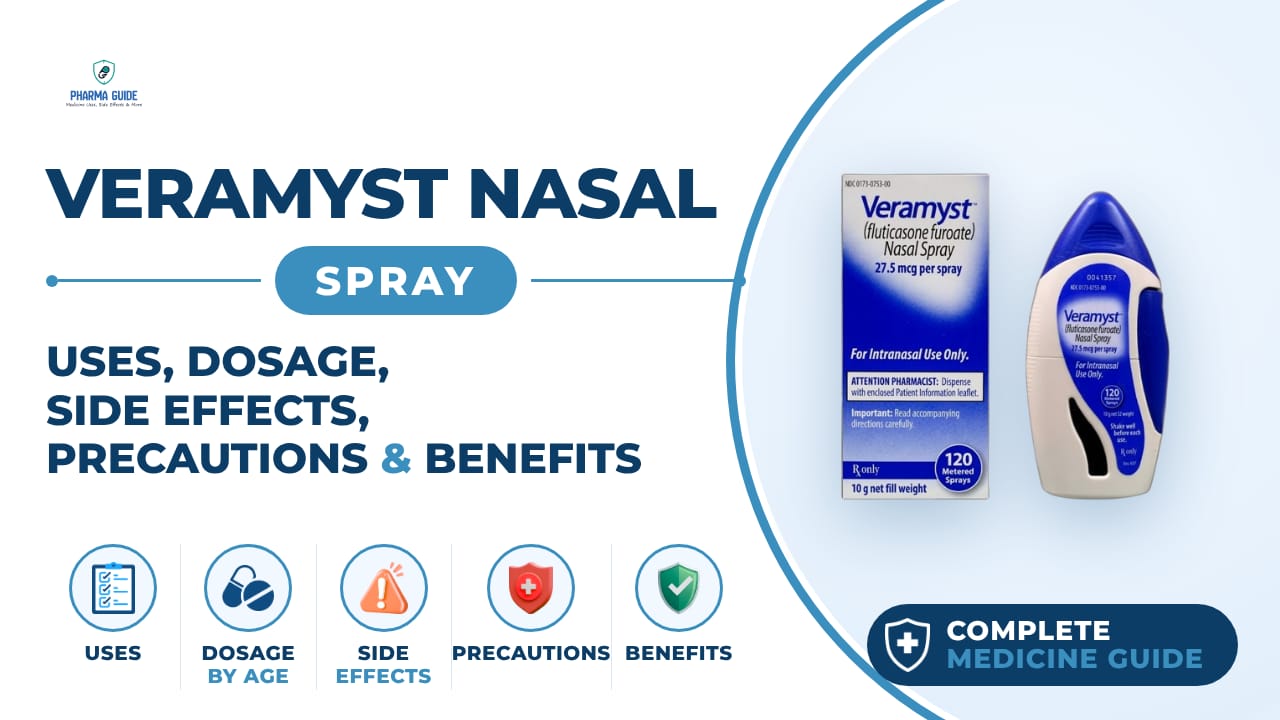
| Generic name | fluticasone furoate |
|---|---|
| Drug class | corticosteroid |
| Forms | Nasal spray suspension |
Quick overview
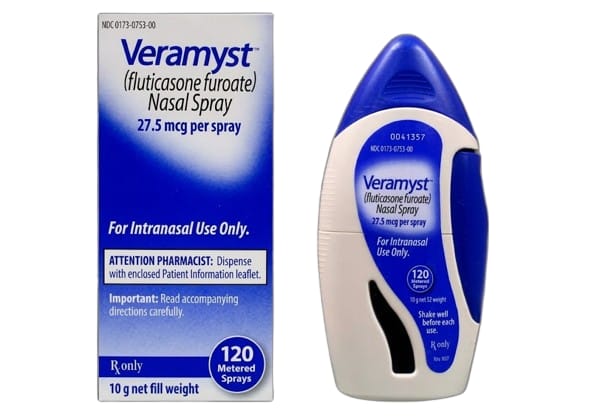
Veramyst Nasal Spray contains fluticasone furoate, a man-made corticosteroid. It is a prescription nasal spray used to treat seasonal and year-round allergy symptoms in adults and children 2 years old and older. It works by calming inflammation in the nasal lining that causes allergy symptoms.
What is Veramyst Nasal Spray
Veramyst is a prescription nasal spray that contains fluticasone furoate, a man-made corticosteroid. It is used to treat seasonal and year-round allergy symptoms in adults and children 2 years old and older.
Veramyst Nasal Spray uses
- Treatment of the symptoms of seasonal and perennial allergic rhinitis in patients aged 2 years and older
- May also help red, itchy, and watery eyes in adults and teenagers with seasonal allergic rhinitis
Benefits of Veramyst Nasal Spray
- Helps reduce nasal symptoms of allergic rhinitis such as stuffy nose, runny nose, itching, and sneezing
- May begin to work within 24 hours after the first dose, though it may take several days to reach full effect
How Veramyst Nasal Spray works
Corticosteroids are natural substances made by the body that reduce inflammation. Veramyst is a man-made version of this substance. When sprayed into the nose, it helps calm the inflammation in the nasal lining that causes allergy symptoms. The exact way it works to relieve rhinitis symptoms is not fully known.
Veramyst Nasal Spray dosage
For use in the nose only; do not spray it in the eyes or mouth. An adult should help a young child use this medicine. Use exactly as your healthcare provider tells you; do not take more of the medicine or take it more often than directed.
Gently blow your nose to clear your nostrils before taking a dose, and shake the spray well before each use. Tilt your head forward a little, hold the device upright, and place the nozzle in one nostril, pointing it toward the side of the nose away from the center. Press the button once while breathing in, then take the nozzle out and breathe out through the mouth; repeat in the other nostril if two sprays per nostril are prescribed.
Avoid getting spray in the eyes; if this happens, rinse the eyes well with water. Put the cap back on the device after each use.
Use on a regular once-daily basis for the best effect; it does not work immediately, and symptoms may take up to 24 hours (seasonal rhinitis) or about 4 days (perennial rhinitis) to improve, with full benefit possibly taking longer. Do not increase the dose; contact your healthcare provider if symptoms do not improve or get worse. Do not take extra doses or stop using the medicine without telling your healthcare provider.
If you miss a dose by several hours, just take the next dose at the usual time; do not take an extra dose.
Wipe the nozzle with a clean, dry tissue after each use, and clean the inside of the cap once a week with a clean, dry tissue. Never clean the nozzle with a pin or anything sharp, as this may damage it.
| Age group | Dose |
|---|---|
| Under 18 years | Not recommended |
| 18–64 years | 110 mcg, once/day |
| 65+ years | 110 mcg, once/day |
Available forms and strengths
- Nasal spray suspension
Side effects of Veramyst Nasal Spray
Common
- Headache
- Nosebleed (epistaxis)
- Throat pain
- Nasal ulceration
- Back pain
- Fever
- Cough
- Throat infection
- Nasal irritation
- Sneezing
- Nausea
- Vomiting
Serious
- Nosebleeds and nasal sores
- Fungal infection of the nose (Candida)
- Nasal septal perforation (a hole in the wall between the nostrils)
- Slowed wound healing in the nose
- Glaucoma or cataracts
- Hypersensitivity reactions, including anaphylaxis, swelling of the face, rash, and hives
- Increased risk of infections due to immune system effects
- Slowed growth in children
- Adrenal gland suppression, which reduces the body's ability to make natural cortisone, especially at high doses
Warnings and precautions
- This medicine can cause nosebleeds, nasal sores, and in some cases a hole in the wall between the nostrils. It can also slow wound healing in the nose. Do not use it if you have had a recent nose sore, nose surgery, or nose injury until it has healed.
- This medicine may increase the risk of a fungal nose infection, which happened in about 1 of every 1,000 patients in studies.
- This medicine can increase the risk of eye problems, including glaucoma and cataracts. Regular eye exams are recommended.
- This medicine can weaken the immune system, which may raise the risk of infections, including making chickenpox or measles more serious in people who have not had these illnesses or been vaccinated.
- In children, this medicine may slow growth, so a child's growth should be checked regularly by their healthcare provider.
- Taking a medicine called ritonavir together with this nasal spray is not recommended, and caution is needed if combined with ketoconazole, because these drugs can increase the amount of this medicine in the body.
- Serious allergic reactions, including swelling of the face, rash, hives, and life-threatening anaphylaxis, can happen with this medicine. Stop using it if this occurs.
- There is not enough research in pregnant women to know if this medicine is fully safe during pregnancy.
- It should only be used during pregnancy if your healthcare provider decides the benefit is worth the possible risk to the baby.
- It is not known whether this medicine passes into breast milk, but other similar medicines have been found in human milk. Caution should be used if you are breastfeeding and using this medicine.
- No dose change is needed for people with kidney problems.
- This medicine should be used carefully in people with severe liver problems, since it can build up more in the body.
- Veramyst generally does not impair driving.
Storage
- Store between 59° and 86°F (15° and 30°C)
- Do not refrigerate or freeze
- Store with the cap on
- Store in an upright position
- Keep out of the reach of children
- Do not use after 120 sprays (plus the initial priming sprays) have been used or after the expiration date, whichever comes first
- Before throwing away the bottle, talk to your healthcare provider about whether you need a refill
When to see a doctor
- Tell your healthcare provider right away if you notice any change in your vision while using this medicine.
- If you have a serious allergic reaction such as swelling, rash, hives, or difficulty breathing, stop using the medicine and get medical help.
- If your symptoms do not improve or get worse, contact your healthcare provider rather than increasing your dose on your own.
- If you are exposed to chickenpox or measles and have not had these illnesses or been properly vaccinated, contact your healthcare provider right away.
Alternatives
- Flonase Sensimist
- Fluticasone propionate nasal spray
- Mometasone nasal spray
- Ryaltris
Watch the video
FAQs
What is Veramyst Nasal Spray used for?
Veramyst is a prescription nasal spray containing fluticasone furoate, used to treat seasonal and year-round allergy symptoms in adults and children 2 years and older. It may also help red, itchy, and watery eyes in adults and teenagers with seasonal allergic rhinitis.
How quickly does Veramyst Nasal Spray work?
Veramyst may begin to work within 24 hours after the first dose for seasonal rhinitis, though perennial rhinitis symptoms may take about 4 days to improve, with full benefit possibly taking longer.
What is the dosage for Veramyst Nasal Spray?
For adults and seniors (18 years and older), the dose is 110 mcg once daily. It is not recommended for use in children under 18 years based on the dosing information provided.
What are the serious side effects of Veramyst Nasal Spray?
Serious side effects include nosebleeds and nasal sores, fungal infection of the nose, nasal septal perforation, slowed wound healing in the nose, glaucoma or cataracts, hypersensitivity reactions including anaphylaxis, increased risk of infections, slowed growth in children, and adrenal gland suppression.
Can I use Veramyst Nasal Spray if I'm pregnant or breastfeeding?
There is not enough research in pregnant women to confirm full safety, so it should only be used during pregnancy if a healthcare provider decides the benefit outweighs possible risk. It is not known if it passes into breast milk, so caution should be used while breastfeeding.
General information, not medical advice
Your prescriber and the leaflet in your pack know your situation. This page does not.
- Follow your prescriber and the leaflet
- Don't start, stop, or change a dose on your own
- Doses and warnings differ by country and product
Sources
Video
Related medicines
Fludrocortisone Tablet: Uses, Dosage, Side Effects, Precautions and Alternates
corticosteroid
Fludrocortisone Tablet helps treat Addison's disease and salt-losing adrenogenital syndrome by helping the body retain sodium and water. Learn uses, dosage,
Anusol-HC Suppository: Uses, Dosage, Side Effects, Precautions and Alternates
Corticosteroid
Anusol-HC Suppository is a short-term steroid treatment for hemorrhoid itching, swelling, and irritation. Learn uses, dosage, side effects, and warnings.