
Safety
General information, not medical advice
Your prescriber and the leaflet in your pack know your situation. This page does not.
- Follow your prescriber and the leaflet
- Don't start, stop, or change a dose on your own
- Doses and warnings differ by country and product
Vicks Sinex Nasal Spray: Uses, Dosage, Side Effects, Precautions and Alternates
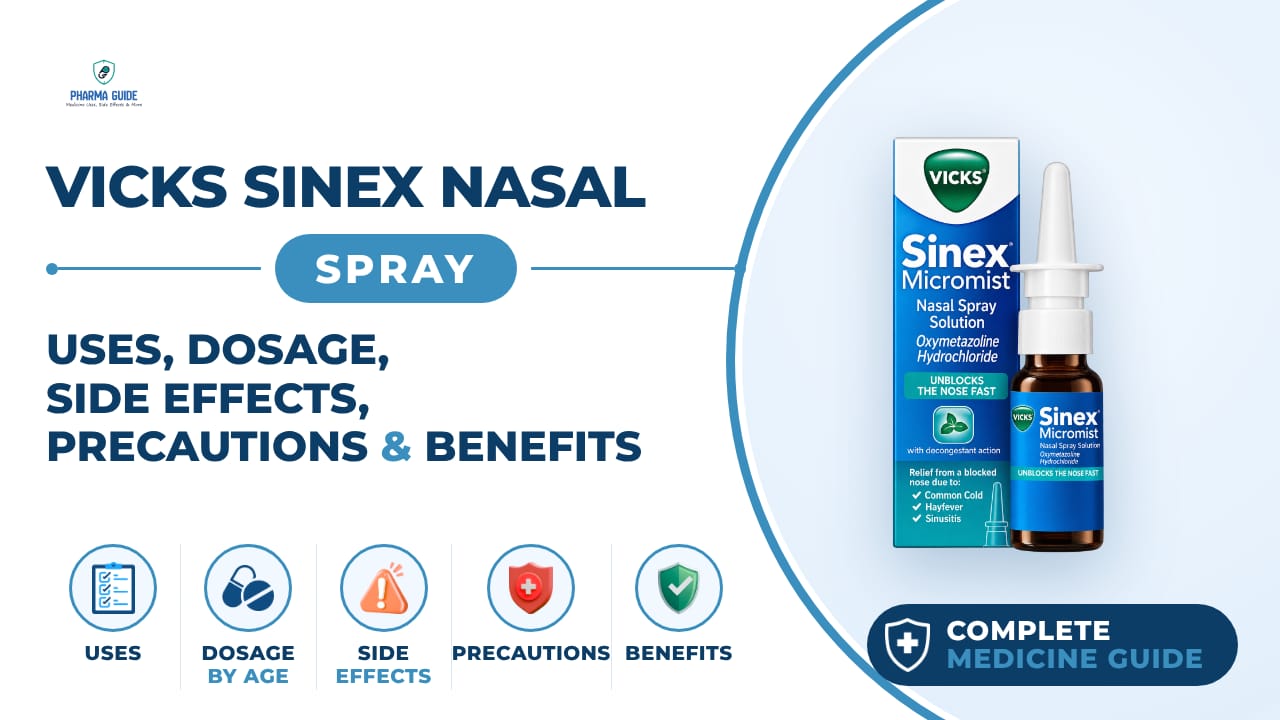
| Generic name | Oxymetazoline hydrochloride |
|---|---|
| Drug class | Nasal antihistamines and decongestants |
| Forms | Nasal spray (metered dose pump spray solution) |
Quick overview
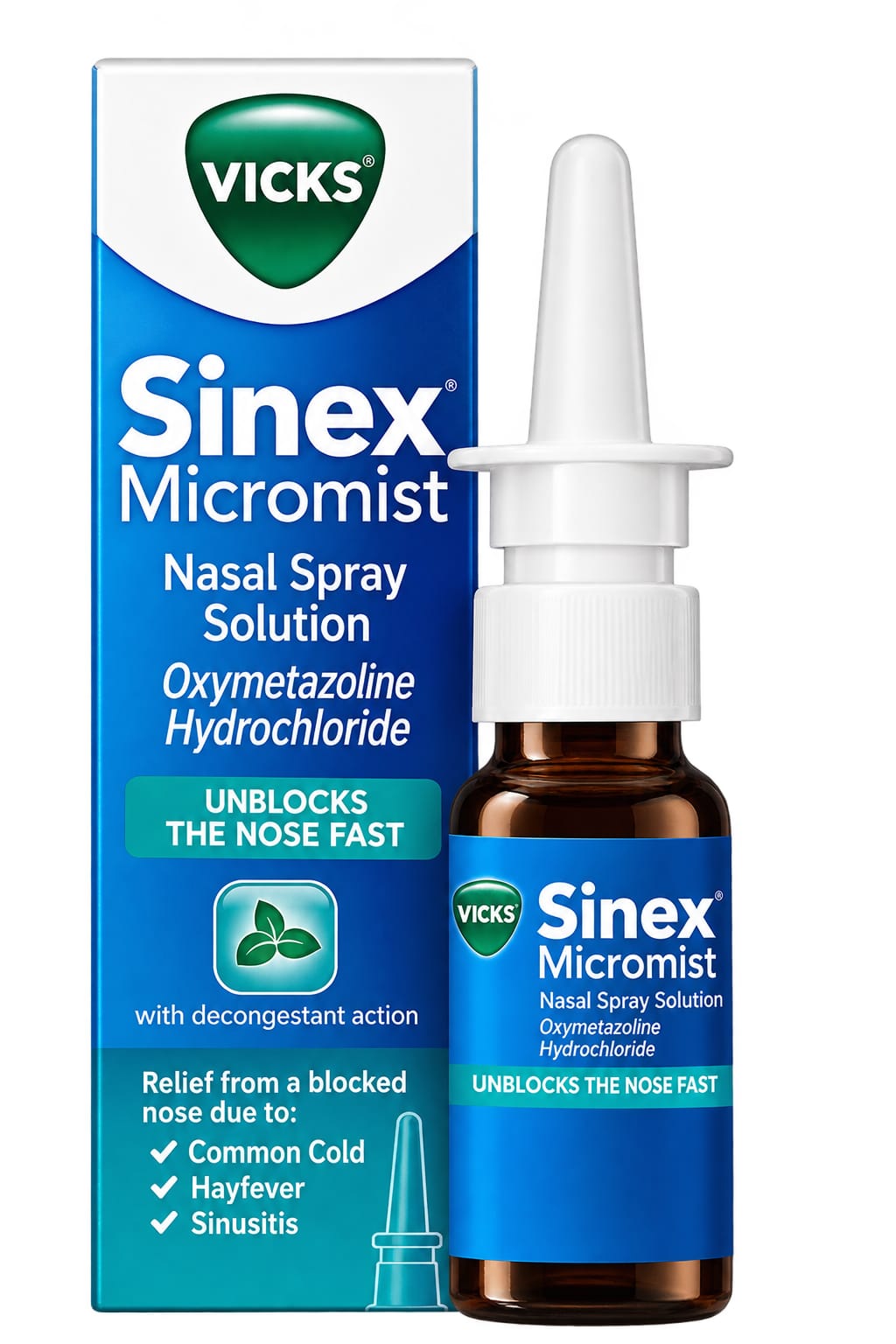
Vicks Sinex Nasal Spray contains oxymetazoline hydrochloride, a decongestant from the nasal antihistamines and decongestants class. It is used to relieve a blocked nose caused by colds or rhinitis in adults, adolescents, and children 6 years of age and older. It works by narrowing the blood vessels in the lining of the nose to reduce congestion. It should not be used for more than a few days in a row.
What is Vicks Sinex Nasal Spray
Vicks Sinex is a nasal spray that contains the decongestant oxymetazoline hydrochloride. It is used to relieve a blocked nose caused by colds or rhinitis.
Vicks Sinex Nasal Spray uses
- Localised relief of the symptoms of a blocked nose in association with a cold or rhinitis, in adults, adolescents, and children 6 years of age and older
- Temporarily relieves nasal congestion due to a cold, hay fever, or other upper respiratory allergies
- Relieves sinus congestion and pressure
Benefits of Vicks Sinex Nasal Spray
- Relieves nasal congestion
- Helps clear a blocked nose
- Makes breathing through the nose easier
- Provides temporary relief from cold-related congestion
- Helps relieve sinus pressure caused by nasal blockage
How Vicks Sinex Nasal Spray works
The medicine works by narrowing the blood vessels in the lining of the nose, which helps clear up stuffiness.
Vicks Sinex Nasal Spray dosage
Remove the cap and, before first use, prime the pump by pressing its rim several times until a steady spray comes out. Keep the bottle upright and place the nozzle just inside the nostril, holding the other nostril closed. Spray while breathing in deeply through the nose, then repeat in the other nostril. Wipe the nozzle with a clean, damp tissue and put the dust cover back on right after use.
Do not use while lying down; always use the spray in an upright position. Avoid getting the spray in your eyes. Do not use for more than a few days in a row, as longer use can make nasal congestion worse. If you forget a dose, do not double up — just continue with your normal schedule. Clean the tip of the bottle after each use and keep the cap on when not in use. Do not share this nasal spray with anyone else, as it can spread infection.
| Age group | Dose |
|---|---|
| Under 6 years | Not recommended |
| 6–11 years | 1 spray/nostril, twice/day |
| 12–60 years | 1–2 sprays/nostril, twice/day |
| 60+ years | 1–2 sprays/nostril, twice/day |
Available forms and strengths
- Nasal spray (metered dose pump spray solution)
Side effects of Vicks Sinex Nasal Spray
Common
- Sneezing
- Dryness or irritation in the nose, mouth, or throat
- Swelling of the nasal lining after the effect wears off
- Mild burning, dryness, cold feeling, or irritation inside the nose
- Headache
- Dizziness
- Weakness
- Feeling excited or restless, especially in children
- Mild sleep problems
- Burning and stinging of the nose
- Increased nasal discharge
- Trouble sleeping
Serious
- Anxiety, sedative effect, irritability, disturbed sleep
- Rapid heartbeat or palpitations
- Increased blood pressure
- Reduced effect of a dose
- Rash and visual disturbances
- Severe sneezing, runny or stuffy nose, redness or swelling in the nose, or other worsening nasal symptoms
- Severe stinging, burning, or irritation inside the nose
- Severe dizziness, restless feeling, nervousness, or insomnia
- Mood changes, unusual thoughts or behavior
- Tremors or shaking
- Little or no urination
- Signs of an allergic reaction such as hives, difficulty breathing, or swelling of the face, lips, tongue, or throat
- Blurred vision
- Drowsiness
- Signs of too much medication such as slurred speech, unclear thinking, decreased coordination, or sleepiness
Warnings and precautions
- Do not use this medicine if you are allergic to oxymetazoline hydrochloride or any other ingredient in it
- Do not use this medicine if you are taking, or have taken in the last two weeks, medicines called MAO inhibitors (used for Parkinson's disease or depression)
- Do not use this medicine if you have acute heart disease or cardiac asthma
- Do not use this medicine if you have narrow-angle glaucoma (increased eyeball pressure)
- Do not use this medicine if you have had surgery to remove your pituitary gland
- Do not use this medicine if you have inflamed skin or mucous membranes in your nose, or scabs in your nose
- Talk to your doctor before use if you have high blood pressure, heart disease including angina, diabetes, thyroid problems, an enlarged prostate, increased eye pressure, or a rare adrenal gland tumour called phaeochromocytoma
- Using this medicine for longer than recommended or taking too much can cause a blocked nose and make the medicine less effective over time
- This medicine is not meant for children under 6 years old; lower-strength versions should be used for them instead
- Do not use this medicine for more than 3 days in a row, as frequent or prolonged use may make nasal congestion come back or get worse
- Using the same nasal spray bottle as someone else may spread infection
- Tell your doctor if you are taking tricyclic antidepressants, beta blockers, or high blood pressure medicines, as these can interact with this medicine
- If you are pregnant or think you might be pregnant, talk to your doctor or pharmacist before using this medicine, since there isn't enough information about using it during pregnancy.
- If you are breastfeeding, ask your doctor or pharmacist for advice before using this medicine.
- Do not use for more than 3 consecutive days if you have kidney concerns.
- Avoid exceeding the recommended daily dose if you have liver concerns.
- Consult a healthcare professional before use if you have high blood pressure or heart disease, regarding alcohol use.
- This medicine does not affect your ability to drive or use machines.
Storage
- Keep this medicine out of the sight and reach of children
- Do not store above 25°C
- Do not use this medicine after the expiry date which is stated on the carton and label of the bottle after EXP. The expiry date refers to the last day of that month
- Use this medicine within 12 months of first opening of the bottle
- Do not throw away any medicines via wastewater or household waste. Ask your pharmacist how to throw away medicines you no longer use
- Store this medication at room temperature and keep it out of the reach of children
When to see a doctor
- You must talk to a doctor or nurse if you do not feel better or if you feel worse
- If you use too much of this medicine, or if someone swallows it, get medical help right away and bring the bottle or package with you
- Contact your doctor if your symptoms get worse or do not improve
- Get emergency medical help if you notice signs of an allergic reaction, such as hives, trouble breathing, or swelling of the face, lips, tongue, or throat
- Stop using the spray and call your doctor right away if you have severe sneezing, worsening nasal symptoms, severe nose irritation, severe dizziness, restlessness, nervousness, insomnia, mood changes, unusual thoughts or behavior, tremors, or very little or no urination
- If you think you've taken too much, get emergency medical help or contact your local poison control center
- Stop the medicine and get medical help right away if you notice signs of taking too much, such as slurred speech, unclear thinking, blurred vision, poor coordination, or extreme sleepiness, or signs of a serious allergic reaction like stomach cramps, trouble breathing, nausea and vomiting, or swelling of the face and throat
Alternatives
- Nasacort Nasal Spray
- Afrin Nasal Spray
- Otrivin Nasal Spray
Watch the video
FAQs
What is Vicks Sinex Nasal Spray used for?
It is used for localised relief of a blocked nose caused by colds or rhinitis, and to relieve nasal congestion and sinus pressure due to colds, hay fever, or other upper respiratory allergies.
How does Vicks Sinex Nasal Spray work?
It works by narrowing the blood vessels in the lining of the nose, which helps clear up stuffiness and reduce congestion.
How long can I use Vicks Sinex Nasal Spray?
It should not be used for more than 3 days in a row, as frequent or prolonged use may make nasal congestion come back or get worse.
What is the dosage of Vicks Sinex Nasal Spray for children?
Children aged 6–11 years should use 1 spray per nostril, twice a day. It is not recommended for children under 6 years old, who should use lower-strength versions instead.
Can I use Vicks Sinex Nasal Spray if I am pregnant?
If you are pregnant or think you might be pregnant, you should talk to your doctor or pharmacist before using this medicine, since there isn't enough information about using it during pregnancy.
General information, not medical advice
Your prescriber and the leaflet in your pack know your situation. This page does not.
- Follow your prescriber and the leaflet
- Don't start, stop, or change a dose on your own
- Doses and warnings differ by country and product
Sources
Video
Related medicines
Astelin Nasal Spray: Uses, Dosage, Side Effects, Precautions and Alternates
Nasal antihistamines and decongestants
Astelin Nasal Spray (azelastine) treats sneezing, runny/stuffy nose, and itching from allergic and non-allergic rhinitis. Learn dosage, side effects, and
Xylometazoline Nasal Spray: Uses, Dosage, Side Effects, Precautions and Alternates
Nasal antihistamines and decongestants
Xylometazoline Nasal Spray relieves stuffy or blocked nose from colds, allergies, or sinusitis within 5-10 minutes. Learn uses, dosage, and side effects.