
Safety
General information, not medical advice
Your prescriber and the leaflet in your pack know your situation. This page does not.
- Follow your prescriber and the leaflet
- Don't start, stop, or change a dose on your own
- Doses and warnings differ by country and product
Xylometazoline Nasal Spray: Uses, Dosage, Side Effects, Precautions and Alternates
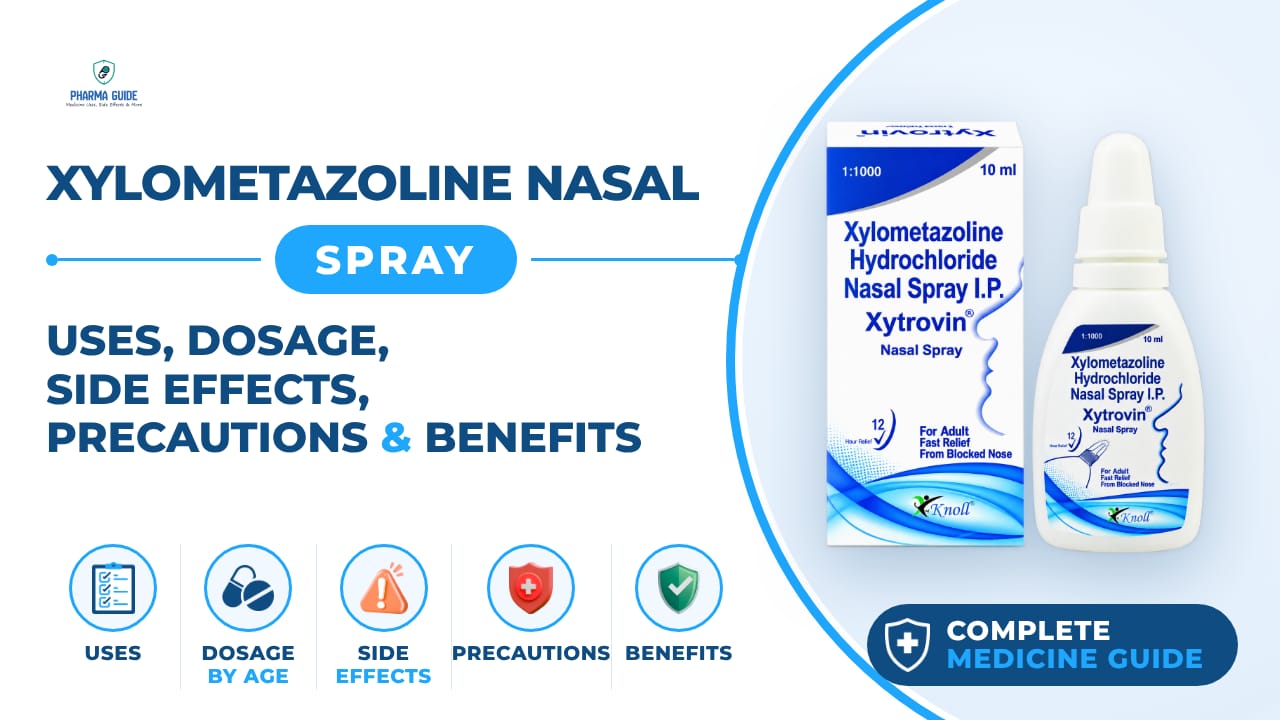
| Generic name | Xylometazoline |
|---|---|
| Drug class | Nasal antihistamines and decongestants |
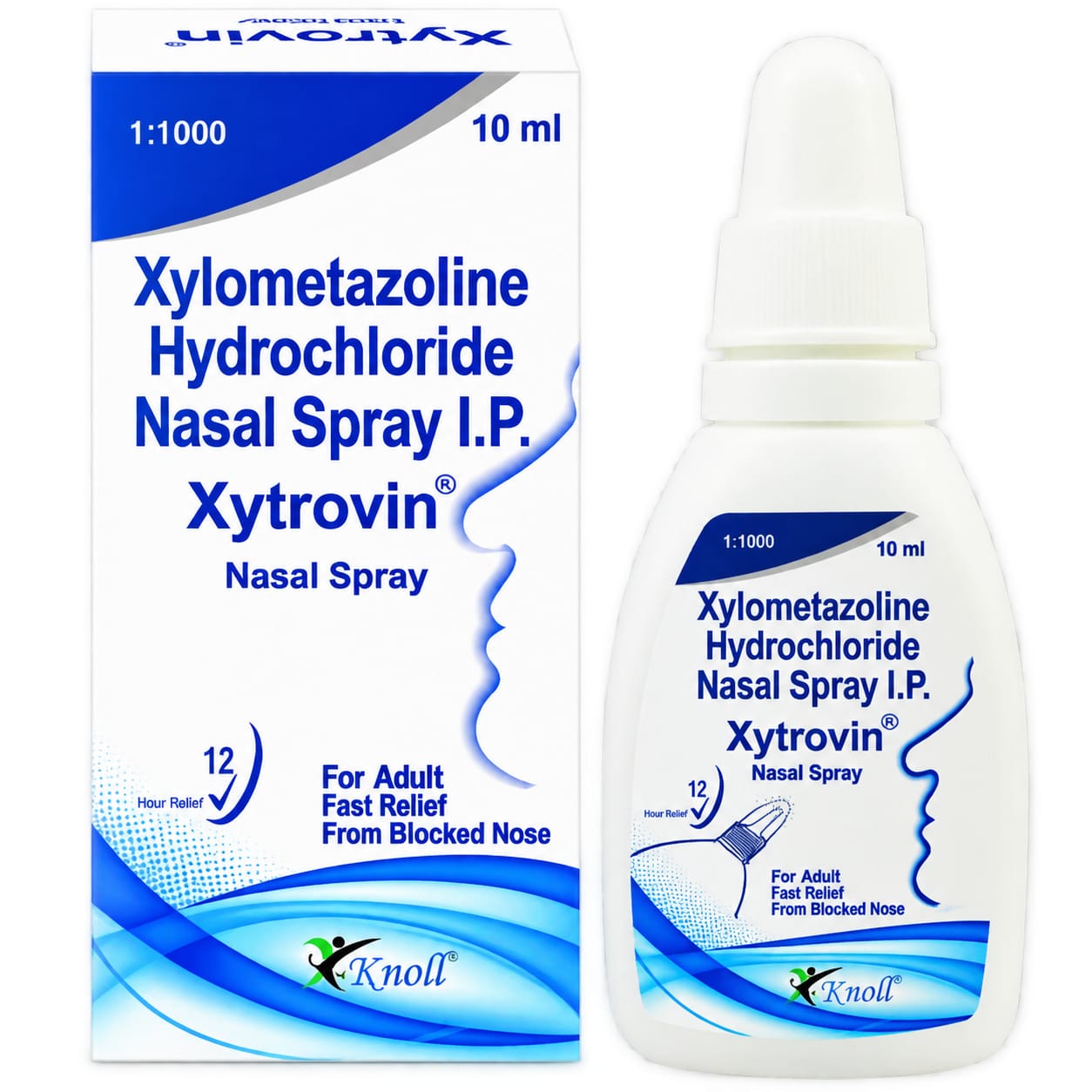
| Forms | Nasal spray (0.05%) |
Quick overview
Xylometazoline Nasal Spray is a decongestant belonging to the nasal antihistamines and decongestants drug class. It is used in the nose to relieve a stuffy or blocked nose caused by colds, allergies, or sinus irritation. It works by shrinking blood vessels in the nasal passages, with effects noticeable within 5-10 minutes and lasting about 10 hours. It is generally well tolerated, though it should be used exactly as directed and not for more than 3 days unless a doctor advises otherwise.
What is Xylometazoline Nasal Spray
Xylometazoline nasal is a decongestant that shrinks blood vessels in the nasal passages. It is used in the nose to relieve a stuffy or blocked nose caused by colds, allergies, or sinus irritation.
Xylometazoline Nasal Spray uses
- Treats stuffy nose caused by allergies, sinus irritation, or the common cold
- Treats a runny nose
- Relieves blocked nose caused by colds, flu, sinusitis, hay fever or other allergic rhinitis
Benefits of Xylometazoline Nasal Spray
- Quickly and effectively relieves nasal congestion
- Effect can be noticed within 5-10 minutes
- Effect lasts for an average of about 10 hours
- Well tolerated with generally mild to moderate side effects
How Xylometazoline Nasal Spray works
This medicine works by shrinking the blood vessels in the lining of the nose, which reduces swelling and helps clear a stuffy nose.
Xylometazoline Nasal Spray dosage
Use exactly as directed on the label or as prescribed by your doctor; do not use more or less than recommended or for longer than recommended. Blow your nose gently before use. Keep your head upright (or tilt it forward slightly), insert the tip of the bottle into one nostril, press the other nostril closed with your finger, and breathe in quickly and gently while spraying. Use the spray in the other nostril the same way. Do not blow your nose for at least a few minutes after using the spray.
Do not use more than 3 times per day, spacing doses every 8 to 10 hours. Do not use for more than 3 days unless your doctor tells you to. Prime the spray before first use by spraying until a fine mist appears. Keep the spray out of your mouth and eyes, and put the cap back on after each use. Do not take this medicine by mouth; it is for use in the nose only. Do not share the nasal spray with others to avoid spreading infection. Call your doctor if symptoms do not improve after 5 days of use.
| Age group | Dose |
|---|---|
| Under 2 Years | Not recommended unless prescribed by a doctor |
| 2–6 Years | Use pediatric strength as directed by a doctor |
| 6 Years and Above | 1 spray in each nostril 1–2 times daily (as directed) |
| Adults (18–64 Years) | 1–2 sprays in each nostril up to 2–3 times daily |
| Older Adults (65+ years) | Use as directed; caution with heart or blood pressure conditions |
Available forms and strengths
- Nasal spray (0.05%)
Side effects of Xylometazoline Nasal Spray
Common
- Dryness, burning, or stinging inside the nose
- Sneezing
- Runny nose
- Headache
- Upset stomach or nausea
- Nasal irritation or discomfort
Serious
- Signs of an allergic reaction: hives, rash, itching, swollen or peeling skin, wheezing, tightness in the chest or throat, trouble breathing, swallowing or talking, or swelling of the mouth, face, lips, tongue, or throat
- Blurred vision or temporary visual disturbance
- Headache, dizziness, or nervousness
- Fast or pounding heartbeats, or irregular heartbeat
- A light-headed feeling, like you might pass out
- Wheezing or feeling short of breath
- Trouble sleeping
- Shakiness (tremor)
- Worsening symptoms
Warnings and precautions
- Do not use if you are allergic to this medicine or any of its ingredients.
- Using too much of this medicine can damage your nasal passages and may lead to long-term (chronic) congestion.
- Do not use more than 3 times a day, and do not use it for longer than recommended, as this can cause congestion to come back or get worse.
- Do not use if you have had surgery to remove a pituitary gland tumor or other surgery that exposed the outer layers of the brain through the nose.
- Do not use if you have taken certain medicines for depression or Parkinson's disease (such as isocarboxazid, phenelzine, tranylcypromine, selegiline, or rasagiline) within the last 14 days, as this may cause a large increase in blood pressure.
- Do not give this medicine to a child without medical advice, and do not use it in children under 6 years old.
- Rinse with water if this medicine gets into your eyes, as it may cause burning, blurred vision, or eye pain.
- It is not known whether this medicine will harm an unborn baby. Do not use it during pregnancy without a doctor's advice.
- It is not known whether this medicine passes into breast milk or could harm a nursing baby. Do not use it while breastfeeding without a doctor's advice.
- Ask a doctor or pharmacist if it is safe to use this medicine if you have liver or kidney disease.
- It is not known how this medicine interacts with alcohol. Talk to your doctor before drinking alcohol while using it.
- This medicine has little or no effect on your ability to drive or use machines, but be careful until you know how it affects you, since it may cause dizziness or sleepiness in some people.
Storage
- Store at room temperature away from moisture and heat.
- Store below 30°C.
- Keep out of reach and sight of children.
- Store in the original package.
- Store it in a cool dry place away from moisture, heat or sunlight; do not store it in the bathroom, near a sink, in the car, or on window sills.
- Throw away unused or expired drugs. Do not flush down a toilet or pour down a drain unless you are told to do so.
- If you no longer need to use this medicine or it is out of date, take it to any pharmacy for safe disposal.
When to see a doctor
- Get emergency medical help if you have signs of an allergic reaction such as hives, difficulty breathing, or swelling of the face, lips, tongue, or throat.
- Stop using this medicine and call your doctor right away if you have blurred vision, headache, dizziness, nervousness, fast or pounding heartbeats, a light-headed feeling like you might pass out, wheezing, feeling short of breath, or worsening symptoms.
- Stop use and get medical help right away if a sudden severe headache, nausea and vomiting, or vision problems occur, as these may be signs of a rare but serious side effect.
- If someone accidentally swallows this medicine, seek emergency medical attention or contact a poison control center right away.
- Call your doctor if your symptoms do not improve after 5 days of treatment.
Alternatives
- Oxymetazoline Nasal Spray
- Mometasone Nasal Spray
- Ipratropium Nasal Spray
Watch the video
FAQs
How long does Xylometazoline Nasal Spray take to work?
Effects can be noticed within 5-10 minutes and last for about 10 hours.
How long can I use Xylometazoline Nasal Spray?
Do not use it for more than 3 days unless your doctor tells you to, and do not use it more than 3 times per day, spacing doses every 8 to 10 hours.
Can children use Xylometazoline Nasal Spray?
It is not recommended for children under 2 years unless prescribed by a doctor, and it should not be used in children under 6 years old without medical advice. Children 2-6 years should use pediatric strength as directed by a doctor, and those 6 years and above can use 1 spray in each nostril 1-2 times daily as directed.
What are the side effects of Xylometazoline Nasal Spray?
Common side effects include dryness, burning, or stinging inside the nose, sneezing, runny nose, headache, upset stomach or nausea, and nasal irritation or discomfort.
When should I call a doctor while using Xylometazoline Nasal Spray?
Call your doctor if your symptoms do not improve after 5 days of treatment, or stop use and get medical help right away if you have blurred vision, headache, dizziness, nervousness, fast or pounding heartbeats, a light-headed feeling, wheezing, shortness of breath, or worsening symptoms.
General information, not medical advice
Your prescriber and the leaflet in your pack know your situation. This page does not.
- Follow your prescriber and the leaflet
- Don't start, stop, or change a dose on your own
- Doses and warnings differ by country and product
Sources
Video
Related medicines
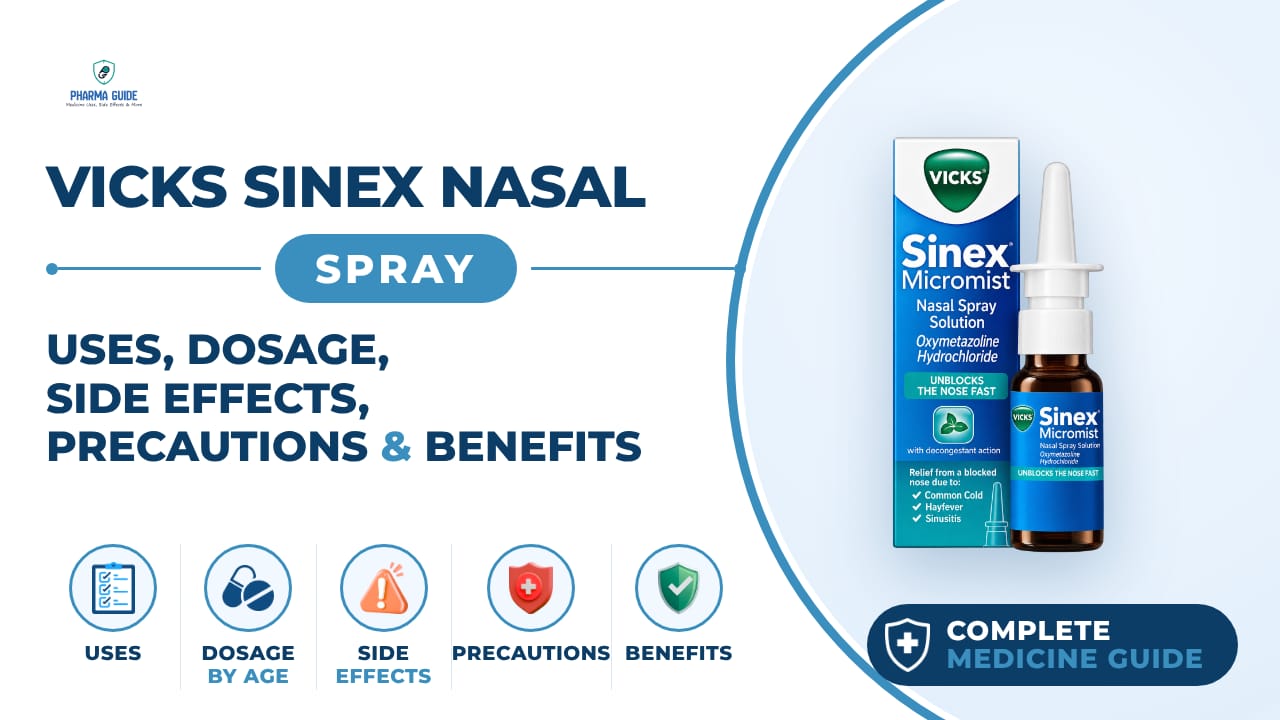
Vicks Sinex Nasal Spray: Uses, Dosage, Side Effects, Precautions and Alternates
Nasal antihistamines and decongestants
Vicks Sinex Nasal Spray contains oxymetazoline to relieve blocked nose from colds or rhinitis. Learn uses, dosage, side effects, and warnings.
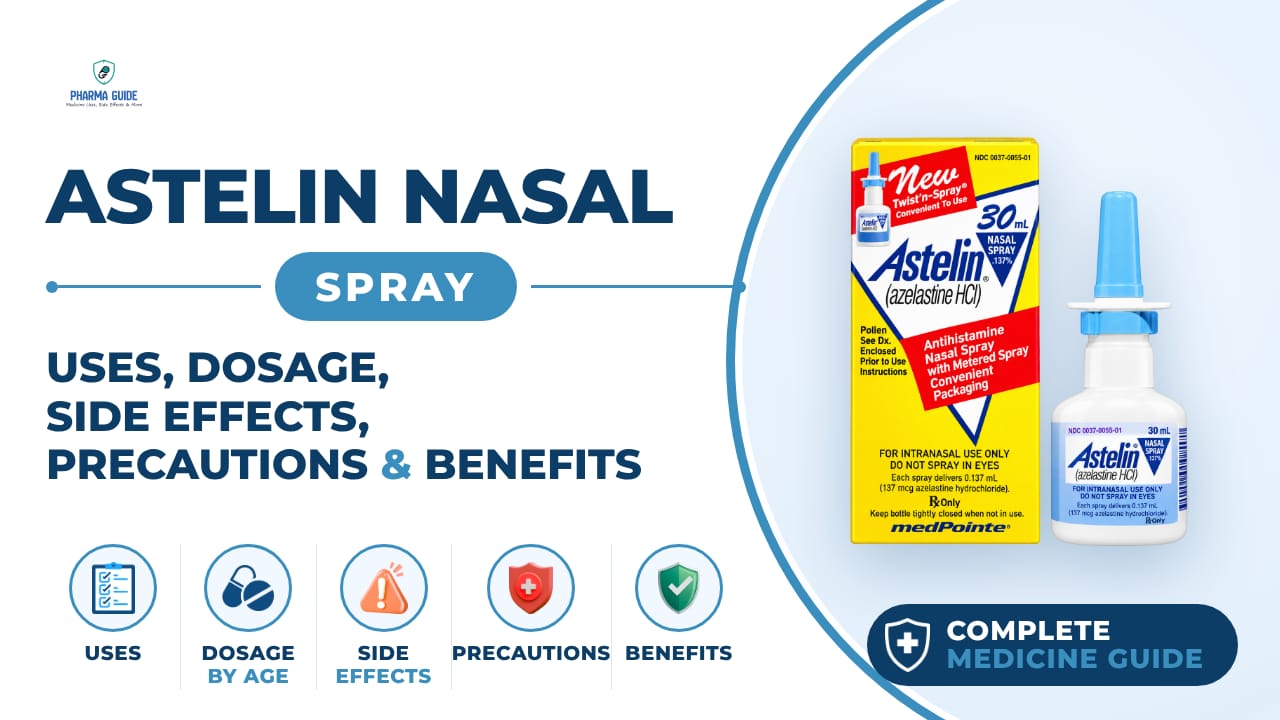
Astelin Nasal Spray: Uses, Dosage, Side Effects, Precautions and Alternates
Nasal antihistamines and decongestants
Astelin Nasal Spray (azelastine) treats sneezing, runny/stuffy nose, and itching from allergic and non-allergic rhinitis. Learn dosage, side effects, and