
Safety
General information, not medical advice
Your prescriber and the leaflet in your pack know your situation. This page does not.
- Follow your prescriber and the leaflet
- Don't start, stop, or change a dose on your own
- Doses and warnings differ by country and product
Viramune Tablet: Uses, Dosage, Side Effects, Precautions and Alternates
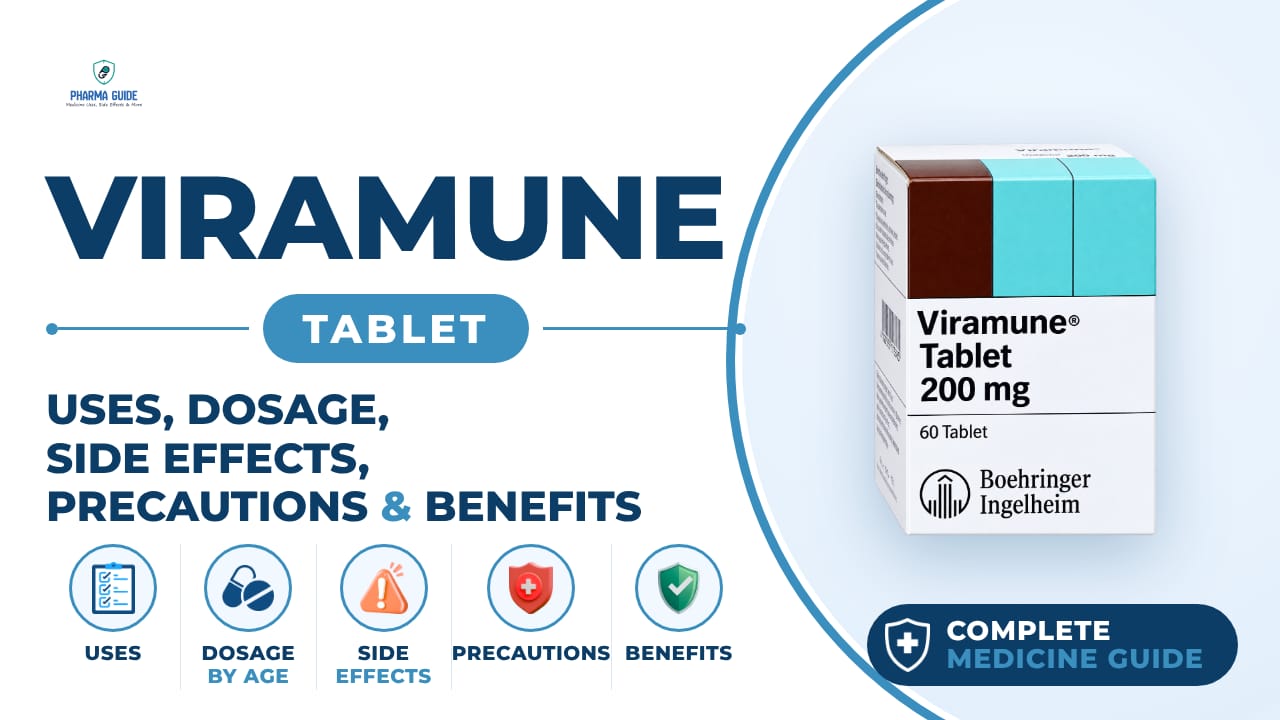
| Generic name | Nevirapine |
|---|---|
| Drug class | Non-nucleoside reverse transcriptase inhibitor (NNRTI), antiretroviral agent |
| Forms | Immediate-release tablet (200 mg), Extended-release tablet (400 mg), Oral suspension (50 mg/5 mL) |
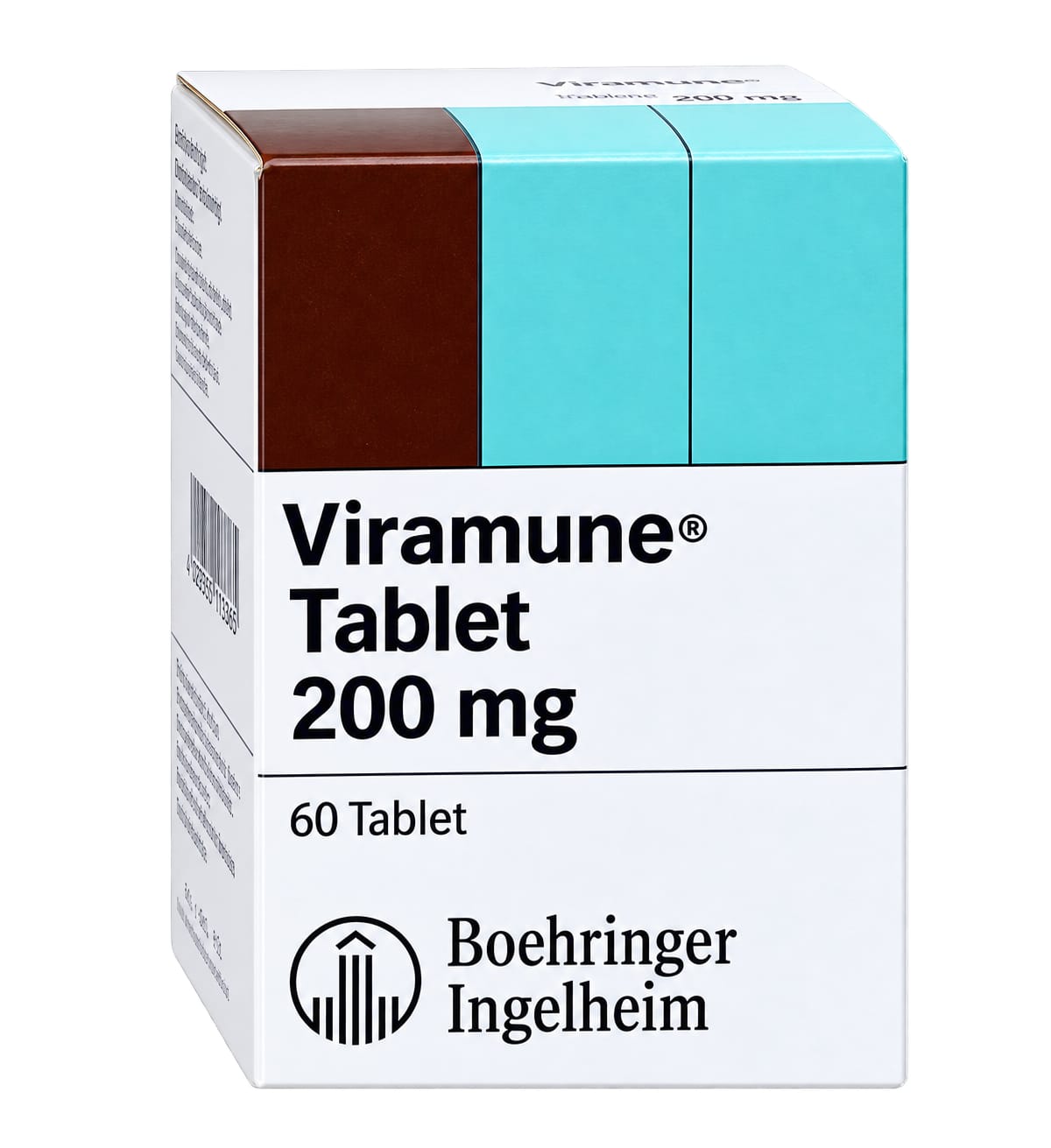
Quick overview
Viramune Tablet (nevirapine) is a non-nucleoside reverse transcriptase inhibitor used to treat HIV-1 infection, always in combination with other anti-HIV medicines. It works by blocking the HIV reverse transcriptase enzyme, helping reduce viral load and maintain or improve CD4 cell counts. It carries important warnings about liver damage and severe skin reactions, particularly during the first 18 weeks of treatment. It is available as an immediate-release tablet, extended-release tablet, and oral suspension.
What is Viramune Tablet
Viramune is a prescription medicine used to treat HIV-1 (the virus that causes AIDS). It belongs to a class of anti-HIV medicines called non-nucleoside reverse transcriptase inhibitors. It is always used together with other anti-HIV medicines, never alone.
Viramune Tablet uses
- Treatment of HIV-1 infection in combination with other antiretroviral medicines
- Use cautiously with liver disease; hepatic injury can occur
- Helps reduce HIV viral load
- Helps maintain or improve CD4 cell counts
- Blocks the HIV reverse transcriptase enzyme
- Used as part of combination antiretroviral therapy
- Helps slow HIV disease progression
Benefits of Viramune Tablet
- Can reduce the amount of HIV virus in the blood (viral load) when used with other anti-HIV medicines
- Can increase the number of CD4 (immune helper) cells in the blood when used with other anti-HIV medicines
How Viramune Tablet works
Nevirapine blocks an HIV enzyme called reverse transcriptase that the virus needs to multiply, which lowers the amount of HIV in the blood.
Viramune Tablet dosage
Viramune must always be taken together with other anti-HIV medicines; never take it alone. It can be taken with or without food, and with water, milk, or soda. Take it at about the same time each day. Do not change the dose on your own; talk to your doctor before stopping.
If you miss a dose, take it as soon as you remember, but do not double the next dose if it is almost time for your next scheduled dose. If you stop taking it for more than 7 days, ask your doctor before restarting, as you may need to restart with the once-daily lead-in dosing.
Extended-release tablets should be swallowed whole and not broken, crushed, or chewed. Oral suspension should be shaken gently before use, and the full dose should be measured with a dosing syringe or dosing cup, rinsing the cup with water and drinking the rinse if used.
| Age group | Dose |
|---|---|
| Under 15 days | Safety and effectiveness are not established |
| 15 days–11 years | 150 mg/m² once daily for the first 14 days, then 150 mg/m² twice daily; maximum 400 mg/day |
| 12–17 years | 150 mg/m² once daily for 14 days, then 150 mg/m² twice daily; maximum 400 mg/day |
Available forms and strengths
- Immediate-release tablet (200 mg)
- Extended-release tablet (400 mg)
- Oral suspension (50 mg/5 mL)
Side effects of Viramune Tablet
Common
- Rash
- Nausea
- Fatigue
- Fever
- Headache
- Vomiting
- Diarrhea
- Abdominal pain
- Muscle pain (myalgia)
- Joint pain (arthralgia)
- Abnormal liver function tests
- Sleepiness/drowsiness
Serious
- Severe, life-threatening, and sometimes fatal liver damage (hepatotoxicity), including fulminant and cholestatic hepatitis, liver failure
- Severe, life-threatening skin reactions including Stevens-Johnson syndrome and toxic epidermal necrolysis
- Hypersensitivity reactions with rash plus fever, general malaise, fatigue, muscle or joint aches, blisters, oral lesions, conjunctivitis, facial swelling, and organ dysfunction (hepatitis, eosinophilia, granulocytopenia, lymphadenopathy, kidney dysfunction)
- Anaphylaxis, angioedema
- Granulocytopenia (more common in children), anemia
- Redistribution/accumulation of body fat (lipodystrophy)
Warnings and precautions
- This medicine can cause severe, life-threatening, and sometimes fatal liver damage, especially during the first 18 weeks of treatment. Risk is higher in women and people with higher CD4 cell counts.
- This medicine can cause severe, life-threatening skin reactions, including fatal cases, usually within the first 6 weeks of treatment.
- Close medical monitoring, including liver function blood tests, is essential during the first 18 weeks of treatment to catch these dangerous reactions early.
- Never restart this medicine after a severe liver, skin, or hypersensitivity reaction.
- You must strictly follow the lower starting dose for the first 14 days, as this lowers the chance of serious rash.
- This medicine must always be taken with other HIV medicines. Taking it alone can lead to drug resistance.
- This medicine does not reduce the risk of spreading HIV to others through sex or blood contact, so safe sex practices and precautions against blood contamination should continue.
- Do not take with herbal products containing St. John's Wort, as this can reduce how well the medicine works and may lead to drug resistance.
- Birth control pills and other hormonal contraceptives may not work as well while taking this medicine, so an additional or alternative method of contraception should be used.
- Viramune should only be used during pregnancy if the potential benefit outweighs the risk to the unborn baby. There is a particular risk of serious, potentially fatal liver damage in pregnant women starting Viramune, especially with higher CD4 counts.
- Mothers taking Viramune should not breastfeed, both because HIV can be passed to the baby through breast milk and because the medicine itself passes into breast milk and could harm the infant.
- No dose adjustment is needed for most patients with kidney problems, but patients on dialysis need an extra dose after each dialysis session.
- Viramune should not be used in people with severe liver problems, and caution is needed in those with moderate liver impairment. Liver function will be monitored closely, especially in the first 18 weeks of treatment.
- This medicine can cause drowsiness or sleepiness in some people. Know how you react to it before driving or operating machinery.
Storage
- Store at room temperature (25°C/77°F; excursions permitted to 15°-30°C/59°-86°F)
- Store in a safe place out of the reach of children
- Oral suspension should be used within 2 months of opening the bottle
- Do not use after the expiry date
When to see a doctor
- Call your doctor right away if you notice signs of liver problems such as general ill feeling, tiredness, nausea, loss of appetite, yellowing of skin or eyes, dark urine, pale stools, or pain/tenderness on your right side below the ribs.
- Stop the medicine and call your doctor right away if you develop a rash along with flu-like feelings, fever, muscle or joint aches, tiredness, blisters, mouth sores, swelling of the face, or red/inflamed eyes (conjunctivitis).
- If your doctor tells you to stop because of a serious liver or skin reaction, never take this medicine again.
- Contact your doctor right away if you experience symptoms of a serious allergic (hypersensitivity) reaction, such as rash with fever, facial swelling, blistering, or breathing problems.
Alternatives
- Dolutegravir-based HIV regimens
- Bictegravir-based HIV regimens
- Raltegravir-based HIV regimens
Watch the video
FAQs
What is Viramune Tablet used for?
Viramune is a prescription non-nucleoside reverse transcriptase inhibitor used to treat HIV-1 infection, always in combination with other anti-HIV medicines. It helps reduce viral load and maintain or improve CD4 cell counts.
Can Viramune be taken alone?
No, Viramune must always be taken together with other anti-HIV medicines. Taking it alone can lead to drug resistance.
What are the serious risks of Viramune Tablet?
Viramune can cause severe, life-threatening, and sometimes fatal liver damage and severe skin reactions like Stevens-Johnson syndrome and toxic epidermal necrolysis, especially during the first 18 weeks of treatment. It can also cause hypersensitivity reactions and anaphylaxis.
What should I do if I miss a dose of Viramune?
If you miss a dose, take it as soon as you remember, but do not double the next dose if it is almost time for your next scheduled dose. If you stop for more than 7 days, ask your doctor before restarting since you may need the once-daily lead-in dosing again.
Is Viramune safe during pregnancy and breastfeeding?
Viramune should only be used during pregnancy if the benefit outweighs the risk, as there is a particular risk of serious liver damage in pregnant women starting it, especially with higher CD4 counts. Mothers taking Viramune should not breastfeed.
General information, not medical advice
Your prescriber and the leaflet in your pack know your situation. This page does not.
- Follow your prescriber and the leaflet
- Don't start, stop, or change a dose on your own
- Doses and warnings differ by country and product
Sources
Video
Related medicines
Nevirapine Tablet: Uses, Dosage, Side Effects, Precautions and Alternates
Non-nucleoside reverse transcriptase inhibitor (NNRTI), antiretroviral agent
Nevirapine Tablet is an NNRTI used with other antiretrovirals to treat HIV-1. Learn its dosage, benefits, side effects, and key safety warnings.

Injectafer Injection: Uses, Dosage, Side Effects, Precautions and Alternates
Iron products
Injectafer (ferric carboxymaltose) treats iron deficiency anemia and heart failure-related iron deficiency via IV. Learn uses, dosage, side effects, and