
Safety
General information, not medical advice
Your prescriber and the leaflet in your pack know your situation. This page does not.
- Follow your prescriber and the leaflet
- Don't start, stop, or change a dose on your own
- Doses and warnings differ by country and product
Vyvanse Capsule: Uses, Dosage, Side Effects, Precautions and Alternates
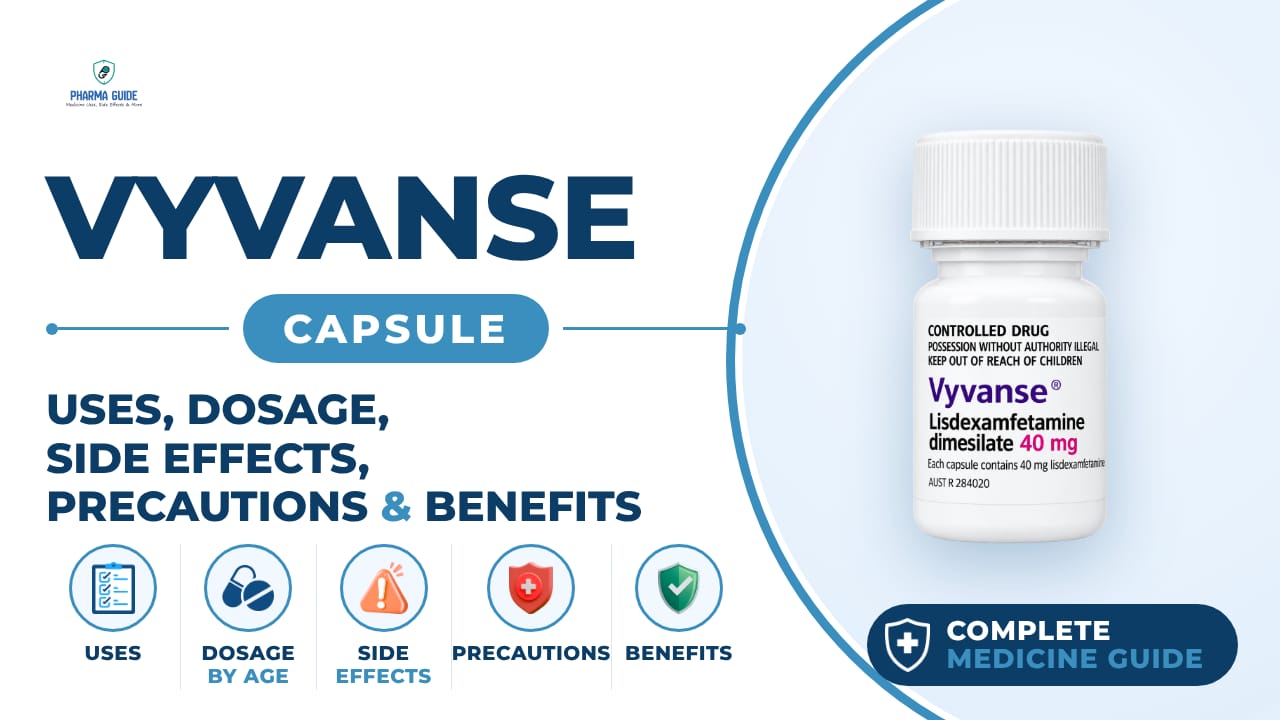
| Generic name | lisdexamfetamine |
|---|---|
| Drug class | CNS stimulant (ADHD agent) |
| Forms | Capsules, Chewable tablets, Oral solution |
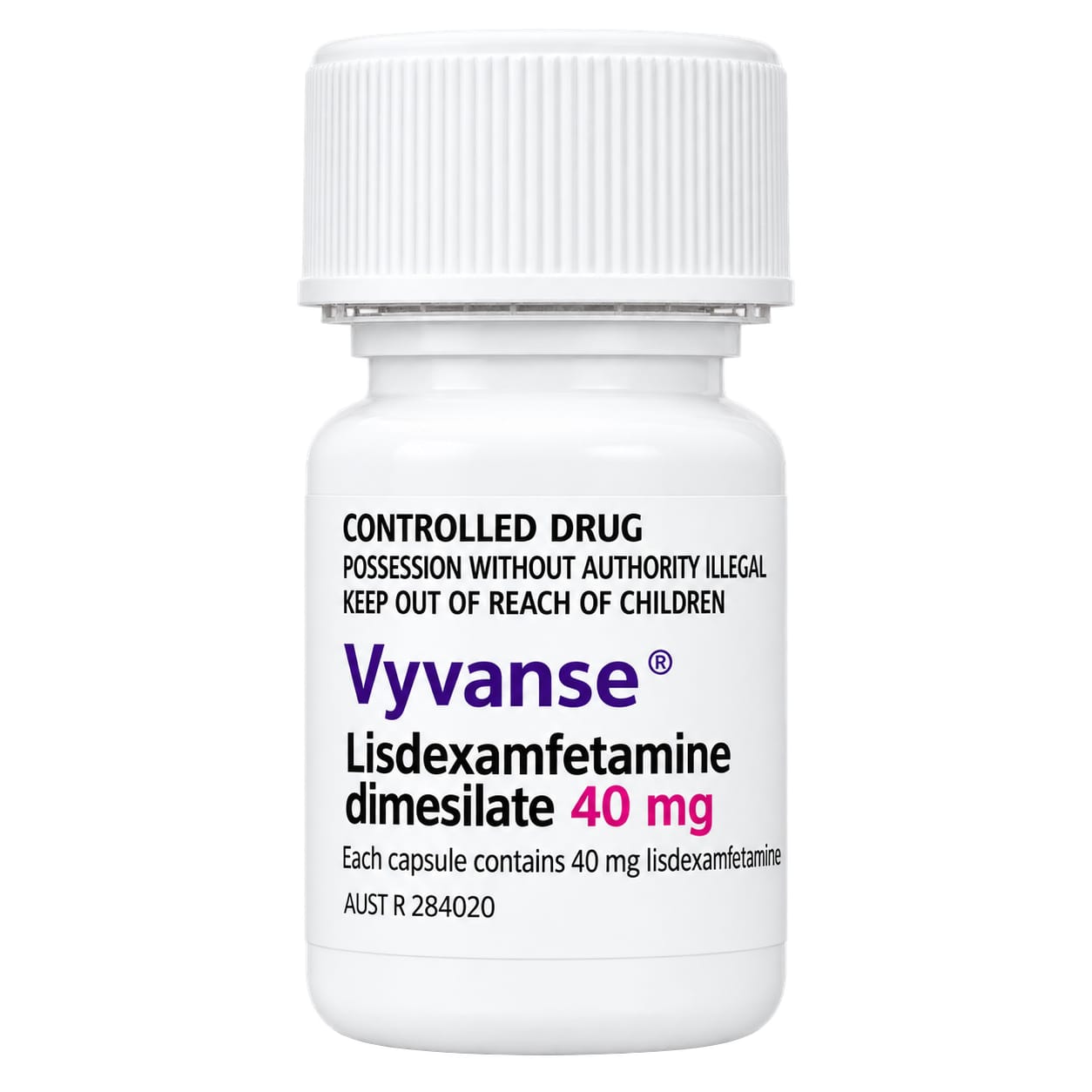
Quick overview
Vyvanse Capsule (lisdexamfetamine) is a CNS stimulant used to treat attention deficit hyperactivity disorder (ADHD) in adults and children 6 years and older, and to treat moderate or severe binge eating disorder in adults. It is a controlled substance because of its potential for misuse and dependence. It is inactive when swallowed and is converted by the body into its active form to help with focus, impulse control, and reducing binge eating.
What is Vyvanse Capsule
Vyvanse is a stimulant medicine used to treat attention deficit hyperactivity disorder (ADHD) in adults and children 6 years and older, and to treat moderate or severe binge eating disorder in adults. It is a controlled substance because of its potential for misuse and dependence.
Vyvanse Capsule uses
- Attention deficit hyperactivity disorder (ADHD), which affects a person's ability to focus and control impulses
- Binge eating disorder, a condition where a person can't stop eating even when very full
Benefits of Vyvanse Capsule
- Helps increase focus and attention
- Helps reduce impulsiveness and hyperactivity in people with ADHD
- Helps people with binge eating disorder overeat less often
- Improves impulse control and executive function in ADHD
- Increases the number of binge-free days in binge eating disorder
How Vyvanse Capsule works
Vyvanse is a stimulant. It is inactive when swallowed and gets changed by the body into its active form, which raises certain brain chemicals (dopamine and norepinephrine) to help with focus, impulse control, and reducing binge eating. Because the body has to convert it first, its effects come on more smoothly and gradually than some other stimulants, and it's harder to misuse by snorting or injecting.
Vyvanse Capsule dosage
Take it once a day, first thing in the morning, with or without food. Avoid taking it in the afternoon or evening, since taking it later can make it hard to sleep at night.
If you take the capsule, swallow it whole; do not split it or take only part of a capsule. If you can't swallow the capsule, you can open it and mix the contents with yogurt, water, or orange juice and take the mixture right away — do not prepare it ahead of time. If you take the chewable tablet, chew it completely before swallowing; do not swallow it whole.
Do not share this medicine with anyone else, even if they have the same condition. Take it regularly at the same time each day to get the most benefit. If you miss a dose, take it as soon as you remember, but not later in the day; skip it if it's almost evening, and do not take a double dose. People 65 and older may be at greater risk for some side effects and should discuss this with their healthcare provider.
Use exactly as prescribed by your doctor or pharmacist.
Available forms and strengths
- Capsules
- Chewable tablets
- Oral solution
Side effects of Vyvanse Capsule
Common
- Dry mouth
- Decreased or loss of appetite
- Weight loss
- Anxiety
- Trouble sleeping (insomnia)
- Dizziness
- Irritability or mood changes
- Nausea, vomiting, stomach pain, diarrhea, or constipation
- Fast heart rate or increased blood pressure
- Feeling jittery
Serious
- Signs of an allergic reaction: hives, difficulty breathing, swelling of the face, lips, tongue, or throat
- Signs of heart problems: chest pain, trouble breathing, pounding or fluttering heartbeats, feeling like you might pass out
- Signs of psychosis: hallucinations, new behavior problems, aggression, hostility, paranoia
- Signs of circulation problems: numbness, pain, cold feeling, unexplained wounds, or color changes (pale, red, or blue) in fingers or toes
- New or worsening motor or verbal tics
- Signs of serotonin syndrome: agitation, hallucinations, fever, sweating, shivering, fast heart rate, muscle stiffness, twitching, loss of coordination, nausea, vomiting, or diarrhea
- Slowed growth in children (both weight and height)
- Misuse and dependence, which can lead to overdose and death
Warnings and precautions
- This medicine has the strongest FDA safety warning for abuse, misuse, and addiction. Misusing it, including taking more than prescribed or using it in ways other than prescribed, raises the risk of overdose and death.
- Stimulants like this one have caused stroke, heart attack, and sudden death in people with high blood pressure, heart disease, or a heart defect.
- Do not take this medicine if you have used a type of antidepressant called an MAO inhibitor in the past two weeks, as this can cause a dangerous interaction.
- This medicine may cause new or worse psychosis (unusual thoughts or behavior), especially if you have a history of depression, mental illness, or bipolar disorder.
- This medicine can cause blood circulation problems that lead to numbness, pain, or color changes in the fingers or toes.
- This medicine can cause children to grow more slowly in both height and weight. Doctors will track your child's growth during treatment.
- If you stop taking this medicine suddenly, you may have withdrawal symptoms such as severe tiredness, sleep problems, or mood changes like depression. Your doctor may lower your dose slowly to help prevent this.
- This medicine is not approved for use in children younger than 6 for ADHD, or in anyone younger than 18 for binge eating disorder.
- This medicine may harm an unborn baby. Tell your healthcare provider if you are or plan to become pregnant, and contact them right away if you become pregnant while taking this medicine.
- There is a pregnancy registry that collects safety information about ADHD medicines used during pregnancy.
- Do not take this medicine while breastfeeding, because it can pass into breast milk. Tell your healthcare provider if you are breastfeeding or plan to breastfeed.
- Tell your doctor if you have kidney disease, as this may affect whether this medicine is safe for you.
- Do not change the dose, share the medicine, or stop treatment without medical advice.
- It isn't known for certain how alcohol affects this medicine, but drinking alcohol while taking it may increase the risk of side effects.
- This medicine may affect your thinking or reactions, so be careful if you drive or do anything that requires you to stay alert.
Storage
- Store at room temperature, between 68 F to 77 F (20 C to 25 C)
- It can be exposed to temperatures between 59 F to 86 F (15 C to 30 C) for shorter periods of time, such as when transporting it
- Store it in a cool, dry, and safe place like a locked cabinet, in a tightly closed container
- Protect it from light
- Do not store in the bathroom
- If you need to dispose of it, bring it to a medicine take-back program at an authorized collection site, such as a pharmacy or police station
- If no take-back program is available, mix it with a nontoxic and unattractive substance such as dirt, cat litter, or used coffee grounds, and place it in a container like a sealed plastic bag, then throw away the mixture in household trash
When to see a doctor
- Get emergency help right away if you have signs of a serious allergic reaction, such as hives, trouble breathing, or swelling of the face, lips, tongue, or throat.
- Call your doctor right away if you have signs of heart problems, like chest pain, trouble breathing, pounding or fluttering heartbeats, or feeling like you might pass out.
- Call your doctor right away if you have signs of psychosis, such as hallucinations, new behavior problems, aggression, hostility, or paranoia.
- Call your doctor right away if you have signs of circulation problems, such as numbness, pain, cold feeling, unexplained wounds, or color changes in your fingers or toes.
- Seek medical attention right away if you have symptoms of serotonin syndrome, such as agitation, hallucinations, fever, sweating, shivering, fast heart rate, muscle stiffness, twitching, loss of coordination, nausea, vomiting, or diarrhea.
- Get emergency medical attention right away if you or someone else has taken too much of this medicine, as overdose can be fatal.
- Call your doctor immediately if you have mental or mood changes like confusion, new or worsening sadness or fear, thoughts of suicide, or unusual behavior.
Alternatives
- Guanfacine
- Dexmethylphenidate
- Atomoxetine
Watch the video
FAQs
What is Vyvanse Capsule used for?
Vyvanse is used to treat attention deficit hyperactivity disorder (ADHD) in adults and children 6 years and older, and to treat moderate or severe binge eating disorder in adults.
How should I take Vyvanse Capsule?
Take it once a day, first thing in the morning, with or without food, and avoid taking it in the afternoon or evening since that can make it hard to sleep. Swallow the capsule whole, or if you can't swallow it, open it and mix the contents with yogurt, water, or orange juice and take right away.
How does Vyvanse Capsule work?
Vyvanse is inactive when swallowed and is converted by the body into its active form, which raises dopamine and norepinephrine to help with focus, impulse control, and reducing binge eating. Because it must be converted first, its effects come on more smoothly and it's harder to misuse by snorting or injecting.
What are the serious side effects of Vyvanse Capsule?
Serious side effects include signs of heart problems, psychosis, circulation problems, new or worsening tics, serotonin syndrome, slowed growth in children, and misuse or dependence that can lead to overdose and death.
What happens if I miss a dose of Vyvanse Capsule?
If you miss a dose, take it as soon as you remember, but not later in the day; skip it if it's almost evening, and do not take a double dose.
General information, not medical advice
Your prescriber and the leaflet in your pack know your situation. This page does not.
- Follow your prescriber and the leaflet
- Don't start, stop, or change a dose on your own
- Doses and warnings differ by country and product
Sources
Video
Related medicines
Lisdexamfetamine Capsule: Uses, Dosage, Side Effects, Precautions and Alternates
CNS stimulant (ADHD agent)
Lisdexamfetamine Capsule is a stimulant for ADHD and binge eating disorder. Learn how it works, dosage, side effects, warnings, and alternatives.

Injectafer Injection: Uses, Dosage, Side Effects, Precautions and Alternates
Iron products
Injectafer (ferric carboxymaltose) treats iron deficiency anemia and heart failure-related iron deficiency via IV. Learn uses, dosage, side effects, and