
Safety
General information, not medical advice
Your prescriber and the leaflet in your pack know your situation. This page does not.
- Follow your prescriber and the leaflet
- Don't start, stop, or change a dose on your own
- Doses and warnings differ by country and product
Zafirlukast Tablet: Uses, Dosage, Side Effects, Precautions and Alternates
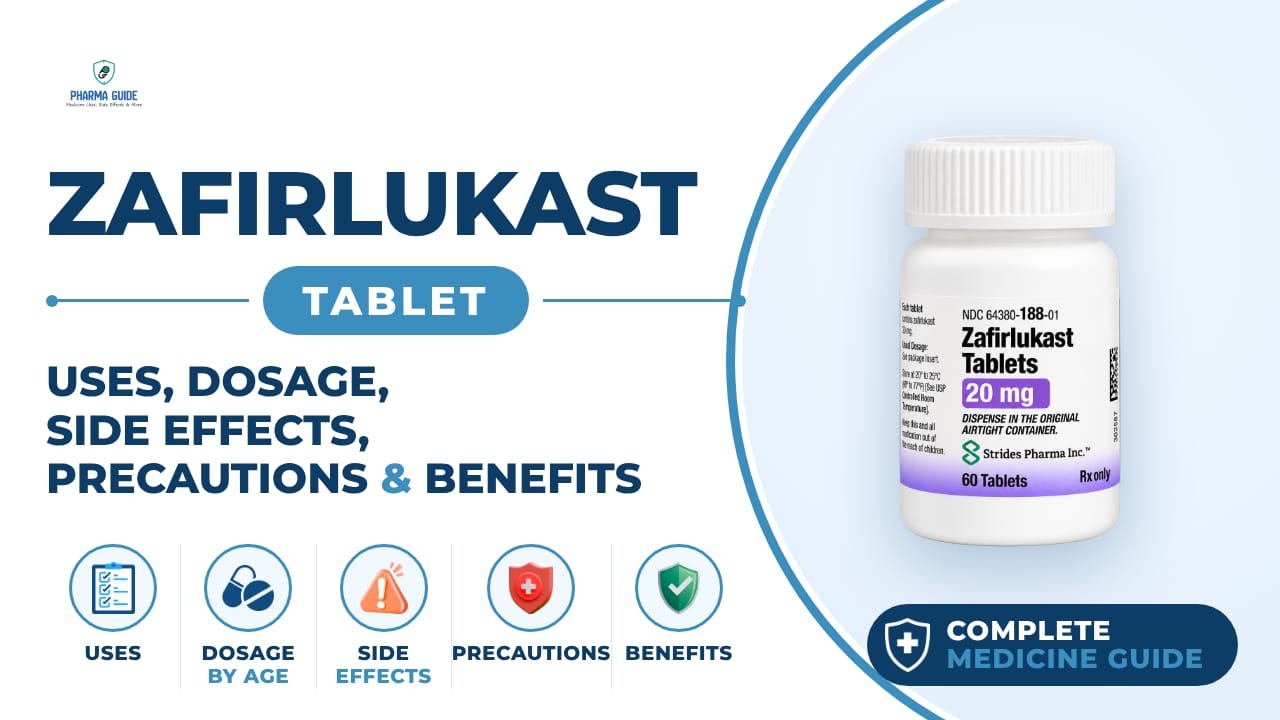
| Generic name | zafirlukast |
|---|---|
| Drug class | Leukotriene modifiers (leukotriene receptor antagonist) |
| Forms | Film-coated tablet |
Quick overview
Zafirlukast Tablet (generic name zafirlukast) is a prescription medicine belonging to the leukotriene modifiers (leukotriene receptor antagonist) class. It is used regularly to prevent asthma attacks and provide long-term treatment of asthma symptoms in adults and children 5 years of age and older. It works by blocking leukotrienes, substances that cause airway swelling and tightening, and it is not intended to treat a sudden asthma attack.
What is Zafirlukast Tablet
Zafirlukast is a prescription medicine that blocks substances in the body called leukotrienes, which cause airway swelling and tightening in asthma. It is used regularly to help prevent asthma attacks, not to treat them once they start.
Zafirlukast Tablet uses
- Prevent asthma attacks and provide long-term (chronic) treatment of asthma symptoms in adults and children 5 years of age and older
- Prevents asthma symptoms
- Helps reduce airway inflammation
- Helps prevent wheezing
- Helps reduce shortness of breath
- Supports long-term asthma control
Benefits of Zafirlukast Tablet
- Improves daytime asthma symptoms
- Reduces nighttime awakenings due to asthma
- Reduces mornings with asthma symptoms
- Reduces need for rescue inhaler (beta2-agonist) use
- Improves lung function measurements (FEV1 and peak flow rates)
How Zafirlukast Tablet works
Zafirlukast blocks receptors for leukotrienes, natural substances that cause airway swelling, muscle tightening around the airways, and inflammation that lead to asthma symptoms. By blocking these receptors, it helps prevent these effects.
Zafirlukast Tablet dosage
Take by mouth at least 1 hour before or 2 hours after meals, because food can reduce how well the body absorbs the medicine. Take regularly and continue even during symptom-free periods; do not stop or change the dose without talking to your healthcare provider.
This medicine does not treat sudden asthma attacks; always keep a fast-acting rescue inhaler with you for sudden symptoms. Do not stop or change the dose of your other asthma medicines, including oral steroids, unless your healthcare provider tells you to.
If you miss a dose, take it as soon as you remember, but skip it if it is almost time for your next dose; do not take two doses at once.
| Age group | Dose |
|---|---|
| Under 5 years | Safety and effectiveness are not established; no standard dose |
| 5–11 years | 10 mg twice daily |
| 12–74 years | 20 mg twice daily |
Available forms and strengths
- Film-coated tablet
Side effects of Zafirlukast Tablet
Common
- Headache
- Infection (often respiratory)
- Nausea
- Diarrhea
- Generalized pain
- Stomach pain (in children)
- Cold-like symptoms such as stuffy nose, sneezing, sore throat
Serious
- Severe liver problems, which can lead to liver failure, need for a liver transplant, or death
- Inflammation of blood vessels (Churg-Strauss-like syndrome)
- Changes in behavior or mood, including depression, agitation, anxiety, confusion, sleep problems, hallucinations, or suicidal thoughts or actions
- Hypersensitivity (allergic) reactions including hives, severe itching, breathing problems, skin rash, blisters, or swelling
- Increased theophylline levels with signs of toxicity if taken together with theophylline
- Increased bleeding risk if taken with warfarin due to effect on blood clotting time
Warnings and precautions
- This medicine can rarely cause serious, even life-threatening liver problems. Watch for pain in the upper right stomach area, nausea, tiredness, itching, yellowing of skin or eyes, flu-like symptoms, or loss of appetite, and call your doctor right away if these occur.
- This medicine is not for treating a sudden asthma attack; it will not work fast enough to stop breathing problems that are getting worse quickly.
- Taking this medicine with warfarin can significantly increase how long it takes blood to clot, raising bleeding risk; blood clotting time should be monitored closely.
- In rare cases, people with asthma taking this medicine have developed a serious condition involving inflamed blood vessels, sometimes linked to lowering or stopping oral steroid medicines.
- Some people have experienced new or worsening mental health changes, including depression and insomnia, while taking this medicine.
- It is not known if this medicine will harm an unborn baby. Tell your doctor if you are pregnant or plan to become pregnant, since the medicine should only be used during pregnancy if clearly needed.
- This medicine passes into breast milk, and women who are breastfeeding should not take it.
- No dose change is needed for people with kidney problems.
- This medicine should not be used by people with liver problems, including cirrhosis, because it can build up in the body and increase the risk of serious liver injury.
- People with alcohol-related liver cirrhosis clear this medicine more slowly, leading to higher levels in the body.
Storage
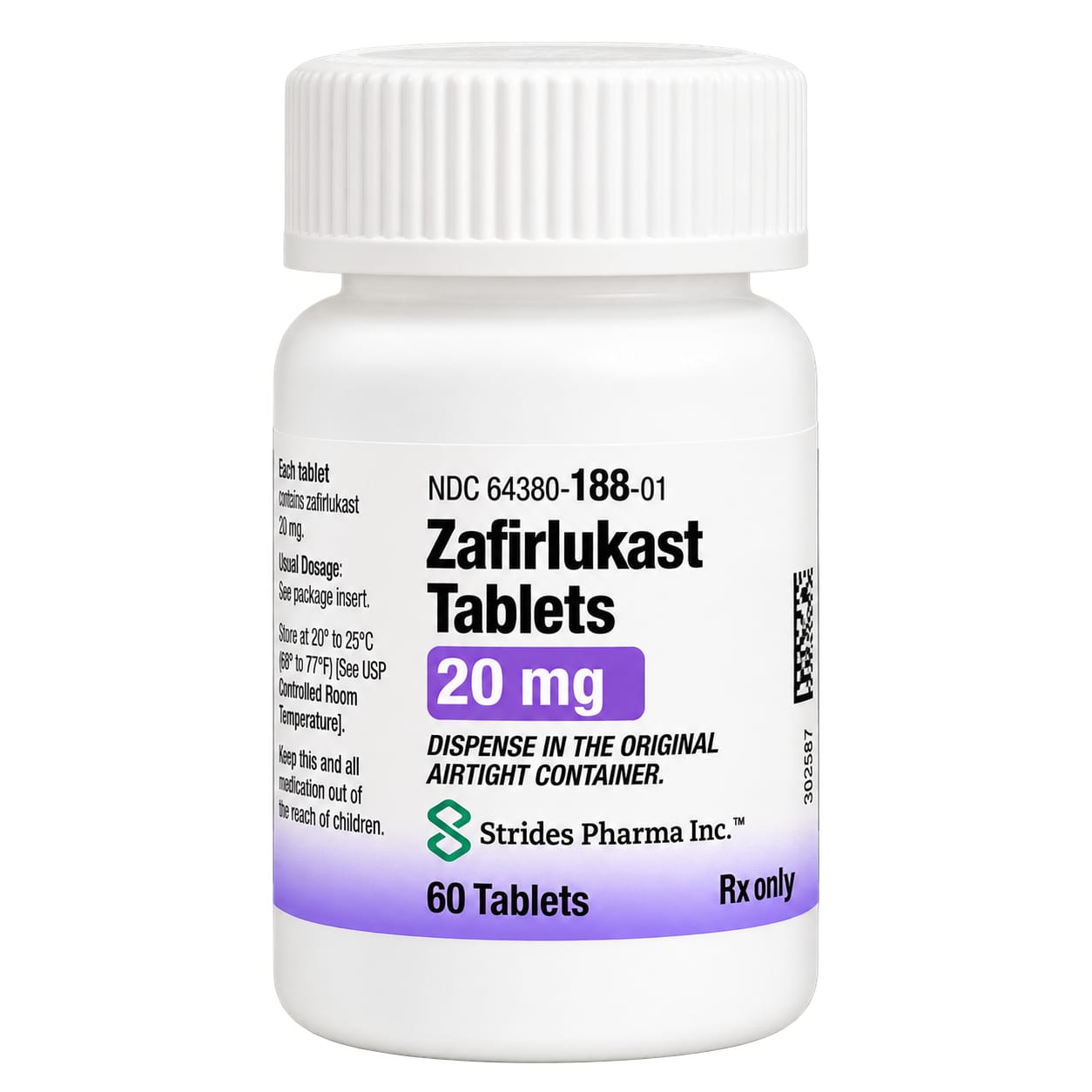
- Store zafirlukast tablets at 68°F to 77°F (20°C to 25°C)
- Keep zafirlukast tablets dry
- Keep zafirlukast tablets in a tight closed container and keep zafirlukast tablets out of the light
- Keep zafirlukast tablets and all medicines out of the reach of children
- Protect from light and moisture. Dispense in the original air-tight container
When to see a doctor
- Get emergency help right away if you have signs of an allergic reaction, such as hives, blisters, severe itching, trouble breathing, or swelling of the face, lips, tongue, or throat.
- Call your doctor right away if you notice signs of blood vessel inflammation, such as flu-like symptoms, severe sinus pain, a skin rash, or numbness/pins-and-needles feeling in your arms or legs.
- Stop the medicine and call your doctor immediately if you have unusual changes in mood or behavior, including agitation, depression, confusion, sleep problems, compulsive behaviors, hallucinations, or thoughts of suicide.
- Call your doctor right away if you notice signs of liver problems, such as nausea, loss of appetite, stomach pain, tiredness, itching, dark urine, or yellowing of the skin or eyes.
- If you think you have taken too much of this medicine, seek emergency medical attention or contact your local poison control center right away.
Alternatives
- Montelukast
- Zileuton
- Budesonide inhaler
Watch the video
FAQs
What is Zafirlukast Tablet used for?
It is used to prevent asthma attacks and provide long-term treatment of asthma symptoms in adults and children 5 years of age and older. It is not used to treat a sudden asthma attack.
How does Zafirlukast Tablet work?
It blocks receptors for leukotrienes, substances that cause airway swelling, muscle tightening, and inflammation that lead to asthma symptoms.
How should Zafirlukast Tablet be taken?
It should be taken by mouth at least 1 hour before or 2 hours after meals, since food can reduce absorption. It should be taken regularly, even during symptom-free periods, without stopping or changing the dose without medical advice.
What are the serious side effects of Zafirlukast Tablet?
Serious side effects include severe liver problems, blood vessel inflammation, mood or behavior changes such as depression or suicidal thoughts, allergic reactions, increased theophylline levels, and increased bleeding risk with warfarin.
Can Zafirlukast Tablet be used during pregnancy or breastfeeding?
It is not known if it will harm an unborn baby, so it should only be used in pregnancy if clearly needed. It passes into breast milk, so breastfeeding women should not take it.
General information, not medical advice
Your prescriber and the leaflet in your pack know your situation. This page does not.
- Follow your prescriber and the leaflet
- Don't start, stop, or change a dose on your own
- Doses and warnings differ by country and product
Sources
Video
Related medicines
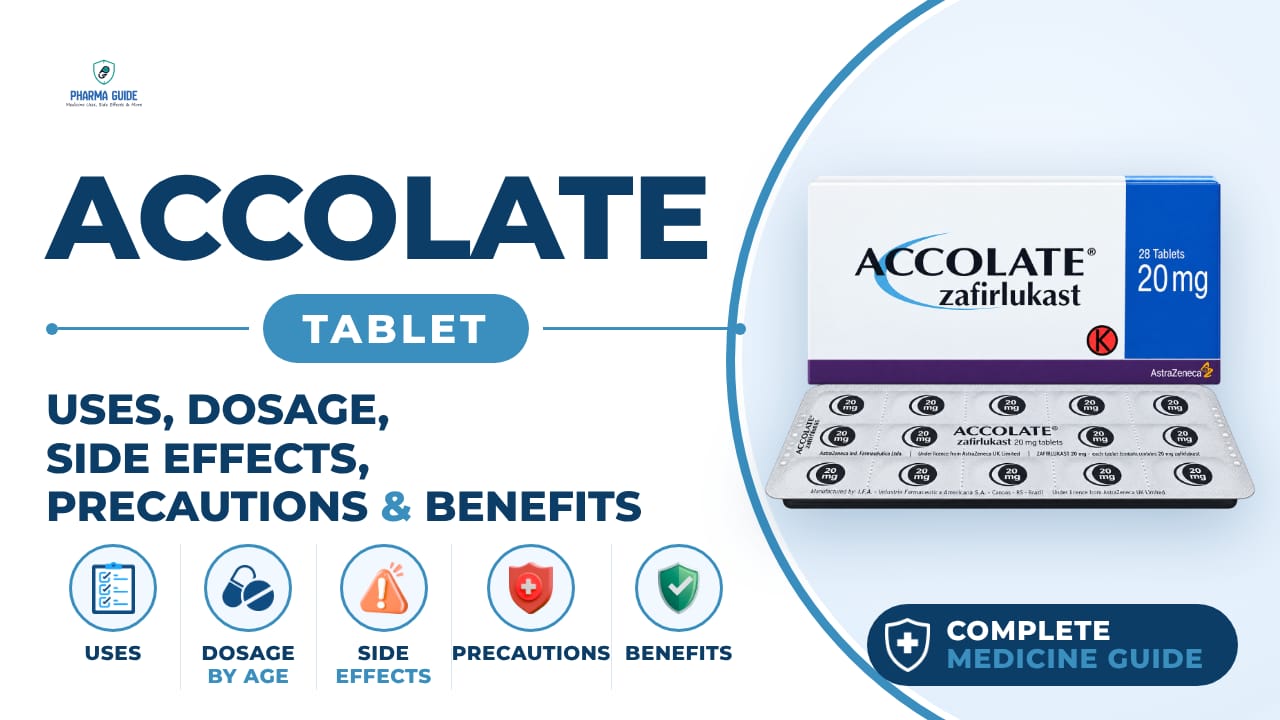
Accolate Tablet: Uses, Dosage, Side Effects, Precautions and Alternates
Leukotriene modifiers (leukotriene receptor antagonist)
Accolate Tablet (zafirlukast) is used for long-term asthma prevention in adults and children 5+. Learn dosage, benefits, side effects, and precautions.

Injectafer Injection: Uses, Dosage, Side Effects, Precautions and Alternates
Iron products
Injectafer (ferric carboxymaltose) treats iron deficiency anemia and heart failure-related iron deficiency via IV. Learn uses, dosage, side effects, and