
Safety
General information, not medical advice
Your prescriber and the leaflet in your pack know your situation. This page does not.
- Follow your prescriber and the leaflet
- Don't start, stop, or change a dose on your own
- Doses and warnings differ by country and product
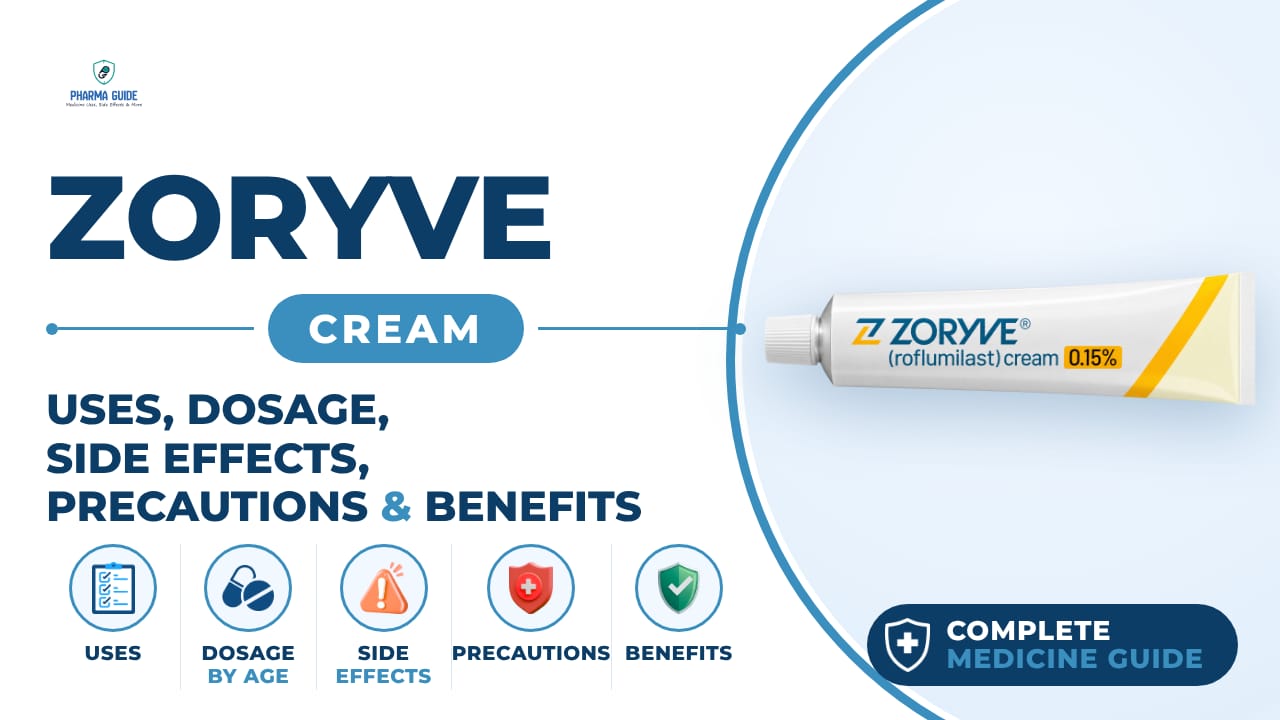
Zoryve Cream: Uses, Dosage, Side Effects, Precautions and Alternates
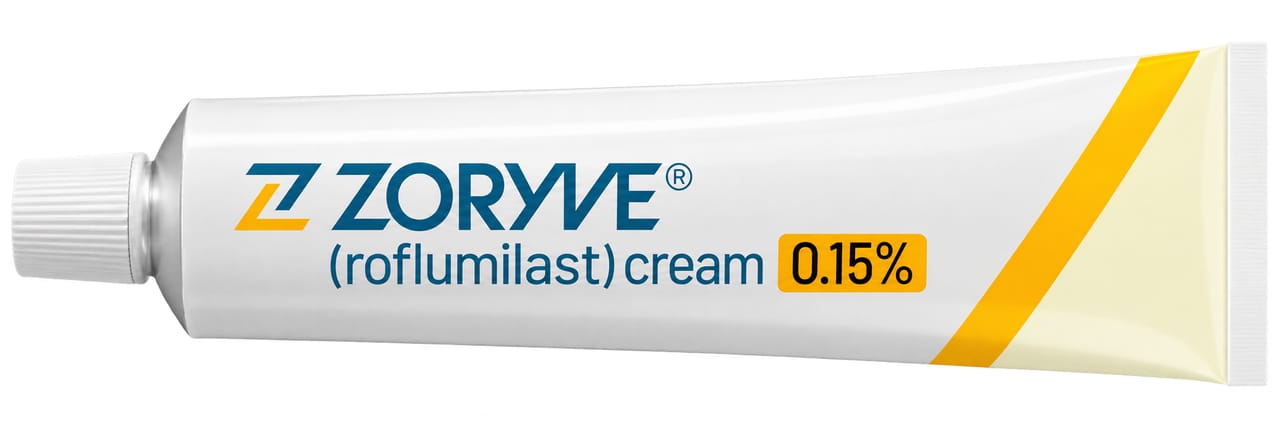
| Generic name | roflumilast topical |
|---|---|
| Drug class | Topical antipsoriatics (phosphodiesterase-4 (PDE4) inhibitor) |
| Forms | Cream (0.05%, 0.15%, 0.3%), Foam (0.3%) |
Quick overview
Zoryve Cream (roflumilast topical) is a once-daily, steroid-free prescription topical medicine used to treat plaque psoriasis and atopic dermatitis. It belongs to the topical antipsoriatics class and works as a PDE4 inhibitor. It can be used long-term on sensitive areas such as the face and skin folds.
What is Zoryve Cream
Zoryve cream is a once-daily, steroid-free prescription topical medicine used to treat chronic inflammatory skin conditions like plaque psoriasis and atopic dermatitis. It can be used long-term on sensitive areas such as the face and skin folds.
Zoryve Cream uses
- Plaque psoriasis in adults and children (cream 0.3%)
- Atopic dermatitis (eczema), mild to moderate, in people 6 years and older (cream 0.15%)
- Atopic dermatitis in children ages 2 to 5 years (cream 0.05%)
Benefits of Zoryve Cream
- Steroid-free, so it avoids the skin-thinning risks linked to topical corticosteroids
- Can be used long-term on sensitive areas like the face, eyelids, and skin folds
- Itch relief can start as early as 24 hours after applying
- The cream base absorbs quickly and does not contain common irritants like fragrances, propylene glycol, or isopropyl alcohol
How Zoryve Cream works
Zoryve works by blocking an enzyme called PDE4, which plays a role in the body's inflammation response. By blocking PDE4, the medicine helps reduce inflammation and ease symptoms of skin conditions like psoriasis and dermatitis.
Zoryve Cream dosage
Apply a thin layer to the affected areas once a day. Rub the cream in completely until it disappears. Wash your hands after applying, unless you are treating your hands. Do not apply to the eyes, mouth, or vagina. Try to apply it at the same time each day to keep a steady level of medicine in your body. If you miss a dose, apply it as soon as you remember, but skip it if it's almost time for your next dose — do not apply twice in one day. This medicine is meant to be used long-term if it is working well for you.
| Age group | Dose |
|---|---|
| Under 2 years | Safety and effectiveness not established; no approved dosage |
| 6–12 years | Plaque psoriasis: 0.3% once daily; atopic dermatitis: 0.15% once daily |
| 13–74 years | Plaque psoriasis: 0.3% once daily; atopic dermatitis: 0.15% once daily |
| 75 years and older | Plaque psoriasis: 0.3% once daily; atopic dermatitis: 0.15% once daily, with careful monitoring |
Available forms and strengths
- Cream (0.05%, 0.15%, 0.3%)
- Foam (0.3%)
Side effects of Zoryve Cream
Common
- Diarrhea
- Headache
- Nausea
- Insomnia (trouble sleeping)
- Application site pain or mild burning
- Upper respiratory or urinary tract infections
- Vomiting (reported with the 0.15% cream)
Serious
- Mild or severe allergic reaction, including rash, itchiness, flushing, swelling of the eyelids, lips, hands, or feet, or swelling of the tongue, mouth, or throat with trouble breathing
Warnings and precautions
- Do not use Zoryve if you have moderate to severe liver problems.
- The foam form of this medicine is flammable. Keep it away from fire, open flames, and smoking during and right after you apply it.
- This medicine is for use on the skin only. Do not apply it to the eyes, mouth, or vagina.
- Tell your doctor if you are pregnant or planning to become pregnant.
- It is not known if roflumilast will harm an unborn baby, and it should not be used during labor and delivery.
- Tell your doctor if you are breastfeeding or planning to breastfeed.
- If you use the cream while breastfeeding, use it on the smallest area of skin for the shortest time needed, and do not apply it directly to the nipple or areola or let your baby's skin touch treated areas.
- Kidney: No established renal-specific dose adjustment is available.
- Patients with significant kidney disease should receive individualized medical assessment.
- Liver: Do not use Zoryve if you have moderate to severe liver problems. Tell your doctor about any liver problems before starting treatment.
- Alcohol is not known to interact with Zoryve.
- Driving: Zoryve Cream is not generally associated with significant sedation. Avoid driving or operating machinery if dizziness or another impairing effect occurs.
Storage
Store at room temperature from 68°F to 77°F (20°C to 25°C).
When to see a doctor
- Call your doctor right away if you have signs of an allergic reaction, such as a rash, itching, or flushing.
- Get emergency help right away if you have signs of a severe allergic reaction, such as swelling of your eyelids, lips, hands, feet, tongue, mouth, or throat, or trouble breathing.
- If you think you've applied too much of this medicine, contact your doctor or a poison control center, or seek emergency care if symptoms are severe.
Alternatives
- Wynzora
- Vectical
- Dovonex
- Calcipotriene
Watch the video
FAQs
What is Zoryve Cream used for?
Zoryve Cream is used to treat plaque psoriasis in adults and children and mild to moderate atopic dermatitis in people 2 years and older, depending on the strength used.
How often do you apply Zoryve Cream?
Apply a thin layer to the affected areas once a day, rubbing it in completely until it disappears, ideally at the same time each day.
Is Zoryve Cream a steroid?
No, Zoryve Cream is steroid-free. It works as a PDE4 inhibitor to reduce inflammation and can be used long-term on sensitive areas like the face and skin folds.
What are the common side effects of Zoryve Cream?
Common side effects include diarrhea, headache, nausea, insomnia, application site pain or mild burning, upper respiratory or urinary tract infections, and vomiting (reported with the 0.15% cream).
Who should not use Zoryve Cream?
Zoryve Cream should not be used by people with moderate to severe liver problems, and it should not be applied to the eyes, mouth, or vagina.
General information, not medical advice
Your prescriber and the leaflet in your pack know your situation. This page does not.
- Follow your prescriber and the leaflet
- Don't start, stop, or change a dose on your own
- Doses and warnings differ by country and product
Sources
Video
Related medicines

Roflumilast Cream: Uses, Dosage, Side Effects, Precautions and Alternates
Topical antipsoriatics (phosphodiesterase 4 (PDE4) inhibitor)
Roflumilast Cream (Zoryve) is a once-daily, steroid-free PDE4 inhibitor for plaque psoriasis, atopic dermatitis, and seborrheic dermatitis. Learn uses, dosage,

Injectafer Injection: Uses, Dosage, Side Effects, Precautions and Alternates
Iron products
Injectafer (ferric carboxymaltose) treats iron deficiency anemia and heart failure-related iron deficiency via IV. Learn uses, dosage, side effects, and