
Safety
General information, not medical advice
Your prescriber and the leaflet in your pack know your situation. This page does not.
- Follow your prescriber and the leaflet
- Don't start, stop, or change a dose on your own
- Doses and warnings differ by country and product
Abecma Injection: Uses, Dosage, Side Effects, Precautions and Alternates
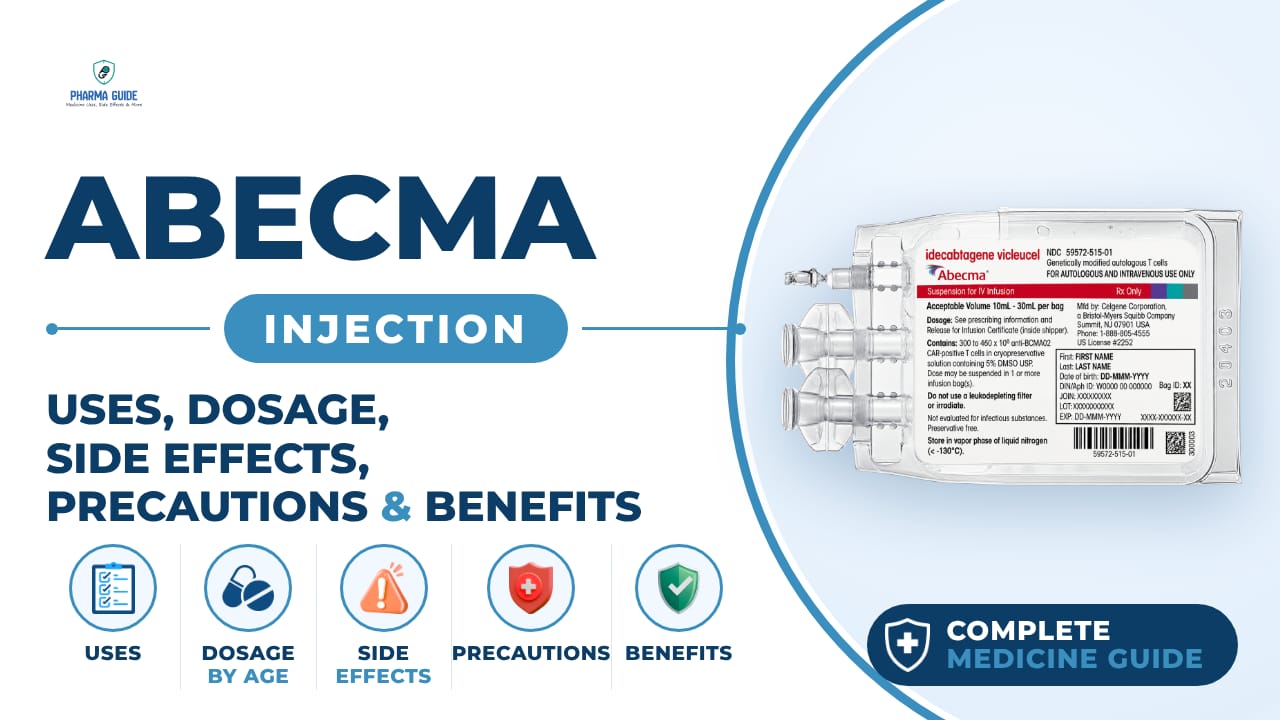
| Generic name | idecabtagene vicleucel |
|---|---|
| Drug class | Chimeric antigen receptor (CAR)-positive T cell immunotherapy (gene therapy / cell-based advanced therapy medicinal product, anti-BCMA CAR T-cell therapy) |
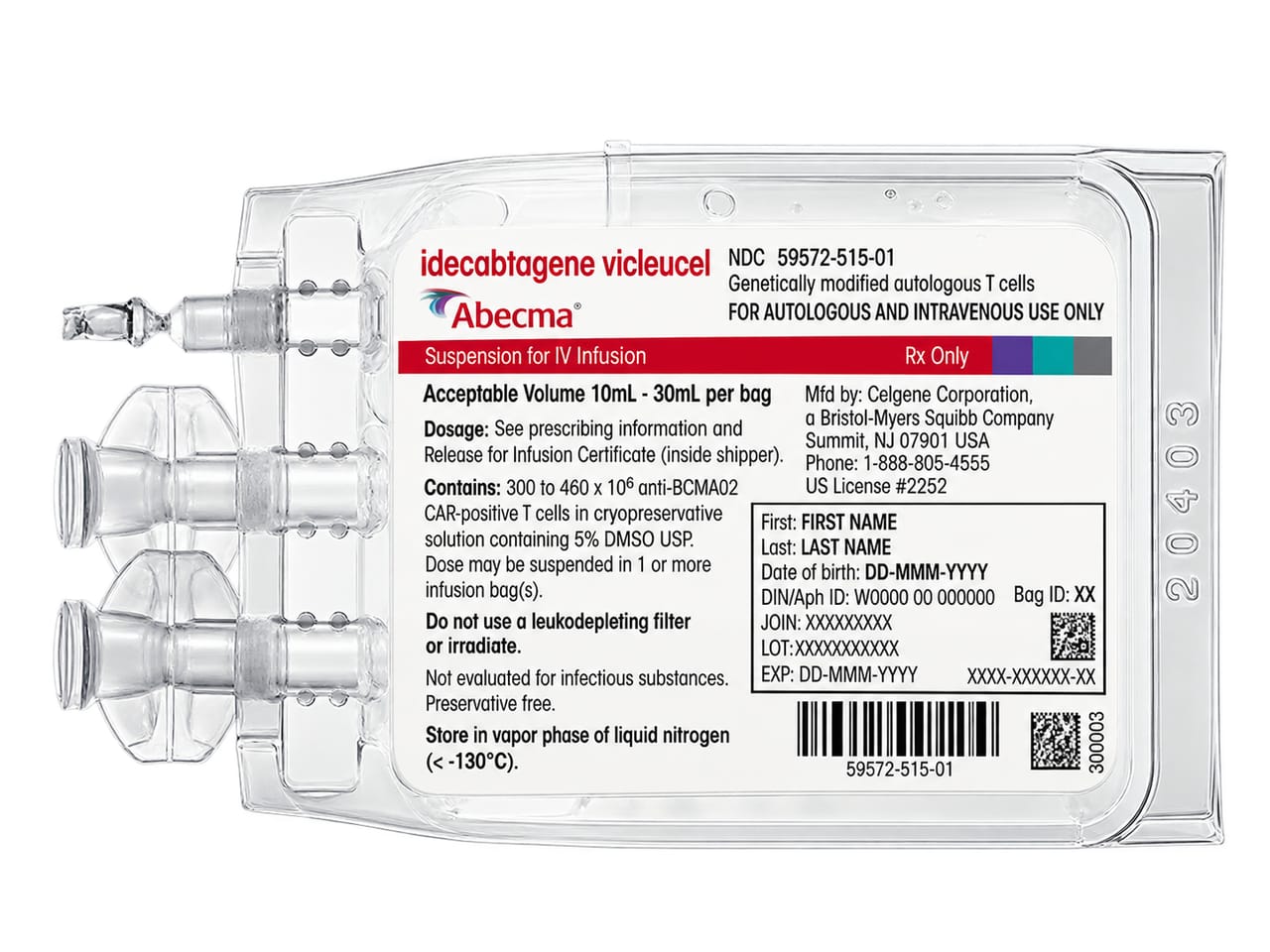
| Forms | Cell dispersion (suspension) for intravenous infusion, supplied frozen in one or more patient-specific infusion bags |
Quick overview
Abecma Injection (idecabtagene vicleucel) is a CAR T-cell immunotherapy made from a patient's own white blood cells, used to treat adults with multiple myeloma who have already received at least three other treatments. It is given as a single one-time infusion into a vein at a qualified treatment centre. It carries serious risks, including cytokine release syndrome and neurologic toxicity, and requires close monitoring after infusion.
What is Abecma Injection
Abecma is a genetically modified autologous (made from your own) cell therapy. Your white blood cells (T cells) are collected from your blood and modified in a lab so they can recognize and attack myeloma cells. It is given back to you as a one-time infusion into a vein.
Abecma Injection uses
- Treatment of adult patients with multiple myeloma (a cancer of the bone marrow) who have already received at least three other treatments, including an immunomodulatory agent, a proteasome inhibitor, and an anti-CD38 antibody, and whose cancer has progressed on the last treatment
Benefits of Abecma Injection
- In a clinical study, about two-thirds of patients (67.1%) had their cancer shrink or disappear after treatment (overall response rate)
- About 30% of patients achieved a complete response (no detectable signs of myeloma)
- Responses lasted for a median of about 10.6 months, and many patients had ongoing responses at last follow-up
- May provide a treatment option with a different mechanism of action for patients who have run out of other treatment options
How Abecma Injection works
Your T cells are genetically modified to carry a special receptor (CAR) that recognizes a protein called BCMA found on myeloma cells. Once infused back into your body, these modified T cells attach to BCMA on the myeloma cells, become activated, multiply, release signaling chemicals, and kill the myeloma cells.
Abecma Injection dosage
Abecma is given as a single one-time infusion into a vein at a qualified treatment centre by trained healthcare professionals. Before infusion, you will receive a short course of chemotherapy (lymphodepleting chemotherapy) for three days to prepare your body. Shortly before the infusion, you will be given paracetamol/acetaminophen and an antihistamine medicine to reduce the risk of infusion reactions and fever. Avoid routine use of corticosteroids before infusion unless specifically needed, as they may interfere with how well the treatment works.
You will be monitored closely at the treatment centre, generally daily for about the first 7 to 10 days after infusion, for signs of serious reactions. You should stay within about 2 hours' travel of the treatment centre for at least 4 weeks after infusion in case you need urgent care. Do not drive or operate machinery for at least 8 weeks after infusion, or until your doctor says it is safe, because of the risk of confusion, sleepiness, or seizures. Do not donate blood, organs, tissues, or cells after receiving this treatment.
Women should have a pregnancy test before treatment, and effective contraception is recommended after treatment; discuss pregnancy plans with your doctor. This treatment is intended only for the patient whose own cells were used to make it; your identity will be checked against the product labels before infusion. No specific dose adjustment is needed for elderly patients; this treatment is not approved for children or adolescents.
| Age group | Dose |
|---|---|
| Under 18 years | Safety and effectiveness have not been established |
| 18–64 years | Not dosed in mg; target dose is 300–510 × 10⁶ CAR-positive viable T cells as a single IV infusion |
Available forms and strengths
- Cell dispersion (suspension) for intravenous infusion, supplied frozen in one or more patient-specific infusion bags
Side effects of Abecma Injection
Common
- Neutropenia (low white blood cell count)
- Cytokine release syndrome (CRS)
- Anaemia (low red blood cell count)
- Thrombocytopenia (low platelet count)
- Infections
- Leucopenia (low white blood cell count)
- Fatigue
- Diarrhoea
- Hypokalaemia (low potassium)
- Hypophosphataemia (low phosphate)
- Nausea
- Lymphopenia (low lymphocyte count)
- Pyrexia (fever)
- Cough
- Hypocalcaemia (low calcium)
- Headache
- Hypomagnesaemia (low magnesium)
- Upper respiratory tract infection
- Joint pain (arthralgia)
- Swelling (oedema) of face, arms, legs or ankles
- Decreased appetite
- Low antibody levels (hypogammaglobulinaemia)
- Febrile neutropenia (fever with low white blood cell count)
- Constipation
- Vomiting
- Difficulty sleeping (insomnia)
- Muscle pain
Serious
- Cytokine release syndrome (CRS), which can be severe or life-threatening, with symptoms such as fever, chills, difficulty breathing, dizziness, nausea, headache, fast heartbeat, low blood pressure or fatigue
- Neurologic toxicity, including confusion, memory problems, difficulty speaking or understanding speech, loss of balance, disorientation, decreased consciousness or excessive sleepiness, loss of consciousness, delirium, seizures, or weakness/paralysis on one side of the body
- Haemophagocytic lymphohistiocytosis/macrophage activation syndrome (HLH/MAS), a rare but potentially life-threatening condition with fever, organ damage, and abnormal blood counts
- Serious infections, including bacterial, viral, and fungal infections, which can be fatal
- Prolonged low blood counts (cytopenias) including persistent neutropenia and thrombocytopenia lasting weeks after treatment
- Hypogammaglobulinaemia (low antibody levels) increasing infection risk
- Secondary malignancies (new cancers) have been reported after treatment
- Severe allergic/hypersensitivity reactions, including anaphylaxis, possibly related to a component (DMSO) in the product
- Viral reactivation, including cytomegalovirus (CMV) infection and hepatitis B virus reactivation
- Tumour lysis syndrome (rare)
- Aggravation of graft versus host disease in patients with prior stem cell transplant
Warnings and precautions
- Cytokine release syndrome (CRS), including fatal or life-threatening reactions, can occur after treatment. Treatment should be delayed if a patient has an uncontrolled infection, active inflammatory disorder, or unresolved serious side effects from previous therapies. Patients must be closely monitored and treated with supportive care, tocilizumab, and/or corticosteroids as needed.
- Serious neurologic (nervous system) side effects can occur, which may be severe or life-threatening, and may happen together with CRS, after CRS has resolved, or without CRS at all. Patients must be monitored and treated promptly.
- A rare but potentially fatal condition called haemophagocytic lymphohistiocytosis/macrophage activation syndrome (HLH/MAS) has occurred in association with CRS and/or neurologic toxicity.
- This treatment must only be given at a qualified treatment centre with experienced healthcare professionals, due to the risks involved.
- Patients may develop new (secondary) cancers after treatment and should be monitored life-long for this risk.
- Serious infections, including fatal infections, have occurred. Patients with active infections should not receive this treatment, and should be monitored closely afterward.
- Patients should not receive live vaccines for at least 6 weeks before the preparatory chemotherapy, during treatment, or until the immune system has recovered after treatment.
- There is limited experience giving a second dose (retreatment) of this therapy; responses were less frequent and less durable, and some patients died after retreatment.
- Because the treatment involves a virus-based (lentiviral) manufacturing process, some commercial HIV tests may give a false-positive result in patients who have received this treatment.
- There is no information on using this treatment during pregnancy. Because of how the treatment works, it may potentially affect the unborn baby, so it is not recommended during pregnancy. A pregnancy test will be done before treatment, and pregnancy after treatment should be discussed with your doctor.
- It is not known whether this treatment passes into breast milk or could affect a breastfeeding baby. Discuss the potential risks with your doctor before breastfeeding.
- Studies in patients with kidney problems were not specifically conducted. Caution is needed because this product contains potassium, which may need to be considered in people with reduced kidney function. Dose adjustments for the lymphodepleting chemotherapy given before this treatment may be needed based on kidney function.
- Specific studies in patients with liver problems were not conducted.
- Because this treatment can cause confusion, sleepiness, seizures, or loss of coordination, you should not drive, operate machinery, or do other potentially dangerous activities for at least 8 weeks after treatment, or until your doctor confirms it is safe.
Storage
- Abecma must be stored and transported frozen in the vapour phase of liquid nitrogen (≤ -130°C) at the treatment centre
- Do not thaw the product until it is ready to be used
- Do not refreeze the product once thawed
- Each infusion bag must be used within 1 hour from the start of thawing
- After thawing, the product intended for infusion should be kept at room temperature (20°C–25°C)
- This medicine contains genetically modified human blood cells; unused medicine or waste material must be disposed of according to local guidelines for handling of waste of human-derived material
When to see a doctor
- Seek medical help immediately if you develop fever, chills, difficulty breathing, dizziness or light-headedness, nausea, headache, fast heartbeat, low blood pressure, or fatigue, as these may be signs of a serious reaction called cytokine release syndrome.
- Seek medical help immediately if you experience confusion, memory problems, difficulty speaking or understanding speech, loss of balance or coordination, disorientation, decreased alertness or excessive sleepiness, loss of consciousness, seizures, or weakness on one side of the body.
- Seek medical help immediately if you have any signs of infection, such as fever, chills, cough, shortness of breath, rapid breathing, or rapid pulse.
- Tell your doctor immediately if you feel very tired, weak, or short of breath, which may indicate low red blood cell counts (anaemia).
- Tell your doctor immediately if you notice unusual bleeding or bruising, including nosebleeds or bleeding from the mouth or bowels, which may indicate low platelet counts.
Alternatives
- Carvykti
- Tecvayli
- Elrexfio
Watch the video
FAQs
What is Abecma Injection used for?
Abecma is used to treat adult patients with multiple myeloma who have already received at least three other treatments, including an immunomodulatory agent, a proteasome inhibitor, and an anti-CD38 antibody, and whose cancer has progressed on the last treatment.
How is Abecma Injection given?
Abecma is given as a single one-time infusion into a vein at a qualified treatment centre by trained healthcare professionals, after a short course of lymphodepleting chemotherapy to prepare the body.
What are the serious side effects of Abecma Injection?
Serious side effects include cytokine release syndrome, neurologic toxicity, haemophagocytic lymphohistiocytosis/macrophage activation syndrome, serious infections, prolonged low blood counts, secondary malignancies, severe allergic reactions, and viral reactivation.
How long do I need to stay near the treatment centre after Abecma infusion?
You should stay within about 2 hours' travel of the treatment centre for at least 4 weeks after infusion in case you need urgent care.
Can I drive after receiving Abecma Injection?
You should not drive or operate machinery for at least 8 weeks after infusion, or until your doctor says it is safe, due to the risk of confusion, sleepiness, or seizures.
General information, not medical advice
Your prescriber and the leaflet in your pack know your situation. This page does not.
- Follow your prescriber and the leaflet
- Don't start, stop, or change a dose on your own
- Doses and warnings differ by country and product
Sources
Video
Related medicines

Injectafer Injection: Uses, Dosage, Side Effects, Precautions and Alternates
Iron products
Injectafer (ferric carboxymaltose) treats iron deficiency anemia and heart failure-related iron deficiency via IV. Learn uses, dosage, side effects, and

Gliclazide Tablet: Uses, Dosage, Side Effects, Precautions and Alternates
Sulfonylurea (hypoglycemic/antidiabetic agent)
Gliclazide Tablet is a sulfonylurea for type 2 diabetes that boosts insulin release. Learn about dosage, side effects, warnings, and precautions.