
Safety
General information, not medical advice
Your prescriber and the leaflet in your pack know your situation. This page does not.
- Follow your prescriber and the leaflet
- Don't start, stop, or change a dose on your own
- Doses and warnings differ by country and product
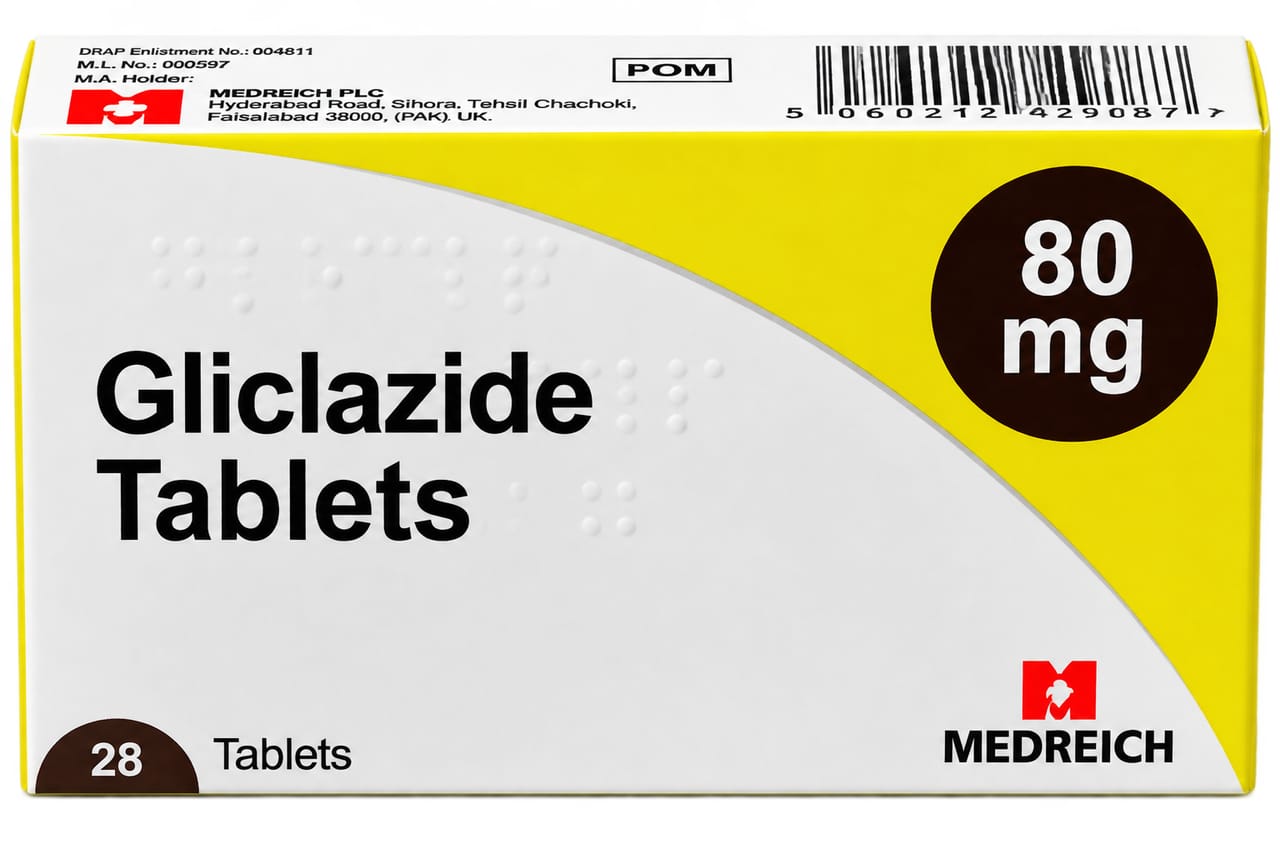
Gliclazide Tablet: Uses, Dosage, Side Effects, Precautions and Alternates

| Generic name | Gliclazide |
|---|---|
| Drug class | Sulfonylurea (hypoglycemic/antidiabetic agent) |
| Forms | Tablet, Sustained-release (SR) tablet |
Quick overview
Gliclazide Tablet is a prescription-only medicine containing gliclazide, a sulfonylurea used to lower high blood sugar in people with type 2 diabetes. It works by helping the pancreas release more insulin and by helping the body use insulin more effectively. It is taken with food, usually once or twice daily, and dosing is individualized based on age and blood sugar response.
What is Gliclazide Tablet
Gliclazide is a prescription-only medicine used to lower high blood sugar in people with type 2 diabetes. It belongs to a group of medicines called sulfonylureas.
Gliclazide Tablet uses
- Control of high blood sugar (hyperglycemia) in type 2 diabetes that cannot be controlled by diet and exercise alone
- Helps control blood sugar in stable, non-ketosis-prone, adult-onset diabetes when insulin therapy is not suitable
Benefits of Gliclazide Tablet
- Helps lower high blood sugar levels in people with type 2 diabetes.
- Helps improve fasting and after-meal blood glucose levels.
- Helps lower HbA1c, supporting better long-term diabetes control.
- May be used alone or with other diabetes medicines when additional glucose control is needed.
- Helps reduce the risk of complications related to poorly controlled diabetes when blood sugar is effectively managed.
How Gliclazide Tablet works
Gliclazide works by helping the pancreas release more insulin, which lowers blood sugar levels. It also helps the body use insulin more effectively in muscle and liver tissue.
Gliclazide Tablet dosage
Try to take it at the same time each day. Swallow tablets whole with a glass of water. Take your tablets after a meal to help avoid stomach problems. Take with meals, as regular food intake including breakfast is important to reduce the risk of low blood sugar. Do not chew or crush the tablets. If you take it twice a day, this could be once in the morning and once in the evening.
If you miss a dose, take it as soon as you remember, but if it's almost time for your next dose, skip the missed dose and take your next dose as usual — do not take two doses together. Do not stop taking this medicine long term unless your doctor tells you to.
| Age group | Dose |
|---|---|
| Under 18 years | Not recommended; safety and effectiveness are not established |
| 18–64 years – Immediate-release | Usually start 40–80 mg once daily; titrate according to glucose response |
| 18–64 years – Modified-release (MR) | Start 30 mg once daily with breakfast |
| 65+ years | Usually start at the lower end of the adult range with careful glucose monitoring |
Available forms and strengths
- Tablet
- Sustained-release (SR) tablet
Side effects of Gliclazide Tablet
Common
- Stomach pain
- Diarrhoea
- Indigestion and upset stomach
- Dizziness
- Nausea or vomiting
- Headache
- Weight gain
- Low blood sugar (hypoglycemia) causing dizziness, nausea, vomiting, hunger, or tiredness
Serious
- Allergic reaction (anaphylaxis) - swollen throat or tongue, itchy rash, difficulty breathing
- Blood cell problems - bruising easily, sore throat, high temperature
- Liver problems - nausea, vomiting, yellowing of skin or eyes
- Serious skin reactions (Stevens-Johnson syndrome, toxic epidermal necrolysis, bullous pemphigoid, DRESS) - red itchy rash with blisters and peeling skin, often with fever, chills, headache, cough, body aches or joint pain
- Blood disorders - sore throat, fever, mouth sores, unusual bleeding or bruising, anemia
- Low sodium levels - tiredness, weakness, confusion
- Angioedema - rapid swelling of eyelids, face, lips, mouth, tongue, or throat that may cause breathing difficulty
- Allergic inflammation of blood vessels (vasculitis)
Warnings and precautions
- Gliclazide can cause low blood sugar (hypoglycemia), which can sometimes be severe and require hospitalization, especially in elderly, malnourished, or people with liver or kidney problems.
- Serious skin reactions can occur, including blistering and peeling skin conditions. Stop the medicine and get medical help if these occur.
- Do not use if you have type 1 diabetes, diabetic ketoacidosis, or are in a diabetic coma or pre-coma.
- Gliclazide should not be used with miconazole (an antifungal medicine) because it can dangerously increase the risk of low blood sugar.
- People with a blood condition called G6PD deficiency may develop a type of anemia from this medicine.
- This medicine may cause acute porphyria attacks in people with porphyria, a condition affecting the nervous system.
- Do not take this medicine during serious infection, injury, or surgery, as your blood sugar control needs may change.
- Gliclazide is not recommended during pregnancy because it may harm the baby. Insulin is usually used instead, and blood sugar should be well controlled before and during pregnancy.
- Gliclazide is not recommended while breastfeeding because it could cause low blood sugar in the nursing infant.
- People with severe kidney problems should not take gliclazide because the body may not clear it properly, increasing the risk of prolonged low blood sugar.
- People with severe liver problems should not take gliclazide, as it may build up in the body and cause harm.
- It's best to avoid alcohol while taking gliclazide because it can increase the risk of low blood sugar and cause reactions like flushing, dizziness, nausea, and a fast heartbeat.
- Gliclazide can cause low blood sugar, which may affect alertness and reaction time. Be careful driving or operating machinery, especially when starting treatment.
Storage
- Store below 30°C (86°F) or according to the product label.
- Keep in a cool, dry place away from excessive heat.
- Protect tablets from moisture and direct sunlight.
- Keep tablets in their original packaging until use.
- Avoid storing in bathrooms or other humid areas.
- Keep out of reach of children and pets.
When to see a doctor
- Call for emergency help if you think you're having an allergic reaction (anaphylaxis) with symptoms like swollen throat or tongue, itchy rash, or difficulty breathing.
- Get medical help right away if you have taken more than your prescribed dose of gliclazide, even without symptoms.
- Stop taking the medicine and get immediate medical help if you develop a skin rash with blisters and peeling, especially with fever, mouth sores, or yellowing of the skin or eyes.
- Seek help if you have symptoms of low blood sugar such as sweating, shaking, confusion, fast heartbeat, or unusual tiredness, and eat or drink something sugary right away.
- Talk to your doctor if you notice unexplained fever, chills, or sore throat, which could be signs of a blood problem.
- Get medical attention if you notice yellowing of your skin or eyes, dark urine, or pale stools, which could be signs of liver problems.
Alternatives
- Glipizide
- Empagliflozin
- Linagliptin
- Pioglitazone
- Glimepiride
Watch the video
FAQs
What is Gliclazide Tablet used for?
It is used to control high blood sugar (hyperglycemia) in people with type 2 diabetes that cannot be managed by diet and exercise alone, including stable, non-ketosis-prone, adult-onset diabetes when insulin therapy is not suitable.
How does Gliclazide Tablet work?
Gliclazide works by helping the pancreas release more insulin, which lowers blood sugar levels, and also helps the body use insulin more effectively in muscle and liver tissue.
How should I take Gliclazide Tablet?
Take it at the same time each day, swallowing tablets whole with water after a meal to help avoid stomach problems. Do not chew or crush the tablets, and regular food intake, including breakfast, is important to reduce the risk of low blood sugar.
What are the common side effects of Gliclazide Tablet?
Common side effects include stomach pain, diarrhoea, indigestion, dizziness, nausea or vomiting, headache, weight gain, and low blood sugar (hypoglycemia) causing dizziness, nausea, vomiting, hunger, or tiredness.
Who should not take Gliclazide Tablet?
It should not be used by people with type 1 diabetes, diabetic ketoacidosis, or diabetic coma, nor by those with severe kidney or liver problems. It is also not recommended during pregnancy or breastfeeding.
General information, not medical advice
Your prescriber and the leaflet in your pack know your situation. This page does not.
- Follow your prescriber and the leaflet
- Don't start, stop, or change a dose on your own
- Doses and warnings differ by country and product
Sources
Video
Related medicines

Injectafer Injection: Uses, Dosage, Side Effects, Precautions and Alternates
Iron products
Injectafer (ferric carboxymaltose) treats iron deficiency anemia and heart failure-related iron deficiency via IV. Learn uses, dosage, side effects, and
Venofer Injection: Uses, Dosage, Side Effects, Precautions and Alternates
Iron replacement product (iron supplement)
Venofer Injection (iron sucrose) treats iron deficiency anemia from kidney disease, chemotherapy, or IBD. Learn uses, dosage, side effects, and precautions.