
Safety
General information, not medical advice
Your prescriber and the leaflet in your pack know your situation. This page does not.
- Follow your prescriber and the leaflet
- Don't start, stop, or change a dose on your own
- Doses and warnings differ by country and product
Venofer Injection: Uses, Dosage, Side Effects, Precautions and Alternates
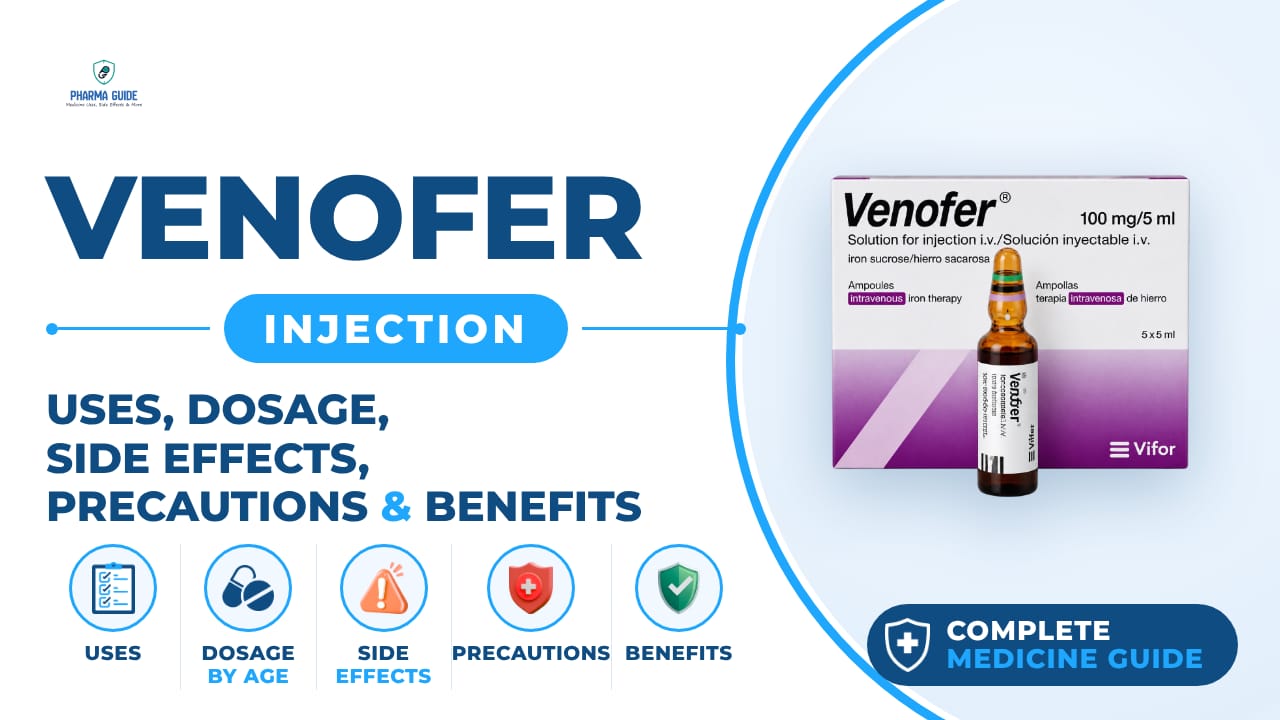
| Generic name | Iron sucrose |
|---|---|
| Drug class | Iron replacement product (iron supplement) |
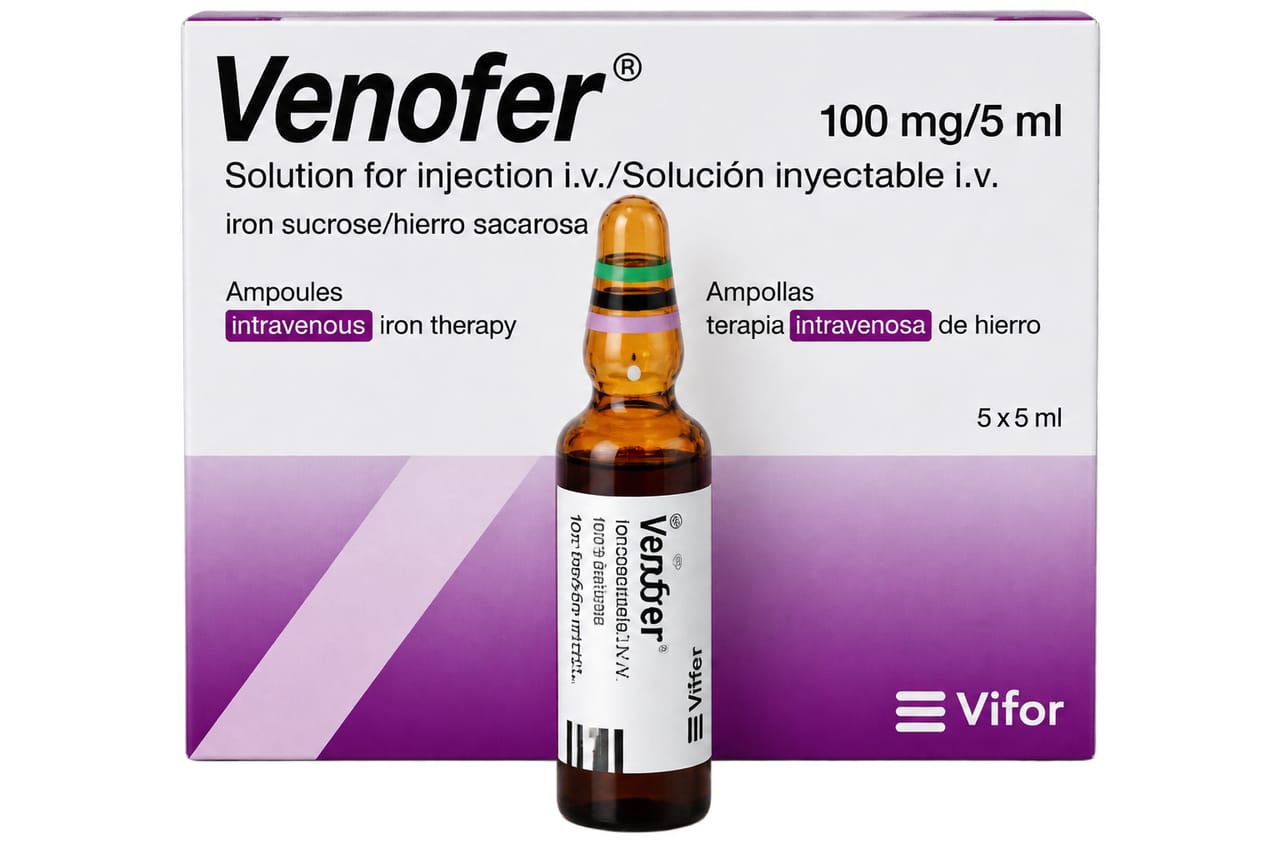
| Forms | Injection/solution for intravenous use (50 mg/2.5 mL, 100 mg/5 mL, or 200 mg/10 mL vials or ampoules) |
Quick overview
Venofer Injection contains iron sucrose, an iron replacement product given into a vein by a healthcare provider. It is used to treat severe iron deficiency anemia from causes such as chemotherapy, advanced kidney disease, and inflammatory bowel disease, as well as iron deficiency anemia in chronic kidney disease. It helps replenish iron stores and supports red blood cell production. Dosing depends on age, body weight, and kidney/dialysis status, and the medicine must be given by trained staff due to the risk of allergic reactions.
What is Venofer Injection
Venofer is an injectable form of iron called iron sucrose. Iron is important for many functions in the body, especially carrying oxygen in the blood. Venofer is given as a shot or infusion into a vein by a healthcare provider.
Venofer Injection uses
- Treatment of severe iron deficiency anemia caused by chemotherapy, advanced kidney disease, and other causes
- Treatment of iron deficiency anemia (IDA) in patients with chronic kidney disease (CKD)
- Iron deficiency where the body needs iron quickly, or when oral iron cannot be used or tolerated
- Iron deficiency in active inflammatory bowel disease where oral iron does not work well
Benefits of Venofer Injection
- Helps replenish low iron stores in the body
- Helps the body make more red blood cells
- Can raise hemoglobin and iron levels more than oral iron in certain patients
How Venofer Injection works
After being given into a vein, Venofer breaks apart into iron and sucrose. The iron is carried by a protein called transferrin to cells that make red blood cells. The iron is then used to make hemoglobin, the part of red blood cells that carries oxygen through the body.
Venofer Injection dosage
Venofer is given as an injection or infusion into a vein by a trained healthcare professional; it must not be given as a shot into a muscle or under the skin. The infusion is sometimes given slowly and can take up to 2.5 hours to complete. Tell your caregivers right away if you feel burning, pain, or swelling around the IV needle while receiving Venofer.
You will be watched for at least 30 minutes after your dose to check for an allergic reaction. You will need regular blood tests so your doctor can monitor your iron levels and decide how long you need treatment. Do not take other iron supplements or iron pills while being treated with Venofer, as this can lead to too much iron in the body. If you are switching to oral iron pills after treatment, this should generally not start until several days after your last Venofer dose. For children, Venofer is used in those at least 2 years old, and the amount given depends on body weight.
| Age group | Dose |
|---|---|
| Under 2 years | Not established / not studied |
| 2 years & older — hemodialysis CKD | 0.5 mg/kg IV, maximum 100 mg per dose, every 2 weeks for 12 weeks for iron maintenance |
| 2 years & older — non-dialysis/peritoneal dialysis CKD with erythropoietin therapy | 0.5 mg/kg IV, maximum 100 mg per dose, every 4 weeks for 12 weeks |
| Adults — hemodialysis CKD | 100 mg IV during consecutive dialysis sessions; usual total course 1,000 mg |
| Adults — non-dialysis CKD | 200 mg IV on 5 occasions over 14 days; usual total course 1,000 mg |
| Adults — peritoneal dialysis CKD | 300 mg IV, followed by 300 mg IV 14 days later, then 400 mg IV 14 days later |
Available forms and strengths
- Injection/solution for intravenous use (50 mg/2.5 mL, 100 mg/5 mL, or 200 mg/10 mL vials or ampoules)
Side effects of Venofer Injection
Common
- Fever, cold or flu symptoms (sore throat, cough, stuffy nose, sneezing)
- High or low blood pressure
- Headache, dizziness
- Nausea, vomiting, diarrhea
- Muscle or joint pain, back pain
- Pain or swelling in an arm or leg
- Itching
- Bruising or irritation where the medicine was injected
- Temporary change in taste (such as a metallic taste)
- Fatigue
- Muscle cramps
Serious
- Signs of an allergic reaction: hives, rash, itching, feeling light-headed, difficulty breathing, swelling of face, lips, tongue, or throat
- Problems with your dialysis vein access point
- Chest pain
- Low blood pressure - feeling light-headed, like you might pass out
- Signs of inflammation in the stomach lining - pain or swelling, bloating, nausea, vomiting, loss of appetite, diarrhea, fever
- Rapid, shallow breathing, cold and clammy skin, weakness and fainting, weak rapid pulse, convulsions, facial swelling
- Signs of too much iron in the body: fatigue, weakness, darkening of skin color, stomach or joint pain
- Irregular or fast heartbeat
Warnings and precautions
Do not receive Venofer if you have ever had an allergic reaction to an iron injection. Venofer can cause serious allergic reactions, including life-threatening reactions. You will be watched closely during and after your dose, and treatment should only be given where staff and medicines are ready to treat a severe reaction. Venofer can cause low blood pressure, which is often monitored after each dose.
Getting too much iron in the body can be harmful, so your doctor will do regular blood tests, and Venofer should not be given if you already have too much iron. If you have a history of asthma, eczema, or other allergic conditions, you may be more likely to have an allergic reaction to this medicine. This medicine should be used with caution if you have an active infection, and may need to be stopped if you have an ongoing bloodstream infection. Getting the injection too fast can cause low blood pressure or allergic-type reactions, especially if the dose is higher than recommended.
Tell your doctor if you are pregnant or planning to become pregnant. Venofer should not be used in the first trimester of pregnancy. In later pregnancy, it can be used if needed, but severe allergic reactions during treatment may harm the unborn baby. Not treating iron deficiency anemia in pregnancy can also cause problems, so your doctor will weigh the risks and benefits.
Tell your doctor if you are breastfeeding. If you notice diarrhea or constipation in your nursing baby, tell your doctor.
Venofer is commonly used to treat iron deficiency anemia caused by chronic kidney disease, and your doctor will choose your dose based on your kidney condition and dialysis needs.
If you have liver disease, tell your doctor before receiving Venofer, as it should only be given after your doctor carefully weighs the risks and benefits, and should be avoided in certain liver conditions where iron overload is a concern.
Tell your doctor if you drink alcohol.
Be careful before you drive or use machines or tools until you know how Venofer affects you. Also, avoid standing up too quickly from sitting or lying down, since you may feel dizzy.
Storage
- Store this medicine at room temperature, away from direct light and heat
- Store in a safe place, away from heat and light, where the temperature stays below 25°C
- The product should not be frozen
- Once the ampoules/vials have been opened, they should be used immediately
- Keep out of the reach of children
- If you no longer need this medicine or it is out of date, take it to a pharmacy for safe disposal
- Do not use this medicine after the expiry date
When to see a doctor
Get emergency medical help right away if you have signs of an allergic reaction: hives, rash, itching, feeling light-headed, difficulty breathing, or swelling of your face, lips, tongue, or throat.
Tell your caregivers right away if you have problems with your dialysis access site, chest pain, symptoms of low blood pressure (feeling faint), or signs of stomach lining inflammation such as pain, swelling, bloating, nausea, vomiting, loss of appetite, diarrhea, or fever.
Call your doctor or go to the emergency department right away if you notice cold, clammy skin, dizziness, weakness and fainting, unusual weakness or tiredness, convulsions, facial swelling, chest pain, or a weak rapid pulse.
If you think you have been given too much Venofer, seek urgent medical attention right away, even if you feel fine.
Tell your doctor right away if you notice signs of too much iron in your body, such as fatigue, weakness, darkening of your skin, or joint pain.
Alternatives
- FeroSul
- Infed
- Feraheme
- Injectafer
- Monoferric (ferric derisomaltose)
- Accrufer
- Ferric carboxymaltose
- Ferrous sulfate
Watch the video
FAQs
What is Venofer Injection used for?
Venofer treats severe iron deficiency anemia caused by chemotherapy, advanced kidney disease, inflammatory bowel disease, and chronic kidney disease, especially when oral iron cannot be used or tolerated.
How is Venofer Injection given?
Venofer is given as an injection or infusion into a vein by a trained healthcare professional; it must not be given into a muscle or under the skin. Infusions can take up to 2.5 hours, and you are watched for at least 30 minutes afterward for allergic reactions.
What are the common side effects of Venofer Injection?
Common side effects include fever, cold or flu-like symptoms, high or low blood pressure, headache, dizziness, nausea, vomiting, diarrhea, muscle or joint pain, itching, injection site bruising, metallic taste, fatigue, and muscle cramps.
Can Venofer Injection be used during pregnancy?
Venofer should not be used in the first trimester of pregnancy. In later pregnancy, it may be used if needed, but your doctor will weigh the risks and benefits since severe allergic reactions could harm the baby.
Can I take oral iron pills while receiving Venofer?
No, you should not take other iron supplements or iron pills while being treated with Venofer, as this can lead to too much iron in the body. If switching to oral iron afterward, this should generally wait several days after your last Venofer dose.
General information, not medical advice
Your prescriber and the leaflet in your pack know your situation. This page does not.
- Follow your prescriber and the leaflet
- Don't start, stop, or change a dose on your own
- Doses and warnings differ by country and product
Sources
- https://www.drugs.com/venofer.html
- https://www.safetyandquality.gov.au/medicine-finder/venofer
- https://www.goodrx.com/venofer/what-is
- Venofer Product Label / Prescribing Information (American Regent, Inc.)
Video
Related medicines

Injectafer Injection: Uses, Dosage, Side Effects, Precautions and Alternates
Iron products
Injectafer (ferric carboxymaltose) treats iron deficiency anemia and heart failure-related iron deficiency via IV. Learn uses, dosage, side effects, and

Gliclazide Tablet: Uses, Dosage, Side Effects, Precautions and Alternates
Sulfonylurea (hypoglycemic/antidiabetic agent)
Gliclazide Tablet is a sulfonylurea for type 2 diabetes that boosts insulin release. Learn about dosage, side effects, warnings, and precautions.