
Safety
General information, not medical advice
Your prescriber and the leaflet in your pack know your situation. This page does not.
- Follow your prescriber and the leaflet
- Don't start, stop, or change a dose on your own
- Doses and warnings differ by country and product
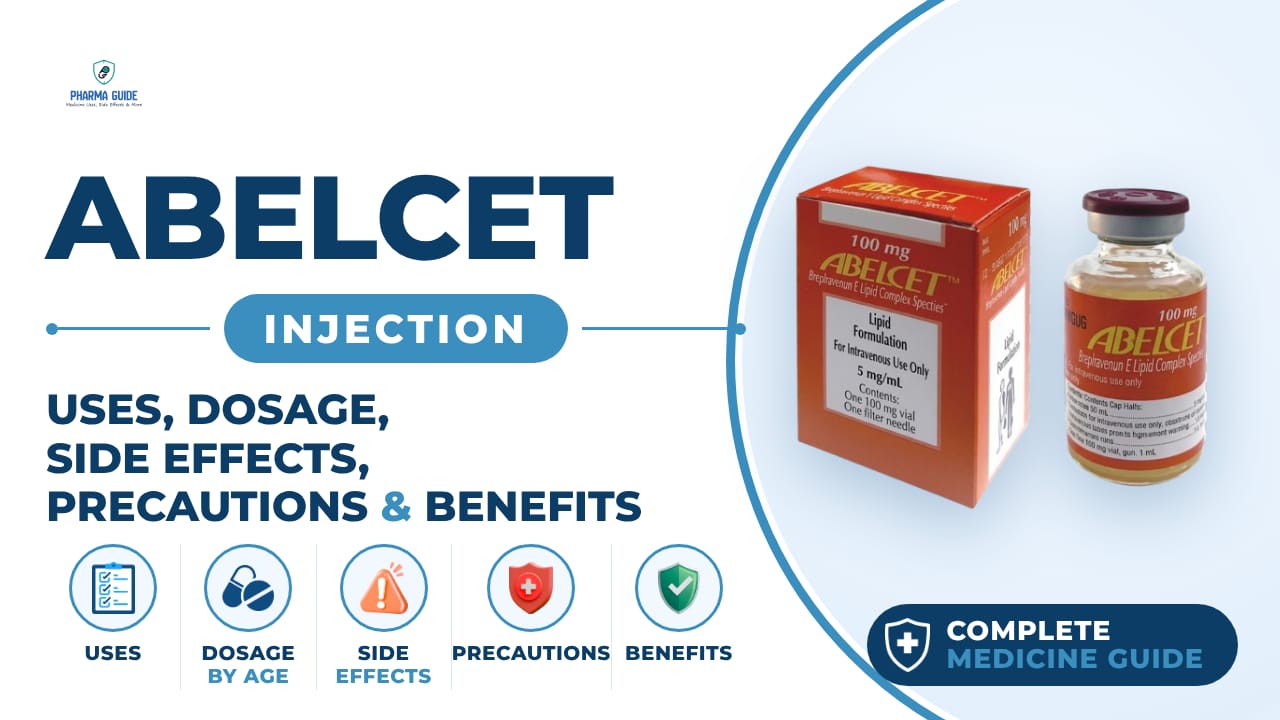
Abelcet Injection: Uses, Dosage, Side Effects, Precautions and Alternates
| Generic name | amphotericin B lipid complex |
|---|---|
| Drug class | Antifungals, Systemic (Polyenes) |
| Forms | Injection |
Quick overview
Abelcet Injection (amphotericin B lipid complex) is an antifungal antibiotic given by IV infusion, used to treat serious fungal infections, usually in people who cannot tolerate or did not respond to standard amphotericin B treatment. It belongs to the Antifungals, Systemic (Polyenes) drug class. It is given in a hospital setting and requires regular monitoring of kidney and liver function during treatment.
What is Abelcet Injection
Abelcet is an antifungal antibiotic given by IV infusion. It is used to treat serious fungal infections, usually in people who cannot tolerate or did not respond to standard amphotericin B treatment.
Abelcet Injection uses
- Treatment of invasive fungal infections in patients who cannot tolerate or did not respond to standard amphotericin B therapy
- Serious, life-threatening fungal infections that cannot be treated with other antifungal medications
Benefits of Abelcet Injection
- Treats serious fungal infections.
- Helps treat invasive Candida infections.
- Helps treat Aspergillus infections.
- Treats certain Cryptococcus infections.
- Provides an option when conventional amphotericin B is not tolerated.
How Abelcet Injection works
Abelcet works by attaching to sterols in the outer covering of fungal cells. This changes the cell's covering so that it leaks, which helps kill the fungus. Human cells also have sterols, which is why this medicine can also affect the body's own cells.
Abelcet Injection dosage
This medicine is given directly into a vein (IV) by a doctor or nurse, usually in a hospital. Each dose is usually given as a single infusion that takes about 2 hours to complete. If the infusion runs longer than 2 hours, the IV bag should be gently shaken every 2 hours to keep the medicine mixed. Treatment is usually continued for at least 14 days, but your doctor may adjust this based on your infection and how you respond. Your doctor will check your kidney and liver function and blood electrolyte levels regularly during treatment.
| Age group | Dose |
|---|---|
| Under 18 years | Not recommended |
| 18–64 years | 5 mg/kg, once/day |
| 65+ years | 5 mg/kg, once/day |
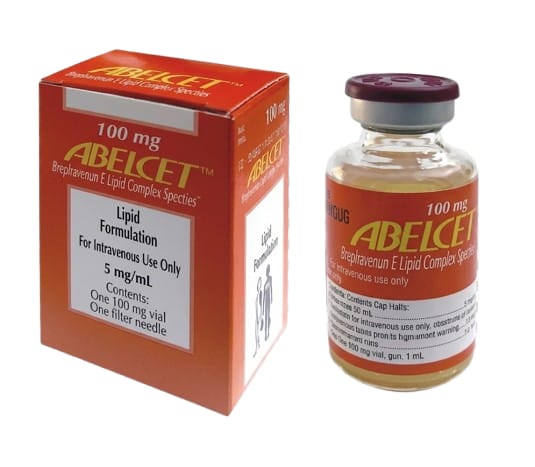
Available forms and strengths
- Injection
Side effects of Abelcet Injection
Common
- Chills
- Fever
- Shaking
- Flushing
- Loss of appetite
- Dizziness
- Nausea
- Vomiting
- Headache
- Shortness of breath or fast breathing 1 to 2 hours after the infusion starts
- Abnormal kidney function test results
Serious
- Signs of a serious allergic reaction: hives or itchy rash, swelling of the face, lips, or tongue, trouble breathing or swallowing, wheezing, faintness
- New or worsening cough, wheezing, or trouble breathing
- Blue-colored lips, fingers, or toes
- Easy bruising, unusual bleeding, or purple/red spots under the skin
- Slow heart rate, weak pulse, fainting, or slow breathing
- Kidney problems: little or no urination, swelling in feet or ankles, feeling tired or short of breath
- Low calcium levels: muscle spasms or contractions, numbness or tingling
- Low magnesium levels: dizziness, irregular heartbeats, feeling jittery, muscle cramps or spasms, cough or choking feeling
- Low potassium levels: leg cramps, constipation, fluttering in the chest, increased thirst or urination, muscle weakness
Warnings and precautions
Serious allergic reactions (anaphylaxis) have been reported with this medicine. If you have severe trouble breathing during the infusion, it will be stopped right away and you should not receive more of this medicine. This medicine should not be given to anyone who is allergic to amphotericin B or any other ingredient in the product.
Reactions such as fever and chills can happen 1 to 2 hours after the infusion starts. These are more common with the first few doses and usually lessen with later doses. Rarely, the infusion can cause low blood pressure, wheezing, irregular heartbeats, or shock.
Combining this medicine with certain other drugs, such as other medicines that can harm the kidneys, certain chemotherapy drugs, or leukocyte (white blood cell) transfusions, can increase the risk of serious side effects.
Pregnancy: It is not known for certain whether this medicine can harm an unborn baby. It should only be used during pregnancy if your doctor decides it is clearly needed.
Breastfeeding: It is not known if this medicine passes into breast milk, so it is generally not recommended while breastfeeding.
Kidney: This medicine can affect the kidneys, and the risk increases with the dose. Your doctor will check your kidney function often during treatment.
Liver: Tell your doctor if you have liver problems, as your liver function will be monitored during treatment.
Storage
- Prior to mixing, store at 2°C to 8°C (36°F to 46°F) and protect from light
- Do not freeze
- Keep the medicine in its carton until it is time to use it
- Once mixed for infusion, it may be stored for up to 48 hours at 2°C to 8°C, plus an additional 6 hours at room temperature
- Do not freeze after mixing
- Any unused medicine should be thrown away
When to see a doctor
Get emergency help right away if you have signs of an allergic reaction, such as hives, difficulty breathing, or swelling of the face, lips, tongue, or throat. Tell your caregiver right away if you feel feverish, light-headed, or short of breath during the infusion.
Call your doctor right away if you have new or worsening cough, wheezing, or trouble breathing; blue-colored lips or fingers/toes; easy bruising or unusual bleeding; a slow heart rate, weak pulse, fainting, or slow breathing; signs of kidney problems; or signs of low calcium, magnesium, or potassium levels.
Alternatives
- Posaconazole
- Fungizone
- AmBisome
Watch the video
FAQs
What is Abelcet Injection used for?
It treats serious, invasive fungal infections, including Candida, Aspergillus, and certain Cryptococcus infections, usually in patients who cannot tolerate or did not respond to standard amphotericin B therapy.
How is Abelcet Injection given?
It is given directly into a vein by a doctor or nurse, usually in a hospital, as a single infusion lasting about 2 hours. Treatment usually continues for at least 14 days, depending on the infection and response.
What is the dosage of Abelcet Injection?
For adults aged 18 to 64 and those 65 and older, the dose is 5 mg/kg once daily. It is not recommended for use in children under 18.
What are the common side effects of Abelcet Injection?
Common side effects include chills, fever, shaking, flushing, loss of appetite, dizziness, nausea, vomiting, headache, shortness of breath during infusion, and abnormal kidney function test results.
How should Abelcet Injection be stored?
Before mixing, store at 2°C to 8°C protected from light and do not freeze. Once mixed, it can be stored for up to 48 hours refrigerated plus an additional 6 hours at room temperature, and any unused medicine should be discarded.
General information, not medical advice
Your prescriber and the leaflet in your pack know your situation. This page does not.
- Follow your prescriber and the leaflet
- Don't start, stop, or change a dose on your own
- Doses and warnings differ by country and product
Sources
Video
Related medicines

Injectafer Injection: Uses, Dosage, Side Effects, Precautions and Alternates
Iron products
Injectafer (ferric carboxymaltose) treats iron deficiency anemia and heart failure-related iron deficiency via IV. Learn uses, dosage, side effects, and

Gliclazide Tablet: Uses, Dosage, Side Effects, Precautions and Alternates
Sulfonylurea (hypoglycemic/antidiabetic agent)
Gliclazide Tablet is a sulfonylurea for type 2 diabetes that boosts insulin release. Learn about dosage, side effects, warnings, and precautions.