
Safety
General information, not medical advice
Your prescriber and the leaflet in your pack know your situation. This page does not.
- Follow your prescriber and the leaflet
- Don't start, stop, or change a dose on your own
- Doses and warnings differ by country and product
Abreva Cream: Uses, Dosage, Side Effects, Precautions and Alternates
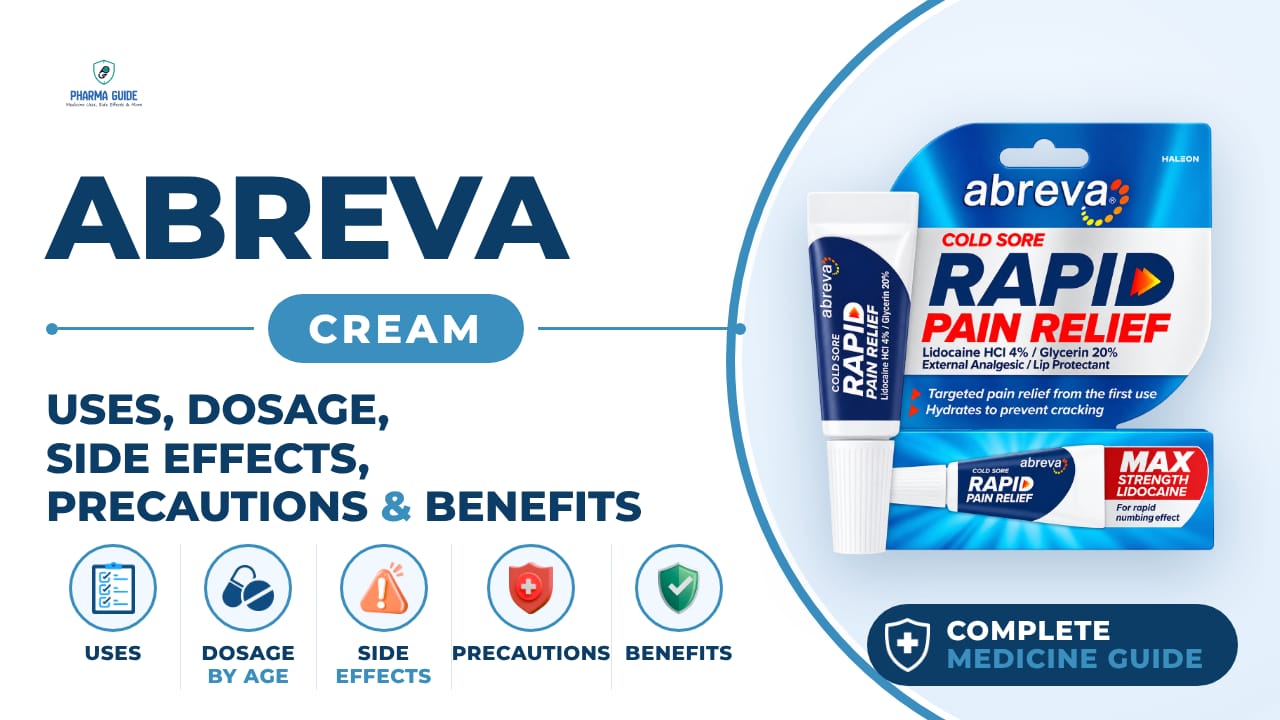
| Generic name | Docosanol |
|---|---|
| Drug class | Topical anti-infectives (viral entry blocking agent) |
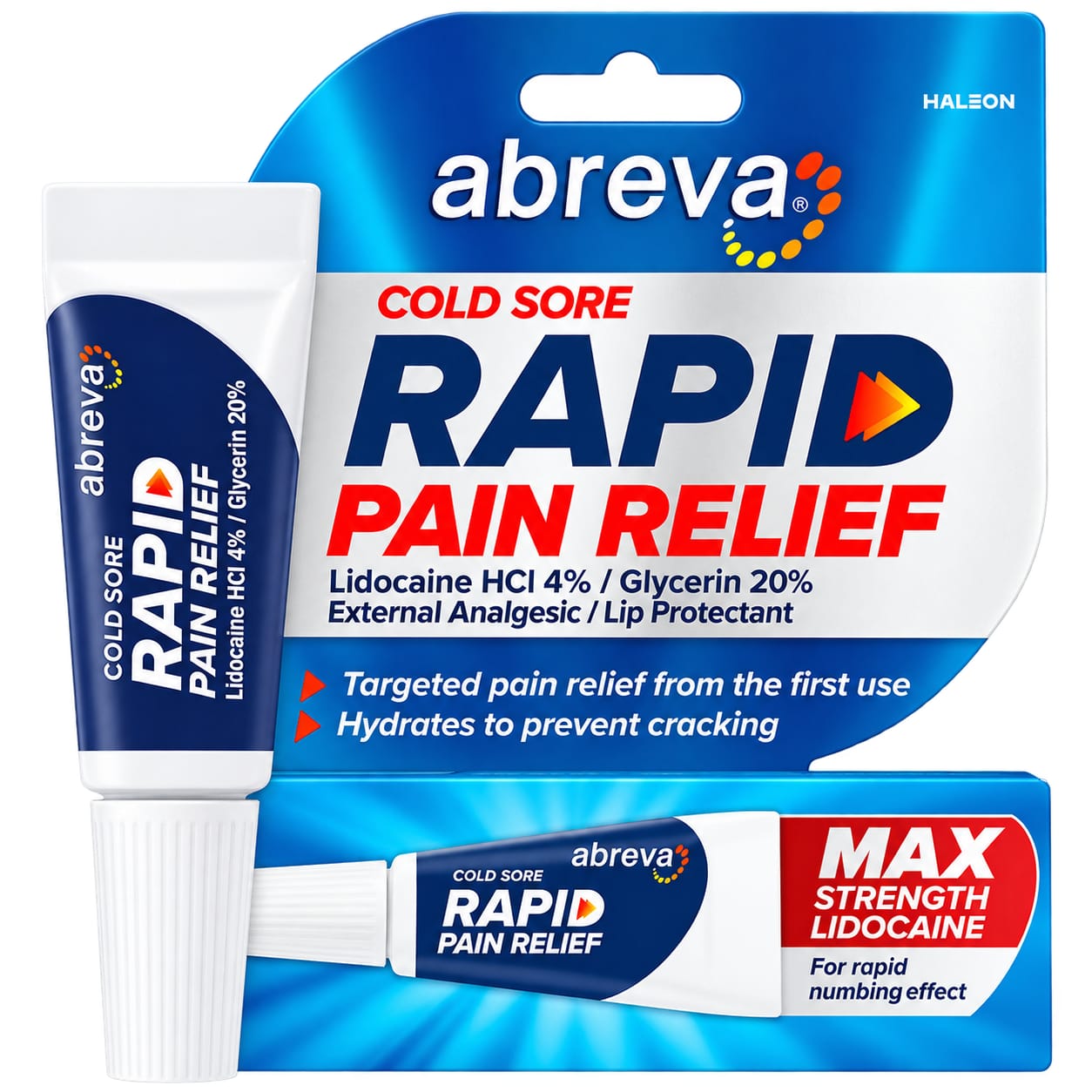
| Forms | Cream (available in a tube or a pump) |
Quick overview
Abreva Cream (docosanol) is an over-the-counter topical anti-infective used to treat cold sores, also called fever blisters, on the lips and face caused by the herpes simplex virus. It works by blocking the virus from entering healthy skin cells, which helps stop it from spreading. It is approved for adults and children 12 years and older and works best when applied at the first sign of a cold sore.
What is Abreva Cream
Abreva is an over-the-counter cream used on the skin to treat cold sores (fever blisters) on the lips and face caused by the herpes simplex virus. The generic name is docosanol, and it belongs to the topical anti-infectives (viral entry blocking agent) drug class.
Abreva Cream uses
- Treats acute episodes of recurrent oral-facial herpes simplex (cold sores or fever blisters) on the lips and face in adults and children 12 years and older
Benefits of Abreva Cream
- Helps treat cold sores
- May shorten healing time
- Can reduce tingling, burning, and discomfort
- Works best when started at the first sign of a cold sore
- Provides localized topical treatment
How Abreva Cream works
Abreva contains docosanol, which blocks the cold sore virus from entering healthy skin cells, which stops it from spreading to the cells around the sore.
Abreva Cream dosage
Apply at the first sign of a cold sore, such as tingling, redness, itching, or a blister, since early treatment works best. Wash your hands before and after applying the cream. Remove any cosmetics from the area before applying. Apply enough cream to completely cover the cold sore and rub it in gently and completely. Do not swallow this medicine; it is for use on the skin only. Rinse with water if the cream gets in your eyes or mouth, and avoid applying inside the mouth. Do not use in children younger than 12 years old without medical advice. Do not share this medicine with another person, even if they have the same symptoms, since this may spread infection. Cosmetics can be applied after the cream is rubbed in, using a separate applicator to avoid spreading infection. Call your doctor if symptoms do not improve within 10 days, or if they get worse. If you miss an application, apply it as soon as you remember, but skip it if it is almost time for your next dose; do not apply two doses at once.
| Age group | Dose |
|---|---|
| Under 12 years | Ask a clinician before use |
| 12–17 years | Apply to the affected area 5 times daily |
| 18–64 years | Apply to the affected area 5 times daily |
Available forms and strengths
- Cream (available in a tube or a pump)
Side effects of Abreva Cream
Common
- Headache
- Reaction at the application site (such as tingling or burning)
- Rash
- Itching
- Dry skin
- Acne
Serious
- Signs of an allergic reaction: hives, feeling light-headed, wheezing, difficult breathing, swelling of the face, lips, tongue, or throat
- Severe allergic symptoms such as itching, rash, dizziness, facial swelling, tongue swelling, throat swelling, or difficulty breathing
Warnings and precautions
- This medicine should only be used on cold sores on the lips and face, not anywhere else.
- Be careful not to get the cream in or near your eyes, since it may cause irritation; if it gets in your eyes, rinse thoroughly with water.
- If skin irritation gets worse or increases, stop using the cream and see a doctor.
- Do not swallow this medicine; it is for use on the skin only, and it must not be applied inside the mouth.
- Do not share this product with anyone else, as this could spread the infection.
- This medicine has not been studied in children under 12, so do not use it in this age group unless a doctor advises it.
- Ask a doctor before using this medicine if you are pregnant. It should be used during pregnancy only if clearly needed.
- Ask a doctor before using this medicine if you are breastfeeding, since it is not known if it passes into breast milk.
- No routine adjustment is needed for topical use in kidney impairment.
- No routine adjustment is usually needed in liver impairment.
- No significant direct interaction with alcohol is expected.
- Does not normally affect driving.
Storage
- Store at room temperature away from moisture and heat.
- Do not freeze.
- Store between 15ºC - 25ºC.
- Keep out of the reach of children.
When to see a doctor
- Get emergency medical help if you have signs of an allergic reaction such as hives, feeling light-headed, wheezing, trouble breathing, or swelling of the face, lips, tongue, or throat.
- Stop using the cream and see a doctor if your cold sore gets worse or has not healed after 10 days of use.
- If someone swallows this medicine and has serious symptoms like trouble breathing or fainting, get emergency medical help right away.
Alternatives
- Acyclovir cream
- Penciclovir cream
- Oral acyclovir
Watch the video
FAQs
What is Abreva Cream used for?
Abreva Cream is used to treat acute episodes of recurrent oral-facial herpes simplex (cold sores or fever blisters) on the lips and face in adults and children 12 years and older.
How does Abreva Cream work?
Abreva contains docosanol, which blocks the cold sore virus from entering healthy skin cells, stopping it from spreading to the cells around the sore.
How often should Abreva Cream be applied?
For ages 12 and older, apply to the affected area 5 times daily, starting at the first sign of a cold sore such as tingling, redness, itching, or a blister.
What are the common side effects of Abreva Cream?
Common side effects include headache, reaction at the application site such as tingling or burning, rash, itching, dry skin, and acne.
When should I see a doctor while using Abreva Cream?
See a doctor if your cold sore gets worse or has not healed after 10 days of use, or get emergency help for signs of an allergic reaction like hives, wheezing, trouble breathing, or facial swelling.
General information, not medical advice
Your prescriber and the leaflet in your pack know your situation. This page does not.
- Follow your prescriber and the leaflet
- Don't start, stop, or change a dose on your own
- Doses and warnings differ by country and product
Sources
Video
Related medicines

Injectafer Injection: Uses, Dosage, Side Effects, Precautions and Alternates
Iron products
Injectafer (ferric carboxymaltose) treats iron deficiency anemia and heart failure-related iron deficiency via IV. Learn uses, dosage, side effects, and

Gliclazide Tablet: Uses, Dosage, Side Effects, Precautions and Alternates
Sulfonylurea (hypoglycemic/antidiabetic agent)
Gliclazide Tablet is a sulfonylurea for type 2 diabetes that boosts insulin release. Learn about dosage, side effects, warnings, and precautions.