
Safety
General information, not medical advice
Your prescriber and the leaflet in your pack know your situation. This page does not.
- Follow your prescriber and the leaflet
- Don't start, stop, or change a dose on your own
- Doses and warnings differ by country and product
Abrocitinib Tablet: Uses, Dosage, Side Effects, Precautions and Alternates
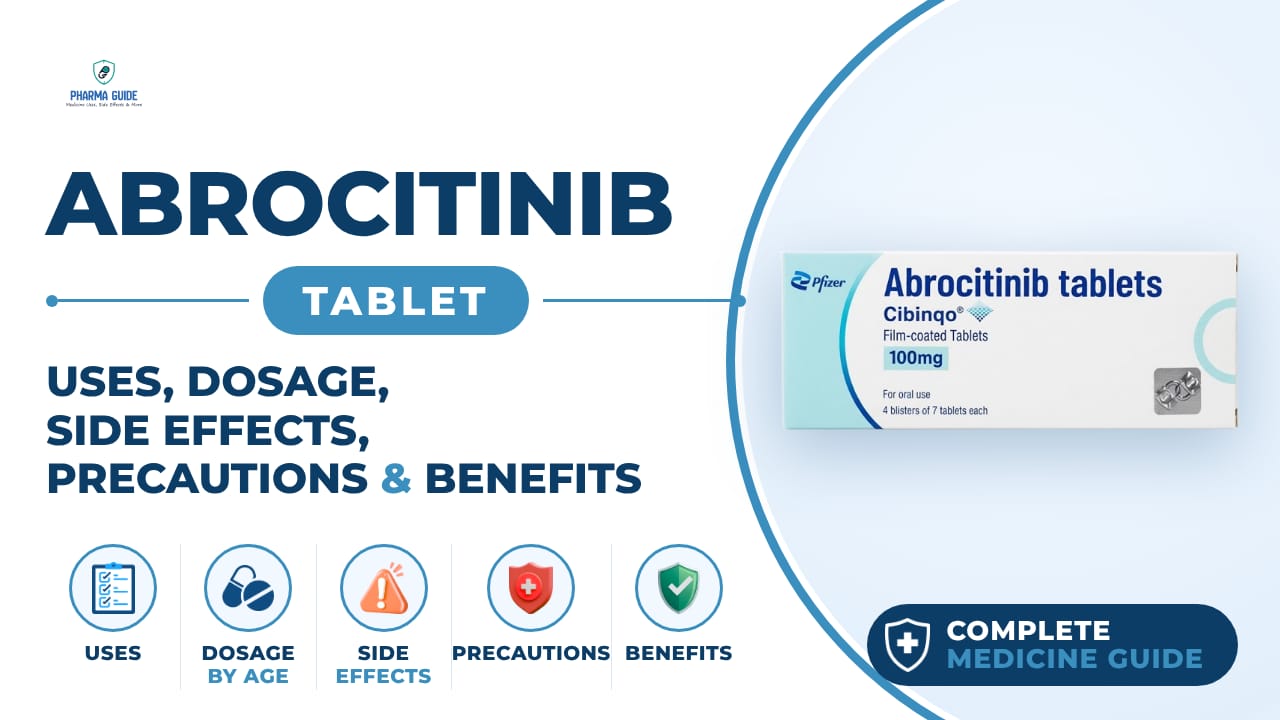
| Generic name | abrocitinib |
|---|---|
| Drug class | Janus kinase (JAK) inhibitor |
| Forms | Tablet |
Quick overview
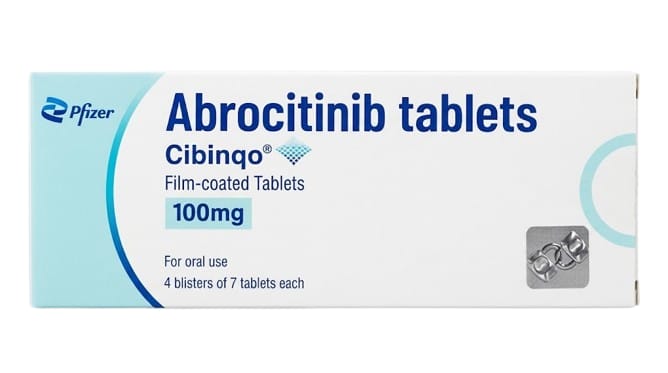
Abrocitinib Tablet (Cibinqo) is a prescription Janus kinase (JAK) inhibitor used to treat moderate-to-severe atopic dermatitis (eczema) in adults and adolescents 12 years and older whose condition has not responded well to other treatments. It works by reducing the activity of an enzyme involved in inflammatory signaling, helping to calm an overactive immune system. It can be used alone or together with topical corticosteroid creams.
What is Abrocitinib Tablet
Cibinqo is a prescription tablet medicine that reduces activity of an enzyme called Janus kinase, which helps calm an overactive immune system. It is used for moderate-to-severe atopic dermatitis (eczema) that has not responded well to other treatments.
Abrocitinib Tablet uses
- Treatment of moderate-to-severe atopic dermatitis (eczema) in adults and adolescents 12 years of age and older whose disease is not adequately controlled with other systemic drug products, including biologics, or when use of those therapies is inadvisable
- Can be used alone or together with topical corticosteroid creams
Benefits of Abrocitinib Tablet
- Reduces itching and inflammation of the skin
- Can improve sleep disturbances and symptoms of anxiety or depression linked to eczema
- Improves overall quality of life
- Works quickly to relieve severe itching, with some improvement seen within days
How Abrocitinib Tablet works
Cibinqo blocks a type of enzyme called Janus kinase 1 (JAK1), which is involved in sending inflammatory signals inside cells. By blocking this enzyme, the medicine reduces the activity of several inflammatory chemical messengers that are overactive in eczema, which lessens itching and inflammation of the skin.
Abrocitinib Tablet dosage
Take this medicine by mouth once a day, at about the same time each day. It can be taken with or without food; if you feel sick (nausea), it may help to take it with food. Swallow the tablet whole with water — do not split, crush, or chew it. It can be used together with topical steroid creams or ointments for eczema, or on its own.
If you miss a dose, take it as soon as you remember unless it is less than 12 hours before your next dose, in which case skip the missed dose and continue your regular schedule — do not take a double dose. Do not stop taking this medicine without talking to your doctor first.
| Age group | Dose |
|---|---|
| Under 18 years | Not recommended |
| 18–64 years | 100 mg, once/day |
| 65+ years | 100 mg, once/day |
Available forms and strengths
- Tablet
Side effects of Abrocitinib Tablet
Common
- Nasopharyngitis (common cold)
- Nausea
- Headache
- Herpes simplex (cold sores)
- Increased blood creatine phosphokinase
- Dizziness
- Urinary tract infection
- Fatigue
- Acne
- Vomiting
- Oropharyngeal pain
- Influenza
- Gastroenteritis (stomach flu)
- Impetigo (bacterial skin infection)
- Hypertension (high blood pressure)
- Contact dermatitis (allergic skin rash)
- Upper abdominal pain
- Abdominal discomfort
- Herpes zoster (shingles)
- Thrombocytopenia (low platelet count)
Serious
- Serious infections, including tuberculosis, that may lead to hospitalization or death
- Increased risk of death (all-cause mortality), including sudden cardiovascular death
- Malignancies (cancers), including lymphoma and lung cancer
- Major adverse cardiovascular events such as heart attack and stroke
- Blood clots, including deep vein thrombosis and pulmonary embolism
- Serious drops in blood counts (platelets, lymphocytes, neutrophils, hemoglobin)
- Retinal detachment (sudden changes in vision)
Warnings and precautions
- This medicine can increase the risk of serious infections, including tuberculosis, that can lead to hospitalization or death. Your doctor will test you for tuberculosis before and during treatment.
- Medicines in this class have been linked to a higher risk of death, including sudden cardiovascular death, compared with other treatments in certain patients.
- Cancers, including lymphoma and lung cancer, have occurred in people taking this medicine or similar medicines. People who currently smoke or used to smoke have an added risk.
- Serious heart-related problems such as heart attack and stroke have occurred with this medicine.
- Blood clots, including in the legs and lungs, have occurred with this medicine and can be life-threatening.
- Do not take certain blood-thinning medicines (antiplatelet therapies), other than low-dose aspirin, during the first 3 months of treatment, as this combination is not allowed.
- Avoid receiving live vaccines before, during, and right after treatment with this medicine.
- Do not take this medicine if you are pregnant, think you may be pregnant, or are planning to become pregnant, as it may harm the unborn baby. Women who can become pregnant should use effective birth control during treatment and for one month after the last dose.
- Do not breastfeed while taking this medicine, since it is not known whether it passes into breast milk or how it could affect a nursing baby.
- This medicine should be avoided in people with severe kidney problems or end-stage kidney disease. A lower dose is recommended for people with moderate kidney impairment.
- This medicine should not be used in people with severe liver problems.
- No specific direct interaction with alcohol is established, but alcohol may complicate liver-related or other adverse effects.
- This medicine does not usually affect your ability to drive or use machines, but some people may feel dizzy. If this happens, avoid driving or operating machinery until the dizziness goes away.
Storage
- Store at room temperature between 68°F to 77°F (20°C to 25°C), excursions permitted between 59°F to 86°F (15°C to 30°C)
- Keep in the original package
- The container has a child-resistant closure
- Keep out of the reach of children
- Do not use after the expiry date on the carton and blister foil
- Do not throw away medicines via wastewater or household waste; ask your pharmacist how to dispose of medicines no longer used
When to see a doctor
- Get emergency help right away if you have signs of a heart attack or stroke, such as chest discomfort or tightness, pain spreading to your arm, back, neck or jaw, slurred speech, weakness on one side of your body, shortness of breath, cold sweats, nausea, or feeling lightheaded.
- Stop taking this medicine and get medical help immediately if you notice signs of a blood clot, such as swelling or pain in one or both legs, sudden unexplained chest or upper back pain, or shortness of breath.
- Call your healthcare provider right away if you notice any sudden changes in your vision, as this could be a sign of retinal detachment.
- Tell your healthcare provider right away if you develop any signs or symptoms of infection, such as fever, chills, cough, weight loss, diarrhea, or feeling unusually tired.
- If you take more of this medicine than you should, contact a doctor or your local poison control center right away for advice.
Alternatives
- Dupilumab
- Tralokinumab
- Upadacitinib
- Topical corticosteroids
Watch the video
FAQs
What is Abrocitinib Tablet used for?
It is used to treat moderate-to-severe atopic dermatitis (eczema) in adults and adolescents 12 years and older whose condition has not responded well to other treatments, including biologics. It can be used alone or with topical corticosteroid creams.
How does Abrocitinib Tablet work?
It blocks an enzyme called Janus kinase 1 (JAK1), which is involved in sending inflammatory signals inside cells. By blocking this enzyme, it reduces the activity of inflammatory chemical messengers that are overactive in eczema, lessening itching and inflammation of the skin.
What is the typical dose of Abrocitinib Tablet?
For adults and adults 65 and older, the typical dose is 100 mg taken once a day by mouth. It is not recommended for use in people under 18 years of age. The tablet should be swallowed whole and not split, crushed, or chewed.
What are the serious side effects of Abrocitinib Tablet?
Serious side effects include serious infections such as tuberculosis, increased risk of death including sudden cardiovascular death, cancers like lymphoma and lung cancer, major cardiovascular events such as heart attack and stroke, blood clots, serious drops in blood counts, and retinal detachment.
Can I take Abrocitinib Tablet while pregnant or breastfeeding?
No, this medicine should not be taken during pregnancy as it may harm the unborn baby, and women who can become pregnant should use effective birth control during treatment and for one month after the last dose. Breastfeeding is also not recommended since it is unknown whether the medicine passes into breast milk.
General information, not medical advice
Your prescriber and the leaflet in your pack know your situation. This page does not.
- Follow your prescriber and the leaflet
- Don't start, stop, or change a dose on your own
- Doses and warnings differ by country and product
Sources
Video
Related medicines
Rinvoq Tablet: Uses, Dosage, Side Effects, Precautions and Alternates
Janus kinase (JAK) inhibitor
Rinvoq Tablet (upadacitinib) treats rheumatoid arthritis, psoriatic arthritis, atopic dermatitis, and more by reducing inflammation. Learn dosage, side
Anzupgo Cream: Uses, Dosage, Side Effects, Precautions and Alternates
Janus kinase (JAK) inhibitor
Anzupgo Cream (delgocitinib) treats moderate to severe chronic hand eczema in adults. Learn how it works, dosage, side effects, and warnings.