
Safety
General information, not medical advice
Your prescriber and the leaflet in your pack know your situation. This page does not.
- Follow your prescriber and the leaflet
- Don't start, stop, or change a dose on your own
- Doses and warnings differ by country and product
Rinvoq Tablet: Uses, Dosage, Side Effects, Precautions and Alternates
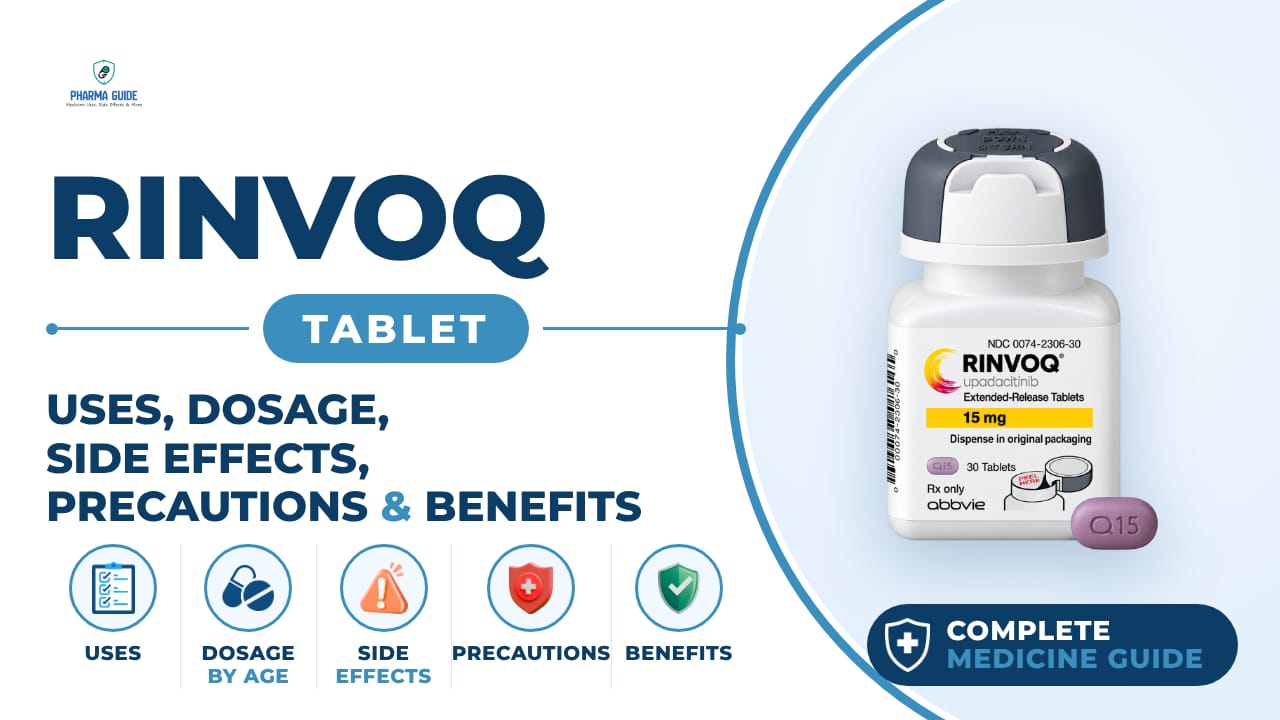
| Generic name | upadacitinib |
|---|---|
| Drug class | Janus kinase (JAK) inhibitor |
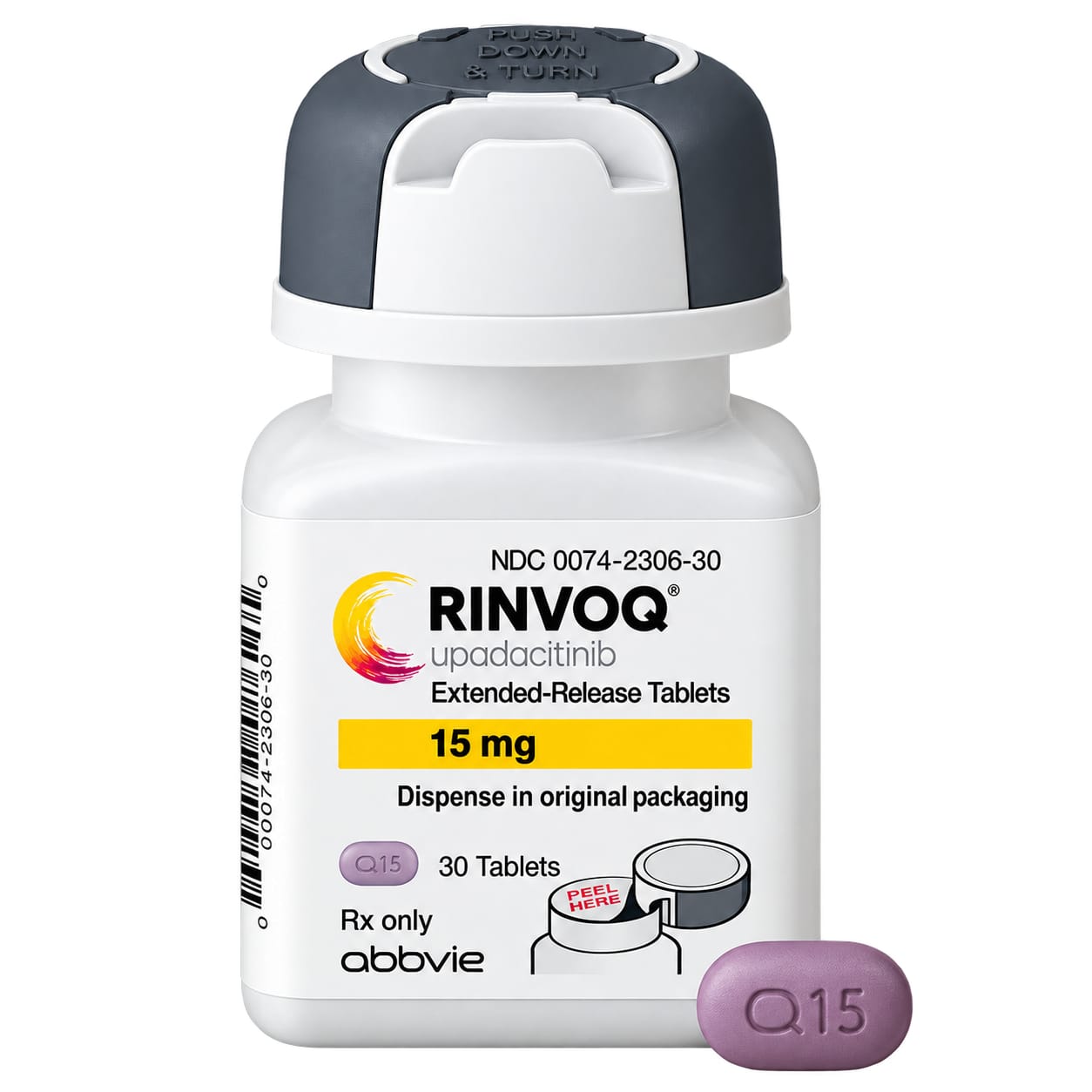
| Forms | Extended-release (prolonged-release) oral tablets (15 mg, 30 mg, 45 mg), Oral solution (1 mg/mL) |
Quick overview
Rinvoq Tablet contains upadacitinib, a Janus kinase (JAK) inhibitor used to reduce inflammation in several long-term conditions, including rheumatoid arthritis, psoriatic arthritis, axial spondyloarthritis, polyarticular juvenile idiopathic arthritis, giant cell arteritis, atopic dermatitis, ulcerative colitis, and Crohn's disease. It works by blocking a protein involved in inflammation, helping to calm an overactive immune system. Rinvoq is available as extended-release tablets and an oral solution, and it carries important warnings regarding infections, cardiovascular risks, and other serious effects.
What is Rinvoq Tablet
Rinvoq is a prescription medicine that contains the active substance upadacitinib. It belongs to a group of medicines called Janus kinase inhibitors and is used to reduce inflammation in several long-term conditions.
Rinvoq Tablet uses
- Rheumatoid arthritis
- Psoriatic arthritis
- Axial spondyloarthritis, including non-radiographic axial spondyloarthritis and ankylosing spondylitis
- Polyarticular juvenile idiopathic arthritis
- Giant cell arteritis (inflammation of blood vessels)
- Atopic dermatitis (eczema)
- Ulcerative colitis
- Crohn's disease
Benefits of Rinvoq Tablet
- Inflammation Control: Helps reduce excessive immune-system activity.
- Rheumatoid Arthritis Support: Helps reduce joint inflammation, pain, and stiffness in appropriate patients.
- Atopic Dermatitis Support: Can reduce itching and skin inflammation in eligible patients.
- Psoriatic Arthritis Support: Helps control inflammation and joint symptoms.
- Ulcerative Colitis Support: Can help induce and maintain remission in eligible patients.
How Rinvoq Tablet works
Rinvoq works by blocking a protein called Janus kinase, which is involved in causing inflammation in the body. By reducing the activity of this enzyme, it calms the immune system and lowers inflammation.
Rinvoq Tablet dosage
Swallow the tablet whole with water; do not split, crush, chew, or break it before swallowing. Take it at the same time every day to help you remember. The tablets can be taken with or without food. If using the oral liquid, follow the Instructions for Use and only use the syringe provided to measure your dose.
If you miss a dose, take it as soon as you remember; if it is almost a full day late, skip the missed dose and take your next dose as usual the following day. Do not take a double dose. You may sometimes see part of the tablet in your stool; tell your healthcare provider if this happens, especially if it happens often.
| Age group | Dose |
|---|---|
| Under 12 Years | Not generally recommended; specialist supervision required |
| 12–17 Years | 15 mg once daily for approved indications in eligible patients, as prescribed |
| Adults (18–64 Years) | 15 mg once daily; some conditions may require 30 mg once daily |
Available forms and strengths
- Extended-release (prolonged-release) oral tablets (15 mg, 30 mg, 45 mg)
- Oral solution (1 mg/mL)
Side effects of Rinvoq Tablet
Common
- Infection in the nose or throat, sore throat, common cold symptoms, or flu
- Cough, bronchitis
- Nausea, stomach pain
- Fever
- Skin problems, including acne, folliculitis, rash, or infections such as cold sores or shingles
- Headache
- Weight gain
- Tiredness
- Elevated liver enzymes
- Increased creatine phosphokinase (CPK)
- Muscle pain
- Swelling of the legs, feet, ankles, or arms
- Urinary tract infection
- Hives
- Dizziness or a spinning sensation (vertigo)
Serious
- Severe allergic reactions (breathing problems, swelling of face/lips/tongue/throat, hives)
- Serious infections, including shingles, pneumonia, or sepsis
- Cancer, including lymphoma and non-melanoma skin cancer
- Heart attack or stroke
- Blood clots in veins or arteries, including pulmonary embolism
- Stomach or intestinal tears (gastrointestinal perforation)
- Severe eye problems, including retinal detachment
- Blood disorders such as anemia, neutropenia, and lymphopenia
- High cholesterol levels
- Liver damage
Warnings and precautions
- Rinvoq can increase the risk of serious infections, including tuberculosis, fungal infections, and shingles, which can lead to hospitalization or death.
- There is a higher rate of death, including sudden cardiovascular death, seen with this type of medicine in certain patients, particularly those 50 and older with heart disease risk factors.
- Lymphoma and other cancers, including skin cancers, have occurred in people taking this medicine; smokers may have a higher risk.
- This medicine can raise the risk of serious heart problems such as heart attack and stroke, especially in people with cardiovascular risk factors.
- Blood clots, including in the legs, lungs, or arteries, have occurred and some have been fatal.
- Tears in the stomach or intestines (gastrointestinal perforation) have been reported, especially in people with a history of diverticulitis or who take NSAIDs or steroids.
- Avoid grapefruit or grapefruit juice while taking this medicine, as it can raise the amount of drug in your blood and increase side-effect risk.
- Do not receive certain live vaccines right before or during treatment with this medicine.
- Rinvoq must not be used during pregnancy because it may harm an unborn baby. Women who can become pregnant must use effective contraception during treatment and for at least 4 weeks after the last dose.
- Breastfeeding is not recommended while taking Rinvoq because it is not known if the medicine passes into breast milk, and animal data show it is excreted in milk.
- Tell your doctor if you have kidney problems, as your dose may need to be reduced.
- Rinvoq should not be used if you have severe liver problems, and your doctor will check that your liver is working well enough before and during treatment.
- It isn't known for certain how alcohol affects Rinvoq, but drinking alcohol may increase the risk of tiredness and liver damage while on this medicine.
- Do not drive or use machines if you feel dizzy or experience a spinning sensation (vertigo) while taking this medicine, until these symptoms go away.
Storage
- Extended-release tablets should be stored in the original bottle or blister to protect them from moisture, in the refrigerator or at room temperature between 36 F and 77 F (2 C to 25 C)
- Oral liquid should be stored in the refrigerator or at room temperature, between 36 F and 86 F (2 C to 30 C); throw away any unused liquid 60 days after opening the bottle
- Keep this medicine out of the sight and reach of children
- Do not use after the expiry date stated on the blister or carton
- This medicine does not require any special temperature storage conditions (tablets); store in the original blister to protect from moisture
- Do not throw away medicines via wastewater or household waste; ask your pharmacist how to dispose of medicines you no longer use
When to see a doctor
- Get emergency help right away if you notice signs of a severe allergic reaction, such as trouble breathing, wheezing, swelling of the face, lips, tongue, or throat, or hives.
- Seek emergency care for signs of a heart attack or stroke, such as chest pain, trouble breathing, sudden weakness on one side of the body, severe headache, or slurred speech.
- Stop taking the medicine and get emergency help if you notice signs of a blood clot, such as chest pain, fast heartbeat, trouble breathing, or pain, swelling, or tenderness in an arm or leg.
- Stop taking the medicine and get emergency help if you have symptoms of stomach bleeding or tears, such as vomiting blood, black or tarry stools, ongoing stomach pain, or fever with chills.
- Call your healthcare provider right away if you have signs of an infection, such as fever, chills, cough, shortness of breath, or burning when urinating.
- Call your healthcare provider right away if you have sudden vision changes, flashes of light, floaters, or a curtain over part of your vision, which could mean a serious eye problem.
- Seek medical advice straight away if you have sudden blurry vision or partial or complete loss of vision, as these may signal blocked blood flow in the eye.
- Tell a doctor straight away if you notice severe stomach pain, especially with fever, nausea, and vomiting.
Alternatives
- Tofacitinib
- Baricitinib
- Filgotinib
Watch the video
FAQs
What is Rinvoq Tablet used for?
Rinvoq is used to treat rheumatoid arthritis, psoriatic arthritis, axial spondyloarthritis, polyarticular juvenile idiopathic arthritis, giant cell arteritis, atopic dermatitis, ulcerative colitis, and Crohn's disease.
How does Rinvoq Tablet work?
Rinvoq works by blocking a protein called Janus kinase, which is involved in causing inflammation in the body, calming the immune system and lowering inflammation.
What is the dosage of Rinvoq Tablet?
For adults, the usual dose is 15 mg once daily, though some conditions may require 30 mg once daily. For ages 12-17, it is 15 mg once daily for approved indications. The tablet should be swallowed whole with water and not split, crushed, chewed, or broken.
What are the serious side effects of Rinvoq Tablet?
Serious side effects include severe allergic reactions, serious infections like shingles or pneumonia, cancer including lymphoma, heart attack or stroke, blood clots, gastrointestinal perforation, severe eye problems, and blood disorders.
Can I drink grapefruit juice while taking Rinvoq?
No, you should avoid grapefruit or grapefruit juice while taking Rinvoq, as it can raise the amount of drug in your blood and increase side-effect risk.
General information, not medical advice
Your prescriber and the leaflet in your pack know your situation. This page does not.
- Follow your prescriber and the leaflet
- Don't start, stop, or change a dose on your own
- Doses and warnings differ by country and product
Sources
Video
Related medicines
Anzupgo Cream: Uses, Dosage, Side Effects, Precautions and Alternates
Janus kinase (JAK) inhibitor
Anzupgo Cream (delgocitinib) treats moderate to severe chronic hand eczema in adults. Learn how it works, dosage, side effects, and warnings.
Abrocitinib Tablet: Uses, Dosage, Side Effects, Precautions and Alternates
Janus kinase (JAK) inhibitor
Abrocitinib Tablet (Cibinqo) treats moderate-to-severe eczema by blocking JAK1 enzyme. Learn about dosage, benefits, side effects, and important safety