
Safety
General information, not medical advice
Your prescriber and the leaflet in your pack know your situation. This page does not.
- Follow your prescriber and the leaflet
- Don't start, stop, or change a dose on your own
- Doses and warnings differ by country and product
Anzupgo Cream: Uses, Dosage, Side Effects, Precautions and Alternates

| Generic name | delgocitinib |
|---|---|
| Drug class | Janus kinase (JAK) inhibitor |
| Forms | Cream, 2% (20 mg of delgocitinib per gram) |
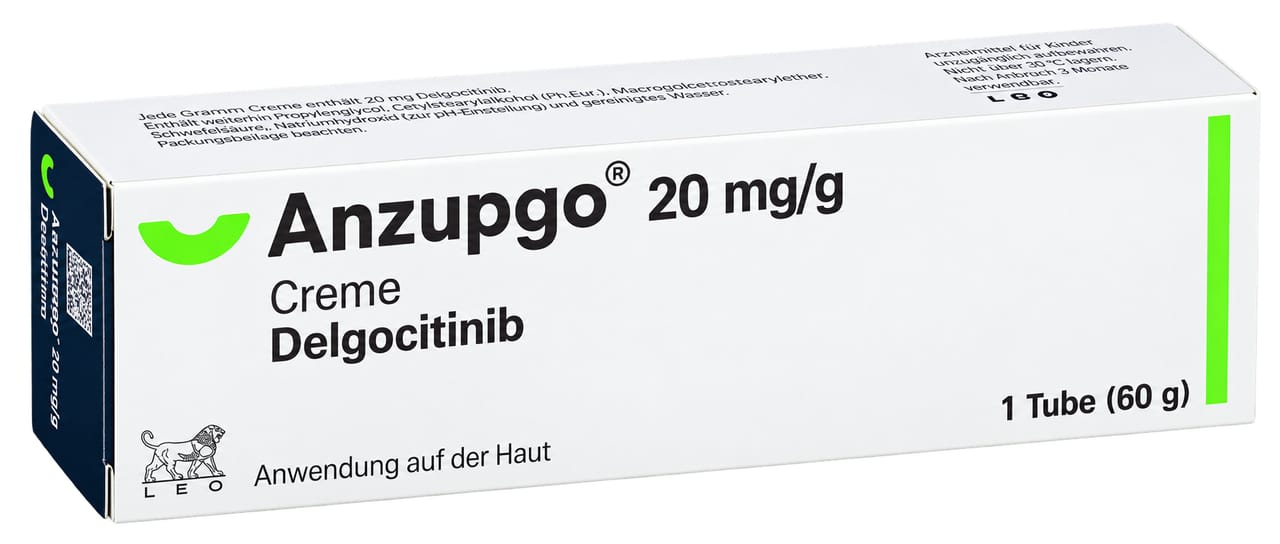
Quick overview
Anzupgo Cream contains delgocitinib, a Janus kinase (JAK) inhibitor applied to the skin. It is a prescription treatment for moderate to severe chronic hand eczema in adults who have not responded well enough to topical corticosteroids, or who cannot use them. It works by calming the skin inflammation involved in this condition and is applied as a thin layer twice daily to the hands and wrists only.
What is Anzupgo Cream
Anzupgo is a prescription cream applied to the skin to treat moderate to severe chronic hand eczema in adults who have not responded well enough to topical corticosteroids, or who cannot use them.
Anzupgo Cream uses
- Topical treatment of moderate to severe chronic hand eczema (CHE) in adults who have had an inadequate response to, or for whom topical corticosteroids are not advisable
- Treats chronic hand eczema
- Reduces skin inflammation
- Helps relieve itching
- Helps reduce redness and irritation
Benefits of Anzupgo Cream
- Reduces the severity of chronic hand eczema (clearer or almost clear skin in many patients after 16 weeks)
- Reduces itch severity
- Reduces pain severity
- Improves quality of life related to hand eczema symptoms
How Anzupgo Cream works
Delgocitinib blocks enzymes called Janus kinases (JAK1, JAK2, JAK3) and TYK2, which are involved in sending signals that cause skin inflammation. By blocking these signals, it helps calm the inflammation that causes chronic hand eczema, although the exact way it works for this condition isn't fully known.
Anzupgo Cream dosage
Anzupgo is for use on the skin of the hands and wrists only; do not use it in or on the eyes, mouth, vagina, or other mucous membranes. If it touches mucous membranes by accident, rinse thoroughly with water. Clean and dry the affected skin before applying, then apply a thin layer twice each day to the affected areas on the hands and wrists only, using it exactly as your healthcare provider tells you to use it.
If someone else applies the cream for you, they should wash their hands afterward. Avoid direct skin contact with other people (especially newborns and infants) right after applying the cream to your hands or wrists, and wipe off any cream that transfers to someone else. Breastfeeding patients should avoid direct contact between the nipple area and the hands/wrists right after applying the cream. Safety and effectiveness have not been established in children under 12.
| Age group | Dose |
|---|---|
| Under 12 years | Safety and effectiveness are not established; no standard dose |
| 12–17 years | Apply a thin layer twice daily to affected areas of the hands and wrists |
| 18–39 years | Apply a thin layer twice daily, approximately 12 hours apart |
| 40–64 years | Same: thin layer twice daily |
Available forms and strengths
- Cream, 2% (20 mg of delgocitinib per gram)
Side effects of Anzupgo Cream
Common
- Pain, tingling, itching, or redness where the cream is applied
- Bacterial skin infections, including finger cellulitis and nail infections (paronychia)
- Low white blood cell counts (leukopenia and neutropenia)
Serious
- Eczema herpeticum (a blistery, painful skin rash)
- Shingles (herpes zoster) or other viral reactivation
- Serious infections from bacteria, fungi, viruses, or other germs that can spread through the body, including tuberculosis
- Non-melanoma skin cancers, including basal cell carcinoma
- Increased cholesterol and triglyceride levels
Warnings and precautions
- This medicine may lower your body's ability to fight infections. Serious and sometimes fatal infections have occurred in people using JAK inhibitors, including tuberculosis and infections that spread through the body. Avoid using this medicine if you have an active or serious infection, and tell your doctor about any history of infections before starting treatment.
- This medicine may increase the risk of non-melanoma skin cancers, including basal cell carcinoma. Your doctor should check your skin regularly, and you should limit sun exposure and use sun protection.
- Avoid receiving live vaccines right before, during, or right after treatment with this medicine.
- It isn't known if this cream carries the same risks as other JAK inhibitor medicines taken by mouth, which have been linked to higher rates of death, serious heart problems, blood clots, and certain cancers in some patients with rheumatoid arthritis. This medicine is not approved for rheumatoid arthritis.
- Do not use this medicine together with other JAK inhibitors or strong immune-suppressing medicines, since this combination hasn't been studied.
- This medicine is for use on the skin only. Do not use it in or on the eyes, mouth, or vagina.
- It isn't known whether Anzupgo could harm an unborn baby. Tell your doctor if you are pregnant or planning to become pregnant.
- It isn't known if Anzupgo passes into breast milk. If you breastfeed while using this medicine, avoid touching the nipple and surrounding area right after applying the cream to your hands or wrists.
- No dose adjustment is generally recommended for kidney impairment because systemic absorption is minimal. No routine dose adjustment is recommended for liver impairment for the same reason.
- No major direct interaction is established with alcohol when using topical Anzupgo. No meaningful effect on driving ability is expected.
Storage
- Store at room temperature between 68ºF to 77ºF (20ºC to 25ºC)
- Do not freeze
- Keep out of the reach of children
When to see a doctor
- Call your healthcare provider right away if you notice any signs of infection, such as fever, chills, muscle aches, cough, shortness of breath, coughing up blood, weight loss, warm or red or painful skin or sores, diarrhea or stomach pain, burning or frequent urination, or feeling very tired.
- Get medical help right away for serious eye symptoms such as sudden vision loss, blurred vision, tunnel vision, eye pain or swelling, or seeing halos around lights.
- Get medical help right away for serious heart symptoms such as a fast, irregular, or pounding heartbeat, fluttering in your chest, shortness of breath, or sudden dizziness, lightheadedness, or passing out.
- Get medical help right away for a severe headache, confusion, slurred speech, arm or leg weakness, trouble walking, loss of coordination, feeling unsteady, very stiff muscles, high fever, heavy sweating, or tremors.
Alternatives
- Topical corticosteroids
- Tacrolimus ointment
- Pimecrolimus cream
Watch the video
FAQs
What is Anzupgo Cream used for?
Anzupgo is a prescription cream used to treat moderate to severe chronic hand eczema in adults who have not responded well enough to topical corticosteroids, or who cannot use them.
How do you apply Anzupgo Cream?
Clean and dry the affected skin, then apply a thin layer twice daily to the hands and wrists only, about 12 hours apart, exactly as your healthcare provider directs. It should not be used in or on the eyes, mouth, vagina, or other mucous membranes.
How does Anzupgo Cream work?
Anzupgo contains delgocitinib, which blocks Janus kinase enzymes (JAK1, JAK2, JAK3) and TYK2 involved in signaling that causes skin inflammation, helping calm the inflammation behind chronic hand eczema.
What are the common side effects of Anzupgo Cream?
Common side effects include pain, tingling, itching, or redness at the application site, bacterial skin infections like finger cellulitis and nail infections, and low white blood cell counts.
Is Anzupgo Cream safe for children?
Safety and effectiveness have not been established in children under 12. For ages 12 to 17, a thin layer is applied twice daily to the affected areas on the hands and wrists.
General information, not medical advice
Your prescriber and the leaflet in your pack know your situation. This page does not.
- Follow your prescriber and the leaflet
- Don't start, stop, or change a dose on your own
- Doses and warnings differ by country and product
Sources
Video
Related medicines
Rinvoq Tablet: Uses, Dosage, Side Effects, Precautions and Alternates
Janus kinase (JAK) inhibitor
Rinvoq Tablet (upadacitinib) treats rheumatoid arthritis, psoriatic arthritis, atopic dermatitis, and more by reducing inflammation. Learn dosage, side
Abrocitinib Tablet: Uses, Dosage, Side Effects, Precautions and Alternates
Janus kinase (JAK) inhibitor
Abrocitinib Tablet (Cibinqo) treats moderate-to-severe eczema by blocking JAK1 enzyme. Learn about dosage, benefits, side effects, and important safety