
Safety
General information, not medical advice
Your prescriber and the leaflet in your pack know your situation. This page does not.
- Follow your prescriber and the leaflet
- Don't start, stop, or change a dose on your own
- Doses and warnings differ by country and product
Acalabrutinib Capsule: Uses, Dosage, Side Effects, Precautions and Alternates
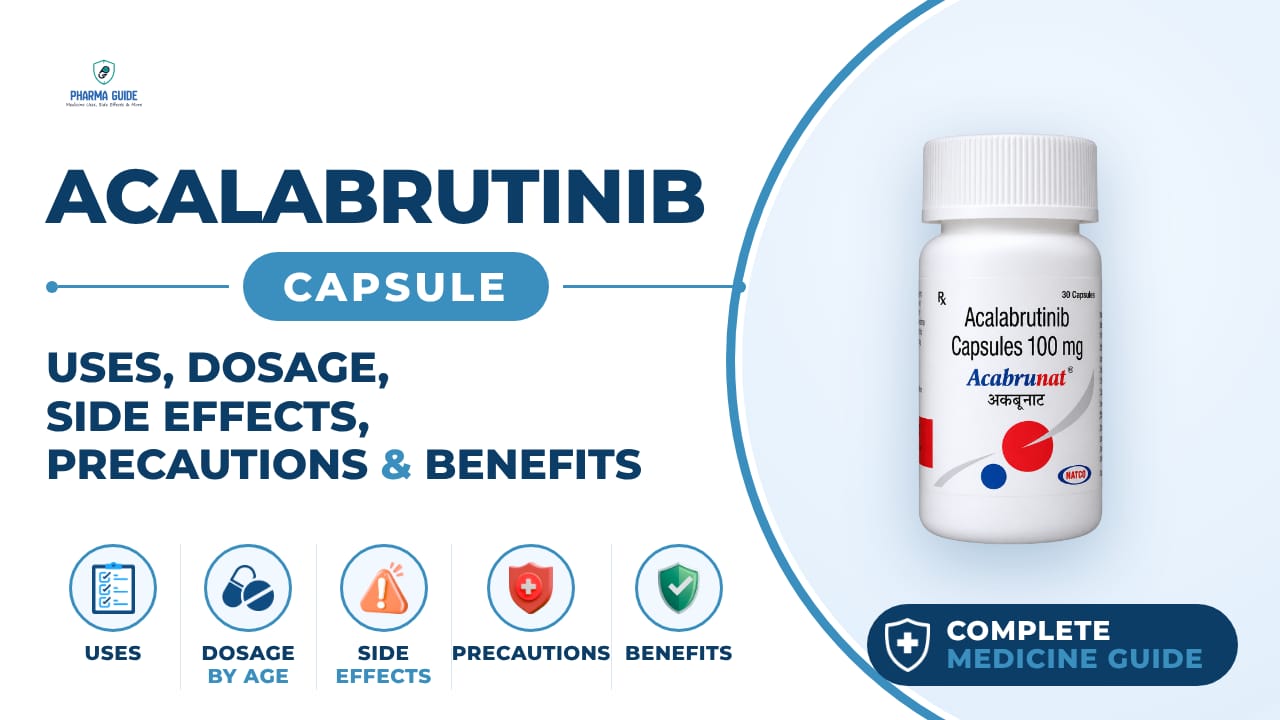
| Generic name | Acalabrutinib |
|---|---|
| Drug class | BTK inhibitor (Bruton tyrosine kinase inhibitor) |
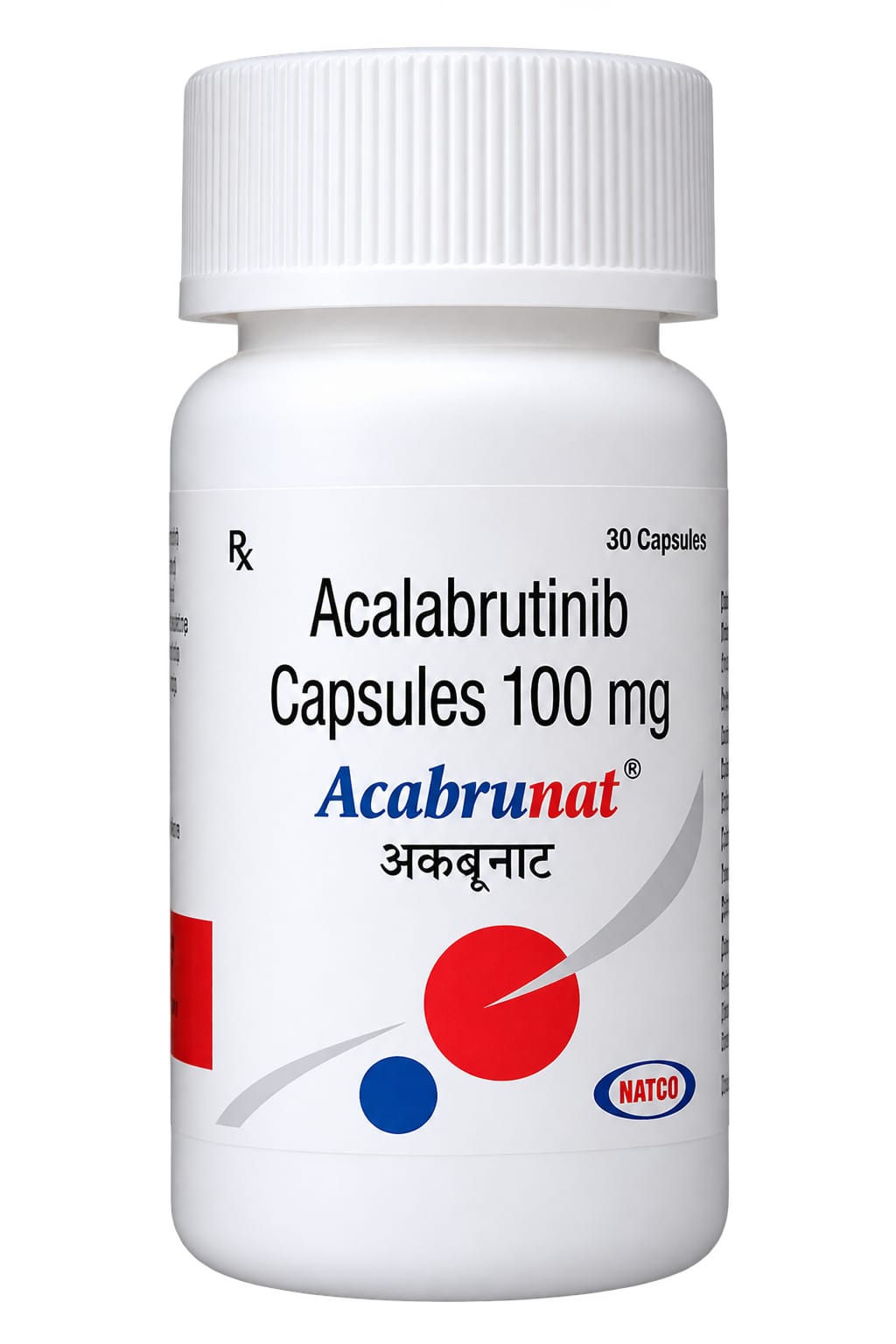
| Forms | Capsule (100mg), Tablet (100mg) |
Quick overview
Acalabrutinib Capsule (generic name: Acalabrutinib) is a BTK inhibitor used to treat certain blood cancers in adults, including chronic lymphocytic leukemia, small lymphocytic lymphoma, and mantle cell lymphoma. It is not chemotherapy; instead, it works by blocking a specific protein that cancer cells need to grow and divide. It is taken as a capsule twice a day, and regular monitoring with blood tests may be required during treatment.
What is Acalabrutinib Capsule
Acalabrutinib is a targeted cancer medicine used to treat certain blood cancers in adults. It is not chemotherapy. It works by blocking a specific protein that cancer cells need to grow and divide. It belongs to the BTK inhibitor (Bruton tyrosine kinase inhibitor) drug class.
Acalabrutinib Capsule uses
- Chronic lymphocytic leukemia (CLL)
- Small lymphocytic lymphoma (SLL)
- Mantle cell lymphoma (MCL) in eligible adults
- Previously untreated mantle cell lymphoma in combination with other medicines for eligible patients
Benefits of Acalabrutinib Capsule
- Helps slow cancer-cell growth
- Helps control abnormal B-cell activity
- May delay disease progression
- Can help reduce cancer-related symptoms
- Supports longer-term disease control in eligible patients
How Acalabrutinib Capsule works
Cancer cells get signals to grow and divide from a protein called Bruton tyrosine kinase (BTK). Acalabrutinib blocks BTK, which helps stop cancer cells from growing and multiplying and helps reduce cancer growth.
Acalabrutinib Capsule dosage
Take the capsule twice a day, about 12 hours apart. It can be taken with or without food. Swallow the capsule whole with a glass of water; do not crush, chew, break, or dissolve it. If you need an antacid, take it either 2 hours before or 2 hours after your dose. If you need an acid reducer (H2-receptor blocker), take acalabrutinib 2 hours before the acid reducer.
Take this medicine exactly as prescribed and follow all directions on your prescription label. Do not switch between acalabrutinib capsules and tablets without talking to your doctor. You may need frequent blood tests while taking this medicine. Tell your surgeon beforehand if you need any surgery, as you may need to stop the medicine for a short time.
| Age group | Dose |
|---|---|
| Under 18 years | Not recommended |
| 18–64 years | 100 mg, twice/day |
| 65+ years | 100 mg, twice/day |
Available forms and strengths
- Capsule (100 mg)
- Tablet (100 mg)
Side effects of Acalabrutinib Capsule
Common
- Infection (including upper and lower respiratory tract infections, urinary tract infections)
- Headache
- Dizziness
- Diarrhea
- Nausea
- Muscle and joint pain
- Tiredness
- Bruising
- Rash
- Low red blood cell counts (anemia)
- Low white blood cell counts (neutropenia)
- Low platelet counts (thrombocytopenia)
- Temporary rise in white blood cell counts (lymphocytosis)
Serious
- Unusual bleeding such as nosebleeds, bleeding gums, or bleeding that will not stop
- Signs of internal bleeding such as weakness, dizziness, confusion, speech problems, prolonged headache, bloody or tarry stools, pink or brown urine, coughing up blood, or vomit that looks like coffee grounds
- Heart rhythm problems such as fast or irregular heartbeat, chest pain, shortness of breath, or feeling light-headed
- Signs of low blood cell counts such as fever, chills, tiredness, mouth sores, skin sores, easy bruising, pale skin, cold hands and feet
- Signs of infection such as fever, chills, flu-like symptoms, cough with mucus, chest pain, trouble breathing
- Signs of an allergic reaction such as hives, difficulty breathing, or swelling of the face, lips, tongue, or throat
- Brain infection causing problems with speech, thought, vision, or muscle movement that can get worse quickly
- Liver problems including abdominal discomfort, dark urine, or yellowing of the skin
- Second cancers, including skin cancers and other solid tumors
Warnings and precautions
- This medicine can make it easier for you to bleed, including serious and sometimes fatal bleeding. Contact your doctor or get emergency help if you have bleeding that will not stop.
- Serious and sometimes fatal infections, including opportunistic infections, have happened in people taking this medicine. Watch for signs of infection and treat them promptly.
- This medicine can lower your red blood cell, white blood cell, or platelet counts. You will need regular blood tests to monitor this.
- New cancers, including skin cancers and other solid tumors, have occurred in people taking this medicine. Use sun protection and ask your doctor about this risk.
- Serious and sometimes fatal heart rhythm problems have occurred with this medicine. You will be monitored for symptoms.
- Serious, life-threatening, and sometimes fatal liver damage has occurred with this type of medicine. Your doctor will check your liver function before and during treatment.
- Your doctor may need to stop this medicine temporarily before any planned surgery, medical, or dental procedure because of bleeding risk.
- Pregnancy: This medicine may harm an unborn baby and cause problems during childbirth. Tell your healthcare provider if you are pregnant or plan to become pregnant, and use effective birth control during treatment and for at least 1 week after the last dose.
- Breastfeeding: It is not known if this medicine passes into breast milk. Do not breastfeed during treatment and for at least 2 weeks after the final dose.
- Kidney: No routine adjustment is usually required for mild-to-moderate renal impairment, but severe kidney disease requires specialist assessment.
- Liver: This medicine should be avoided in people with severe liver problems. Liver problems have occurred in people taking this medicine, so your doctor will check your liver function before and during treatment. Tell your doctor right away if you have stomach pain, dark urine, or yellowing of your skin.
- Alcohol: No major direct interaction is established, but alcohol may worsen fatigue or bleeding risk indirectly.
- Driving: This medicine has no or only a small effect on your ability to drive or use machines, but tiredness and dizziness have been reported. Be careful when driving or operating machinery if you feel tired, dizzy, or have blurred vision.
Storage
- Store at room temperature between 68°F to 77°F (20°C to 25°C)
- Keep CALQUENCE and all medicines out of the reach of children
When to see a doctor
- Get emergency help right away for signs of an allergic reaction, such as hives, difficulty breathing, or swelling of the face, lips, tongue, or throat.
- Call your doctor right away if you have unusual bleeding, such as nosebleeds, bleeding gums, abnormal vaginal bleeding, or any bleeding that will not stop.
- Call your doctor right away if you have signs of bleeding inside your body, such as weakness, dizziness, confusion, speech problems, a headache that lasts a long time, bloody or tarry stools, pink or brown urine, or coughing up blood or vomit that looks like coffee grounds.
- Call your doctor right away if you have signs of a heart rhythm problem, such as dizziness, chest pain, shortness of breath, a fast or irregular heartbeat, or feeling light-headed.
- Call your doctor right away if you have signs of low blood cell counts, such as fever, chills, tiredness, mouth sores, skin sores, easy bruising, unusual bleeding, pale skin, cold hands and feet, or feeling light-headed or short of breath.
- Call your doctor right away if you have signs of infection, such as fever, chills, tiredness, flu-like symptoms, cough with mucus, chest pain, or trouble breathing.
- Tell your doctor immediately if you notice problems with speech, thought, vision, or muscle movement, as this medicine can cause a brain infection that may worsen quickly.
- Tell your healthcare provider immediately if you experience abdominal discomfort, dark urine, or yellowing of the skin, which can be signs of liver problems.
Alternatives
- Ibrutinib
- Zanubrutinib
- Pirtobrutinib
- Venetoclax
Watch the video
FAQs
What is Acalabrutinib Capsule used for?
It is used to treat chronic lymphocytic leukemia (CLL), small lymphocytic lymphoma (SLL), and mantle cell lymphoma (MCL) in eligible adults, including previously untreated MCL in combination with other medicines.
How does Acalabrutinib Capsule work?
It blocks a protein called Bruton tyrosine kinase (BTK) that cancer cells need to grow and divide, helping stop cancer cells from growing and multiplying.
How should I take Acalabrutinib Capsule?
Take the capsule twice a day, about 12 hours apart, with or without food. Swallow it whole with water; do not crush, chew, break, or dissolve it. The usual dose is 100 mg twice a day.
What are the serious side effects of Acalabrutinib Capsule?
Serious side effects include unusual bleeding, signs of internal bleeding, heart rhythm problems, low blood cell counts, infections, allergic reactions, brain infection, liver problems, and second cancers such as skin cancers.
Can I take antacids with Acalabrutinib Capsule?
If you need an antacid, take it either 2 hours before or 2 hours after your Acalabrutinib dose. If you need an H2-receptor blocker, take Acalabrutinib 2 hours before it.
General information, not medical advice
Your prescriber and the leaflet in your pack know your situation. This page does not.
- Follow your prescriber and the leaflet
- Don't start, stop, or change a dose on your own
- Doses and warnings differ by country and product
Sources
Video
Related medicines

Injectafer Injection: Uses, Dosage, Side Effects, Precautions and Alternates
Iron products
Injectafer (ferric carboxymaltose) treats iron deficiency anemia and heart failure-related iron deficiency via IV. Learn uses, dosage, side effects, and

Gliclazide Tablet: Uses, Dosage, Side Effects, Precautions and Alternates
Sulfonylurea (hypoglycemic/antidiabetic agent)
Gliclazide Tablet is a sulfonylurea for type 2 diabetes that boosts insulin release. Learn about dosage, side effects, warnings, and precautions.