
Safety
General information, not medical advice
Your prescriber and the leaflet in your pack know your situation. This page does not.
- Follow your prescriber and the leaflet
- Don't start, stop, or change a dose on your own
- Doses and warnings differ by country and product
Acanya Gel: Uses, Dosage, Side Effects, Precautions and Alternates
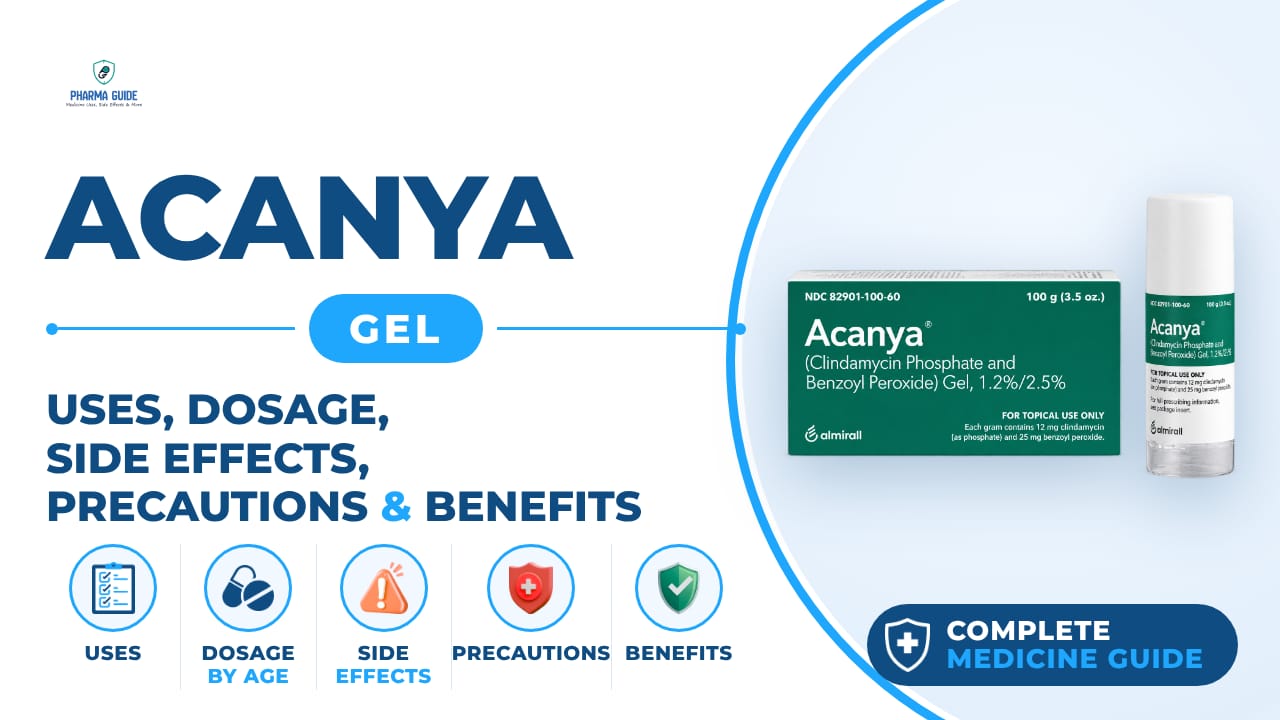
| Generic name | benzoyl peroxide and clindamycin topical (clindamycin phosphate and benzoyl peroxide) |
|---|---|
| Drug class | Topical acne agents |
| Forms | Gel |
Quick overview
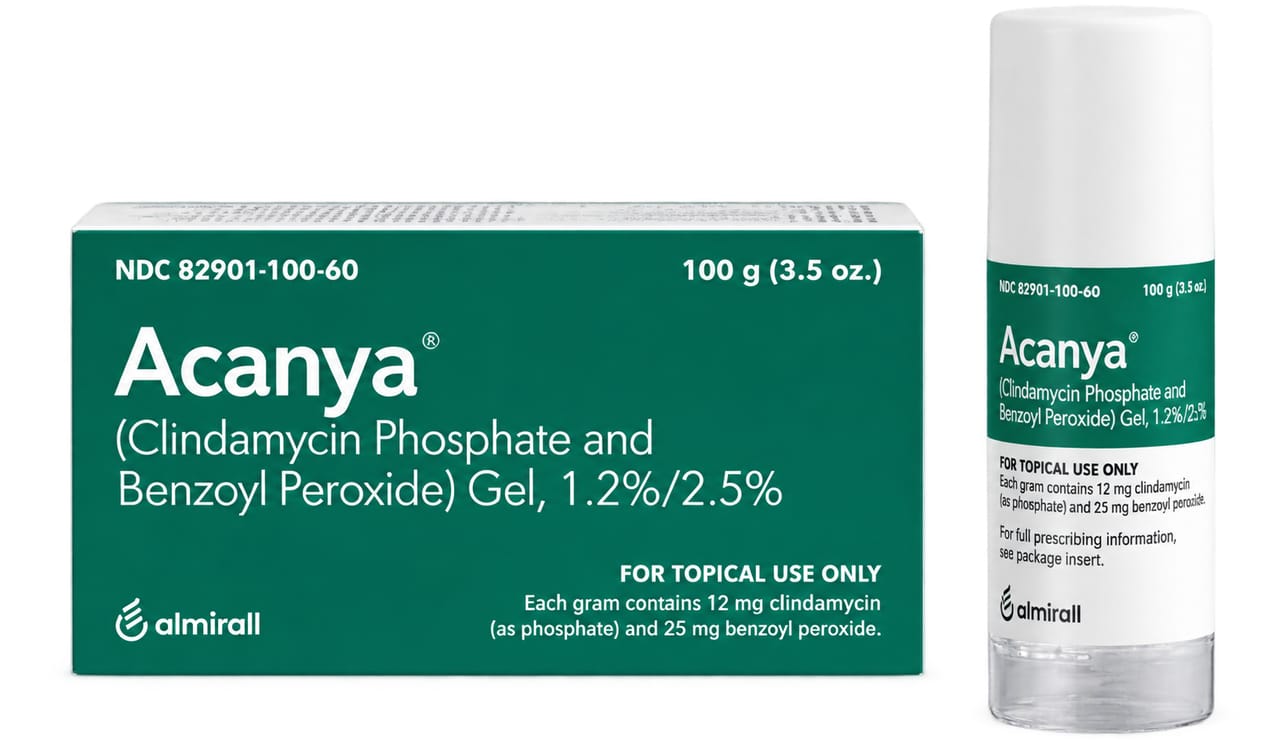
Acanya Gel is a prescription topical medicine that combines benzoyl peroxide and clindamycin to treat acne vulgaris in people 12 years and older. It helps decrease the number of pimples and reduces swelling, redness, and inflammation. The gel is applied once daily as part of a treatment plan guided by a healthcare professional.
What is Acanya Gel
Acanya Gel is a prescription medicine applied to the skin that combines two active ingredients, benzoyl peroxide and clindamycin, to treat acne in people 12 years and older. The generic name is benzoyl peroxide and clindamycin topical (clindamycin phosphate and benzoyl peroxide), and it belongs to the topical acne agents drug class.
Acanya Gel uses
- Treats acne vulgaris (a common type of acne with pimples and inflamed lesions) in patients 12 years or older
Benefits of Acanya Gel
- Helps decrease the number of acne pimples
- Reduces swelling, redness, and inflamed pimples
- Helps shed dead skin cells and keep pores open
How Acanya Gel works
Benzoyl peroxide kills acne-causing bacteria and helps remove excess oil and dirt from the skin, while clindamycin is an antibiotic that stops the acne-causing bacteria from growing.
Acanya Gel dosage
Wash your hands before and after applying the gel. Wash your face with a mild cleanser (not soap), rinse with warm water, and pat the skin dry with a clean towel. Apply the gel once daily as a thin layer to the affected areas, avoiding the eyes and lips.
Use the pump to dispense one pea-sized amount onto your fingertip; this should be enough to cover your entire face. Dot the gel onto six areas of the face (chin, left cheek, right cheek, nose, left forehead, right forehead), then spread it evenly and gently rub it in.
Avoid getting the gel in your eyes, mouth, nose, or on your lips; if this happens, wash with water. Do not apply to sunburned, windburned, dry, chapped, irritated, or broken skin.
It may take several weeks to months before you see improvement, so keep using it as directed and tell your doctor if symptoms do not improve.
If you miss a dose, apply it as soon as you remember, but skip it if it is almost time for your next dose; do not use extra to make up for a missed dose. This medicine is not for use in the mouth, eyes, or vagina.
| Age group | Dose |
|---|---|
| Under 12 years | Not established / not recommended |
| 12–17 years | Apply a pea-sized amount to the face once daily |
| 18–64 years | Apply a pea-sized amount to the face once daily |
| 65+ years | Apply a pea-sized amount to the face once daily |
Available forms and strengths
- Gel
Side effects of Acanya Gel
Common
- Mild burning or stinging
- Itching or tingly feeling
- Dryness or peeling of treated skin
- Redness or other irritation
- Application site pain
Serious
- Severe redness, burning, stinging, or peeling of treated skin areas
- Diarrhea that is watery or bloody
- Severe stomach or abdominal cramps
- Blood or mucus in stool
- Signs of a serious allergic reaction such as hives, rash, severe itching, swelling of the face, lips, tongue, or throat, severe dizziness, or trouble breathing
Warnings and precautions
- For external use only. Do not use in the eyes, mouth, mucous membranes, or vagina. Avoid broken or irritated skin. Do not use if allergic to clindamycin, benzoyl peroxide, lincomycin, or any ingredient in the product.
- Colitis warning: Stop Acanya and contact a healthcare professional if significant or persistent diarrhea, especially bloody diarrhea, develops.
- Do not use if you have a history of ulcerative colitis, regional enteritis, or antibiotic-associated colitis.
- You may not be able to use this medicine if you have inflammation of the intestines (enteritis), ulcerative colitis, or if you have ever had severe diarrhea caused by an antibiotic medicine, because enough clindamycin may be absorbed through the skin to cause serious side effects.
- Avoid getting the gel in your eyes, mouth, or nose, or on your lips. If it does get into these areas, wash with water. Do not apply to sunburned, windburned, dry, chapped, irritated, or broken skin.
- Minimize sunlight and avoid tanning beds/sunlamps while using Acanya. This medicine can make you sunburn more easily. Avoid sunlight and tanning beds, and wear protective clothing and sunscreen (SPF 30 or higher) when outdoors.
- May cause dryness, peeling, redness, burning, irritation, or skin sensitivity.
- Avoid combining with other peeling, abrasive, or strongly drying acne products, as irritation can increase. Avoid using harsh soaps, other skin cleansers, hair coloring or chemical treatments, hair removers or waxes, or skin products containing alcohol, spices, astringents, or lime while using this medicine, and do not use other medicated skin products unless your doctor tells you to.
- This medicine may bleach hair or colored fabric, so avoid letting it touch clothing, hair, or towels and bed linens.
- Avoid using Acanya with topical or oral erythromycin-containing products unless specifically directed by a doctor, as this may make the medicine less effective.
- Pregnancy: It is not known whether this medicine will harm an unborn baby. Tell your doctor if you are pregnant or plan to become pregnant, and it should only be used during pregnancy if clearly needed.
- Breastfeeding: It is not known whether this medicine passes into breast milk or could harm a nursing baby. You should not breastfeed while using this medication; talk to your doctor about the best way to feed your baby.
- Children under 12: Safety and effectiveness have not been established. Acanya treatment beyond 12 weeks has not been evaluated in the labeling.
Storage
- Store at room temperature away from moisture and heat
- Do not freeze
- Keep the container tightly closed
- Store pump upright
- Throw away any unused medicine 2 months after the date you filled the prescription
- Keep out of the reach of children
When to see a doctor
Get emergency medical help if you have signs of an allergic reaction such as hives, difficulty breathing, or swelling of your face, lips, tongue, or throat.
Stop using the gel and call your doctor right away if you have severe redness, burning, stinging, or peeling of treated skin, or if you have watery or bloody diarrhea.
Stop using the gel and call your doctor right away if you have severe stomach cramps, watery diarrhea, or blood or mucus in your stool, even weeks after stopping treatment, and do not take anti-diarrhea medicine as it may make things worse.
Alternatives
- Clindamycin + Benzoyl Peroxide Gel
- Benzaclin
- Azelaic Acid
Watch the video
FAQs
What is Acanya Gel used for?
Acanya Gel is a prescription topical medicine used to treat acne vulgaris in people 12 years and older by decreasing the number of pimples and reducing swelling, redness, and inflammation.
How do you apply Acanya Gel?
Wash your face with a mild cleanser and pat dry, then apply a pea-sized amount of gel once daily in a thin layer to the affected areas, avoiding the eyes and lips. Dot the gel onto six areas of the face and spread it evenly.
What are the common side effects of Acanya Gel?
Common side effects include mild burning or stinging, itching or tingling, dryness or peeling of treated skin, redness or other irritation, and application site pain.
Can I use Acanya Gel while pregnant or breastfeeding?
It is not known whether Acanya Gel will harm an unborn baby, so it should only be used during pregnancy if clearly needed. It is also not known if it passes into breast milk, so you should not breastfeed while using this medication without talking to your doctor.
What warnings should I know before using Acanya Gel?
Acanya Gel can increase sun sensitivity, so you should minimize sun exposure and use sunscreen. It may also cause colitis, so stop use and contact your doctor if you develop significant or persistent diarrhea, especially if bloody.
General information, not medical advice
Your prescriber and the leaflet in your pack know your situation. This page does not.
- Follow your prescriber and the leaflet
- Don't start, stop, or change a dose on your own
- Doses and warnings differ by country and product
Sources
Video
Related medicines
Onexton Gel: Uses, Dosage, Side Effects, Precautions and Alternates
Topical acne agents
Onexton Gel combines clindamycin and benzoyl peroxide to treat acne vulgaris in patients 12+. Learn about dosage, side effects, and precautions.
Clindagel Gel: Uses, Dosage, Side Effects, Precautions and Alternates
Topical acne agents
Clindagel Gel (1% clindamycin) is a prescription topical antibiotic for acne in adults and teens 12+. Learn uses, dosage, side effects, and warnings.