
Safety
General information, not medical advice
Your prescriber and the leaflet in your pack know your situation. This page does not.
- Follow your prescriber and the leaflet
- Don't start, stop, or change a dose on your own
- Doses and warnings differ by country and product
Onexton Gel: Uses, Dosage, Side Effects, Precautions and Alternates
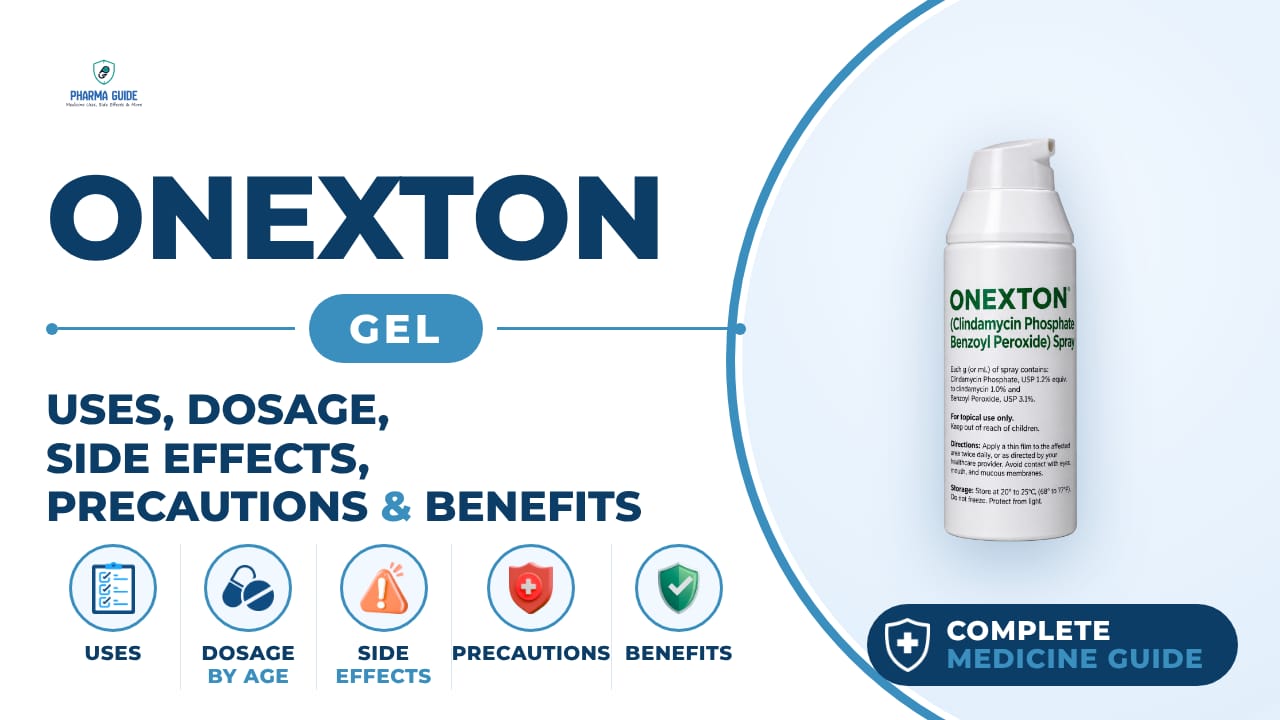
| Generic name | clindamycin phosphate and benzoyl peroxide |
|---|---|
| Drug class | Topical acne agents |
| Forms | Gel |
Quick overview
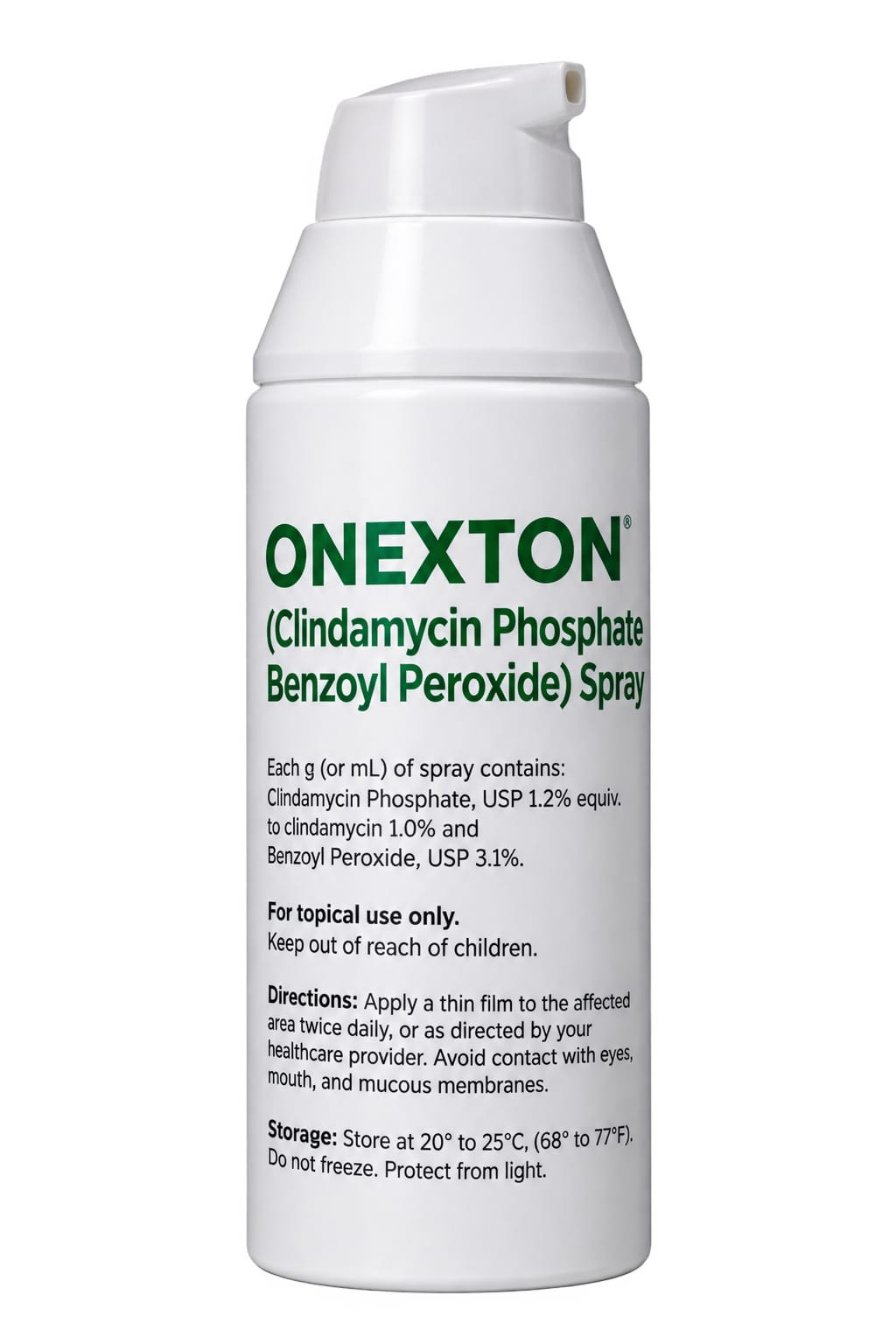
Onexton Gel contains clindamycin phosphate and benzoyl peroxide, a topical acne agent combining an antibiotic and an antiseptic. It is used for the topical treatment of acne vulgaris in patients 12 years of age and older. Onexton is applied once daily to the face and combines two medications into a single product.
What is Onexton Gel
Onexton is a combination medicine applied to the skin that contains an antibiotic (clindamycin) and an antiseptic (benzoyl peroxide). It is used to treat acne.
Onexton Gel uses
- Topical treatment of acne vulgaris in patients 12 years of age and older
Benefits of Onexton Gel
- Combines two medications into a single product
- Applied once per day
- A first-choice option for treating acne
How Onexton Gel works
Clindamycin is an antibiotic that stops acne-causing bacteria from making proteins they need to grow and spread. Benzoyl peroxide is an antiseptic that kills bacteria on the skin, helps shed damaged or flaking skin, and reduces inflammation.
Onexton Gel dosage
Follow all directions on your prescription label and do not use in larger or smaller amounts or for longer than recommended. Using more medicine or applying it more often than prescribed will not make it work any faster, and may increase side effects.
Wash your hands before and after applying this medicine. Wash your face with a mild cleanser (not soap) and pat the skin dry with a clean towel before applying. Apply once daily to the face.
Avoid getting this medicine in your eyes, mouth, or nose (or in the creases of your nose), or on your lips; if it gets into these areas, wash with water. Do not apply this medicine to sunburned, windburned, dry, chapped, irritated, or broken skin.
It may take several weeks before your symptoms improve; keep using the medication as directed and tell your doctor if symptoms do not improve.
Before starting, you may apply a small test amount to 1 or 2 small acne areas daily for 3 days to check for a reaction, then begin the full prescribed amount on the 4th day if there is no reaction.
If you miss a dose, apply it as soon as you remember, but skip it if it is almost time for your next dose; do not use extra medicine to make up for a missed dose.
| Age group | Dose |
|---|---|
| Under 12 years | Safety and effectiveness are not established; no standard labeled dose |
| 12–17 years | Apply a pea-sized amount to the face once daily |
| 40–64 years | Apply a pea-sized amount to the face once daily |
| 65 years and older | No separate geriatric dose is established; generally follows the adult regimen with clinician monitoring |
Available forms and strengths
- Gel
Side effects of Onexton Gel
Common
- Mild burning or stinging
- Itching or tingly feeling
- Dryness or peeling of treated skin
- Redness or other irritation
- Scaling
- Change in hair color
- Sensitivity to light
Serious
- Severe redness, burning, stinging, or peeling of treated skin areas
- Diarrhea that is watery or bloody
- Signs of a serious allergic reaction: hives, itching, difficult breathing, feeling light-headed, swelling of face, lips, tongue, or throat
- Inflammation of the large intestine (colitis): diarrhea that doesn't go away, especially if bloody, with severe stomach cramps
Warnings and precautions
- This medicine can cause a rare but serious allergic reaction or severe skin irritation. Stop using it and get emergency medical help if you have hives, itching, difficulty breathing, feeling light-headed, or swelling of the face, lips, tongue, or throat.
- You should not use this medicine if you are allergic to benzoyl peroxide or clindamycin.
- Your body may absorb enough of the medicine through your skin to cause serious side effects. You may not be able to use this medicine if you have inflammation of your intestines (enteritis), ulcerative colitis, or have ever had severe diarrhea caused by antibiotic medicine.
- Avoid using skin products that can cause irritation, such as harsh soaps, shampoos, hair coloring or permanent chemicals, hair removers or waxes, or skin products with alcohol, spices, astringents, or lime.
- Avoid using other medications on the areas you treat with this medicine unless your doctor tells you to.
- Avoid sunlight or tanning beds, since this medicine can make you sunburn more easily. Wear protective clothing and use sunscreen (SPF 30 or higher) when outdoors.
- Avoid using sunscreen containing PABA on skin treated with this medicine, as skin discoloration may occur.
- This medicine can bleach hair or fabrics, so avoid letting it contact clothing, hair, or colored towels or bed linens.
- It is not known whether Onexton will harm an unborn baby. Tell your doctor if you are pregnant or plan to become pregnant while using this medicine.
- It is not known whether this medicine passes into breast milk or if it could harm a nursing baby. You should not breast-feed while using this medicine.
- No routine kidney-specific dose adjustment is established for topical use. No routine liver-specific dose adjustment is established. No major direct interaction is expected with topical Onexton and alcohol. Onexton is not expected to impair driving.
Storage
- If you receive more than one supply, store the unopened container in a refrigerator until you are ready to start using it. Do not freeze.
- Once in use, store the gel at room temperature away from moisture and heat. Do not freeze.
- Throw away any unused medicine after the expiration date on the label has passed.
When to see a doctor
- Stop using the medicine and get emergency medical help if you have signs of an allergic reaction, such as hives, itching, difficulty breathing, feeling light-headed, or swelling of the face, lips, tongue, or throat.
- Stop using this medicine and call your doctor right away if you have severe redness, burning, stinging, or peeling of treated skin, or diarrhea that is watery or bloody.
- If you have diarrhea that is watery or bloody, stop using this medicine and call your doctor. Do not use anti-diarrhea medicine unless your doctor tells you to.
- If you think you have used too much and it has been absorbed through the skin, seek emergency medical attention or contact your local poison control center, especially if you develop bloody or watery diarrhea.
Alternatives
- Clindamycin + benzoyl peroxide gel
- Benzoyl peroxide
- Adapalene
- Azelaic acid
Watch the video
FAQs
What is Onexton Gel used for?
Onexton Gel is used for the topical treatment of acne vulgaris in patients 12 years of age and older.
How often should Onexton Gel be applied?
Onexton Gel is applied once daily to the face.
How does Onexton Gel work?
Clindamycin is an antibiotic that stops acne-causing bacteria from making proteins they need to grow and spread, while benzoyl peroxide is an antiseptic that kills bacteria on the skin, helps shed damaged or flaking skin, and reduces inflammation.
What are the common side effects of Onexton Gel?
Common side effects include mild burning or stinging, itching or tingly feeling, dryness or peeling of treated skin, redness or other irritation, scaling, change in hair color, and sensitivity to light.
Can Onexton Gel be used during pregnancy or breastfeeding?
It is not known whether Onexton will harm an unborn baby, so you should tell your doctor if you are pregnant or plan to become pregnant. It is also not known whether it passes into breast milk, so you should not breastfeed while using this medicine.
General information, not medical advice
Your prescriber and the leaflet in your pack know your situation. This page does not.
- Follow your prescriber and the leaflet
- Don't start, stop, or change a dose on your own
- Doses and warnings differ by country and product
Sources
Video
Related medicines
Clindagel Gel: Uses, Dosage, Side Effects, Precautions and Alternates
Topical acne agents
Clindagel Gel (1% clindamycin) is a prescription topical antibiotic for acne in adults and teens 12+. Learn uses, dosage, side effects, and warnings.
Oxy 10 Cream: Uses, Dosage, Side Effects, Precautions and Alternates
Topical acne agents
Oxy 10 Cream contains 10% benzoyl peroxide to treat acne by killing bacteria and removing excess oil. Learn uses, dosage, side effects, and precautions.