
Safety
General information, not medical advice
Your prescriber and the leaflet in your pack know your situation. This page does not.
- Follow your prescriber and the leaflet
- Don't start, stop, or change a dose on your own
- Doses and warnings differ by country and product
Oxy 10 Cream: Uses, Dosage, Side Effects, Precautions and Alternates
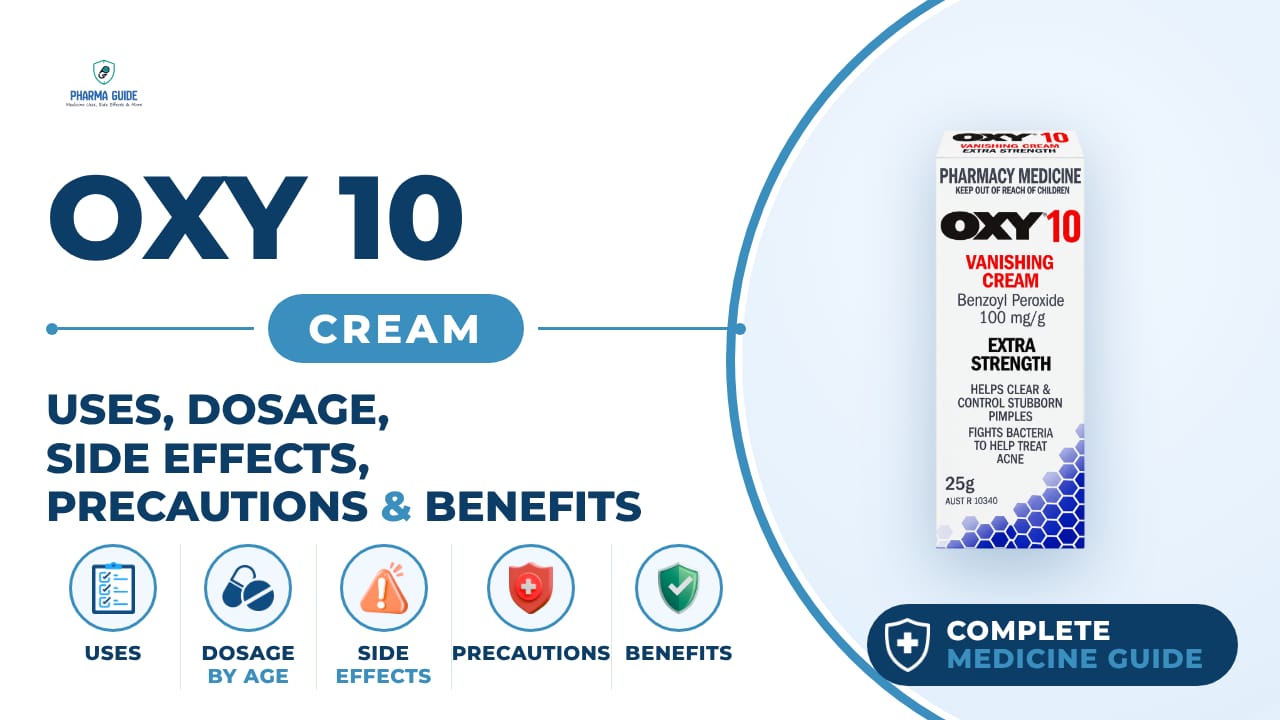
| Generic name | benzoyl peroxide topical |
|---|---|
| Drug class | Topical acne agents |
| Forms | Cream, Lotion |
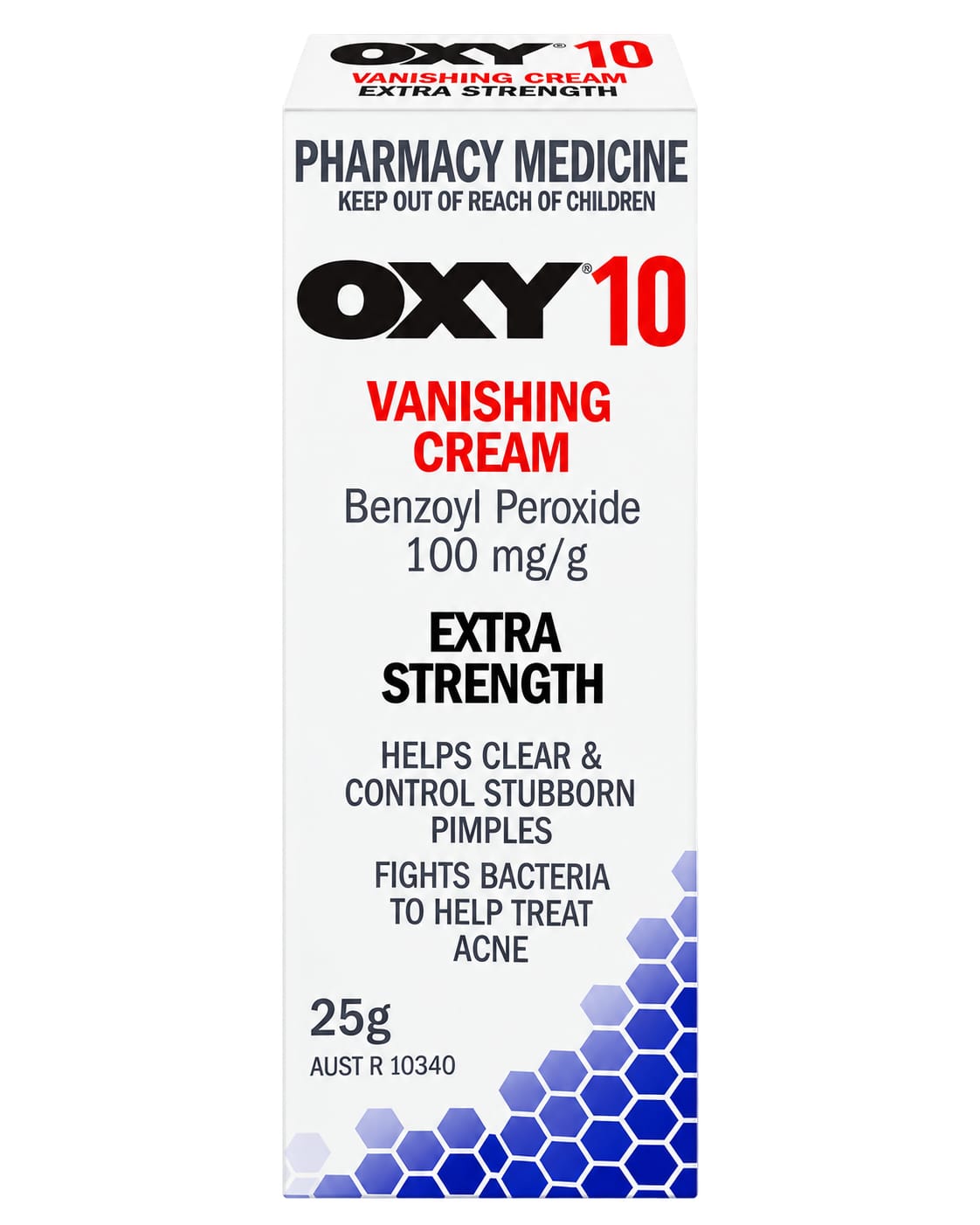
Quick overview
Oxy 10 Cream contains 10% benzoyl peroxide, a topical acne agent used to treat acne and pimples. It has an antibacterial effect and a mild drying effect that helps wash away excess oils and dirt from the skin. It is applied topically and is available as a cream or lotion.
What is Oxy 10 Cream
Oxy 10 Cream contains 10% benzoyl peroxide and is used to treat acne and pimples. It has an antibacterial effect and also has a mild drying effect that helps wash away excess oils and dirt from the skin.
Oxy 10 Cream uses
- Treats acne vulgaris.
- Helps reduce inflammatory pimples.
- Controls acne-associated bacterial growth.
- Helps clear clogged pores.
- Supports reduction of excess surface oil.
Benefits of Oxy 10 Cream
- Provides antibacterial activity against acne-associated bacteria.
- Helps reduce inflammatory acne lesions.
- Supports clearer pores.
- Helps remove excess surface oil.
- Provides mild keratolytic action.
How Oxy 10 Cream works
Benzoyl peroxide kills bacteria on the skin and has a mild drying effect that helps remove excess oil and dead skin cells.
Oxy 10 Cream dosage
Clean the skin thoroughly before applying. Apply a thin layer to clean, dry skin and rub in gently. Wash your hands before and after applying. Start with one application daily, then gradually increase to two or three times a day if needed or as directed by a doctor. If bothersome dryness or peeling occurs, use it less often, such as once a day or every other day.
Do not use on open wounds, or on sunburned, windburned, dry, or irritated skin; wait until these conditions heal before using. Avoid contact with the eyes, lips, and mouth. Avoid letting the product touch your hair or clothing because it can bleach them. Do not cover the treated skin area unless a doctor has told you to.
You may want to test the product on one or two small acne spots once a day for three days before using the full amount, to check for a reaction. It may take several weeks before you see improvement; keep using it as directed and tell your doctor if it does not help.
If you miss an application, use it as soon as you remember, but skip it if it is almost time for your next use; do not apply two applications at once. Do not use on a child without medical advice. If going outside, apply sunscreen after using this product.
| Age group | Dose |
|---|---|
| Under 12 years | No established age-specific dosage for Oxy 10 Cream; consult a healthcare professional |
| 12–64 years | 10% cream once daily initially; may increase to twice daily if appropriate and tolerated |
| 65–74 years | 10% cream once daily initially; additional application depends on skin tolerance |
| 75 years and older | No separate age-specific dosage; 10% cream once daily initially, with careful monitoring for irritation |
Available forms and strengths
- Cream (10%)
- Lotion
Side effects of Oxy 10 Cream
Common
- Mild stinging or burning
- Itching or a tingly feeling
- Skin dryness, peeling, or flaking
- Redness or other irritation
- Bleaching of hair, towels, bedsheets, or colored clothing upon contact
Serious
- Severe itching or burning
- Severe stinging or redness
- Swelling
- Peeling
Warnings and precautions
- Do not use if you have very sensitive skin or are allergic to benzoyl peroxide.
- Using another topical acne medicine at the same time increases the risk of skin irritation and dryness; use only one at a time unless a doctor tells you otherwise.
- This medicine can make your skin more sensitive to sunlight; avoid unnecessary sun exposure and use sunscreen.
- Avoid contact with the eyes, lips, mouth, hair, and dyed fabrics, which can be bleached by this product.
- Using benzoyl peroxide together with tretinoin topical medicine may cause severe skin irritation.
- Do not use on a child without medical advice.
- For external use only; this is not to be taken by mouth.
- Pregnancy: Ask a doctor or health professional before using this medicine if you are pregnant.
- Breastfeeding: Ask a doctor or health professional before using this medicine if you are breastfeeding.
- Kidney: No routine renal dosage adjustment is established. Systemic absorption of benzoyl peroxide is limited during appropriate topical use.
- Liver: No established hepatic-specific dosage adjustment is required for ordinary topical application.
- Alcohol: No significant interaction with alcoholic beverages is established. Alcohol-containing skincare products may worsen irritation.
- Driving: Oxy 10 Cream is not generally associated with sedation or impaired alertness.
Storage
- Store at room temperature away from moisture and heat
- Shelf lifetime is 2 years
- Store below 30 degrees Celsius
- Keep tightly closed
- Avoid storing at temperatures above 100°F (38°C)
- Keep out of reach of children
When to see a doctor
- Stop using this medicine and get emergency medical help if you have signs of an allergic reaction, such as hives, itching, difficulty breathing, feeling light-headed, or swelling of your face, lips, tongue, or throat.
- Stop using the medicine and call your doctor right away if you have severe itching, burning, stinging, redness, swelling, or peeling on the treated skin.
- Stop use and ask a doctor if irritation becomes severe.
- If swallowed, get medical help or contact a poison control center right away.
- If you think you have used too much, seek emergency medical help or contact your local poison control center.
Alternatives
- Adapalene Gel
- Benzoyl Peroxide 5% Cream
- Benzoyl Peroxide 2.5% Gel
Watch the video
FAQs
What is Oxy 10 Cream used for?
Oxy 10 Cream is used to treat acne vulgaris and pimples. It helps reduce inflammatory pimples, controls acne-associated bacterial growth, helps clear clogged pores, and supports reduction of excess surface oil.
How do you apply Oxy 10 Cream?
Clean the skin thoroughly, then apply a thin layer to clean, dry skin and rub in gently. Start with one application daily, then gradually increase to two or three times a day if needed or as directed by a doctor. If bothersome dryness or peeling occurs, use it less often, such as once a day or every other day.
What are the side effects of Oxy 10 Cream?
Common side effects include mild stinging or burning, itching or a tingly feeling, skin dryness, peeling or flaking, redness or other irritation, and bleaching of hair, towels, bedsheets, or colored clothing upon contact. Serious side effects include severe itching or burning, severe stinging or redness, swelling, and peeling.
Can Oxy 10 Cream be used with other acne medicines?
Using another topical acne medicine at the same time increases the risk of skin irritation and dryness, so only one should be used at a time unless a doctor advises otherwise. Using benzoyl peroxide together with tretinoin topical medicine may cause severe skin irritation.
Does Oxy 10 Cream make skin more sensitive to the sun?
Yes, this medicine can make your skin more sensitive to sunlight, so you should avoid unnecessary sun exposure and use sunscreen, especially if going outside after applying it.
General information, not medical advice
Your prescriber and the leaflet in your pack know your situation. This page does not.
- Follow your prescriber and the leaflet
- Don't start, stop, or change a dose on your own
- Doses and warnings differ by country and product
Sources
Video
Related medicines
Onexton Gel: Uses, Dosage, Side Effects, Precautions and Alternates
Topical acne agents
Onexton Gel combines clindamycin and benzoyl peroxide to treat acne vulgaris in patients 12+. Learn about dosage, side effects, and precautions.
Clindagel Gel: Uses, Dosage, Side Effects, Precautions and Alternates
Topical acne agents
Clindagel Gel (1% clindamycin) is a prescription topical antibiotic for acne in adults and teens 12+. Learn uses, dosage, side effects, and warnings.