
Safety
General information, not medical advice
Your prescriber and the leaflet in your pack know your situation. This page does not.
- Follow your prescriber and the leaflet
- Don't start, stop, or change a dose on your own
- Doses and warnings differ by country and product
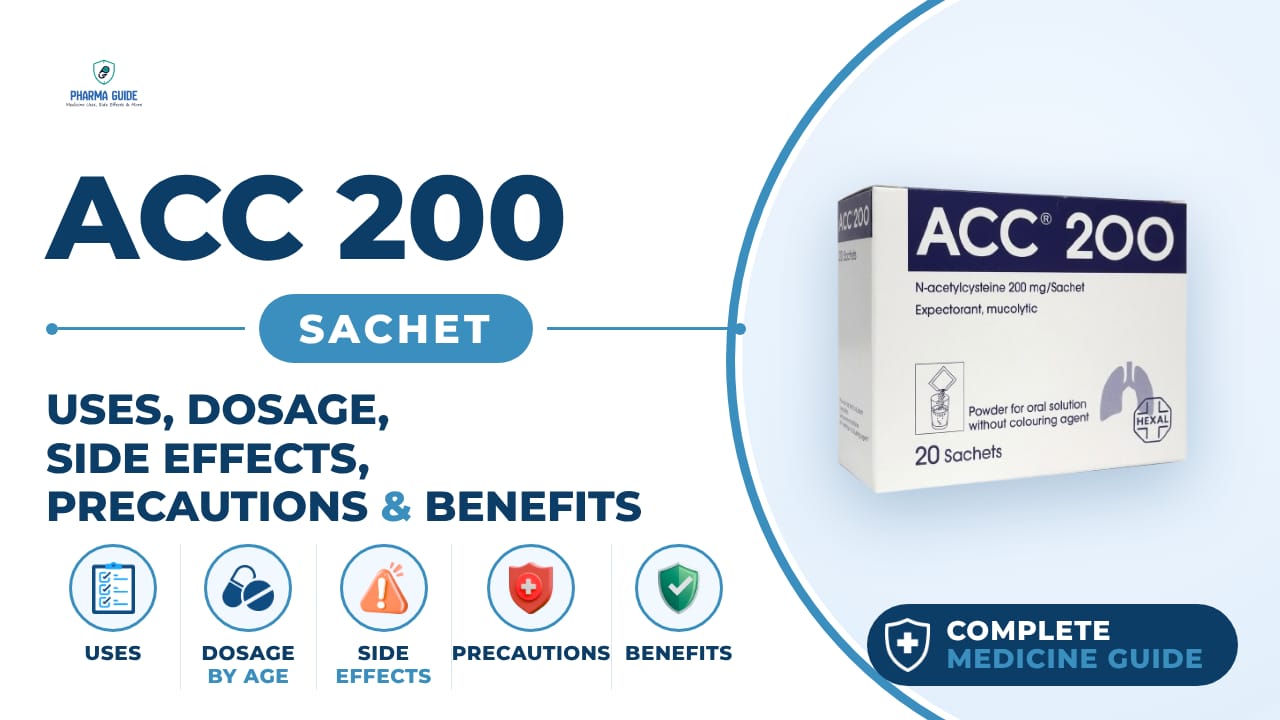
ACC 200 Sachet: Uses, Dosage, Side Effects, Precautions and Alternates
| Generic name | Acetylcysteine (N-acetylcysteine) |
|---|---|
| Drug class | Mucolytic (mucus thinner) |
| Forms | Granules, Powder/sachet for oral solution, Dispersible tablets, Capsules, Syrup/oral solution |
Quick overview
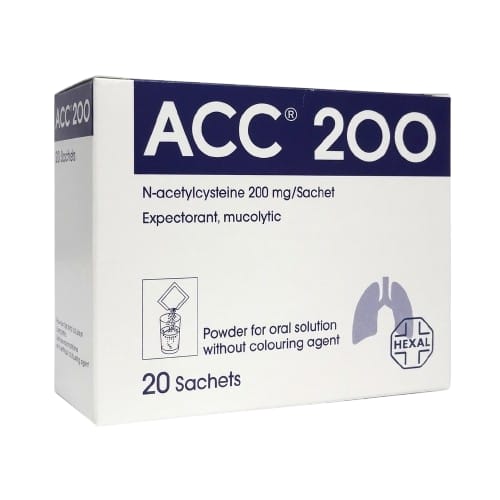
ACC 200 Sachet contains acetylcysteine (N-acetylcysteine), a mucolytic medicine that thins thick mucus in the airways. It is dissolved in water and drunk, and is used for conditions such as bronchitis and cystic fibrosis where mucus is thick and hard to clear. The usual adult dose is 200 mg three times a day, and it is not recommended for use under 18 years of age.
What is ACC 200 Sachet
ACC 200 is a powder that you dissolve in water and drink. It contains acetylcysteine, a medicine that thins thick mucus in the airways so it is easier to cough up.
ACC 200 Sachet uses
- Loosening thick mucus (phlegm) in the airways
- Treating respiratory conditions with thick mucus, such as acute and chronic bronchitis
- Treating cystic fibrosis (mucoviscidosis)
Benefits of ACC 200 Sachet
- Makes thick, sticky mucus thinner so it can be coughed up more easily
- May reduce the number of flare-ups in people with COPD who have a lot of phlegm
How ACC 200 Sachet works
The medicine breaks apart the chemical bonds that hold mucus proteins together in a tight network. This loosens the mucus so it becomes thinner and easier to cough up.
ACC 200 Sachet dosage
Dissolve the powder completely in a glass of water and drink the whole glass. Take it after meals. Leave at least two hours between this medicine and antibiotics taken by mouth. Do not take it together with cough suppressant medicines unless your doctor has told you to. If you forget a dose, take it as soon as you remember, but do not take a double dose to make up for it. Do not use continuously for more than 14 days without talking to a doctor.
| Age group | Dose |
|---|---|
| Under 18 years | Not recommended |
| 18–64 years | 200 mg, 3 times/day |
| 65+ years | 200 mg, 3 times/day |
Available forms and strengths
- Granules
- Powder/sachet for oral solution
- Dispersible tablets
- Capsules
- Syrup/oral solution
Side effects of ACC 200 Sachet
Common
- Nausea
- Vomiting
- Diarrhoea
- Stomach pain
- Heartburn
- Indigestion
- Headache
- Ringing or buzzing in the ears
- Rash, itching or hives
- Fever
- Sores inside the mouth
Serious
- Severe allergic reaction with swelling of the face, lips, mouth, tongue or throat causing difficulty swallowing or breathing
- Anaphylactic shock
- Fast or changed heartbeat
- Low blood pressure
- Difficulty breathing or fast breathing, including bronchospasm (airway spasm) especially in people with asthma
- Severe skin reactions such as Stevens-Johnson syndrome or toxic epidermal necrolysis, with blisters, mouth/eye involvement and fever
- Bleeding or reduced ability of blood to clot
Warnings and precautions
- Do not take this medicine if you are allergic to acetylcysteine or any of its ingredients.
- Do not give this medicine to children under 2 years old, because loosened mucus can block their narrow airways instead of clearing them.
- Do not take this medicine if you have an active stomach ulcer, and use extra caution if you have a history of ulcers.
- Use extra caution if you have asthma, because this medicine can trigger a spasm of the airways (bronchospasm). Stop the medicine right away if this happens.
- Do not take this medicine at the same time as cough suppressant medicines, because loosened mucus that cannot be coughed up may build up and block the airways.
- Leave at least two hours between taking this medicine and taking antibiotics by mouth, because it may reduce how well some antibiotics work.
- If you have an existing or past stomach or duodenal ulcer, or if you have histamine intolerance, use this medicine only with caution, as it can cause symptoms like headache, runny nose or itching.
- Do not use continuously for more than 14 days without consulting a doctor.
- If you are unable to cough up the loosened mucus, you must see a doctor so it can be removed safely, since the volume of mucus can increase especially at the start of treatment.
- Safety during pregnancy has not been established, and one version of this product's information says it should not be used during pregnancy. Talk to your doctor before taking it if you are pregnant or planning to become pregnant.
- It is not known whether this medicine passes into breast milk. Ask your doctor, pharmacist or other healthcare professional for advice before taking it while breastfeeding.
- If your liver does not work normally, the medicine stays in your body longer, so you should discuss use with a doctor first.
- There is no specific known interaction with alcohol, but drinking alcohol is not helpful while you have an infection.
- This medicine is not known to affect your ability to drive or use machines.
Storage
- Store at or below 25°C in a cool dry place
- Protect from light
- Store all medicines out of reach of children
- Do not use after the expiry date printed on the container
- Return unused medicine to your pharmacist
- Do not dispose of unused medicine in drains or sewerage systems (e.g. toilets)
When to see a doctor
- Stop the medicine and get urgent medical help if you have swelling of the face, lips, mouth, tongue or throat, trouble swallowing or breathing, or a widespread rash — these can be signs of a severe allergic reaction.
- Get urgent medical help if you notice a faster or irregular heartbeat, low blood pressure, or difficulty breathing or fast breathing.
- Stop the medicine and see a doctor immediately if you develop a rash along with high fever, skin redness, joint pain, eye infection, or blisters/peeling skin — these can be signs of rare but serious skin reactions.
- See a doctor if your symptoms get worse or do not improve after 14 days of treatment.
- If you have taken too much of this medicine, contact your doctor or pharmacist, or the nearest hospital or poison control center if neither is available.
Alternatives
- Mucolator
- Fluimucil
- Mucomix
Watch the video
FAQs
What is ACC 200 Sachet used for?
It is used to loosen thick mucus in the airways and to treat respiratory conditions with thick mucus, such as acute and chronic bronchitis, as well as cystic fibrosis (mucoviscidosis).
What is the dosage of ACC 200 Sachet for adults?
The usual adult dose is 200 mg three times a day. Dissolve the powder completely in a glass of water, drink it after meals, and do not use continuously for more than 14 days without consulting a doctor.
Can ACC 200 Sachet be taken with antibiotics?
Leave at least two hours between taking ACC 200 Sachet and oral antibiotics, because it may reduce how well some antibiotics work.
What are the common side effects of ACC 200 Sachet?
Common side effects include nausea, vomiting, diarrhoea, stomach pain, heartburn, indigestion, headache, ringing or buzzing in the ears, rash, itching or hives, fever, and sores inside the mouth.
Is ACC 200 Sachet safe for children?
It is not recommended for use under 18 years of age, and it should not be given to children under 2 years old because loosened mucus can block their narrow airways instead of clearing them.
General information, not medical advice
Your prescriber and the leaflet in your pack know your situation. This page does not.
- Follow your prescriber and the leaflet
- Don't start, stop, or change a dose on your own
- Doses and warnings differ by country and product
Sources
Video
Related medicines

Injectafer Injection: Uses, Dosage, Side Effects, Precautions and Alternates
Iron products
Injectafer (ferric carboxymaltose) treats iron deficiency anemia and heart failure-related iron deficiency via IV. Learn uses, dosage, side effects, and

Gliclazide Tablet: Uses, Dosage, Side Effects, Precautions and Alternates
Sulfonylurea (hypoglycemic/antidiabetic agent)
Gliclazide Tablet is a sulfonylurea for type 2 diabetes that boosts insulin release. Learn about dosage, side effects, warnings, and precautions.