
Safety
General information, not medical advice
Your prescriber and the leaflet in your pack know your situation. This page does not.
- Follow your prescriber and the leaflet
- Don't start, stop, or change a dose on your own
- Doses and warnings differ by country and product
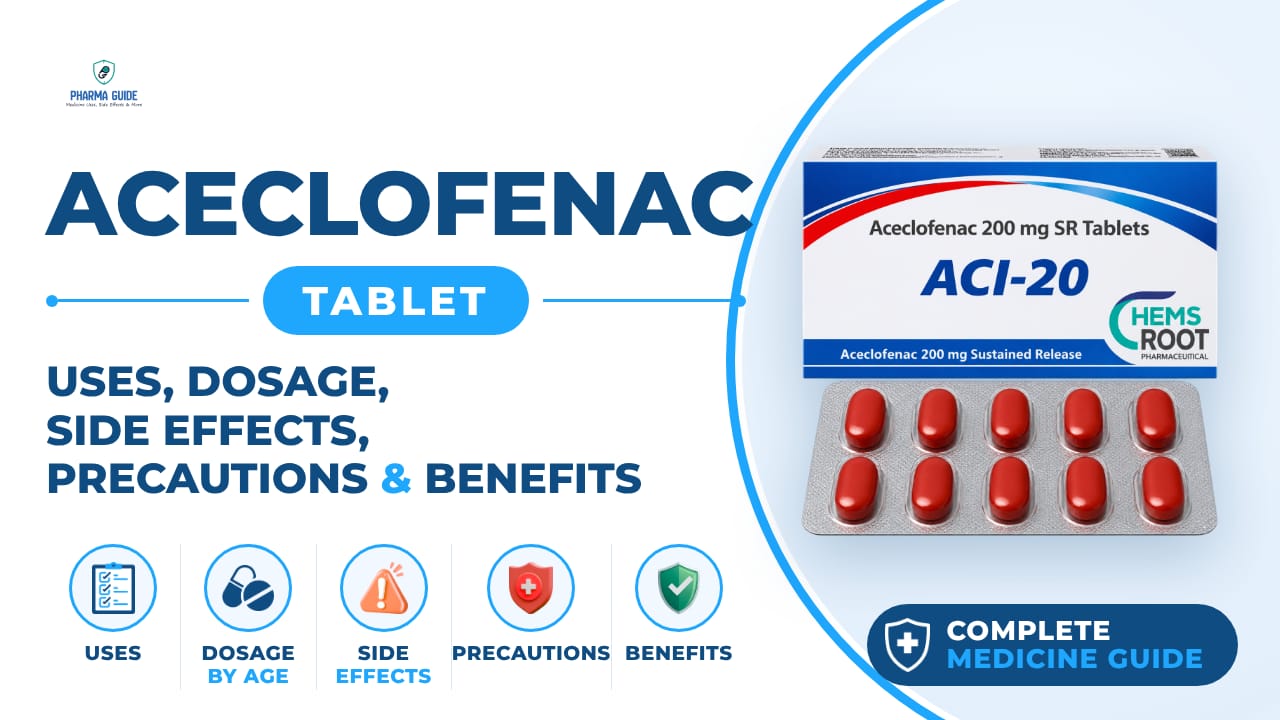
Aceclofenac Tablet: Uses, Dosage, Side Effects, Precautions and Alternates
| Generic name | Aceclofenac |
|---|---|
| Drug class | Non-steroidal anti-inflammatory drug (NSAID); preferential COX-2 inhibitor |
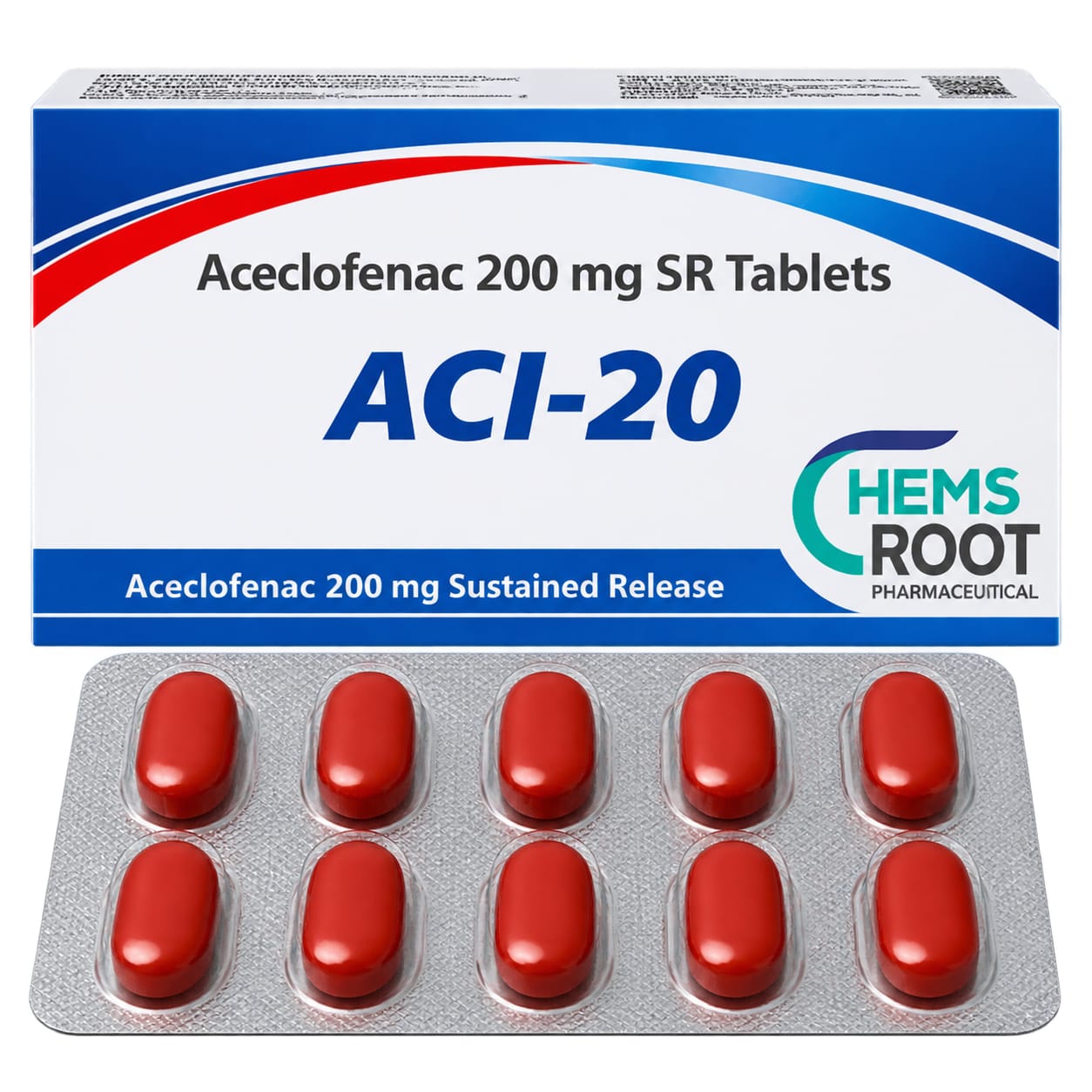
| Forms | Film-coated tablet (100 mg), Extended release tablet (200 mg) |
Quick overview
Aceclofenac Tablet contains Aceclofenac, a non-steroidal anti-inflammatory drug (NSAID) that acts as a preferential COX-2 inhibitor. It is used to relieve pain, inflammation, and fever, often affecting the bones and joints. It works by blocking the COX enzyme, which lowers the chemicals responsible for pain, swelling, and inflammation.
What is Aceclofenac Tablet
Aceclofenac is a non-steroidal anti-inflammatory drug (NSAID). It is used to relieve pain and inflammation, often in the bones and joints. It works by blocking the COX enzyme, which lowers the chemicals that cause pain, swelling, and inflammation.
Aceclofenac Tablet uses
- Relief of pain and stiffness in rheumatoid arthritis
- Relief of pain and stiffness in ankylosing spondylitis
- Relief of tender, painful joints in osteoarthritis
- Relief of fever, pain, and inflammation
- Relief of gout
- Relief of general body pains linked to physical stress
- Relief of post-operative pain
- Relief of menstrual cramps
- Relief of migraine headache
- Relief of toothache
- Relief of low back pain
- Relief of frozen shoulder (scapulohumeral periarthritis)
Benefits of Aceclofenac Tablet
- Helps relieve pain and reduce inflammation
- Helps reduce swelling and stiffness of the joints
- Helps lower fever
- Helps protect joints in osteoarthritis by preventing the breakdown of cartilage
How Aceclofenac Tablet works
Aceclofenac blocks the COX enzyme (mainly COX-2). This enzyme makes chemicals called prostaglandins at the site of an injury, which cause swelling, pain, and inflammation. By blocking COX, aceclofenac lowers prostaglandins and helps relieve pain and reduce inflammation.
Aceclofenac Tablet dosage
Take the tablet by mouth and swallow it whole with a glass of water. Do not crush or chew the tablet. Take it during or after a meal, or with milk, to help avoid stomach irritation or indigestion. Do not take it on an empty stomach. Follow the prescribed dosage and do not take more than prescribed. It is not recommended for children under 18 years of age due to a lack of clinical evidence.
| Age group | Dose |
|---|---|
| Under 18 years | Generally not recommended unless specifically prescribed |
| 18–64 years | Common adult dose: 100 mg twice daily |
| 65+ years | Usually the lowest effective dose for the shortest duration, with medical supervision |
Available forms and strengths
- Film-coated tablet (100 mg)
- Extended release tablet (200 mg)
Side effects of Aceclofenac Tablet
Common
- Nausea
- Vomiting
- Diarrhoea
- Abdominal pain
- Indigestion (dyspepsia)
- Flatulence
- Constipation
- Heartburn
- Loss of appetite
- Skin rashes
- Dizziness
- Blurry vision (visual disturbance)
- Raised liver enzymes
Serious
- Gastrointestinal bleeding
- Hypersensitivity reactions such as hives (urticaria)
- Angioedema (swelling of the lips, tongue, or throat)
- Shortness of breath (dyspnea)
- Anaemia
- Low platelet count (thrombocytopenia)
- Hepatitis (inflammation of the liver)
- Low white blood cell counts (granulocytopenia, neutropenia)
- Depression
- Swelling (oedema)
Warnings and precautions
- Aceclofenac should be avoided in pregnancy unless the benefit clearly outweighs the risk to the baby. Use in the last trimester is not advised. Tell your doctor if you are pregnant or planning to become pregnant.
- There is no evidence that aceclofenac passes into breast milk, but it is not recommended during breastfeeding. Tell your doctor if you are breastfeeding.
- Use with caution if you have kidney problems. It is not preferred in severe kidney disease. Kidney function should be monitored, and the lowest effective dose is preferred.
- Use with caution if you have liver problems. It is not preferred in liver failure. Liver function should be monitored closely and the dose may need to be lowered.
- Aceclofenac can cause drowsiness, dizziness, visual disturbances, vertigo, and fatigue. If you have any of these effects, do not drive or use machines.
- Do not take aceclofenac if you have had an allergic reaction to an NSAID such as diclofenac, naproxen, or aspirin.
- Do not use aceclofenac if you have active or a history of stomach ulcers or intestinal bleeding.
- Do not use aceclofenac if you have severe kidney disease, liver failure, heart attack, or cerebrovascular disease.
- Gastrointestinal bleeding, ulceration, or perforation can be fatal and can happen with or without warning symptoms during treatment.
- Aceclofenac is contraindicated in people with congestive heart failure.
- Use with caution if you have asthma or another allergic disorder because of the risk of bronchospasm.
- Do not take aceclofenac with other medicines unless your doctor tells you to. Blood thinners such as acenocoumarol, warfarin, and strontium may interact with it.
Storage
- Store the tablets below 30 °C and protect from sunlight.
- Store in a dry and cool place, away from light and direct heat.
- Keep all medicines out of the sight and reach of children.
- Do not use the medicine after the expiration date and do not use expired medicine.
When to see a doctor
- If you have any of the side effects again and again, stop taking the medicine and contact your doctor right away.
- If you or someone else takes too much aceclofenac, go to the emergency department of the nearest hospital straight away and take the medicine container with you. An overdose can badly damage the kidney, liver, or other organs.
- Seek medical attention if you have severe side effects such as gastrointestinal bleeding or an allergic reaction.
Alternatives
- Diclofenac
- Ibuprofen
- Naproxen
- Meloxicam
- Celecoxib
- Etoricoxib
- Ketoprofen
Watch the video
FAQs
What is Aceclofenac Tablet used for?
It is used to relieve pain and stiffness in rheumatoid arthritis, ankylosing spondylitis, and osteoarthritis, as well as fever, gout, post-operative pain, menstrual cramps, migraine, toothache, low back pain, and frozen shoulder.
How does Aceclofenac Tablet work?
Aceclofenac blocks the COX enzyme, mainly COX-2, which lowers prostaglandins that cause pain, swelling, and inflammation at the site of injury.
What is the common dosage of Aceclofenac Tablet for adults?
The common adult dose for ages 18-64 is 100 mg twice daily, while older adults are usually given the lowest effective dose for the shortest duration under medical supervision.
What are the common side effects of Aceclofenac Tablet?
Common side effects include nausea, vomiting, diarrhoea, abdominal pain, indigestion, flatulence, constipation, heartburn, loss of appetite, skin rashes, dizziness, blurry vision, and raised liver enzymes.
Can Aceclofenac Tablet be taken during pregnancy?
It should be avoided in pregnancy unless the benefit clearly outweighs the risk, and its use in the last trimester is not advised.
General information, not medical advice
Your prescriber and the leaflet in your pack know your situation. This page does not.
- Follow your prescriber and the leaflet
- Don't start, stop, or change a dose on your own
- Doses and warnings differ by country and product
Sources
- https://www.carehospitals.com/medicine-detail/aceclofenac
- https://www.pacehospital.com/aceclofenac-tablet
- https://medex.com.bd/brands/35665/aceclofenac-100-mg-tablet
- https://patient.info/medicine/aceclofenac-tablets-for-pain-and-inflammation-preservex
- https://www.medicines.org.uk/emc/product/2389/smpc#gref
Video
Related medicines

Injectafer Injection: Uses, Dosage, Side Effects, Precautions and Alternates
Iron products
Injectafer (ferric carboxymaltose) treats iron deficiency anemia and heart failure-related iron deficiency via IV. Learn uses, dosage, side effects, and

Gliclazide Tablet: Uses, Dosage, Side Effects, Precautions and Alternates
Sulfonylurea (hypoglycemic/antidiabetic agent)
Gliclazide Tablet is a sulfonylurea for type 2 diabetes that boosts insulin release. Learn about dosage, side effects, warnings, and precautions.