
Safety
General information, not medical advice
Your prescriber and the leaflet in your pack know your situation. This page does not.
- Follow your prescriber and the leaflet
- Don't start, stop, or change a dose on your own
- Doses and warnings differ by country and product
Acetaminophen Tablet: Uses, Dosage, Side Effects, Precautions and Alternates
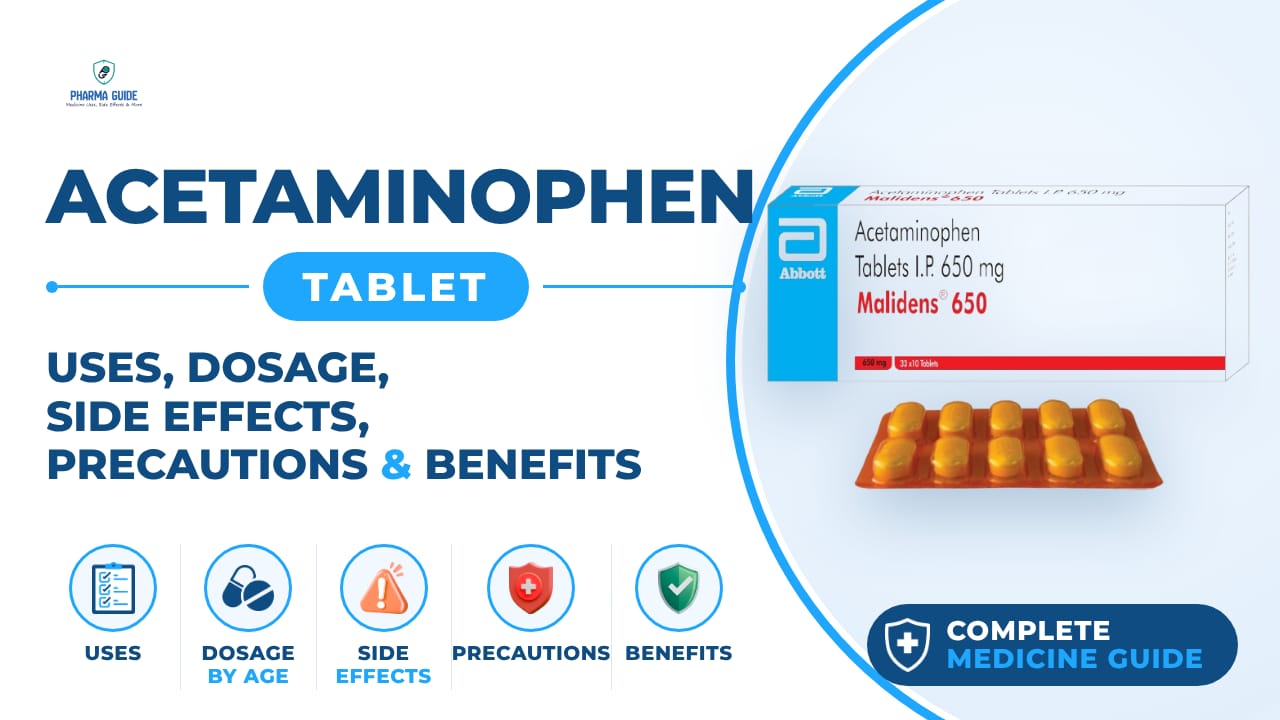
| Generic name | acetaminophen |
|---|---|
| Drug class | pain relievers and antipyretics (fever reducers) |
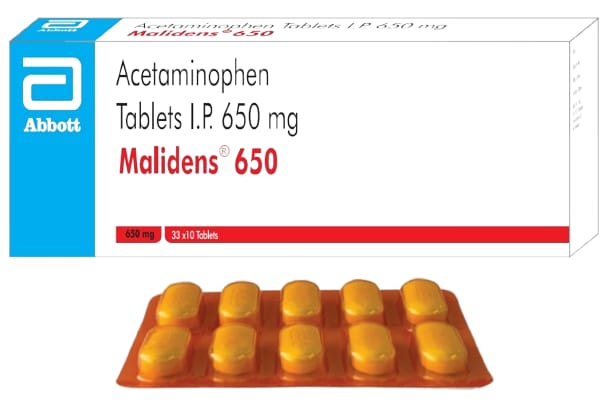
| Forms | Oral tablet (regular strength and extra strength), Oral capsule, Rapid-release gel caps, Chewable tablets, Orally-disintegrating tablets, Extended-release tablets |
Quick overview
Acetaminophen Tablet (generic name acetaminophen) is a pain reliever and fever reducer used to treat mild to moderate pain and reduce fever. Outside of the United States, Canada, and Japan, it is known as paracetamol. It works on the central nervous system to change how the body senses pain and to cool the body. When taken at recommended doses, it is generally well-tolerated.
What is Acetaminophen Tablet
Acetaminophen is a medicine used to relieve mild to moderate pain and to reduce fever. It belongs to the drug class of pain relievers and antipyretics (fever reducers). Outside of the United States, Canada, and Japan, it is called paracetamol.
Acetaminophen Tablet uses
- Short-term relief of minor aches and pains due to colds, flu, headache, backache, arthritis, toothache, muscle pain, and menstruation
- Temporarily reducing fever
- Relieving pain after tooth extraction, lower back pain, pain from stiff shoulders, joint pain, bruises, sprains, fractures, nerve pain, sore throat, and earache
Benefits of Acetaminophen Tablet
- Relieves mild to moderate pain
- Reduces fever
- Generally well-tolerated with few side effects when taken at recommended doses
How Acetaminophen Tablet works
Acetaminophen works by changing the way the body senses pain and by cooling the body. It acts on the central nervous system to relieve fever and pain.
Acetaminophen Tablet dosage
Take exactly as directed on the package or prescription label; do not take more or more often than directed. It can be taken with or without food. Take it as soon as pain starts, and avoid taking it on an empty stomach as much as possible. Wait at least 4 hours between doses. Do not use for more than 10 days unless directed by a doctor.
Swallow extended-release tablets whole; do not split, chew, crush, or dissolve them. Chew chewable tablets completely before swallowing. Place orally disintegrating tablets on the tongue and let them dissolve, or chew before swallowing, using dry hands. Shake liquid suspension well before each use and use only the measuring device that comes with the product. Never take two products that contain acetaminophen at the same time. If giving this medicine to a child, read the package label carefully to make sure it is the right product for the child's age. Do not switch dosing devices between different products.
| Age group | Dose |
|---|---|
| Under 12 years | Not recommended |
| 12–17 years | 2 tablets (1,300 mg) every 8 hours; maximum 6 tablets in 24 hours |
| 18 years and older | 2 tablets (1,300 mg) every 8 hours; maximum 6 tablets in 24 hours |
Available forms and strengths
- Oral tablet (regular strength and extra strength)
- Oral capsule
- Rapid-release gel caps
- Chewable tablets
- Orally-disintegrating tablets
- Extended-release tablets
Side effects of Acetaminophen Tablet
Common
- Nausea
- Stomach pain
- Loss of appetite
- Headache
- Skin rash or itching (occasionally)
Serious
- Liver damage (with overdose or prolonged high-dose use)
- Allergic reactions such as hives, difficulty breathing, and swelling of the face, lips, tongue, or throat
- Severe skin reactions with redness, rash, blistering, and peeling
- Signs of liver problems such as upper right stomach pain, tiredness, itching, dark urine, clay-colored stools, and jaundice
- Kidney damage
- Drug-induced hypersensitivity syndrome
- Interstitial pneumonia
- Asthma symptoms (difficulty breathing or wheezing)
Warnings and precautions
- Talk to a health professional before taking acetaminophen if you are pregnant or plan to become pregnant.
- Some studies suggest a possible link between acetaminophen use during pregnancy and neurological conditions such as autism or ADHD in children, though no causal relationship has been proven.
- Talk to a health professional before taking acetaminophen if you are breastfeeding.
- If you have kidney disease, consult your doctor, dentist, or pharmacist before taking this medicine.
- Do not use acetaminophen if you have severe liver disease. Tell your doctor if you have or have ever had liver disease, as acetaminophen can damage the liver.
- Avoid drinking alcohol, as it may increase your risk of liver damage while taking acetaminophen. Do not take acetaminophen if you drink three or more alcoholic drinks every day.
- Taking too much acetaminophen can cause liver damage, sometimes serious enough to require a liver transplant or cause death.
- Never take two products that contain acetaminophen at the same time. Check labels for acetaminophen or abbreviations like APAP.
- Do not take more than 4,000 mg of acetaminophen per day from all sources.
- Do not use for long periods of time, and do not use for more than 10 days unless directed by a doctor.
- Do not take other antipyretic analgesics, cold medicines, or sedatives while taking this medicine.
- In rare cases, acetaminophen may cause a severe skin reaction that can be fatal, even if you took it before with no reaction.
Storage
- Store at room temperature away from heat and moisture (not in the bathroom).
- Keep the medication in the container it came in, tightly closed, and out of reach of children.
- Store in a cool, dry place out of direct sunlight.
- Do not transfer to another container.
- Dispose of unneeded medications through a medicine take-back program; do not flush down the toilet.
When to see a doctor
- Get emergency medical help if you have signs of an allergic reaction such as hives, difficulty breathing, or swelling of your face, lips, tongue, or throat.
- Stop taking acetaminophen and call your doctor at once if you have signs of liver problems such as upper right stomach pain, loss of appetite, tiredness, itching, dark urine, clay-colored stools, or yellowing of the skin or eyes.
- In case of overdose, get medical help or contact your local poison control center right away, even if there are no symptoms. An overdose can be fatal.
- Stop taking this medicine and call your doctor right away if you have skin redness or a rash that spreads and causes blistering and peeling.
- Stop taking acetaminophen and talk to a doctor if you still have a sore throat after 2 days, a fever after 3 days, or pain after 7 days (or 5 days for a child), or if symptoms worsen or new symptoms appear.
Alternatives
- Paracetamol
- Tylenol
Watch the video
FAQs
What is Acetaminophen Tablet used for?
It is used for short-term relief of minor aches and pains from colds, flu, headache, backache, arthritis, toothache, muscle pain, and menstruation, as well as to temporarily reduce fever. It can also relieve pain after tooth extraction, lower back pain, joint pain, bruises, sprains, fractures, nerve pain, sore throat, and earache.
How is Acetaminophen Tablet dosed for adults?
For adults and those 12 to 17 years, the dose is 2 tablets (1,300 mg) every 8 hours, with a maximum of 6 tablets in 24 hours. It is not recommended for children under 12.
How much acetaminophen is safe per day?
Do not take more than 4,000 mg of acetaminophen per day from all sources, and do not use it for more than 10 days unless directed by a doctor.
What are the serious side effects of Acetaminophen Tablet?
Serious side effects include liver damage, allergic reactions like hives and swelling, severe skin reactions with blistering and peeling, kidney damage, drug-induced hypersensitivity syndrome, interstitial pneumonia, and asthma symptoms.
Can I drink alcohol while taking Acetaminophen Tablet?
Avoid alcohol, as it may increase the risk of liver damage, and do not take acetaminophen if you drink three or more alcoholic drinks every day.
General information, not medical advice
Your prescriber and the leaflet in your pack know your situation. This page does not.
- Follow your prescriber and the leaflet
- Don't start, stop, or change a dose on your own
- Doses and warnings differ by country and product
Sources
- https://www.drugs.com/acetaminophen.html
- https://medlineplus.gov/druginfo/meds/a681004.html
- ACETAMINOPHEN 325MG- acetaminophen tablet
- Ahlqvist VH, Sjöqvist H, Dalman C, et al. Acetaminophen Use During Pregnancy and Children’s Risk of Autism, ADHD, and Intellectual Disability. JAMA. 2024;331(14):1205–1214.
- Sakulchit T, Goldman RD. Acetaminophen use and asthma in children. Can Fam Physician. 2017 Mar;63(3):211-213.
Video
Related medicines

Injectafer Injection: Uses, Dosage, Side Effects, Precautions and Alternates
Iron products
Injectafer (ferric carboxymaltose) treats iron deficiency anemia and heart failure-related iron deficiency via IV. Learn uses, dosage, side effects, and

Gliclazide Tablet: Uses, Dosage, Side Effects, Precautions and Alternates
Sulfonylurea (hypoglycemic/antidiabetic agent)
Gliclazide Tablet is a sulfonylurea for type 2 diabetes that boosts insulin release. Learn about dosage, side effects, warnings, and precautions.