
Safety
General information, not medical advice
Your prescriber and the leaflet in your pack know your situation. This page does not.
- Follow your prescriber and the leaflet
- Don't start, stop, or change a dose on your own
- Doses and warnings differ by country and product
Acetylcysteine Sachet: Uses, Dosage, Side Effects, Precautions and Alternates
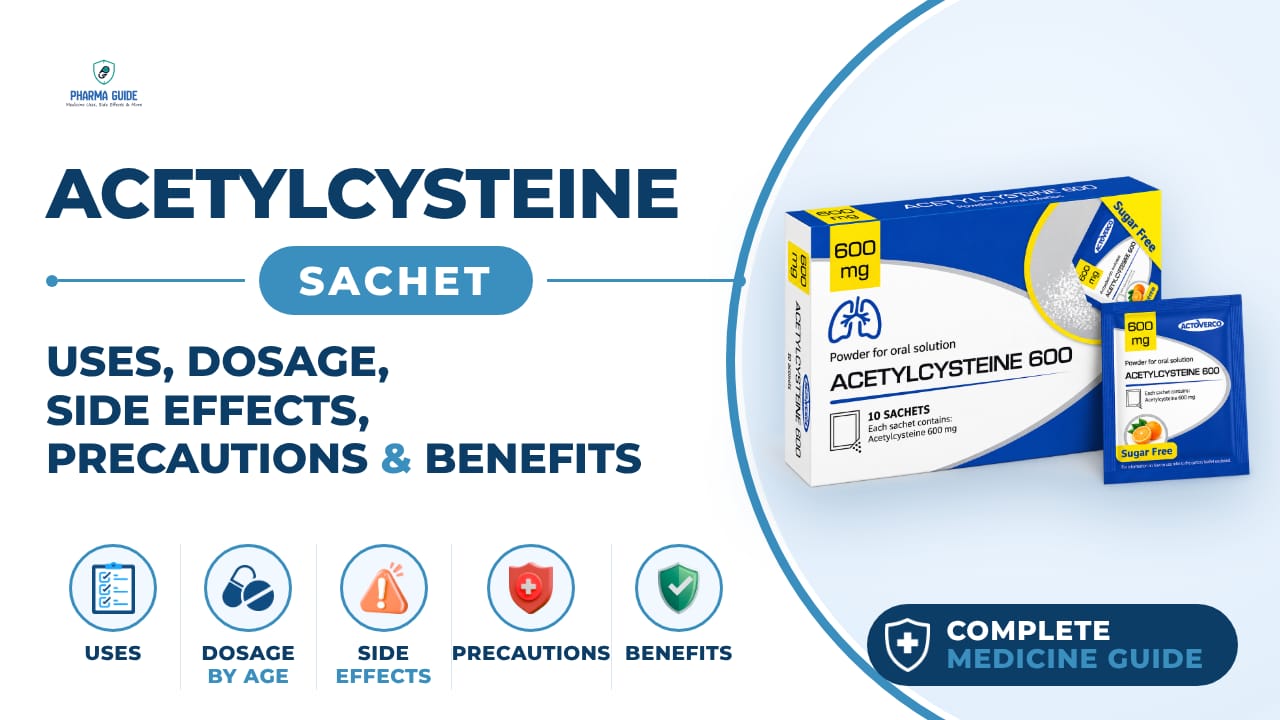
| Generic name | acetylcysteine |
|---|---|
| Drug class | Mucolytic |
| Forms | Powder for oral solution (sachet) |
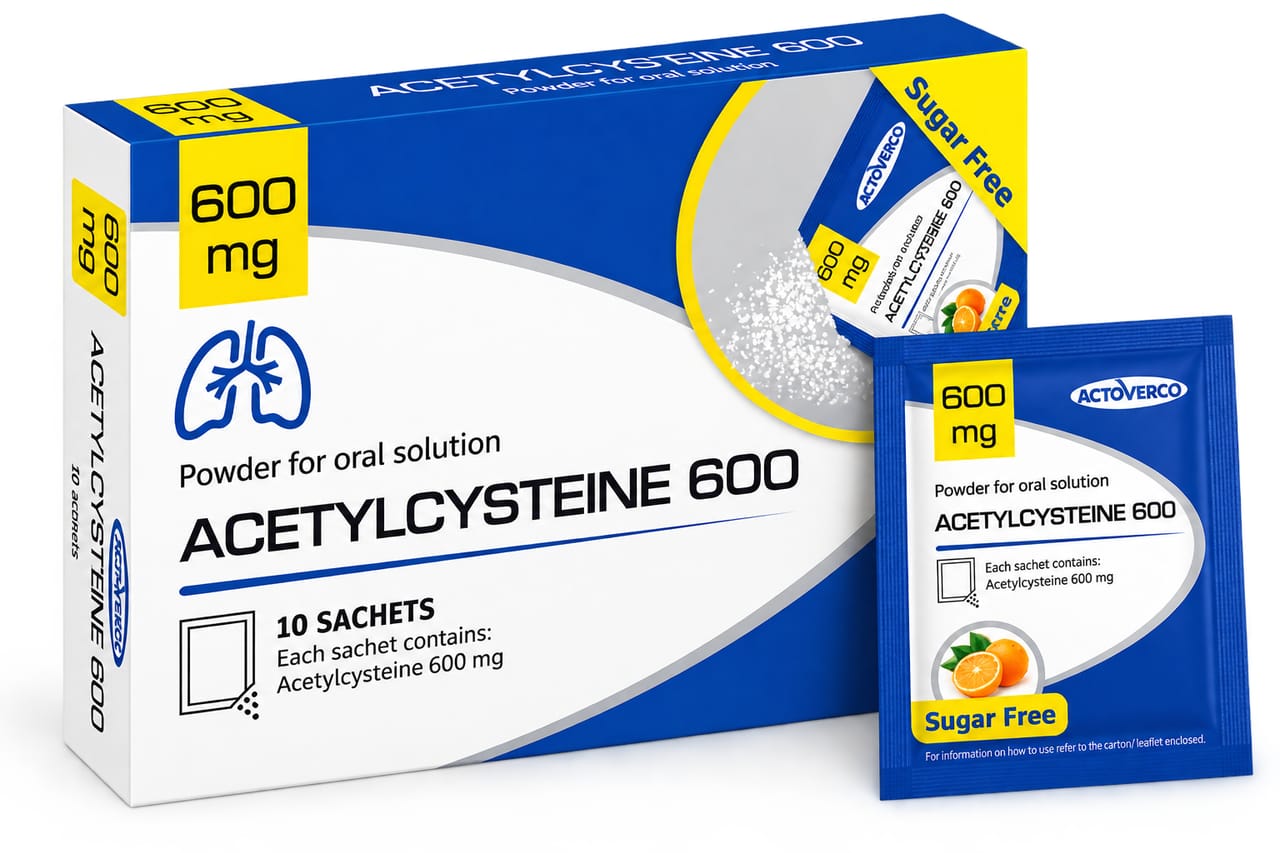
Quick overview
Acetylcysteine Sachet contains acetylcysteine 200 mg and belongs to a group of medicines called mucolytics. The powder is mixed with water to make a drink and is used to treat breathing difficulties caused by too much mucus, or mucus that is too thick and sticky to cough up easily. It works by thinning mucus in the lungs and airways so it can be coughed up more easily. It is not recommended for children under 12 years.
What is Acetylcysteine Sachet
Acetylcysteine 200 mg Powder is a medicine that comes in a sachet. You mix the powder with water to make a drink. It belongs to a group of medicines called mucolytics.
Acetylcysteine Sachet uses
- Treats breathing difficulties caused by too much mucus in the lungs and airways, or mucus that is too thick and sticky to cough up easily
Benefits of Acetylcysteine Sachet
- Helps thin mucus so it can be coughed up more easily
How Acetylcysteine Sachet works
Acetylcysteine works by thinning the mucus (phlegm) in your lungs and airways so it can be coughed up more easily.
Acetylcysteine Sachet dosage
Take this medicine exactly as your doctor, nurse or pharmacist has told you. Empty the sachet contents into a small amount of water in a glass and stir until it dissolves completely, just before drinking. It is important to drink all of the mixture. Drink plenty of fluids, as this supports the mucolytic effect of the medicine.
Do not use in children under the age of 12 years. If this applies to you, take this medicine either two hours before or two hours after taking certain antibiotics, since taking them together can stop the antibiotic from working properly.
If you forget a dose, take it as soon as you remember; but if it is almost time for your next dose, skip the missed dose and take the next one as normal. Do not take a double dose to make up for a forgotten dose.
| Age group | Dose |
|---|---|
| Under 12 years | This 200 mg sachet formulation is not recommended; a more suitable pediatric formulation is required |
| 12–17 years | 200 mg (1 sachet) three times daily |
| 40–64 years | 200 mg (1 sachet) three times daily |
| 65–74 years | Usually follows the adult dose, with clinical review if significant medical conditions are present |
Available forms and strengths
- Powder for oral solution (sachet), 200 mg
Side effects of Acetylcysteine Sachet
Common
- Headache
- Ringing sound in the ears (tinnitus)
- Fast heart rate
- Feeling or being sick
- Diarrhoea
- Inflammation of the skin in your mouth and on your lips
- Pain in your abdomen (tummy)
- An itchy raised rash
- Swelling of the deeper layers of skin, caused by a build up of fluid
- Itchy skin
- Fever
- Low blood pressure, which could cause dizziness when standing up quickly
- Tightness of your airways
- Shortness of breath
- Indigestion
Serious
- Severe, life-threatening allergic reaction with rash, swallowing or breathing problems, swelling of lips, face, throat or tongue
- Severe bleeding (haemorrhaging)
- Blistering, peeling, bleeding, scaling, or fluid filled patches on the skin, lips, eyes, mouth, nose, genitals, hands or feet
- Swelling of the face
Warnings and precautions
- Do not take this medicine if you are allergic to acetylcysteine, similar medicines such as carbocisteine, erdosteine or mecysteine, or any of the other ingredients.
- Do not take this medicine if you have a genetic condition called phenylketonuria, where you cannot break down a substance called phenylalanine.
- Talk to your doctor or pharmacist before taking this medicine if you have asthma, as you may need to be monitored closely.
- If you have a reduced ability or inability to cough before starting this medicine, your doctor may need to remove mucus by suction after it has been loosened.
- Tell your doctor if you are due to have blood or urine tests, as this medicine can interfere with some laboratory tests.
- Talk to your doctor before taking this medicine if you have a history of peptic ulcers.
- Taking this medicine for a long time can affect how histamine is broken down in the body. Tell your doctor if you notice headache, a stuffy or runny nose, or itchy skin.
- The powder may smell of sulphur (rotten eggs) when the sachet is opened. This is normal and does not mean the medicine is unsafe.
- This medicine contains sorbitol. Talk to your doctor before taking it if you have an intolerance to some sugars or hereditary fructose intolerance.
- This medicine contains aspartame, a source of phenylalanine, which may be harmful if you have phenylketonuria (PKU).
- This medicine contains Sunset yellow, a food colouring that may cause allergic reactions.
- Tell your doctor or pharmacist if you are taking cough medicines, activated charcoal, certain antibiotics, angina medicines like glyceryl trinitrate, or carbamazepine, as these can interact with this medicine.
- If you are pregnant or breast-feeding, think you may be pregnant, or are planning to have a baby, ask your doctor or pharmacist for advice before taking this medicine.
- No routine kidney-specific adjustment is established for standard mucolytic use, but significant kidney disease warrants medical review. Significant liver disease should be discussed with a clinician.
- There are no special requirements to consider when taking this medicine with food, drink or alcohol.
- This medicine should not affect your ability to drive or operate machinery. If you get side effects that may affect these abilities, do not drive or operate machinery until the effects have completely gone.
Storage
- Keep this medicine out of the sight and reach of children
- Store in the original package to protect from moisture
- Once the contents of the sachet have been dissolved in water use this medicinal product immediately. Do not store the solution
- Do not use this medicine after the expiry date which is stated on the sachet and carton after EXP. The expiry date refers to the last day of that month
- Do not throw away any medicines via wastewater or household waste. Ask your pharmacist how to throw away medicines you no longer use
When to see a doctor
- Stop taking this medicine and get medical advice straight away if you have a severe, life-threatening allergic reaction with rash, swallowing or breathing problems, or swelling of your lips, face, throat or tongue.
- Stop taking this medicine and get medical advice straight away if you have severe bleeding (haemorrhaging).
- Stop taking this medicine and get medical advice straight away if you have blistering, peeling, bleeding, scaling, or fluid-filled patches on your skin, lips, eyes, mouth, nose, genitals, hands or feet.
- If you accidentally take more of this medicine than prescribed, contact your doctor or get medical advice immediately. Take the sachets, box and leaflet with you if possible.
Alternatives
- Carbocisteine
- Bromhexine
- Ambroxol
- Erdosteine
Watch the video
FAQs
What is Acetylcysteine Sachet used for?
It is used to treat breathing difficulties caused by too much mucus in the lungs and airways, or mucus that is too thick and sticky to cough up easily.
How does Acetylcysteine Sachet work?
It works by thinning the mucus (phlegm) in the lungs and airways so it can be coughed up more easily.
How do I take Acetylcysteine Sachet?
Empty the sachet contents into a small amount of water, stir until completely dissolved, and drink all of the mixture immediately. Drink plenty of fluids to support the mucolytic effect.
Can children take Acetylcysteine Sachet?
No, it is not recommended for children under 12 years, as the 200 mg sachet is not suitable and a more appropriate pediatric formulation is needed.
What are the common side effects of Acetylcysteine Sachet?
Common side effects include headache, tinnitus, fast heart rate, nausea, diarrhoea, abdominal pain, itchy rash, fever, low blood pressure, shortness of breath, and indigestion.
General information, not medical advice
Your prescriber and the leaflet in your pack know your situation. This page does not.
- Follow your prescriber and the leaflet
- Don't start, stop, or change a dose on your own
- Doses and warnings differ by country and product
Sources
Video
Related medicines
Ambrodil Syrup: Uses, Dosage, Side Effects, Precautions and Alternates
Mucolytic
Ambrodil Syrup contains ambroxol, used to loosen thick mucus in bronchitis and wet cough. Learn about its uses, dosage, side effects, and precautions.
Ambrodil Tablet: Uses, Dosage, Side Effects, Precautions and Alternates
Mucolytic
Ambrodil Tablet contains Ambroxol, which thins thick mucus to relieve chest congestion and productive cough. Learn its uses, dosage, and side effects.