
Safety
General information, not medical advice
Your prescriber and the leaflet in your pack know your situation. This page does not.
- Follow your prescriber and the leaflet
- Don't start, stop, or change a dose on your own
- Doses and warnings differ by country and product
Ambrodil Syrup: Uses, Dosage, Side Effects, Precautions and Alternates
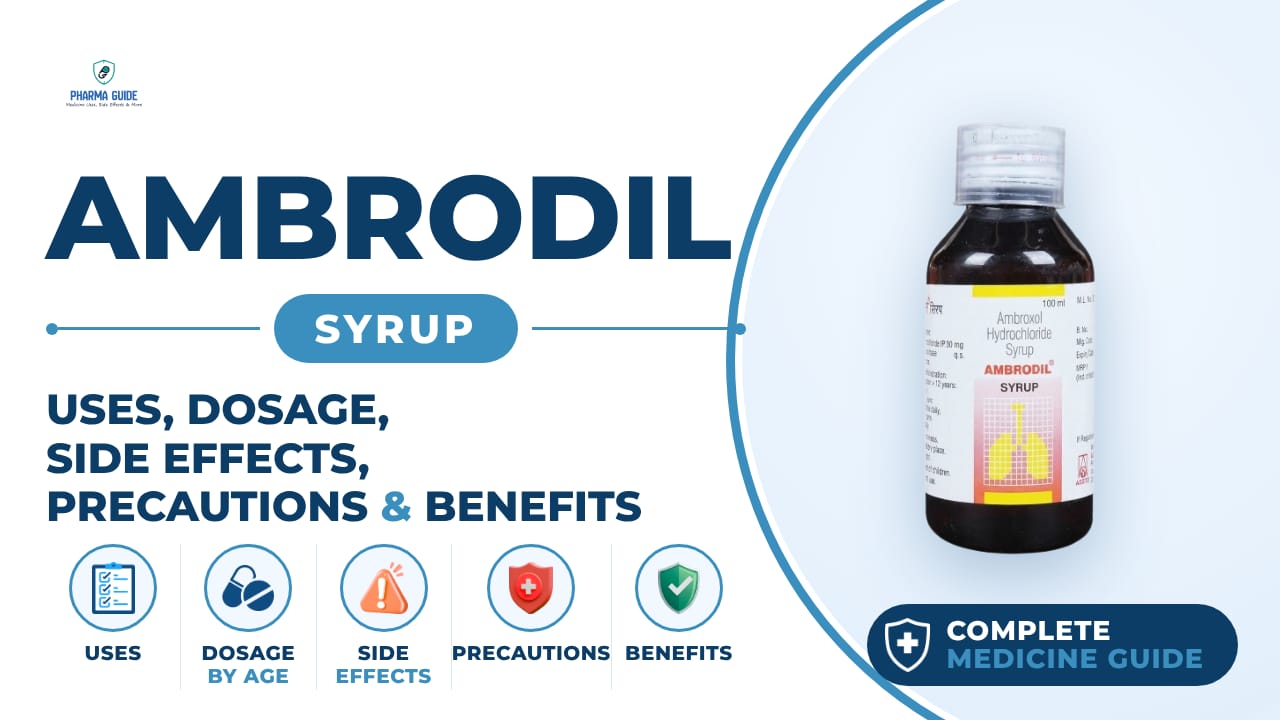
| Generic name | Ambroxol |
|---|---|
| Drug class | Mucolytic |
| Forms | Syrup |
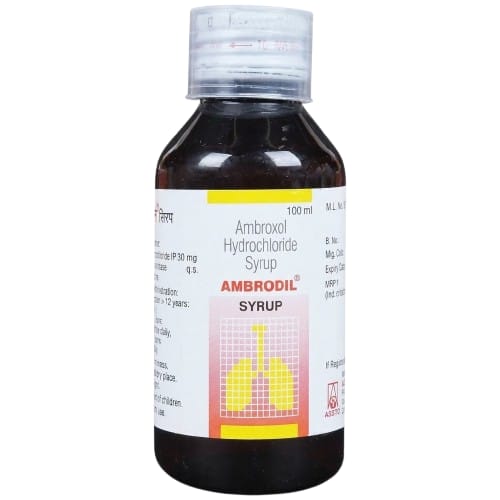
Quick overview
Ambrodil Syrup contains ambroxol, a mucolytic medicine mainly prescribed for bronchitis. It helps loosen and clear thick mucus from the airways, making a wet or productive cough easier to manage. It is taken by mouth as prescribed by a doctor.
What is Ambrodil Syrup
Ambrodil Syrup is a cough medicine containing ambroxol. It is prescribed mainly for bronchitis and helps loosen and clear mucus from the airways.
Ambrodil Syrup uses
- Wet or productive cough with thick mucus
- Chest congestion
- Acute bronchitis with mucus
- Chronic bronchitis with excess mucus
- Other respiratory conditions involving thick secretions, when prescribed
Benefits of Ambrodil Syrup
- Helps thin thick mucus.
- Makes phlegm easier to cough up.
- Helps clear mucus from the airways.
- May ease chest congestion associated with a wet cough.
- Supports more comfortable breathing when mucus is the cause of congestion.
How Ambrodil Syrup works
Ambroxol breaks down the structure of mucus in the lungs, making it thinner and easier to cough up.
Ambrodil Syrup dosage
Ambrodil Syrup can be taken with or without food. Shake the bottle well before use and measure each dose with the measuring cup provided. Keep the bottle tightly closed after use. Take it as prescribed by your doctor and do not stop unless your doctor advises you to.
| Age group | Dose |
|---|---|
| Under 18 years | Not recommended |
| 18–64 years | 5 mL, 3 times/day |
| 65+ years | 5 mL, 3 times/day |
Available forms and strengths
- Syrup
Side effects of Ambrodil Syrup
Common
- Nausea
- Vomiting
- Diarrhea
- Stomach pain or discomfort
- Indigestion
- Bloating
- Dry mouth or throat irritation
Serious
- Skin rash or hives
- Swelling of the face, lips, or tongue
- Difficulty breathing
- Severe blistering or peeling of the skin
Warnings and precautions
- People with gastrointestinal bleeding should not take this medicine, as it can cause severe adverse effects.
- This medicine should not be taken together with certain antibiotics, including amoxicillin, cefuroxime, and erythromycin, due to the risk of severe side effects.
- Pregnant women may have severe side effects from this medicine. Do not take it without a doctor's advice.
- Breastfeeding women may have severe harmful effects from this medicine. It should only be taken after medical advice.
- This medicine rarely affects the kidneys.
- Very few cases of liver side effects have been reported with this medicine.
- The effect of alcohol with this medicine is unknown, as this has not been researched.
- It is safe to drive or operate machinery after taking this medicine since it does not cause sleepiness.
Storage
- Store below 25°C
- Store in a cool and dry place
- Avoid exposure to direct sunlight or excessive heat
- Keep the product tightly sealed when not in use to prevent air or moisture damage
- Always keep this medicine out of the reach of children
- Use the medicine before its expiry date
When to see a doctor
- Please speak with your doctor if side effects worsen or last longer than usual.
Alternatives
- Bromhexine Syrup
- Ambrolite Syrup
- Mucolite Syrup
Watch the video
FAQs
What is Ambrodil Syrup used for?
Ambrodil Syrup is used for wet or productive cough with thick mucus, chest congestion, acute and chronic bronchitis with excess mucus, and other conditions involving thick secretions when prescribed.
How does Ambrodil Syrup work?
It contains ambroxol, which breaks down the structure of mucus in the lungs, making it thinner and easier to cough up.
What is the dosage of Ambrodil Syrup for adults?
For adults aged 18-64 and those 65 and above, the dose is 5 mL taken 3 times a day. It is not recommended for those under 18 years.
What are the common side effects of Ambrodil Syrup?
Common side effects include nausea, vomiting, diarrhea, stomach pain or discomfort, indigestion, bloating, and dry mouth or throat irritation.
Can pregnant or breastfeeding women take Ambrodil Syrup?
Pregnant women may have severe side effects and should not take it without a doctor's advice. Breastfeeding women may also have severe harmful effects and should only take it after medical advice.
General information, not medical advice
Your prescriber and the leaflet in your pack know your situation. This page does not.
- Follow your prescriber and the leaflet
- Don't start, stop, or change a dose on your own
- Doses and warnings differ by country and product
Sources
Video
Related medicines
Ambrodil Tablet: Uses, Dosage, Side Effects, Precautions and Alternates
Mucolytic
Ambrodil Tablet contains Ambroxol, which thins thick mucus to relieve chest congestion and productive cough. Learn its uses, dosage, and side effects.

Acetylcysteine Sachet: Uses, Dosage, Side Effects, Precautions and Alternates
Mucolytic
Acetylcysteine Sachet (200 mg) is a mucolytic that thins thick mucus to ease coughing. Learn its uses, dosage, side effects, and precautions here.