
Safety
General information, not medical advice
Your prescriber and the leaflet in your pack know your situation. This page does not.
- Follow your prescriber and the leaflet
- Don't start, stop, or change a dose on your own
- Doses and warnings differ by country and product
Ambrodil Tablet: Uses, Dosage, Side Effects, Precautions and Alternates
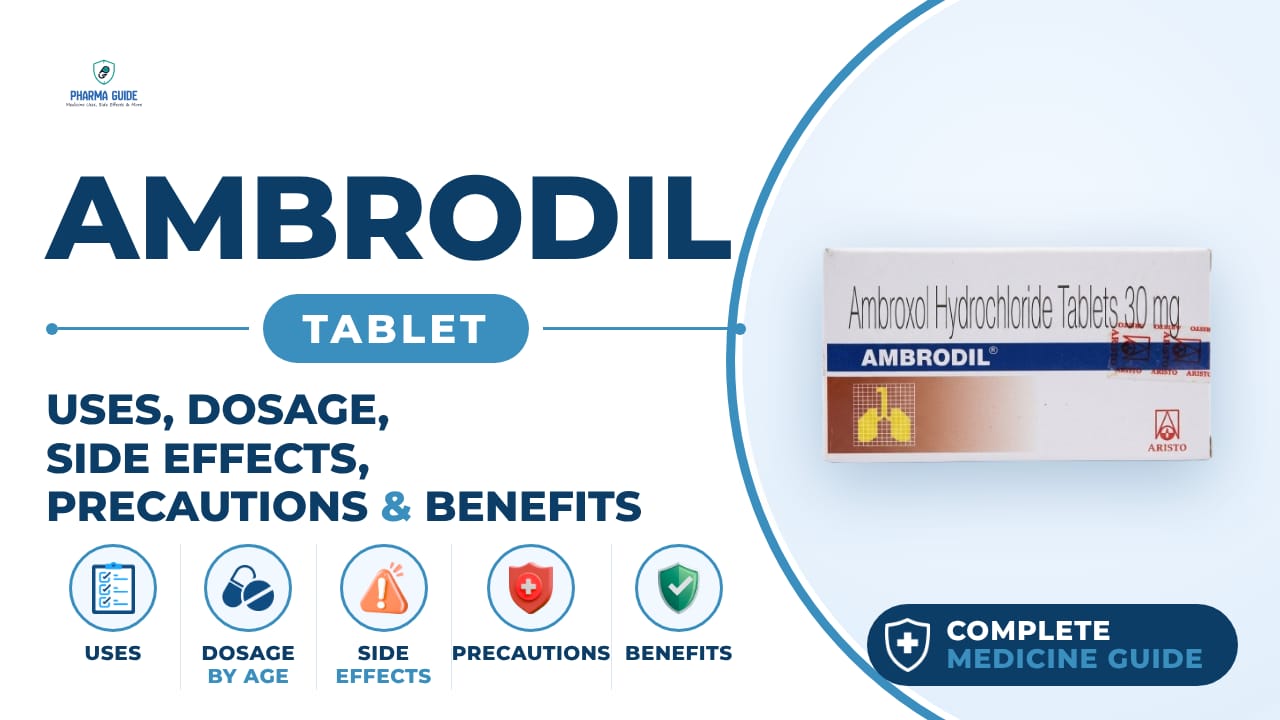
| Generic name | Ambroxol |
|---|---|
| Drug class | Mucolytic |
| Forms | Tablet, Syrup, Drops |
Quick overview
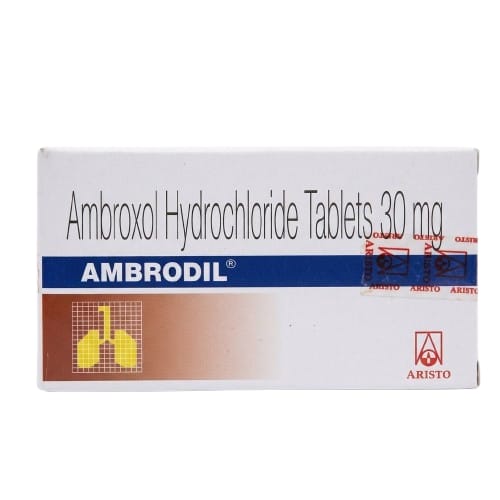
Ambrodil Tablet contains Ambroxol, a mucolytic medicine used to treat breathing conditions linked to too much thick mucus in the airways and lungs. It works by thinning and loosening mucus so it can be coughed out more easily, helping you breathe more comfortably. It is available as a tablet, syrup, and drops, and is not recommended for children below 6 years of age.
What is Ambrodil Tablet
Ambrodil Tablet contains Ambroxol and is used to treat breathing conditions linked to too much thick mucus in the airways and lungs.
Ambrodil Tablet uses
- Productive cough with thick mucus
- Acute bronchitis
- Chronic bronchitis with mucus
- Respiratory tract conditions involving thick secretions
- Chest congestion associated with excessive mucus
Benefits of Ambrodil Tablet
- Helps thin thick mucus.
- Makes phlegm easier to cough up.
- Helps clear mucus from the airways.
- May relieve chest congestion.
- Supports easier breathing when thick mucus is present.
How Ambrodil Tablet works
This medicine works by thinning and loosening mucus so that it can be coughed out easily, which helps you breathe more easily.
Ambrodil Tablet dosage
Take this medicine preferably with food to avoid stomach irritation, or as your doctor advises. Take it at the same time every day to keep a steady level of the medicine in your blood. Do not start or stop taking this medicine without checking with your doctor first. Drink enough water, as this can also help loosen mucus from your airways. Avoid taking more or less than the amount your doctor prescribed, and take it for the full recommended length of time. Not recommended for children below 6 years of age.
| Age group | Dose |
|---|---|
| Under 18 years | Not recommended |
| 18–64 years | 30 mg, 2–3 times/day |
| 65+ years | 30 mg, 2–3 times/day |
Available forms and strengths
- Tablet
- Syrup
- Drops
Side effects of Ambrodil Tablet
Common
- Nausea and vomiting
- Diarrhoea
- Stomach discomfort
- Skin rash and itching
- Heartburn
- Dry mouth
- Altered sense of taste
- Constipation
Serious
- Skin rash or hives
- Swelling of the face, lips, or tongue
- Difficulty breathing
- Severe skin blistering or peeling
Warnings and precautions
- Do not take this medicine if you are allergic to it. Get medical help right away if you notice a skin rash, itching or swelling of the face, tongue or throat, severe dizziness, or trouble breathing.
- Tell your doctor about all medicines, herbs, and supplements you take, since this medicine may interact with many other drugs and cause serious side effects.
- Use with caution if you have stomach ulcers, as this medicine could make them worse.
- Never take more than your prescribed dose. If you accidentally take too much, contact your doctor right away.
- This medicine is not recommended during pregnancy unless it is absolutely necessary, because there isn't enough safety information. Talk to your doctor if you are pregnant.
- This medicine is not recommended while breastfeeding because there isn't enough information on its safety. Talk to your doctor if you are breastfeeding.
- Use with caution if you have kidney disease, since poor kidney function may cause the medicine to build up in your body and raise the risk of side effects. Your doctor may change your dose or suggest a different medicine.
- Use with caution if you have liver disease, as this medicine is processed by the liver and poor liver function may increase the risk of side effects. Your doctor may order tests to check your liver and adjust your dose if needed.
- It isn't known how this medicine interacts with alcohol, so it's best to check with your doctor before drinking.
Storage
- Store below 30°C.
- Keep in a cool, dry place.
- Protect from direct sunlight and moisture.
- Keep out of reach of children.
- Do not use after the expiry date.
When to see a doctor
- Get immediate medical help if you notice skin rash, itching or swelling of the face, tongue, or throat, severe dizziness, or difficulty breathing.
- Talk to your doctor if your symptoms don't improve or get worse even after taking this medicine for 5 days.
- Tell your doctor if side effects persist or get worse.
Alternatives
- Acetylcysteine
- Ambrolite
- Mucolite
Watch the video
FAQs
What is Ambrodil Tablet used for?
Ambrodil Tablet contains Ambroxol and is used to treat breathing conditions linked to too much thick mucus, such as productive cough, acute and chronic bronchitis, and chest congestion.
How does Ambrodil Tablet work?
It works by thinning and loosening mucus so that it can be coughed out easily, helping you breathe more comfortably.
What is the dosage of Ambrodil Tablet for adults?
For adults aged 18-64 years and those 65 and above, the typical dose is 30 mg, 2-3 times a day, or as advised by your doctor. It is best taken with food to avoid stomach irritation.
Can children take Ambrodil Tablet?
No, Ambrodil Tablet is not recommended for children below 6 years of age, and it is generally not recommended for those under 18 years according to the dosage guidance.
What are the common side effects of Ambrodil Tablet?
Common side effects include nausea and vomiting, diarrhoea, stomach discomfort, skin rash and itching, heartburn, dry mouth, altered sense of taste, and constipation.
General information, not medical advice
Your prescriber and the leaflet in your pack know your situation. This page does not.
- Follow your prescriber and the leaflet
- Don't start, stop, or change a dose on your own
- Doses and warnings differ by country and product
Sources
Video
Related medicines
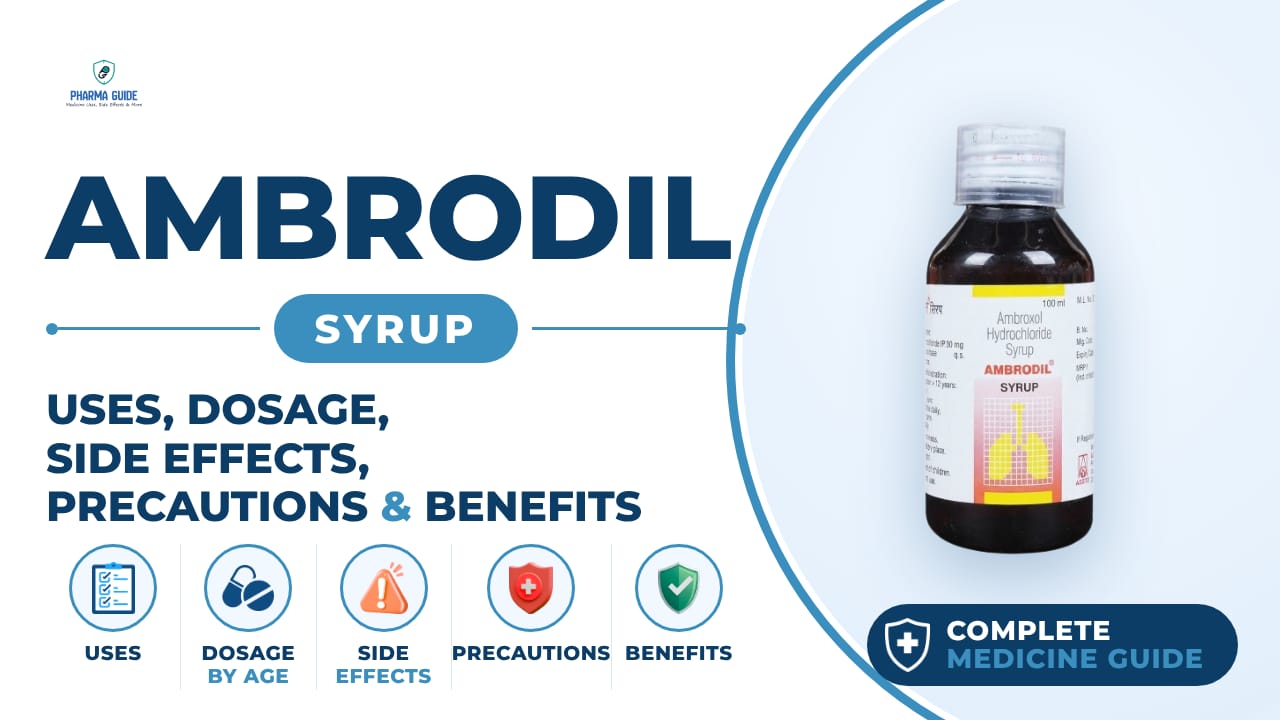
Ambrodil Syrup: Uses, Dosage, Side Effects, Precautions and Alternates
Mucolytic
Ambrodil Syrup contains ambroxol, used to loosen thick mucus in bronchitis and wet cough. Learn about its uses, dosage, side effects, and precautions.
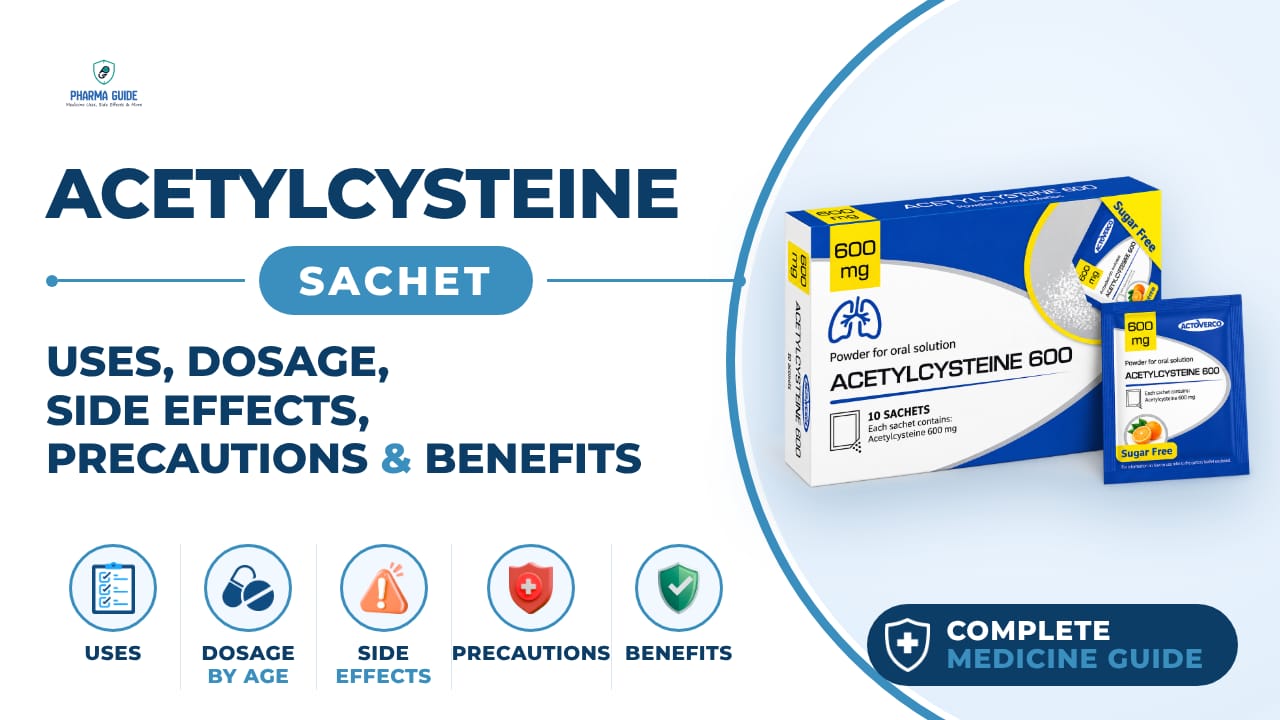
Acetylcysteine Sachet: Uses, Dosage, Side Effects, Precautions and Alternates
Mucolytic
Acetylcysteine Sachet (200 mg) is a mucolytic that thins thick mucus to ease coughing. Learn its uses, dosage, side effects, and precautions here.