
Safety
General information, not medical advice
Your prescriber and the leaflet in your pack know your situation. This page does not.
- Follow your prescriber and the leaflet
- Don't start, stop, or change a dose on your own
- Doses and warnings differ by country and product
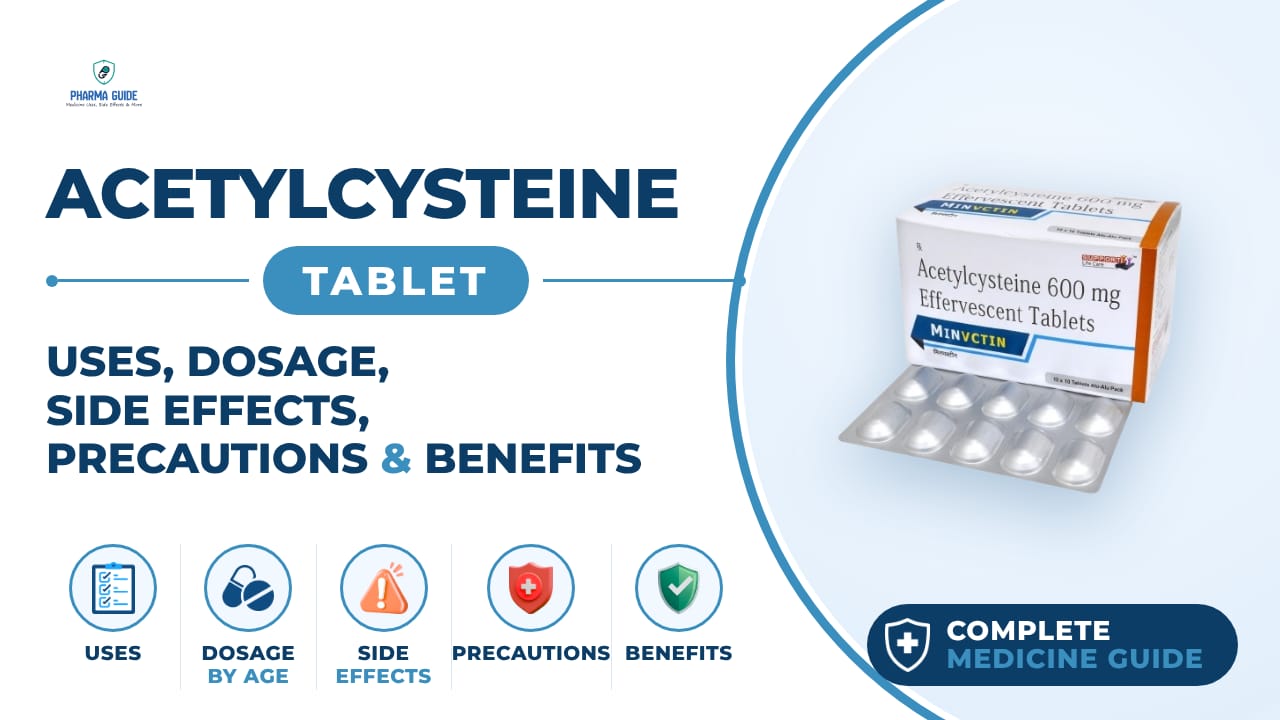
Acetylcysteine Tablet: Uses, Dosage, Side Effects, Precautions and Alternates
| Generic name | acetylcysteine |
|---|---|
| Drug class | Mucolytic / Antidote |
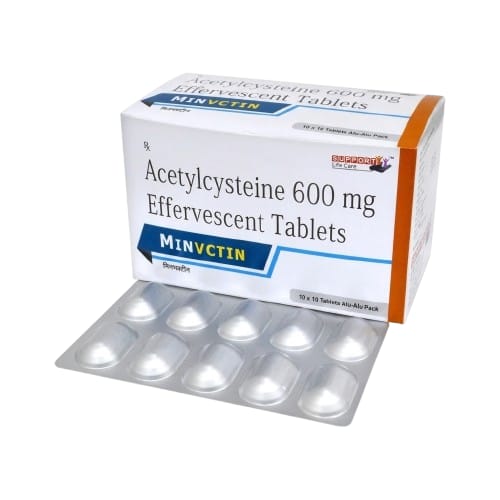
| Forms | Effervescent tablets, Capsules, Tablets, Oral solution, Powder, Granule, Liquid, Ocular solution |
Quick overview
Acetylcysteine Tablet is a mucolytic and antidote medicine that breaks down thick, sticky mucus so it can be coughed up more easily. It is used for respiratory conditions involving thick mucus and, in hospitals, as emergency treatment for acetaminophen (paracetamol) overdose to protect the liver. It is taken as an effervescent tablet dissolved in water and is not recommended for use under 18 years of age.
What is Acetylcysteine Tablet
Acetylcysteine is a medicine that breaks down thick, sticky mucus so it can be coughed up more easily. It is also used in hospitals to treat acetaminophen (paracetamol) overdose and protect the liver.
Acetylcysteine Tablet uses
- Respiratory diseases such as bronchitis, emphysema, cystic fibrosis (mucoviscidose) and bronchiectasis with thick mucus
- Prevention of lung collapse (atelectasis) due to mucus blockage
- Emergency treatment for paracetamol (acetaminophen) overdose
- Support in tracheostomy care
- Preparation assistance for diagnostic lung tests
Benefits of Acetylcysteine Tablet
- Helps loosen thick mucus.
- Makes phlegm easier to cough up.
- Helps clear mucus from the airways.
- Helps relieve chest congestion.
- Supports easier breathing when excess mucus is present.
How Acetylcysteine Tablet works
Acetylcysteine thins mucus by breaking the chemical bonds that make it thick and sticky, making it easier to cough up. In acetaminophen overdose, it binds to and reduces a toxic substance created when the body breaks down acetaminophen, which helps protect the liver.
Acetylcysteine Tablet dosage
Dissolve the effervescent tablet in half a glass of water and drink the solution immediately. For patients having trouble coughing up mucus, it is recommended to take the tablet in the morning. Do not dissolve other medicines together with this medicine at the same time. If taking antibiotics, take them two hours before or after taking acetylcysteine. Do not use together with cough-suppressing (cough reflex muffling) medicines, because it is necessary to cough up the loosened mucus. Do not use for more than 14 days without consulting a doctor.
If you forget a dose, do not take the forgotten dose if it is almost time for the next one; do not double up. This medicine is not suitable for children under 2 years of age and is not recommended for children and adolescents aged 2 to 18, as other forms/strengths are more suitable.
| Age group | Dose |
|---|---|
| Under 18 years | Not recommended |
| 18–64 years | 600 mg, once/day |
| 65+ years | 600 mg, once/day |
Available forms and strengths
- Effervescent tablets
- Capsules
- Tablets
- Oral solution
- Powder
- Granule
- Liquid
- Ocular solution
Side effects of Acetylcysteine Tablet
Common
- Nausea and vomiting
- Upset stomach
- Skin rash with or without fever
- Fever
- Headache
- Diarrhea
- Abdominal pain
- Stomatitis (inflammation of the mouth)
- Ringing in the ears (tinnitus)
- Lowered blood pressure
- Unpleasant body odour
- Drowsiness
- Runny nose
Serious
- Severe allergic reactions (anaphylaxis) with breathing problems, racing heart, swelling of face, lips, mouth, tongue, or throat, hives, dizziness or fainting
- Angioedema - sudden swelling of skin and mucous membranes with breathing difficulty and/or itching and rash
- Shock (strong decrease in blood pressure, paleness, agitation, weak pulse, clammy skin, decreased consciousness)
- Severe or persistent vomiting, which may cause bleeding, especially with a history of stomach ulcers
- Vomit with blood that looks like coffee grounds
- Coughing up blood or blood clots
- Red or black stools (looks like tar)
- Bronchospasm (tightening of the airway muscles) - trouble breathing, wheezing, chest tightness, especially in people with asthma
- Severe skin reactions such as Stevens-Johnson syndrome (fever, red spotted skin, joint pain, eye inflammation) or Lyell syndrome (blistering or shedding skin)
- Signs that the liver may be affected - upper stomach pain, loss of appetite, dark urine, clay-colored stools, yellowing of skin or eyes (jaundice)
Warnings and precautions
- If you have asthma, acetylcysteine can trigger bronchospasm (tightening of the airways); stop treatment immediately and see a doctor if this happens.
- If you have a history of stomach ulcers, acetylcysteine can irritate the stomach wall, especially when combined with other medicines that also irritate the stomach.
- Rare but severe allergic skin reactions such as Stevens-Johnson syndrome or Lyell syndrome have been linked to acetylcysteine use; stop the medicine immediately and seek medical help if you notice new skin or mucus changes.
- Especially early in treatment, mucus can increase in volume as it becomes more liquid; if you cannot cough this up effectively, see a doctor right away so the mucus can be removed safely.
- This medicine is not suitable for children under 2 years old, because mucolytics can block the airway in this age group since their ability to cough up mucus may be limited.
- Taking more than the recommended dose can cause nausea, vomiting, and diarrhea; contact a doctor immediately if too much is taken.
- There is limited data on using acetylcysteine during pregnancy. Animal studies have not shown clear harm, but it should only be used after weighing the benefits and risks with a doctor. Pregnant women with phenylketonuria should not take this product because of its aspartame content.
- It is not known whether acetylcysteine passes into breast milk, so it should only be used while breastfeeding after discussing the benefits and risks with a doctor.
- Tell your doctor if you have kidney disease before using acetylcysteine, as this may need to be considered before treatment.
- People with liver problems, including a type of high blood pressure called portal hypertension, should tell their doctor, as acetaminophen is broken down by the liver and treatment duration may need adjusting.
- It is not known whether drinking alcohol affects acetylcysteine, so caution is advised.
- There is no specific data on how acetylcysteine affects the ability to drive or use machines, but an effect is considered unlikely.
Storage
- Store in the original package to protect from moisture and light
- Keep the tablet container well closed
- Do not use after the expiry date stated on the label and carton
- After first opening of the tube, the medicine may be used for a maximum of 8 weeks
- Do not throw away medicines via wastewater or household waste; ask your pharmacist how to dispose of medicines you no longer use
- Keep out of the sight and reach of children
When to see a doctor
- Get emergency help right away if you notice signs of a severe allergic reaction, such as shock (sudden drop in blood pressure, paleness, weak pulse, clammy skin, confusion) or sudden swelling of the face, lips, tongue or throat with difficulty breathing.
- Call your doctor right away if you see signs of bleeding, such as vomit that looks like coffee grounds, coughing up blood, or black, tar-like stools.
- If your breathing gets worse, or you develop wheezing or chest tightness, especially if you have asthma, stop treatment and seek medical advice.
- Contact your doctor if you see signs that your liver may not be working properly, such as upper stomach pain, loss of appetite, dark urine, pale stools, or yellowing of the skin or eyes.
- See a doctor if you do not feel better, or if you feel worse, after 14 days of treatment.
Alternatives
- Solmucol
- Mucomix
- Fluimucil
Watch the video
FAQs
What is Acetylcysteine Tablet used for?
It is used for respiratory conditions with thick mucus such as bronchitis, emphysema, cystic fibrosis, and bronchiectasis, to prevent mucus-related lung collapse, as emergency treatment for paracetamol overdose, and to support tracheostomy care and lung test preparation.
How should I take Acetylcysteine Tablet?
Dissolve the effervescent tablet in half a glass of water and drink it immediately. If you have trouble coughing up mucus, take it in the morning. Do not dissolve other medicines with it, and avoid cough-suppressing medicines since you need to cough up loosened mucus.
What is the dosage of Acetylcysteine Tablet for adults?
Adults aged 18 to 64 and those 65 and older take 600 mg once a day. It is not recommended for anyone under 18 years of age.
What are the common side effects of Acetylcysteine Tablet?
Common side effects include nausea and vomiting, upset stomach, skin rash with or without fever, headache, diarrhea, abdominal pain, stomatitis, tinnitus, lowered blood pressure, unpleasant body odour, drowsiness, and runny nose.
Can Acetylcysteine Tablet be used in children?
No, it is not suitable for children under 2 years old because mucolytics can block the airway in this age group, and it is not recommended for children and adolescents aged 2 to 18 since other forms or strengths are more suitable.
General information, not medical advice
Your prescriber and the leaflet in your pack know your situation. This page does not.
- Follow your prescriber and the leaflet
- Don't start, stop, or change a dose on your own
- Doses and warnings differ by country and product
Sources
Video
Related medicines

Injectafer Injection: Uses, Dosage, Side Effects, Precautions and Alternates
Iron products
Injectafer (ferric carboxymaltose) treats iron deficiency anemia and heart failure-related iron deficiency via IV. Learn uses, dosage, side effects, and

Gliclazide Tablet: Uses, Dosage, Side Effects, Precautions and Alternates
Sulfonylurea (hypoglycemic/antidiabetic agent)
Gliclazide Tablet is a sulfonylurea for type 2 diabetes that boosts insulin release. Learn about dosage, side effects, warnings, and precautions.