
Safety
General information, not medical advice
Your prescriber and the leaflet in your pack know your situation. This page does not.
- Follow your prescriber and the leaflet
- Don't start, stop, or change a dose on your own
- Doses and warnings differ by country and product
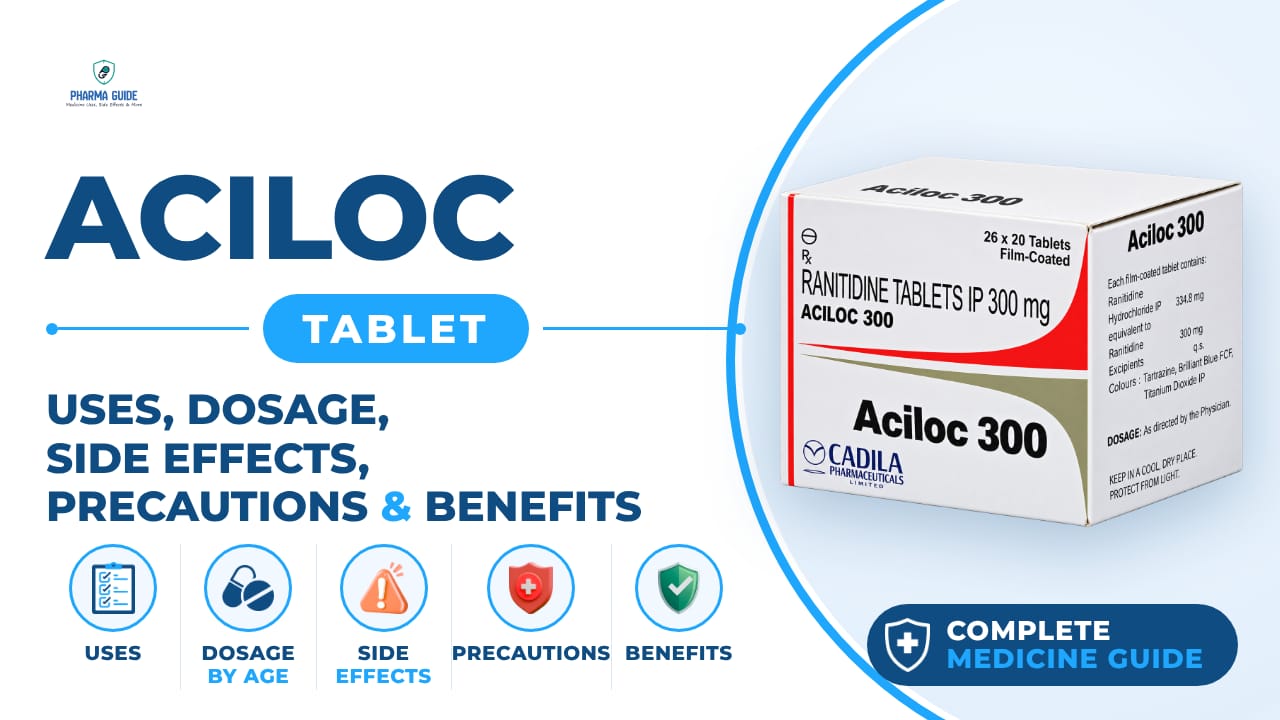
Aciloc Tablet: Uses, Dosage, Side Effects, Precautions and Alternates
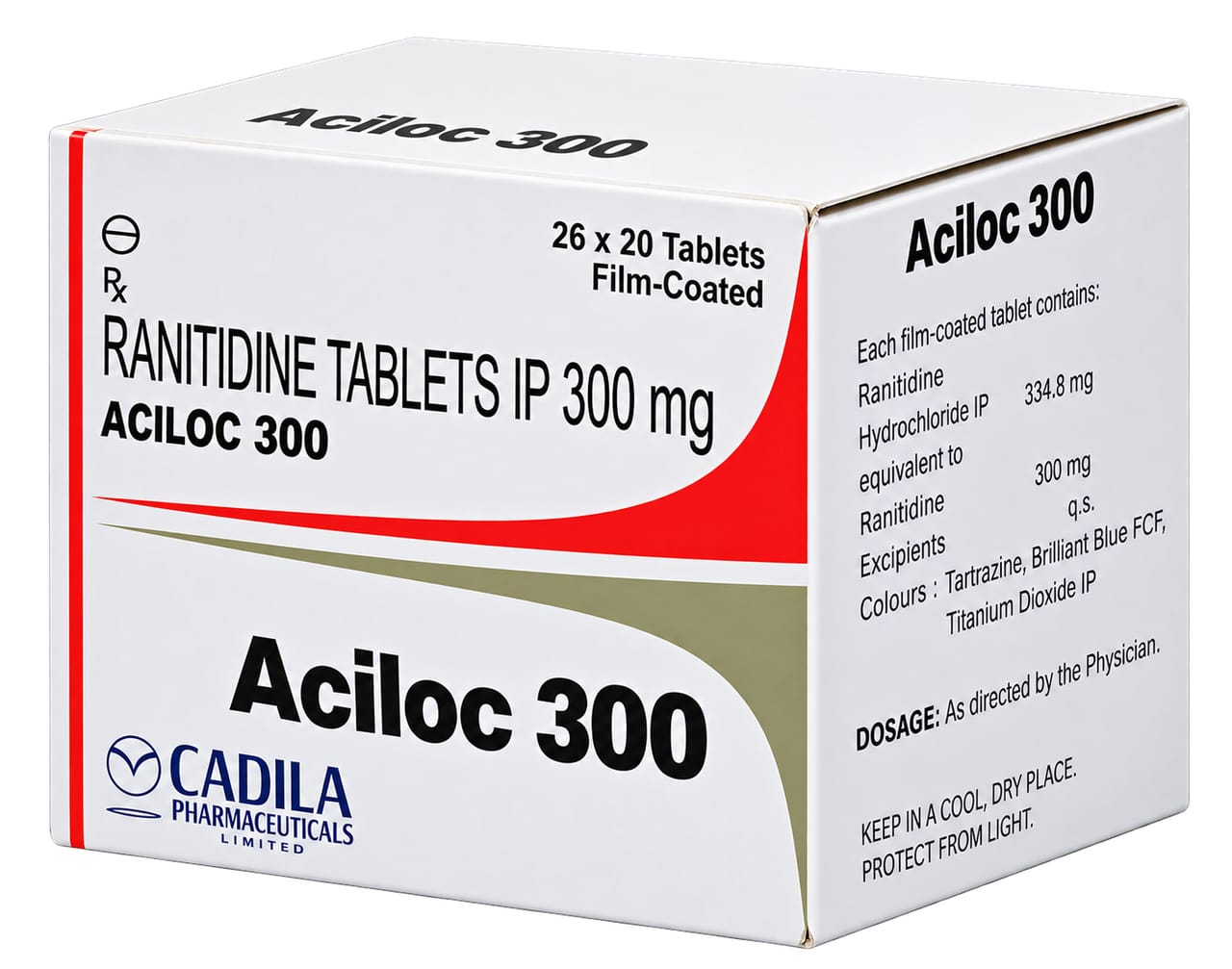
| Generic name | Ranitidine |
|---|---|
| Drug class | H2-receptor antagonist |
| Forms | Tablet, Injection, Suspension, Syrup |
Quick overview
Aciloc Tablet contains ranitidine, an H2-receptor antagonist that reduces the amount of acid the stomach makes. It is used for conditions caused by excess stomach acid, such as heartburn, indigestion, acid reflux, and ulcers. It works by blocking histamine, a chemical that triggers acid production, and should be taken exactly as advised by your doctor.
What is Aciloc Tablet
Aciloc Tablet contains ranitidine, a medicine that reduces the amount of acid your stomach makes. It is used to treat conditions caused by too much stomach acid, such as heartburn, indigestion, and ulcers.
Aciloc Tablet uses
- Heartburn and acid reflux (relieves burning in the chest and throat)
- Stomach and intestinal (duodenal) ulcers
- Acid indigestion, bloating and burning
- Gastroesophageal reflux disease (GERD)
- Erosive esophagitis
- Zollinger-Ellison syndrome
- Dyspepsia
- H. pylori infection related conditions
Benefits of Aciloc Tablet
- Reduces excess stomach acid
- Relieves burning in the chest and throat
- Helps heal stomach and intestinal ulcers
- Relieves indigestion, bloating and burning
How Aciloc Tablet works
Ranitidine blocks histamine, a chemical in the body that triggers stomach acid production. By blocking histamine, it reduces the amount of acid the stomach makes, which relieves pain and helps ulcers and reflux damage heal.
Aciloc Tablet dosage
Take the tablet whole with or without food; do not crush or chew it, swallow it whole with a glass of water. It is usually taken once or twice a day depending on how severe your symptoms are. Follow your doctor's advice on the exact schedule and how long to take it. If you miss a dose, take it as soon as you remember, but skip it if it's almost time for your next dose; do not double up. Children's dosage should be decided by a pediatrician. Older adults may need special care because of age-related changes in kidney function.
| Age group | Dose |
|---|---|
| Under 12 Years | Use only if prescribed by a doctor |
| 12–17 Years | 150 mg once or twice daily, as prescribed |
| Adults (18–64 Years) | 150 mg twice daily or 300 mg once daily, depending on condition |
| Older Adults (65+ years) | Dose adjusted according to kidney function and medical advice |
Available forms and strengths
- Tablet
- Injection
- Suspension
- Syrup
Side effects of Aciloc Tablet
Common
- Headache
- Dizziness
- Nausea or vomiting
- Diarrhea (loose motions)
- Stomach pain or discomfort
Serious
- Mental confusion
- Muscle pain
- Difficulty in breathing
- Gynecomastia (growth of breast tissue in males)
- Signs of pneumonia such as chest pain, fever, and cough with green or yellow mucus
- Severe gastrointestinal bleeding
- Anaphylaxis or other severe allergic reactions
Warnings and precautions
- Ranitidine products have faced regulatory restrictions and recalls in several countries because some batches contained an impurity called NDMA. Only use this medicine if your doctor has specifically advised it, and tell your doctor about any kidney or liver problems.
- Do not take this medicine if you are allergic to ranitidine or any of its other ingredients.
- Do not use this medicine if you have porphyria, a disorder caused by a buildup of porphyrin in the body.
- This medicine may increase the risk of developing pneumonia. Tell your doctor right away if you get chest pain, fever, trouble breathing, or coughing up green or yellow mucus.
- If your heartburn lasts more than 3 months or gets worse, see your doctor right away, as this could signal a more serious condition.
- Taking this medicine long-term may reduce how well your body absorbs vitamin B12.
- Avoid nicotine use during treatment, as it raises the risk of severe side effects.
- This medicine is not recommended if you have severe gastrointestinal bleeding, as it may make the condition worse.
- Talk to your doctor before taking this medicine if you are pregnant or planning pregnancy. It is only recommended if the benefits outweigh the risks, and this should be discussed with your doctor.
- This medicine passes into breast milk, so talk to your doctor before using it while breastfeeding.
- If you have kidney problems, tell your doctor before starting this medicine, as your dose may need to be adjusted and kidney function may need monitoring.
- If you have liver problems, tell your doctor before starting this medicine, as it may need close monitoring or dose changes.
- Avoid alcohol while taking this medicine, as it can worsen your symptoms and increase stomach acid production.
- This medicine is unlikely to affect your ability to drive or operate machinery, but use caution if you feel dizzy or drowsy.
Storage
- Store ACILOC 150 Tablet in a cool and dry place.
- Protect it from light and moisture by keeping it in its original packaging.
- Keep the medicine out of reach of children to prevent accidental ingestion.
- Make sure to use the product before its expiry date.
When to see a doctor
- If you accidentally take too much of this medicine, get medical help right away or go to a hospital, as an overdose can cause serious side effects.
- If side effects do not improve or become serious, speak to your doctor right away.
- Report symptoms of chest pain, fever, difficulty breathing, or coughing up green or yellow mucus to your doctor promptly, as these may indicate pneumonia.
Alternatives
- Famotidine
- Omeprazole
- Pantoprazole
Watch the video
FAQs
What is Aciloc Tablet used for?
Aciloc Tablet is used for conditions caused by excess stomach acid, such as heartburn, acid reflux, indigestion, stomach and intestinal ulcers, GERD, erosive esophagitis, Zollinger-Ellison syndrome, dyspepsia, and H. pylori infection related conditions.
How does Aciloc Tablet work?
Aciloc Tablet contains ranitidine, which blocks histamine, a chemical that triggers stomach acid production, thereby reducing the amount of acid the stomach makes and helping relieve pain while healing ulcers and reflux damage.
What is the dosage of Aciloc Tablet for adults?
Adults aged 18-64 years are usually given 150 mg twice daily or 300 mg once daily, depending on the condition, though the exact schedule should follow a doctor's advice.
What are the common side effects of Aciloc Tablet?
Common side effects include headache, dizziness, nausea or vomiting, diarrhea, and stomach pain or discomfort.
Are there any precautions to know before taking Aciloc Tablet?
Ranitidine products have faced regulatory restrictions and recalls due to an impurity called NDMA, so it should only be used if specifically advised by a doctor. It should be avoided in people allergic to ranitidine or with porphyria, and caution is needed in those with kidney or liver problems, during pregnancy or breastfeeding, and alcohol should be avoided during treatment.
General information, not medical advice
Your prescriber and the leaflet in your pack know your situation. This page does not.
- Follow your prescriber and the leaflet
- Don't start, stop, or change a dose on your own
- Doses and warnings differ by country and product
Sources
- https://www.nhs.uk/medicines/ranitidine/
- https://medlineplus.gov/druginfo/meds/a601106.html
- https://www.accessdata.fda.gov/drugsatfda_docs/label/2009/018703s068,019675s035,020251s019lbl.pdf
- https://dailymed.nlm.nih.gov/dailymed/lookup.cfm?setid=e2b6f7a7-74fb-4e0c-852f-c13641673d69
- https://www.medicines.org.uk/emc/files/pil.6040.pdf
- https://www.drugbank.ca/drugs/DB00863
- https://www.hpra.ie/img/uploaded/swedocuments/2178946.PA1390_017_001.e002d17f-40e9-4546-8ee0-9b7849021ee9.000001PIL.161117.pdf
- http://mri.cts-mrp.eu/download/NL_H_0112_001_FinalPL.pdf
Video
Related medicines

Injectafer Injection: Uses, Dosage, Side Effects, Precautions and Alternates
Iron products
Injectafer (ferric carboxymaltose) treats iron deficiency anemia and heart failure-related iron deficiency via IV. Learn uses, dosage, side effects, and

Gliclazide Tablet: Uses, Dosage, Side Effects, Precautions and Alternates
Sulfonylurea (hypoglycemic/antidiabetic agent)
Gliclazide Tablet is a sulfonylurea for type 2 diabetes that boosts insulin release. Learn about dosage, side effects, warnings, and precautions.