
Safety
General information, not medical advice
Your prescriber and the leaflet in your pack know your situation. This page does not.
- Follow your prescriber and the leaflet
- Don't start, stop, or change a dose on your own
- Doses and warnings differ by country and product
Acrivastine Capsule: Uses, Dosage, Side Effects, Precautions and Alternates
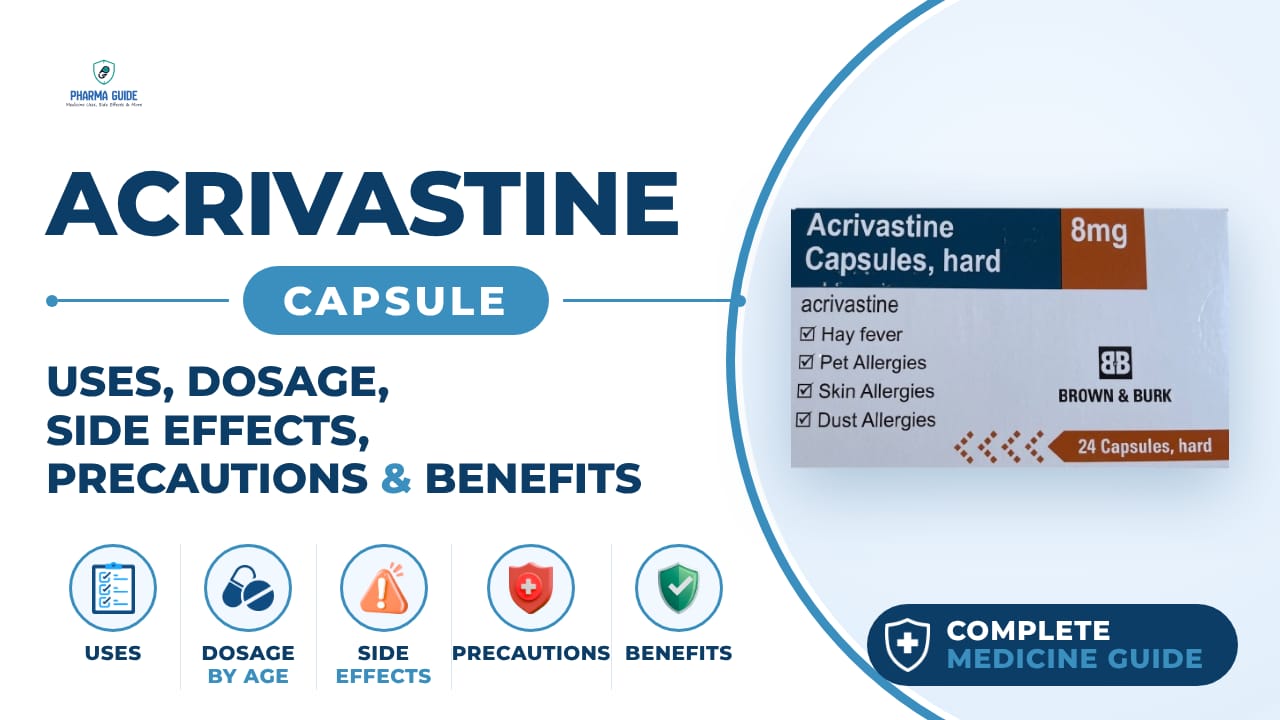
| Generic name | Acrivastine |
|---|---|
| Drug class | Antihistamine (non-drowsy, second-generation) |
| Forms | Capsules |
Quick overview
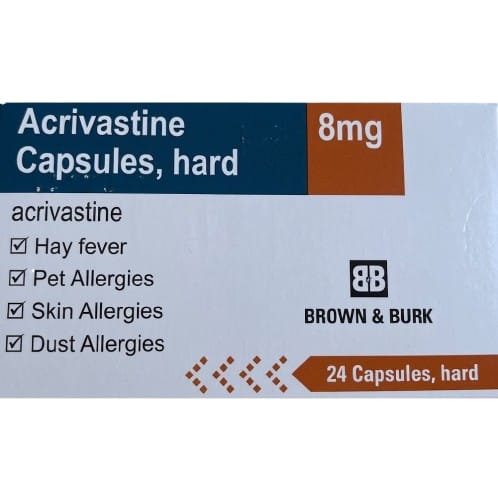
Acrivastine Capsule contains Acrivastine, a non-drowsy, second-generation antihistamine used to relieve allergy symptoms such as hay fever and hives. It works by blocking histamine, the chemical responsible for allergic reaction symptoms, and is less likely to cause drowsiness than older antihistamines. It is available in capsule form without a prescription.
What is Acrivastine Capsule
Acrivastine is an antihistamine used to relieve symptoms of allergies such as hay fever and hives. It is a second-generation antihistamine, which is less likely to cause drowsiness than older antihistamines. It can be bought without a prescription in capsule form.
Acrivastine Capsule uses
- Allergies such as hay fever (allergic rhinitis)
- Urticaria (hives) and some allergic skin reactions
- Seasonal allergies
- Allergy-related sneezing
- Itchy, watery eyes caused by allergies
- Symptoms caused by allergens such as pollen, pet dander, house dust mites, insect bites, and detergents
Benefits of Acrivastine Capsule
- Relieves allergy symptoms
- Reduces sneezing
- Helps relieve itching
- Reduces a runny nose
- Helps control watery eyes
How Acrivastine Capsule works
Acrivastine blocks the effects of histamine, a chemical the body releases during an allergic reaction. By stopping histamine from acting, it reduces symptoms like sneezing, itching, watery eyes, and a runny nose.
Acrivastine Capsule dosage
Swallow the capsule whole with water; do not crush, break, or chew it. It can be taken with or without food. Take only when needed for allergy symptoms, and stop once symptoms ease. If you miss a dose, skip it and take your next dose when due; do not double up to make up for a missed dose. This medicine is not recommended for children under 12 years of age without medical guidance. People over 65 should talk to a doctor or pharmacist before use, as safety in this age group has not been studied.
| Age group | Dose |
|---|---|
| Under 18 years | Not recommended |
| 18–64 years | 8 mg, three times/day |
| 65+ years | 8 mg, three times/day |
Available forms and strengths
- Capsules
Side effects of Acrivastine Capsule
Common
- Feeling sleepy or drowsy
- Dry mouth
- Dizziness
- Headache
Serious
- Severe allergic reaction (anaphylaxis) with swelling of lips, mouth, throat, or tongue
- Difficulty breathing or very fast breathing
- Tight throat or difficulty swallowing
- Skin, tongue, or lips turning blue, grey, or pale
- Sudden confusion, drowsiness, or dizziness
- Fainting and not waking up
- Rapid or irregular heartbeats
Warnings and precautions
- Do not take acrivastine within 14 days of taking a monoamine oxidase inhibitor (MAOI) medicine, as this combination can be dangerous.
- This medicine should not be used by people with severe high blood pressure or severe coronary artery disease.
- Taking more than one antihistamine at the same time may increase the risk of side effects like drowsiness, so avoid this unless your doctor or pharmacist advises it. If you have epilepsy or a rare blood disorder called porphyria, speak with a doctor or pharmacist before taking acrivastine.
- Talk to a doctor or pharmacist before taking acrivastine if you are pregnant or trying for a baby. This product should only be used in pregnancy if the potential benefit to the mother outweighs any possible risk to the baby.
- Speak with a doctor, pharmacist, or midwife before taking acrivastine while breastfeeding, as the effect on a nursing infant is not fully known.
- People with kidney problems should use caution, as the medicine may build up in the body because it is removed more slowly. People with severe liver problems should use caution when taking this medicine.
- It is best to avoid or limit alcohol while taking acrivastine, as it can increase feelings of drowsiness or dizziness.
- Acrivastine may cause drowsiness in some people. Make sure you know how the medicine affects you before you drive or use tools or machines.
Storage
- Store in a cool, dry place, away from direct heat and light.
- Keep all medicines out of the reach and sight of children.
- Do not keep out-of-date or unwanted medicines. Take them to your local pharmacy which will dispose of them for you.
When to see a doctor
- Get emergency help right away if you notice signs of a serious allergic reaction, such as swelling of the lips, mouth, throat or tongue, fast or difficult breathing, a tight throat, bluish or pale skin, sudden confusion or severe drowsiness, or fainting.
- Seek emergency help immediately if you have symptoms of overdose, such as blurred vision, chest pain, irregular heartbeat, seizures, confusion, or severe dizziness.
- Stop taking this medicine and seek medical advice if you experience hallucinations, restlessness, or sleep disturbances.
Alternatives
- Levocetirizine
- Loratadine
- Cetirizine
Watch the video
FAQs
What is Acrivastine Capsule used for?
It is used to relieve allergy symptoms such as hay fever, hives, sneezing, itchy and watery eyes, and runny nose caused by allergens like pollen, pet dander, dust mites, insect bites, and detergents.
How does Acrivastine Capsule work?
Acrivastine blocks the effects of histamine, a chemical released during an allergic reaction, which reduces symptoms like sneezing, itching, watery eyes, and a runny nose.
What is the dosage of Acrivastine Capsule for adults?
Adults aged 18-64 years and those 65 and older take 8 mg three times a day. It should be swallowed whole with water and not crushed, broken, or chewed.
Can children take Acrivastine Capsule?
This medicine is not recommended for children under 12 years of age without medical guidance, and it is not recommended for those under 18 years according to the dosage table.
What are the common side effects of Acrivastine Capsule?
Common side effects include feeling sleepy or drowsy, dry mouth, dizziness, and headache.
General information, not medical advice
Your prescriber and the leaflet in your pack know your situation. This page does not.
- Follow your prescriber and the leaflet
- Don't start, stop, or change a dose on your own
- Doses and warnings differ by country and product
Sources
Video
Related medicines

Injectafer Injection: Uses, Dosage, Side Effects, Precautions and Alternates
Iron products
Injectafer (ferric carboxymaltose) treats iron deficiency anemia and heart failure-related iron deficiency via IV. Learn uses, dosage, side effects, and

Gliclazide Tablet: Uses, Dosage, Side Effects, Precautions and Alternates
Sulfonylurea (hypoglycemic/antidiabetic agent)
Gliclazide Tablet is a sulfonylurea for type 2 diabetes that boosts insulin release. Learn about dosage, side effects, warnings, and precautions.