
Safety
General information, not medical advice
Your prescriber and the leaflet in your pack know your situation. This page does not.
- Follow your prescriber and the leaflet
- Don't start, stop, or change a dose on your own
- Doses and warnings differ by country and product
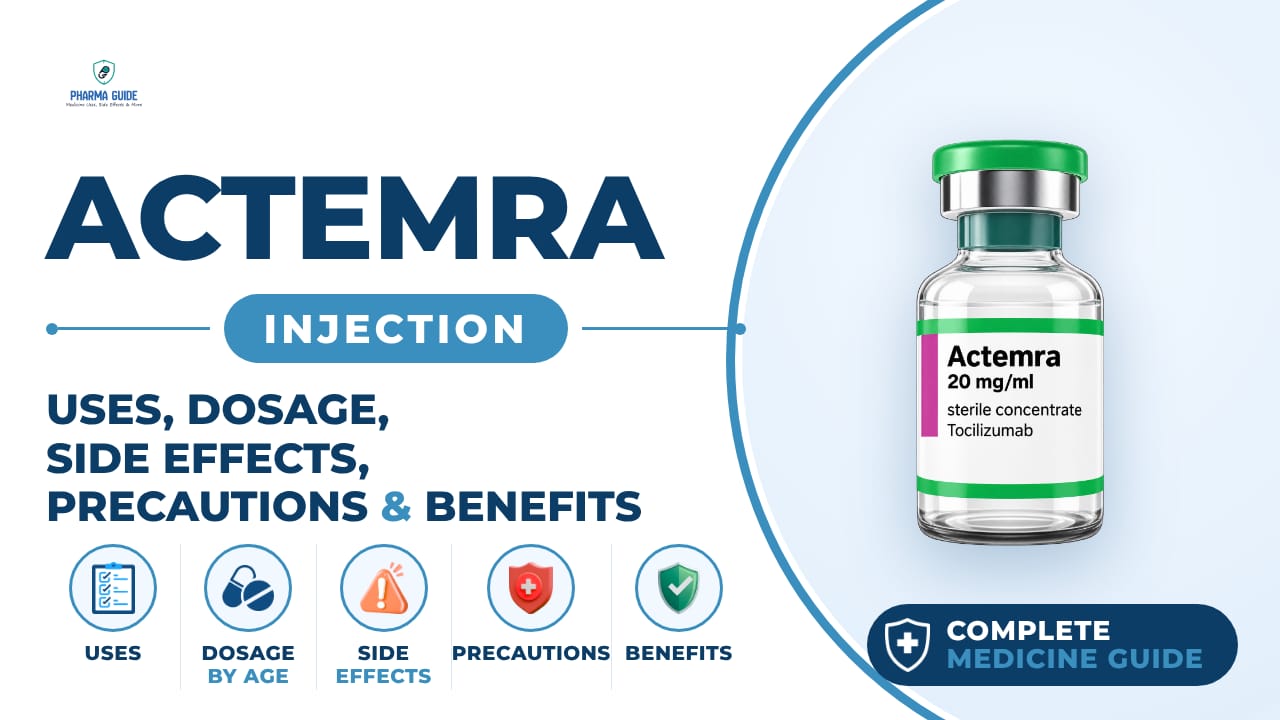
Actemra Injection: Uses, Dosage, Side Effects, Precautions and Alternates
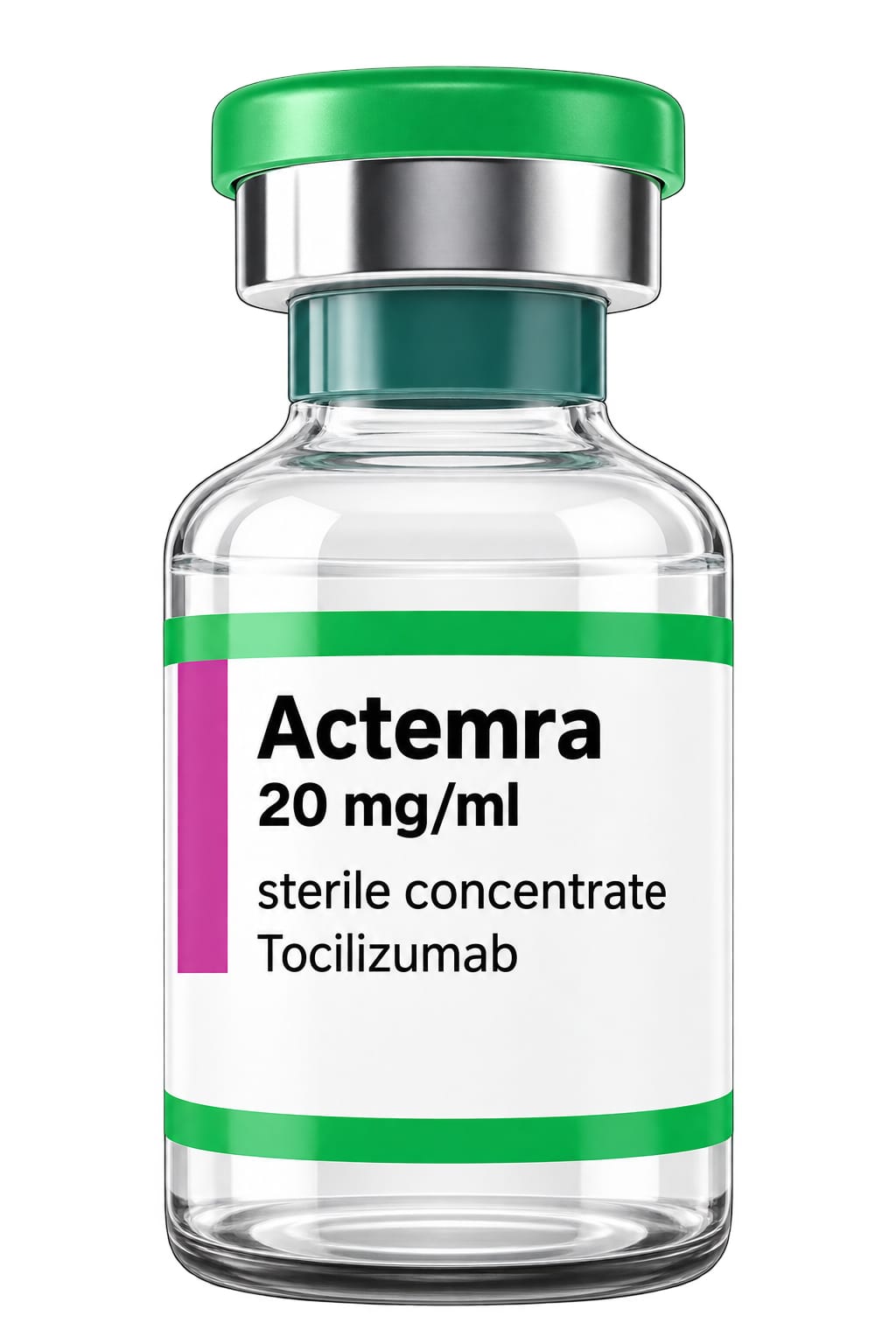
| Generic name | tocilizumab |
|---|---|
| Drug class | monoclonal antibody (interleukin-6 receptor antagonist) |
| Forms | Pre-filled pen (ACTPen) for subcutaneous injection, Pre-filled syringe for subcutaneous injection, Concentrated solution for intravenous infusion |
Quick overview
Actemra Injection contains tocilizumab, a monoclonal antibody that blocks the interleukin-6 receptor. It is used for active moderate to severe rheumatoid arthritis and giant cell arteritis in adults, as well as certain forms of juvenile idiopathic arthritis in children. Actemra is given as a subcutaneous injection or intravenous infusion and should be used exactly as prescribed, with regular monitoring for infections and other effects.
What is Actemra Injection
Actemra contains the active ingredient tocilizumab. It belongs to a group of medicines called monoclonal antibodies, which are proteins that specifically recognise and bind to other unique proteins in the body.
Actemra Injection uses
- Active moderate to severe rheumatoid arthritis (RA) in adults
- Giant cell arteritis (GCA) in adults
- Active moderate to severe polyarticular juvenile idiopathic arthritis (pJIA) in children over 2 years of age
- Active systemic juvenile idiopathic arthritis (sJIA) in children and adolescents aged 1 year and over
Benefits of Actemra Injection
- Inflammation Control: Blocks IL-6 signaling involved in inflammatory diseases.
- Rheumatoid Arthritis Support: Helps reduce joint inflammation, pain, and stiffness.
- Juvenile Arthritis Support: Used for certain systemic or polyarticular juvenile arthritis conditions.
- Giant Cell Arteritis Support: Helps control inflammation in eligible patients.
- Systemic Inflammation Support: May be used for certain severe inflammatory conditions under specialist care.
How Actemra Injection works
Some of the signs and symptoms of these conditions are caused by a protein called interleukin-6 receptor (IL-6R). Actemra works by binding and blocking IL-6R, which helps relieve some of the signs and symptoms of these conditions.
Actemra Injection dosage
Use Actemra exactly as your doctor has prescribed, and follow all instructions given by your doctor or pharmacist carefully, as they may differ from this leaflet. Actemra is given by subcutaneous injection, meaning it is injected with a short needle into the fatty tissue just under the skin. For weekly dosing, Actemra must be used on the same day each week; choose a day that fits your schedule.
At least the first injection will be given under the supervision of a healthcare provider in a facility that can manage allergic reactions; later injections may be given at home by you or a caregiver after training. Let the pre-filled pen warm up to room temperature for about 45 minutes before use; do not speed up warming in a microwave, warm water, or direct sunlight.
Choose an injection site on the front of the thigh or abdomen (avoiding the area around the navel); the outer upper arm may be used only if a caregiver is giving the injection. Rotate injection sites with each new injection, choosing a spot away from the last injection site, and avoid moles, scars, bruises, or areas where skin is tender, red, hard, or not intact. Do not inject through clothing.
The pen is for single use only and should not be reused; do not reattach the cap after removal.
If a once-a-week dose is missed and remembered within 7 days, skip the missed dose and take the next dose on the normal scheduled day; do not double up doses. If a fortnightly or three-weekly dose is missed and remembered within 7 days, inject the missed dose as soon as possible, then continue with the next dose on the normal schedule. If more than 7 days have passed since a missed dose, contact your doctor for advice. Continue to use Actemra until your doctor tells you to stop.
| Age group | Dose |
|---|---|
| 2–17 Years | 8–12 mg/kg per dose IV, depending on body weight and condition |
| Adults (18–64 Years) | 4–8 mg/kg IV every 4 weeks for some conditions; dosage varies by indication |
| Older Adults (65+ Years) | Adult regimen; dose individualized according to medical condition and monitoring |
Available forms and strengths
- Pre-filled pen (ACTPen) for subcutaneous injection
- Pre-filled syringe for subcutaneous injection
- Concentrated solution for intravenous infusion
Side effects of Actemra Injection
Common
- High blood pressure (hypertension) with symptoms like headache, dizziness, ringing in the ears
- Skin redness, itchy skin, or pain at the injection site
- Constipation
- Anxiety
- Difficulty sleeping
- Low potassium levels shown by blood tests
- Mouth ulcers
- Colds, runny nose, or sinus infections
- Higher blood cholesterol levels
- Dizziness or skin rashes
Serious
- Allergic reactions: chest tightness, wheezing or difficulty breathing, severe dizziness or light-headedness, swelling of the face, lips, tongue, throat or other parts of the body with difficulty breathing, skin rash, itching or hives
- Signs of infection with or without fever: sweating or chills, feeling very tired, cough, shortness of breath, muscle aches, weight loss, warm, red, or painful skin or sores, blood in phlegm, diarrhoea or stomach ache, persistent headaches, burning when urinating or urinating more often than normal
- Severe blisters and bleeding in the lips, eyes, mouth, nose and genitals
- Signs of tears (perforation) of the stomach or intestines: fever and stomach pain that does not go away, vomiting blood or material like coffee grounds, bleeding from the rectum, change in bowel habits
- Signs of inflamed pancreas (pancreatitis): upper stomach pain, abdominal pain spreading to the back, feeling generally unwell
- Signs of liver disease, hepatitis and/or jaundice: nausea, vomiting, loss of appetite, feeling generally unwell, fever, itching, yellowing of skin and eyes, light coloured bowel motions, dark coloured urine
- Low white blood cell and platelet counts
- Increase in certain liver function tests
- Raised blood fat (cholesterol) levels
Warnings and precautions
- Do not use Actemra if you have ever had an allergic reaction to it or any of its ingredients, or if you have an active, severe infection, as it can reduce your body's ability to fight infections and may make an existing infection worse.
- Serious and sometimes fatal infections, including tuberculosis and other opportunistic infections, have occurred in people taking Actemra. Your doctor should test you for tuberculosis before you start and monitor you during treatment.
- Tears (perforation) of the stomach or intestines can occur, especially in people with a history of diverticulitis or stomach ulcers, often in combination with other medicines like NSAIDs, steroids, or methotrexate.
- Actemra may increase the risk of certain cancers by changing how the immune system works.
- If you are a carrier of hepatitis B, the virus may become active again while using Actemra.
- Live vaccines should not be given while using Actemra; make sure your vaccinations are up to date before starting treatment.
- Do not use Actemra together with other biological medicines for RA, as this is not recommended and may increase infection risk.
- Tell your doctor if you are pregnant or plan to become pregnant. Actemra should not be used during pregnancy as it may harm your unborn baby, though your doctor may discuss benefits and risks if treatment is needed.
- Women who could become pregnant should use effective contraception during and for several months after treatment.
- It is not known whether Actemra passes into breast milk. It is recommended that you stop breastfeeding while being treated with Actemra.
- No dose adjustment is needed for mild or moderate kidney problems. Actemra has not been studied in patients with severe kidney impairment.
- Tell your doctor if you have liver disease such as viral hepatitis or other liver problems. Your doctor will monitor your liver function closely before and during treatment.
- Be careful driving or operating machinery until you know how Actemra affects you. Actemra has not been shown to impair driving ability, but if you feel dizzy you should not drive or use machines until it resolves.
Storage
- Store in a refrigerator (2°C to 8°C). Do not freeze.
- The pre-filled pen must always be kept in the carton to protect from light and keep dry.
- Once removed from the refrigerator, the pre-filled pen can be stored up to 2 weeks (14 days) at or below 30°C.
- Do not use Actemra if the package is torn or shows signs of tampering.
- Do not use Actemra after the expiry date which is stated on the carton and pen labels after 'EXP'.
- The pen is intended for single use only and must be discarded after the injection.
- Dispose of the pens in a sharps container as instructed by your doctor, nurse or pharmacist.
- Do not put the used pens in your normal household rubbish.
- Keep it where young children cannot reach it.
- If you no longer need to use this medicine or it is out of date or if your doctor tells you to stop using Actemra, take it to any pharmacy for safe disposal.
When to see a doctor
- Tell your doctor immediately or go to the emergency department if you have symptoms of a serious allergic reaction, such as chest tightness, wheezing, difficulty breathing, severe dizziness, swelling of the face, lips, tongue or throat, or skin rash, itching or hives.
- Tell your doctor immediately if you develop an infection or symptoms of infection, such as sweating or chills, tiredness, cough, shortness of breath, muscle aches, weight loss, red or painful skin, blood in phlegm, diarrhoea or stomach ache, persistent headaches, or burning when urinating.
- Get urgent medical care if you think you or someone else may have had too much Actemra, even if there are no signs of discomfort.
- Seek medical attention right away if you notice signs of a serious allergic reaction such as shortness of breath, swelling of lips/tongue/face, chest pain, feeling dizzy or faint, or severe abdominal pain or vomiting.
- Tell your doctor right away if you have ongoing fever and stomach pain along with a change in bowel habits, which could be a sign of tears in the stomach or intestine.
Alternatives
- Adalimumab
- Etanercept
- Infliximab
Watch the video
FAQs
What is Actemra Injection used for?
Actemra is used for active moderate to severe rheumatoid arthritis and giant cell arteritis in adults, and for certain forms of polyarticular and systemic juvenile idiopathic arthritis in children.
How does Actemra Injection work?
Actemra contains tocilizumab, a monoclonal antibody that binds to and blocks the interleukin-6 receptor (IL-6R), a protein involved in causing signs and symptoms of these inflammatory conditions.
How is Actemra Injection given?
Actemra is given as a subcutaneous injection into the thigh or abdomen using a pre-filled pen or syringe, or as an intravenous infusion, exactly as prescribed by your doctor.
What should I do if I miss a dose of Actemra?
If a weekly dose is missed and remembered within 7 days, skip it and take the next dose on the normal day. For fortnightly or three-weekly doses missed within 7 days, inject as soon as possible then continue the regular schedule. If more than 7 days have passed, contact your doctor.
What are the serious side effects of Actemra Injection?
Serious side effects include allergic reactions, signs of infection, stomach or intestinal tears, pancreatitis, liver problems, and low white blood cell or platelet counts.
General information, not medical advice
Your prescriber and the leaflet in your pack know your situation. This page does not.
- Follow your prescriber and the leaflet
- Don't start, stop, or change a dose on your own
- Doses and warnings differ by country and product
Sources
- Actemra Consumer Medicine Information (CMI), Roche Products Pty Limited, Australia, November 2022
- Actemra Singapore Prescribing Information, F. Hoffmann-La Roche Ltd, Mar 2023
- ACTEMRA (tocilizumab) U.S. FDA Prescribing Information and Medication Guide, Genentech, Inc., Revised 08/2017
Video
Related medicines

Injectafer Injection: Uses, Dosage, Side Effects, Precautions and Alternates
Iron products
Injectafer (ferric carboxymaltose) treats iron deficiency anemia and heart failure-related iron deficiency via IV. Learn uses, dosage, side effects, and

Gliclazide Tablet: Uses, Dosage, Side Effects, Precautions and Alternates
Sulfonylurea (hypoglycemic/antidiabetic agent)
Gliclazide Tablet is a sulfonylurea for type 2 diabetes that boosts insulin release. Learn about dosage, side effects, warnings, and precautions.