
Safety
General information, not medical advice
Your prescriber and the leaflet in your pack know your situation. This page does not.
- Follow your prescriber and the leaflet
- Don't start, stop, or change a dose on your own
- Doses and warnings differ by country and product
Acthar Gel Injection: Uses, Dosage, Side Effects, Precautions and Alternates
| Generic name | corticotropin |
|---|---|
| Drug class | Adrenocorticotropin stimulating hormone (ACTH analog) |
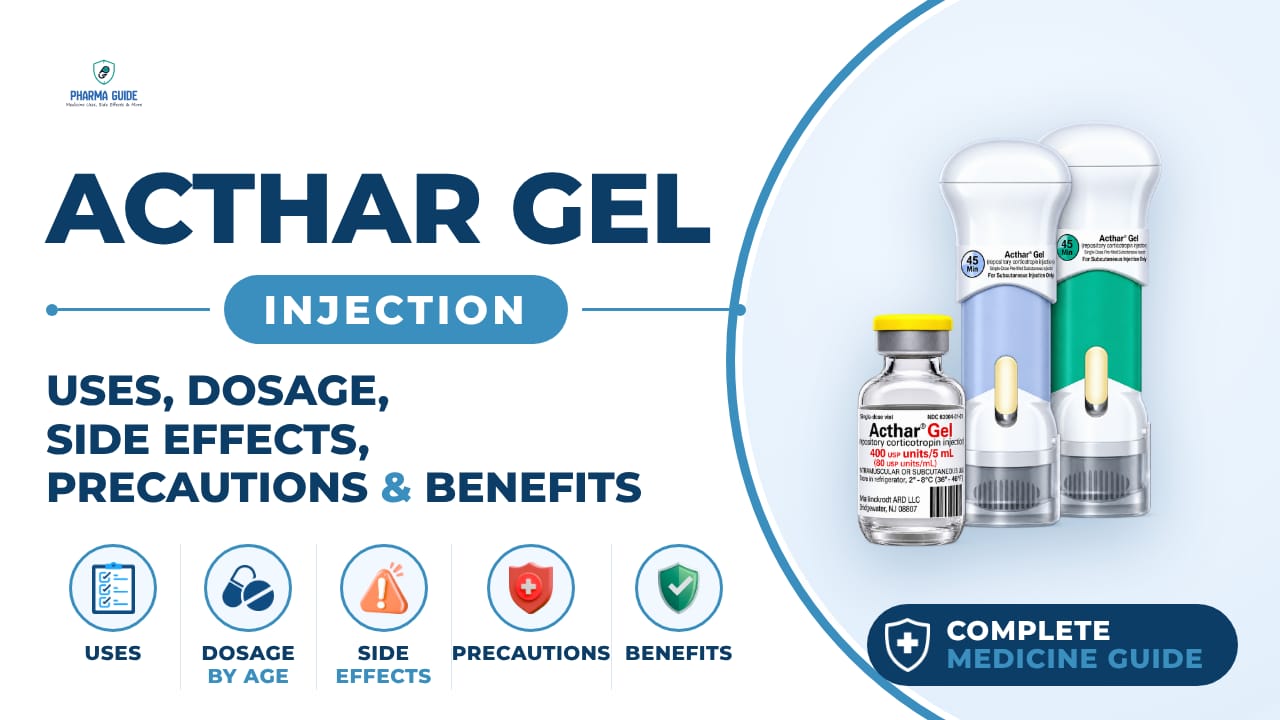
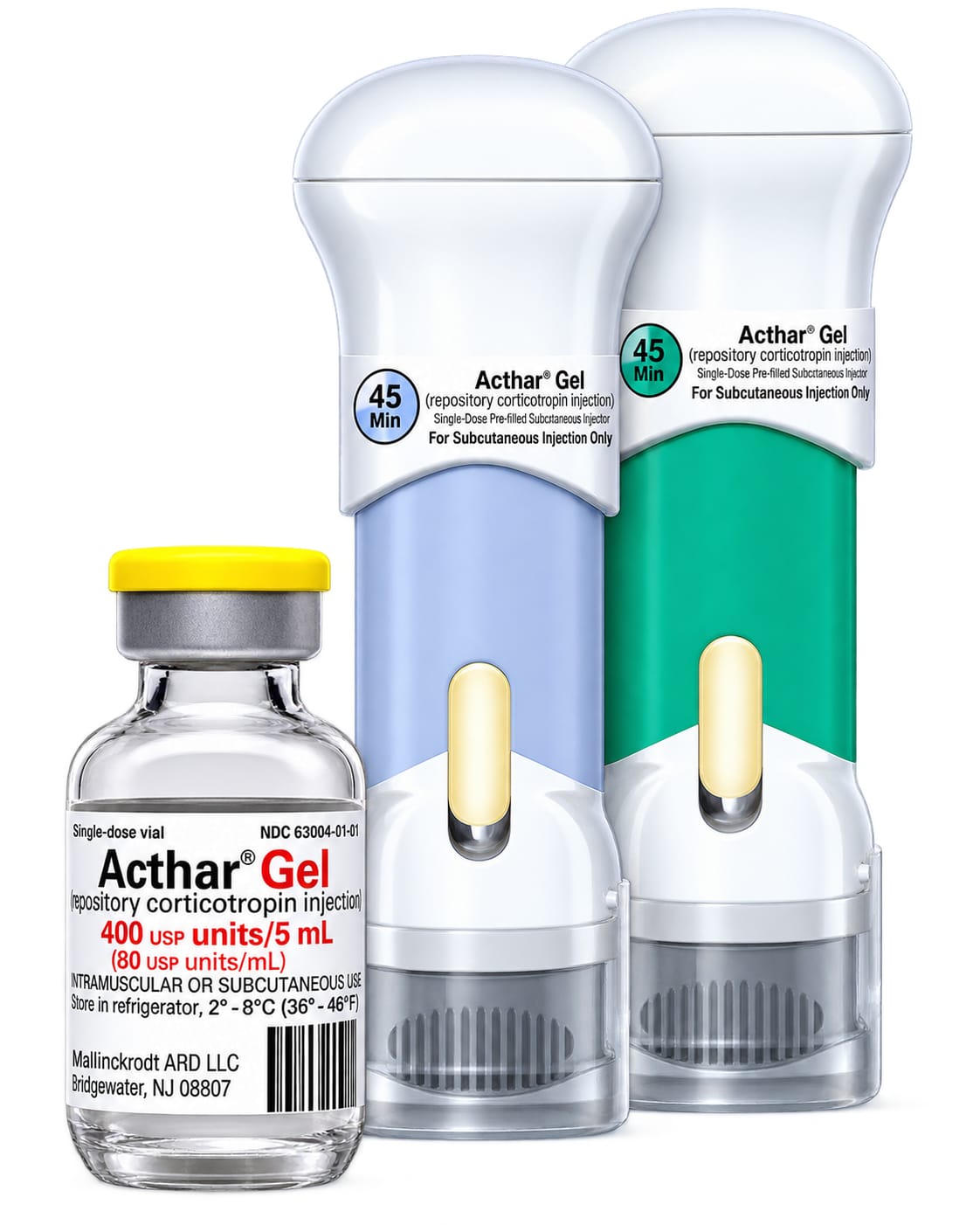
| Forms | Single-dose pre-filled SelfJect injector (40 units or 80 units, for injection under the skin), Multiple-dose vial and syringe (for injection under the skin or into a muscle) |
Quick overview
Acthar Gel Injection (corticotropin) is a prescription hormone medicine given by injection that contains proteins and natural hormones similar to those already found in the body. It belongs to the adrenocorticotropin stimulating hormone (ACTH analog) drug class and is used for many inflammatory and immune-related conditions, including certain eye conditions, infantile spasms, multiple sclerosis flare-ups, and rheumatic and skin conditions. It is not a steroid, though it is believed to work with the immune system to lower inflammation. Dosing and injection method depend on the condition being treated and the product prescribed.
What is Acthar Gel Injection
Acthar Gel is a prescription hormone medicine given by injection. It contains a mix of proteins and natural hormones similar to ones already found in your body, and is used for many inflammatory and immune-related conditions, including certain eye conditions.
Acthar Gel Injection uses
- Severe acute and chronic allergic and inflammatory eye conditions, including uveitis, keratitis, retinal vasculitis, pemphigoid, and conjunctivitis
- Infantile spasms (a seizure disorder in young children)
- Multiple sclerosis flare-ups
- Flare-ups of rheumatic conditions such as psoriatic arthritis, rheumatoid arthritis, and ankylosing spondylitis
- Systemic lupus erythematosus (SLE)
- Systemic dermatomyositis
- Severe skin conditions such as erythema multiforme and Stevens-Johnson syndrome
- Serum sickness
- Breathing conditions such as sarcoidosis
- Fluid build-up from kidney damage due to lupus or unknown cause
Benefits of Acthar Gel Injection
- May help ease symptoms of inflammatory eye conditions such as blurred vision, eye redness, floaters, light sensitivity, tearing, decreased vision, and eye pain
- In a study of people with uveitis, about 3 in 4 people saw improved symptoms, and 4 in 5 people stopped taking other treatments after 3 months
- In a study of people with keratitis, about 1 in 2 people saw improvements after 12 weeks of treatment
- In a study of people with retinal vasculitis, about 3 in 5 people saw improvements after treatment
How Acthar Gel Injection works
Acthar Gel is not a steroid. It is believed to work with the immune system to help lower inflammation, acting like a natural hormone (ACTH) already found in your body. It is thought to trigger the release of hormones like cortisol and to bind to certain proteins to reduce inflammation, though the exact way it works is not fully understood.
Acthar Gel Injection dosage
Acthar is injected beneath the skin or into the muscle, depending on the product prescribed for you. Never inject Acthar directly into a vein. Always inject Acthar with SelfJect beneath the skin, not into a muscle. Follow your doctor's instructions for injecting Acthar, and never stop treatment suddenly unless your doctor tells you to do so, since stopping too fast can cause withdrawal symptoms. Try not to miss any scheduled doctor's appointments so your doctor can monitor you while you take this medicine.
Inject into the upper thigh, abdomen, or back of the arm, avoiding injecting within 1 inch of the belly button, knee, or groin area. Do not inject into skin that is irritated, has tattoos, warts, scars, birthmarks, or stretch marks, and do not inject through clothing. Choose a different injection site each time, and do not use the same site more than once a week. It is not injected into the eye.
Let the medicine warm up on a flat surface for about 45 minutes before injecting; do not warm it any other way. Check that the liquid is clear light yellow or orange; do not use it if it looks cloudy, discolored, or has particles in it. The prefilled SelfJect injector is only for use by people 18 years of age and older. Long-term use can affect growth and physical development in children, but this can be reversed once Acthar is no longer needed.
| Age group | Dose |
|---|---|
| Infants and children under 2 years | For infantile spasms: 150 units/m² per day, divided into 75 units/m² IM twice daily for 2 weeks, followed by a supervised taper |
| 2–17 years | For other approved conditions, there is no fixed age-based dose; dosing is individualized according to the disease, severity, and response |
| 18–64 years | For acute multiple-sclerosis exacerbations: 80–120 units IM or subcutaneously once daily for 2–3 weeks |
| 65–74 years | No separate age-specific dose; individualized according to condition, response, and adverse-effect risk |
| 75 years and older | Individualized cautiously; no standard geriatric dose is established |
Available forms and strengths
- Single-dose pre-filled SelfJect injector (40 units or 80 units, for injection under the skin)
- Multiple-dose vial and syringe (for injection under the skin or into a muscle)
Side effects of Acthar Gel Injection
Common
- Injection site reactions (pain, bruising, swelling, redness, or irritation)
- Fatigue, physical weakness, and lack of energy
- Fluid retention (swelling in hands, legs, feet, or face)
- Insomnia (difficulty sleeping)
- Headache
- High blood sugar
- Mood or behavior changes, irritability
- Increased blood pressure
- In infants treated for infantile spasms: increased risk of infection, convulsions, high blood pressure, irritability, and fever
Serious
- Serious infections, including reactivation of old infections such as tuberculosis
- Severe allergic reactions, including rash, hives, swelling of the face/tongue/lips/throat, and trouble breathing
- Cushing's syndrome (rounded face, increased upper body fat, easy bruising, muscle weakness, weight gain)
- Adrenal insufficiency after stopping long-term treatment (low energy, tiredness, weakness, dizziness, stomach pain, low blood pressure)
- High blood pressure, fluid retention, and electrolyte problems such as low potassium
- Stomach or intestinal bleeding or ulcers (stomach pain, bloody or black stools, vomiting blood)
- Eye problems such as cataracts, glaucoma, or optic nerve damage
- Weakened bones (osteoporosis) and, in children, slowed growth and development
- Seizures
- Severe mood or behavior changes, including depression, hallucinations, or psychotic-like behavior
Warnings and precautions
- Do not take Acthar until you have talked to your doctor if you have had a live or live-attenuated vaccine, scleroderma, osteoporosis or bone density loss, any fungal, bacterial, or viral infection, eye infections such as ocular herpes simplex, recent surgery, stomach ulcers, heart failure, uncontrolled high blood pressure, Addison's disease or Cushing's syndrome, allergy to pig-derived proteins, or suspected infection at birth in infants under 2.
- Never inject Acthar directly into a vein, and always follow your doctor's instructions for how to inject it.
- Never stop treatment suddenly unless your doctor tells you to, since this can cause withdrawal symptoms like low energy, weakness, and skin color changes.
- This medicine may make you more likely to get new infections, or cause old infections to become active again.
- Taking this medicine long-term can cause your adrenal gland to make too much cortisol, leading to symptoms of Cushing's syndrome such as increased upper body fat, a rounded face, easy bruising, or muscle weakness.
- Stopping long-term treatment may mean your body does not make enough of its own cortisol, called adrenal insufficiency; your doctor may give you a steroid medicine to protect you until your adrenal gland recovers.
- This medicine can cause high blood pressure, fluid and salt retention, or low potassium, so your doctor may recommend diet changes.
- Vaccines may not work as well while you are on this medicine, so talk to your doctor about which vaccines are safe for you.
- This medicine may hide symptoms of other diseases, making it harder for your doctor to diagnose other problems.
- This medicine may increase the risk of stomach or intestinal bleeding and ulcers.
- This medicine can cause irritability, depression, mood swings, or trouble sleeping, which usually go away once treatment stops.
- Other conditions such as diabetes or muscle weakness may get worse while taking this medicine.
- Long-term use may cause eye problems such as cataracts, glaucoma, or optic nerve damage.
- This medicine can cause allergic reactions, which may be severe, with symptoms like skin rash, itching, swelling of the face/tongue/lips/throat, or trouble breathing.
- The effects of this medicine may be stronger if you have an underactive thyroid or cirrhosis of the liver.
- Long-term use in children can affect growth and physical development, though this can be reversed once the medicine is stopped.
- This medicine may cause osteoporosis (weak bones).
- This medicine might harm an unborn baby, so tell your doctor if you are pregnant or planning to become pregnant.
- Acthar might harm an unborn baby. Tell your doctor if you are pregnant or plan to become pregnant, so they can decide if this medicine is right for you.
- It is not known if Acthar Gel passes into breast milk. Ask your doctor if it is safe to breastfeed while using this medicine.
- People with kidney problems should talk to their doctor before starting this medicine, since it can cause fluid retention and high blood pressure that may be harder to manage with kidney disease.
- If you have cirrhosis or other liver disease, the effects of this medicine may be stronger, so tell your doctor about any liver problems before starting treatment.
- It is not known whether drinking alcohol affects this medicine, but alcohol may raise the risk of stomach damage, so talk to your doctor about alcohol use.
Storage
- Keep Acthar Gel in the original carton to protect it from light
- Store in the refrigerator at temperatures between 36 F and 46 F (2 C and 8 C)
- Do not freeze
- Once out of the refrigerator, the SelfJect injector can be kept at room temperature for up to 24 hours
- Once it has been out at room temperature, do not place the medicine back in the refrigerator
- Throw away the injector after one use in a sharps container or a heavy-duty plastic container such as an empty milk carton or detergent bottle; do not throw needles or syringes in the regular trash
When to see a doctor
- Contact your doctor at the first sign of an infection or fever, including fever, cough, vomiting, or diarrhea, flu symptoms, or any open cuts or sores.
- Tell your doctor right away if you have stomach pain, bloody vomit, bloody or black stools, excessive tiredness, increased thirst, difficulty breathing, or increased heart rate.
- Get emergency help right away if you notice signs of a severe allergic reaction, such as skin rash and itching, swelling of the face, tongue, lips, or throat, or trouble breathing.
- Go to the hospital right away if you develop symptoms of infection such as fever, chills, and tiredness.
- Call your health care provider right away if you have unusual changes in mood or behavior, blurred vision, eye pain or redness, seeing halos around lights, a seizure, sudden pain or trouble moving your hip, wrist, or back, or signs of high blood pressure such as severe headache or pounding in the neck or ears.
- Call your doctor if you have signs of fluid retention such as shortness of breath even while lying down, swelling, or rapid weight gain, especially in the face and midsection.
- Get emergency help for signs of stomach or intestinal problems, such as severe stomach pain, change in bowel habits, bloody or tarry stools, or coughing up blood or vomit that looks like coffee grounds.
- If you think you have used too much Acthar Gel, get medical help right away or contact a poison control center.
Alternatives
- Prednisone
- Methylprednisolone
- Dexamethasone
Watch the video
FAQs
What is Acthar Gel Injection used for?
It treats inflammatory eye conditions like uveitis and keratitis, infantile spasms, multiple sclerosis flare-ups, rheumatic conditions, lupus, dermatomyositis, severe skin conditions, serum sickness, sarcoidosis, and fluid build-up from kidney damage.
Is Acthar Gel a steroid?
No, Acthar Gel is not a steroid. It is believed to work with the immune system to lower inflammation by acting like a natural hormone already found in the body.
How is Acthar Gel Injection given?
It is injected beneath the skin or into the muscle depending on the product prescribed, into the upper thigh, abdomen, or back of the arm, with a different site chosen each time.
What are the serious side effects of Acthar Gel?
Serious side effects include infections, severe allergic reactions, Cushing's syndrome, adrenal insufficiency, stomach bleeding or ulcers, eye problems, osteoporosis, seizures, and severe mood changes.
How should Acthar Gel be stored?
Keep it in the original carton away from light and store in the refrigerator between 36 F and 46 F without freezing; once out, the SelfJect injector can be kept at room temperature for up to 24 hours but should not be refrigerated again.
General information, not medical advice
Your prescriber and the leaflet in your pack know your situation. This page does not.
- Follow your prescriber and the leaflet
- Don't start, stop, or change a dose on your own
- Doses and warnings differ by country and product
Sources
Video
Related medicines

Injectafer Injection: Uses, Dosage, Side Effects, Precautions and Alternates
Iron products
Injectafer (ferric carboxymaltose) treats iron deficiency anemia and heart failure-related iron deficiency via IV. Learn uses, dosage, side effects, and

Gliclazide Tablet: Uses, Dosage, Side Effects, Precautions and Alternates
Sulfonylurea (hypoglycemic/antidiabetic agent)
Gliclazide Tablet is a sulfonylurea for type 2 diabetes that boosts insulin release. Learn about dosage, side effects, warnings, and precautions.