
Safety
General information, not medical advice
Your prescriber and the leaflet in your pack know your situation. This page does not.
- Follow your prescriber and the leaflet
- Don't start, stop, or change a dose on your own
- Doses and warnings differ by country and product
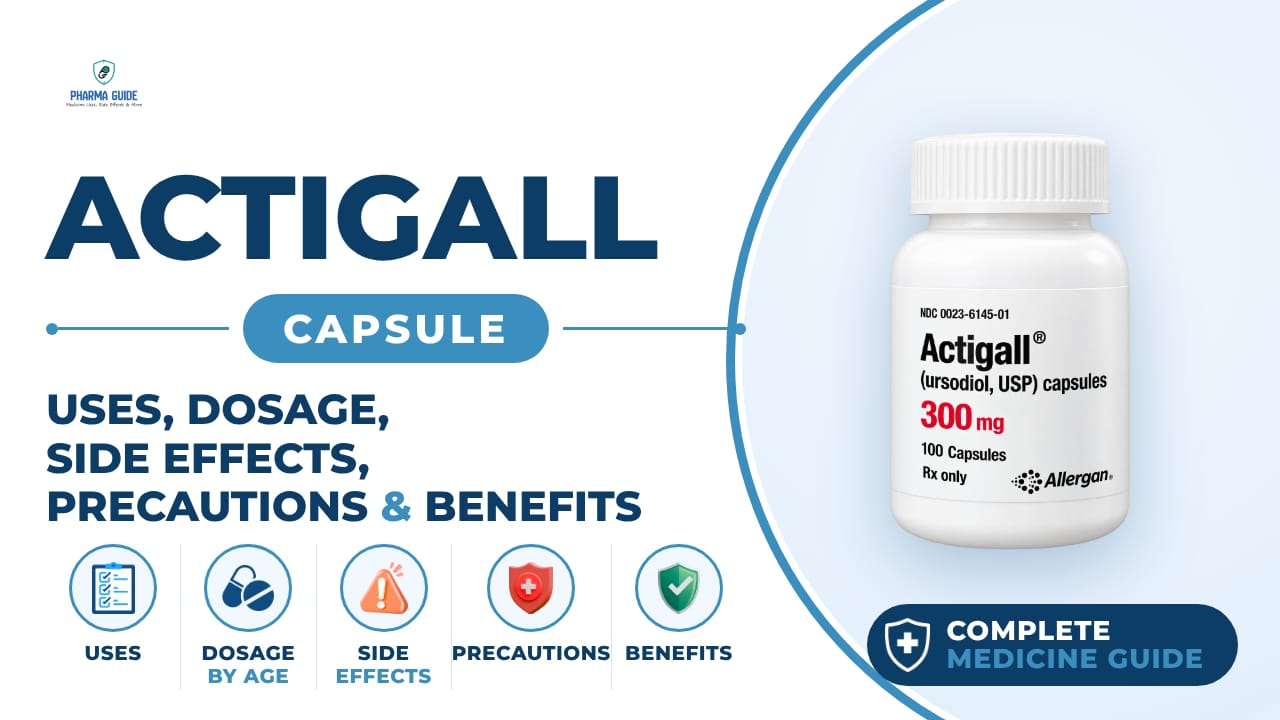
Actigall Capsule: Uses, Dosage, Side Effects, Precautions and Alternates
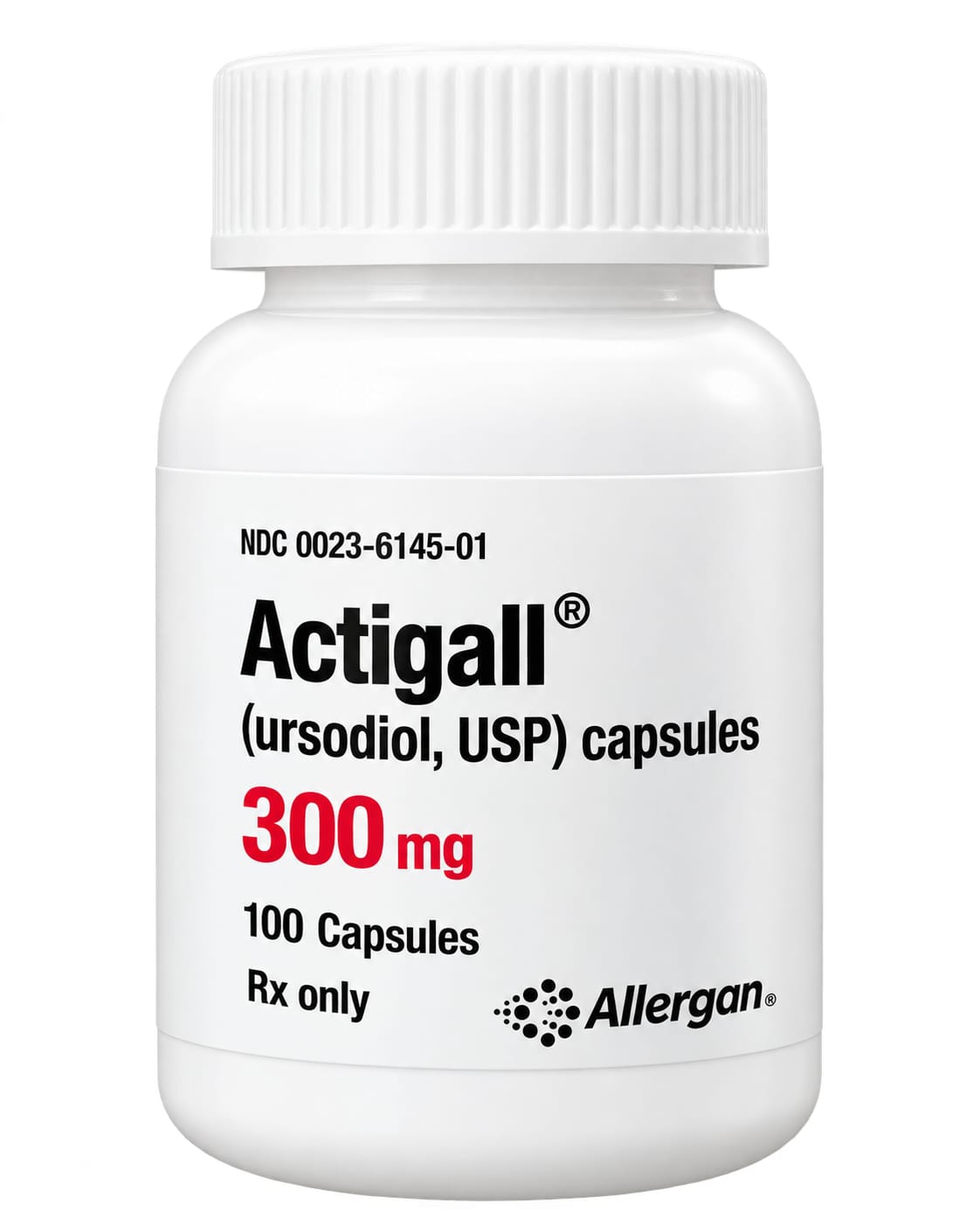
| Generic name | ursodiol |
|---|---|
| Drug class | Gallstone solubilizing agents |
| Forms | Capsule, Tablet |
Quick overview
Actigall Capsule (ursodiol) is a prescription bile acid medicine belonging to the gallstone solubilizing agents class. It is used to dissolve or prevent cholesterol gallstones and to treat chronic liver diseases such as primary biliary cholangitis. It works by changing how the liver and intestines handle cholesterol so that gallstones can slowly dissolve. Treatment is typically long-term and monitored by a doctor with blood tests and ultrasound exams.
What is Actigall Capsule
Actigall is a prescription bile acid medicine used to dissolve or prevent cholesterol gallstones and to treat chronic liver diseases like primary biliary cholangitis.
Actigall Capsule uses
- Dissolving small cholesterol-rich gallstones in people who cannot have surgery or choose not to have an operation
- Preventing new gallstones from forming during rapid weight loss
- Treating primary biliary cholangitis (an autoimmune disorder that causes progressive destruction of the bile ducts in the liver) by improving bile flow and protecting liver function
Benefits of Actigall Capsule
- Helps break down small cholesterol gallstones without surgery
- Helps stop new gallstones from forming during rapid weight loss
- Helps manage primary biliary cholangitis by improving bile flow and protecting liver function
- May gradually dissolve cholesterol-based gallstones
- Helps reduce the risk of gallstone formation during rapid weight loss
How Actigall Capsule works
Actigall lowers the amount of cholesterol the liver makes, reduces how much cholesterol the intestines absorb, and helps spread out the cholesterol already in bile so that gallstones can slowly dissolve.
Actigall Capsule dosage
Take the capsule or tablet with food to help reduce stomach side effects. Follow all directions on your prescription label and use the medicine exactly as directed. If you need to break a tablet in half, swallow each piece whole with a glass of water, since a broken tablet may taste bitter. Keep a broken tablet half separate from whole tablets and use it within 28 days of breaking it.
Use the medicine regularly for the best results, even if you start to feel better. Ask your doctor before taking any antacid, and only use the type your doctor recommends, since some antacids can block absorption of this medicine. Space this medicine at least 2 hours apart from cholesterol-binding medicines like cholestyramine or colestipol, which can reduce how well it's absorbed.
If you miss a dose, take it as soon as you remember, but skip it if it is almost time for your next dose; do not take two doses at once. This medicine is not approved for use in anyone younger than 18 years old. Treatment for gallstones or liver conditions can take several months, and your doctor will likely check your progress with blood tests and ultrasound exams.
| Age group | Dose |
|---|---|
| Under 18 years | Safety and effectiveness not established; no approved pediatric dosage for Actigall |
| 18–74 years | Gallstone dissolution: 8–10 mg/kg/day in 2–3 divided doses; prevention: 300 mg twice daily |
| 75 years and older | Gallstone dissolution: 8–10 mg/kg/day in 2–3 divided doses; prevention: 300 mg twice daily, with careful monitoring |
Available forms and strengths
- Capsule
- Tablet
Side effects of Actigall Capsule
Common
- Upset stomach, nausea, or vomiting
- Diarrhea or constipation
- Headache or dizziness
- Back pain or joint/muscle aches
- Hair loss (alopecia) or skin rash
- Painful or frequent urination
- Cough or sore throat
Serious
- Liver problems: yellowing of the skin or eyes (jaundice), dark urine, clay-colored stools, severe upper stomach pain, itching, tiredness, loss of appetite, or persistent nausea
- Signs of a new infection: fever, chills, sore throat, mouth sores, skin sores, trouble swallowing, sudden weakness, or feeling ill
- Severe allergic reactions: hives, rash, difficulty breathing, or swelling of the face, lips, tongue, or throat
Warnings and precautions
- Do not use this medicine if you are allergic to it or if you have a blockage in your liver or gallbladder.
- Tell your doctor if you have been coughing up blood, or if you have gained weight rapidly, especially in your face and midsection.
- This medicine will not dissolve calcified gallstones, and some gallstones may not fully dissolve; new gallstones can form again within 5 years after treatment.
- This medicine is not approved for use in anyone under 18 years old.
- People with certain conditions that make the bowel narrow or move slowly have rarely developed hard masses (enteroliths) in the intestine that caused blockage requiring surgery.
- Tell your doctor if you are pregnant. Studies have not found that this medicine causes birth defects, miscarriage, or other problems for mother or baby, but you should discuss the benefits and risks with your doctor.
- Tell your doctor if you are breastfeeding. This substance is naturally present in human milk, and there are no reports of harm to a breastfed baby, but data are very limited.
- This medicine is generally considered safe to use in people with kidney problems.
- This medicine is generally considered safe for people with liver problems, but your doctor will check your liver function before and during treatment, and you should not use it if you have certain liver or bile duct blockages.
- No major direct interaction with alcohol is established, but alcohol may worsen underlying liver disease and should be discussed with a healthcare professional.
- Actigall is not generally associated with significant sedation. Avoid driving if dizziness or other impairing symptoms occur.
Storage
- Store tightly closed at room temperature, away from moisture and heat.
When to see a doctor
- Get emergency medical help if you have signs of a severe allergic reaction: hives, difficulty breathing, or swelling of your face, lips, tongue, or throat.
- Call your doctor right away if you have pain or burning when you urinate; signs of liver problems like nausea, upper stomach pain, itching, tiredness, loss of appetite, dark urine, clay-colored stools, or yellowing of the skin or eyes; or signs of a new infection such as sudden weakness, fever, chills, sore throat, mouth sores, skin sores, or trouble swallowing.
- Call your doctor if your symptoms do not improve or if they get worse.
- If you think you have taken too much of this medicine, seek emergency medical help right away or contact your local poison control center.
Alternatives
- Laparoscopic
- Chenodiol
- Urso 250
- Ursodiol
Watch the video
FAQs
What is Actigall Capsule used for?
Actigall is used to dissolve small cholesterol-rich gallstones in people who cannot or choose not to have surgery, to prevent new gallstones during rapid weight loss, and to treat primary biliary cholangitis by improving bile flow and protecting liver function.
How does Actigall Capsule work?
Actigall lowers the amount of cholesterol the liver makes, reduces cholesterol absorption in the intestines, and helps spread out cholesterol already in bile so gallstones can slowly dissolve.
How should Actigall Capsule be taken?
Take the capsule or tablet with food to reduce stomach side effects, follow your prescription directions exactly, and use it regularly even if you start feeling better. If splitting a tablet, swallow each half whole with water and use it within 28 days of breaking it.
Can Actigall Capsule be used in children?
No, Actigall is not approved for use in anyone younger than 18 years old because safety and effectiveness have not been established in this age group.
What are the serious side effects of Actigall Capsule?
Serious side effects include signs of liver problems such as jaundice, dark urine, clay-colored stools, severe upper stomach pain, itching, and persistent nausea, as well as signs of new infection and severe allergic reactions like hives, difficulty breathing, or facial swelling.
General information, not medical advice
Your prescriber and the leaflet in your pack know your situation. This page does not.
- Follow your prescriber and the leaflet
- Don't start, stop, or change a dose on your own
- Doses and warnings differ by country and product
Sources
Video
Related medicines

Injectafer Injection: Uses, Dosage, Side Effects, Precautions and Alternates
Iron products
Injectafer (ferric carboxymaltose) treats iron deficiency anemia and heart failure-related iron deficiency via IV. Learn uses, dosage, side effects, and

Gliclazide Tablet: Uses, Dosage, Side Effects, Precautions and Alternates
Sulfonylurea (hypoglycemic/antidiabetic agent)
Gliclazide Tablet is a sulfonylurea for type 2 diabetes that boosts insulin release. Learn about dosage, side effects, warnings, and precautions.