
Safety
General information, not medical advice
Your prescriber and the leaflet in your pack know your situation. This page does not.
- Follow your prescriber and the leaflet
- Don't start, stop, or change a dose on your own
- Doses and warnings differ by country and product
Activated Charcoal Capsule: Uses, Dosage, Side Effects, Precautions and Alternates
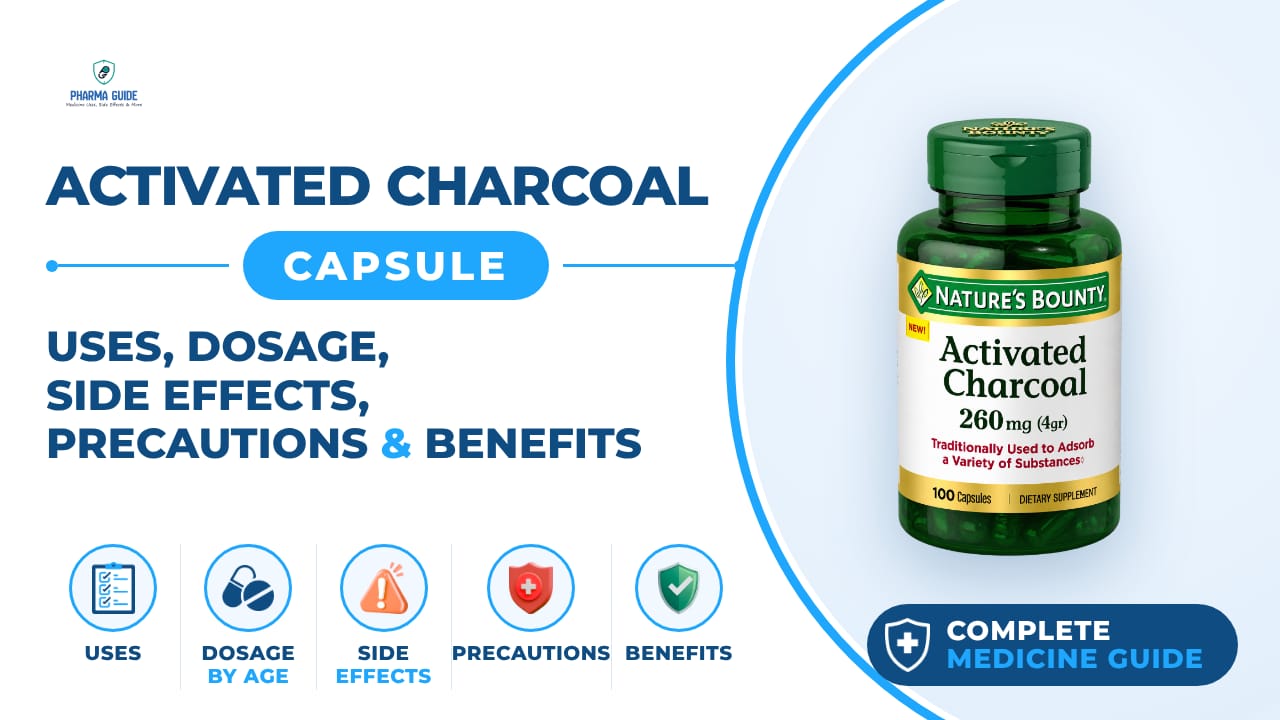
| Generic name | Activated Charcoal |
|---|---|
| Drug class | Vitamins and Supplements |
| Forms | Capsules, Liquid (swallowed), Powder (mixed into liquid and swallowed), Carbon tablets, Granulate |
Quick overview
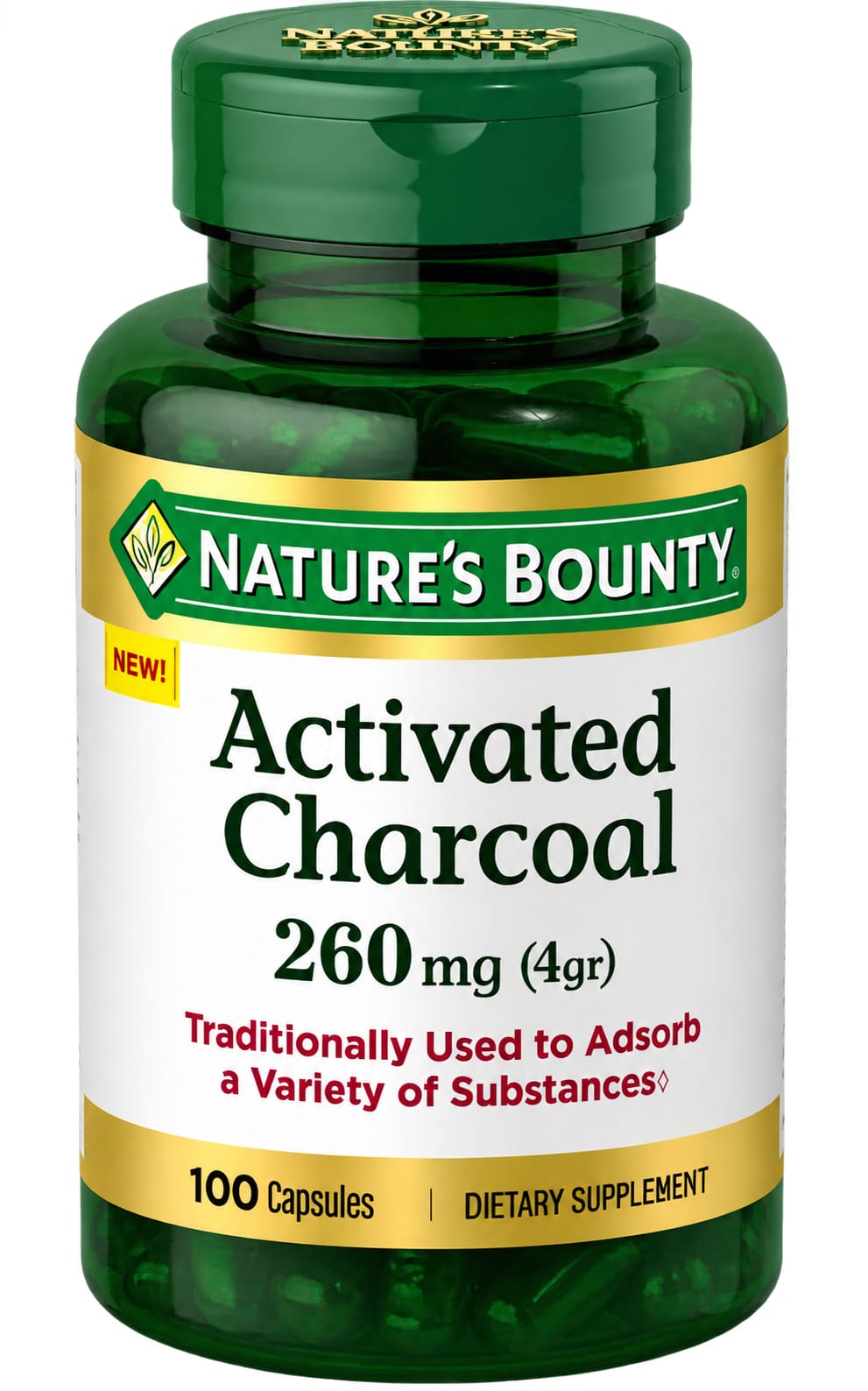
Activated Charcoal Capsule contains Activated Charcoal, part of the Vitamins and Supplements class. It is used by health care providers to treat drug overdose or poisoning, and is also sold as an over-the-counter supplement for purposes such as teeth whitening, digestive health, and bad breath prevention, although these supplement benefits are not well proven. It works by binding to certain substances in the gut so they pass out in the stool instead of being absorbed.
What is Activated Charcoal Capsule
Activated charcoal is a fine, black powder made by heating carbon-rich materials like wood, peat, coconut shells, or sawdust to very high temperatures. This process gives it a huge number of tiny holes and pockets that let it bind to many substances. It is used in hospitals to treat drug overdoses and poisoning, and it is also sold as an over-the-counter dietary supplement, though the supplement's benefits are not well proven.
Activated Charcoal Capsule uses
- Given by a health care provider to help treat a drug overdose or poisoning
- Used in dietary supplement form for reasons such as whitening teeth, improving digestive health, and preventing bad breath, though these benefits are not well defined
Benefits of Activated Charcoal Capsule
- May help clear certain toxins and drugs from the body when given soon after ingestion
- May help reduce intestinal gas symptoms in some people, according to limited studies
How Activated Charcoal Capsule works
Activated charcoal has many tiny holes and pockets on its surface that can bind (adsorb) to certain substances, including toxins and some drugs. Once a substance sticks to the charcoal, the body can't absorb it, and it passes out of the body in the stool instead.
Activated Charcoal Capsule dosage
Activated charcoal supplements should be taken on an empty stomach with a full glass of water. Avoid taking it within about two hours before or after a meal. Also avoid taking it within about two hours before or after taking any other medicines or supplements, since it can bind to them and stop them from being absorbed. Follow the instructions that come with the product and do not use it for longer than recommended on the label. In an emergency for overdose or poisoning, it is given by a health care provider in a health care facility and should not be attempted at home.
| Age group | Dose |
|---|---|
| Under 1 Year | Use only under medical supervision |
| 1–12 Years | Dose depends on body weight and medical purpose |
| 13 Years and Above | 25–100 g in medical poisoning situations (doctor-supervised); capsule doses vary by product strength |
| Adults | Common supplement capsule doses vary by product, usually 250–1000 mg per dose |
Available forms and strengths
- Capsules
- Liquid (swallowed)
- Powder (mixed into liquid and swallowed)
- Carbon tablets
- Granulate
Side effects of Activated Charcoal Capsule
Common
- Black poop
- Nausea or vomiting
Serious
- Severe allergic reaction (breathing problems, wheezing, racing heart, fever, swollen lymph nodes, swelling of face/lips/mouth/tongue/throat, trouble swallowing, itching, rash, hives, dizziness, fainting, stomach cramps, joint pain)
- Gut blockage (lack of appetite, feeling full after eating a small amount, nausea or vomiting, stomach pain or bloating, blood in stool)
- Constipation, diarrhea, urge to defecate, and anal irritation with regular use
- Rare small intestinal blockage requiring surgery, or charcoal hardening and causing a bowel perforation
- Rare but serious aspiration of charcoal into the lungs, which can be fatal
Warnings and precautions
- If someone is not fully awake and alert, or cannot swallow properly, activated charcoal should not be given because of the danger of it going into the lungs.
- People who have had known or suspected bleeding, injury, or a hole in the gut, or problems with the gut passage, should not be given activated charcoal.
- Activated charcoal should not be given if someone is vomiting repeatedly.
- People with slowed stomach emptying, a gut blockage, or other stomach or gut problems should discuss this with their health care provider before using activated charcoal.
- Activated charcoal supplements are not meant for regular, long-term use; talk to a health care provider first if you plan to use it regularly.
- People with malabsorption problems who regularly use activated charcoal supplements may be at higher risk of nutrient deficiencies over time.
- It is not known if or how activated charcoal could affect pregnancy or harm an unborn baby. Tell your health care provider if you are pregnant or plan to become pregnant.
- It is not known if activated charcoal passes into breast milk. Tell your health care provider if you are breastfeeding or plan to breastfeed.
- Do not use activated charcoal for poisoning or overdose without medical advice.
- Do not use if you have intestinal blockage, severe constipation, or digestive obstruction.
- It isn't known if drinking alcohol affects activated charcoal. Activated charcoal does not bind to alcohol, so it will not stop your body from absorbing alcohol, even if you drink too much.
- Pregnant or breastfeeding individuals should consult a doctor before use.
Storage
- Most activated charcoal products should be stored at room temperature, between 68 F and 77 F (20 C and 25 C)
- They can be exposed to temperatures between 59 F and 86 F (15 C and 30 C) for shorter periods of time, such as when transporting them
- Store in a cool, dry place
When to see a doctor
- If you or someone you know is having a drug overdose or poisoning emergency, get medical help right away and do not try to treat it at home.
- Stop using activated charcoal and get help right away if you notice signs of a serious allergic reaction, such as breathing problems, wheezing, a racing heart, fever, swollen lymph nodes, swelling of the face, lips, mouth, tongue, or throat, trouble swallowing, throat tightness, itching, rash, hives, dizziness, fainting, stomach cramps, or joint pain.
- Call your health care provider right away if you notice signs of a gut blockage, such as lack of appetite, feeling full after eating only a small amount, nausea or vomiting, stomach pain or bloating, or blood in your stool.
- If you think you have used too much activated charcoal, get medical help right away.
Alternatives
- Bismuth Subsalicylate
- Oral Rehydration Solution (ORS)
- Antacid Preparations
Watch the video
FAQs
What is Activated Charcoal Capsule used for?
It is given by health care providers to treat drug overdose or poisoning, and is also sold as a supplement for teeth whitening, digestive health, and bad breath prevention, though these supplement benefits are not well proven.
How does Activated Charcoal Capsule work?
It has many tiny holes and pockets that bind to certain substances, including toxins and some drugs, preventing the body from absorbing them so they pass out in the stool instead.
How should Activated Charcoal Capsule be taken?
It should be taken on an empty stomach with a full glass of water, avoiding use within about two hours before or after a meal or other medicines or supplements, since it can bind to them and stop absorption.
What are the side effects of Activated Charcoal Capsule?
Common side effects include black poop and nausea or vomiting. Serious effects can include severe allergic reaction, gut blockage, constipation, diarrhea, anal irritation, rare intestinal blockage or bowel perforation, and rare aspiration into the lungs.
Who should not use Activated Charcoal Capsule?
It should not be given to someone who is not fully awake, cannot swallow properly, is vomiting repeatedly, or has known or suspected bleeding, injury, or a hole in the gut, intestinal blockage, or severe constipation.
General information, not medical advice
Your prescriber and the leaflet in your pack know your situation. This page does not.
- Follow your prescriber and the leaflet
- Don't start, stop, or change a dose on your own
- Doses and warnings differ by country and product
Sources
Video
Related medicines
Thiamine (Vitamin B1) Tablet: Uses, Dosage, Side Effects, Precautions and Alternates
Vitamins and Supplements
Thiamine (Vitamin B1) Tablet prevents and treats B1 deficiency, beriberi, and Wernicke-Korsakoff syndrome. Learn uses, dosage, side effects, and precautions.
Ashwagandha KSM-66 Capsule: Uses, Dosage, Side Effects, Precautions and Alternates
Vitamins and Supplements
Ashwagandha KSM-66 Capsule is a root-extract supplement used for stress, anxiety, sleep trouble, and muscle recovery. Learn dosage, side effects, and