
Safety
General information, not medical advice
Your prescriber and the leaflet in your pack know your situation. This page does not.
- Follow your prescriber and the leaflet
- Don't start, stop, or change a dose on your own
- Doses and warnings differ by country and product
Thiamine (Vitamin B1) Tablet: Uses, Dosage, Side Effects, Precautions and Alternates
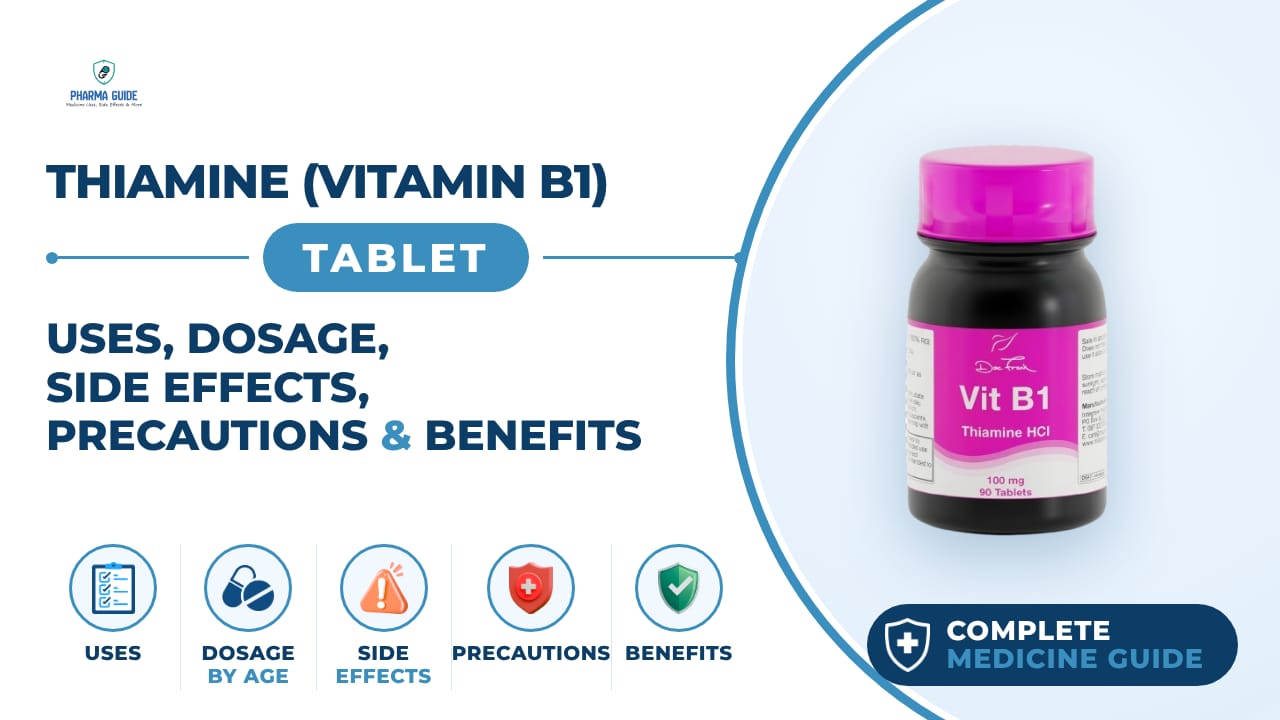
| Generic name | Thiamine, thiamin, thiamin HCl, thiamin hydrochloride, thiamin mononitrate, vitamin B1 |
|---|---|
| Drug class | Vitamins and Supplements |
| Forms | Tablet, Capsule, Solution (liquid drops) |
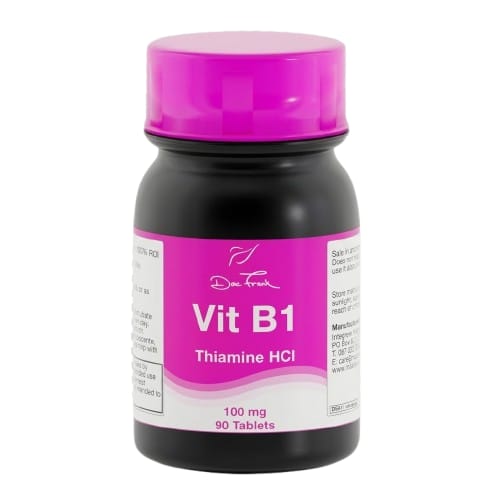
Quick overview
Thiamine (vitamin B1) is a dietary supplement used to prevent and treat vitamin B1 deficiency and related nerve and brain conditions. It supports the body's ability to produce energy from food and helps maintain proper nerve function. It is available as tablets, capsules, and liquid drops, and dosing varies by age. Most side effects are mild, but serious allergic reactions can occur.
What is Thiamine (Vitamin B1) Tablet
Thiamine is vitamin B1, a vitamin your body needs to produce energy and help cells grow and function properly. It is used as a dietary supplement when a person's diet does not give them enough thiamine.
Thiamine (Vitamin B1) Tablet uses
- Preventing low vitamin B1 levels
- Treating vitamin B1 deficiency (beriberi), which causes tingling and numbness in the feet and hands, muscle loss, and poor reflexes
- Treating and preventing Wernicke-Korsakoff syndrome, a serious brain and nerve disorder with tingling and numbness in hands and feet, memory loss, and confusion
- Helping certain inherited metabolic disorders, including Leigh's disease and maple syrup urine disease
- Other conditions as determined by a health care provider
Benefits of Thiamine (Vitamin B1) Tablet
- Helps correct thiamine deficiency and related nerve and brain problems
- Supports the body's ability to turn food into energy
- Supports proper nerve function
How Thiamine (Vitamin B1) Tablet works
Thiamine is vitamin B1. Your body uses it to produce energy and help cells grow and function properly, and it helps maintain proper nerve function.
Thiamine (Vitamin B1) Tablet dosage
Thiamine tablets are taken by mouth. It is usually taken once to three times a day depending on the product, your age, and your medical condition. Follow the directions on your product label or your doctor's instructions carefully. Take thiamine exactly as directed — do not take more or less, or take it more often, than recommended.
Unless your doctor tells you otherwise, continue your normal diet while taking thiamine.
If you miss a dose, take it as soon as you remember; if it is almost time for your next dose, skip the missed dose and continue your regular schedule. Do not take a double dose to make up for a missed one.
| Age group | Dose |
|---|---|
| Under 4 years | 5 mg, once/day |
| 4–8 years | 6 mg, once/day |
| 9–13 years | 9 mg, once/day |
| 14–18 years | 12 mg, once/day |
| 18+ years | 1.1–1.2 mg, once/day |
Available forms and strengths
- Tablet
- Capsule
- Solution (liquid drops)
Side effects of Thiamine (Vitamin B1) Tablet
Common
- Feeling sick (nausea)
- Diarrhea
- Stomach ache
- Flushing
- Hives
- Itching
- Weakness
- Sweating
- Restlessness
Serious
- Severe allergic reaction (anaphylaxis) with breathing problems or wheezing
- Racing heart
- Fever or general ill feeling
- Swollen lymph nodes
- Swelling of the face, lips, mouth, tongue, or throat
- Trouble swallowing or throat tightness
- Skin rash or hives
- Dizziness, feeling lightheaded, or fainting
- Stomach cramps
- Joint pain
Warnings and precautions
Do not use thiamine if you are allergic to thiamine or any ingredient in the specific product.
Thiamine may interact with certain medicines, including the chemotherapy drug fluorouracil (5-FU) and the diuretic furosemide (Lasix). Tell your health care provider about all medicines and supplements you use.
The FDA has not reviewed thiamine dietary supplements for safety and effectiveness, and has not tested these products to confirm they contain the ingredients stated on their labels.
Tell your doctor about health conditions such as diabetes, HIV, heavy alcohol use, weight loss surgery, or heart failure before using thiamine.
Thiamine is considered likely safe for pregnant women when taken in the recommended daily amount, but tell your health care provider if you are pregnant or plan to become pregnant.
Thiamine passes into breast milk. It is considered likely safe at the recommended daily amount, but tell your health care provider if you are breastfeeding or plan to breastfeed.
People receiving dialysis treatments may have low thiamine levels and might need thiamine supplements. Tell your doctor if you are receiving dialysis treatments.
Thiamine might not properly enter the body in some people who have liver problems. People with alcoholism and a liver disease called cirrhosis often have low thiamine levels and might need supplements.
Drinking large amounts of alcohol may lower vitamin B1 levels in your body, so it is best to limit how much alcohol you drink. Tell your doctor if you drink alcohol.
Storage
Keep this medication in the container it came in, tightly closed, and out of reach of children. Store it at room temperature and away from excess heat and moisture (not in the bathroom).
Keep all medication out of sight and reach of children as many containers are not child-resistant. Always lock safety caps.
Dispose of unneeded medications in a way so that pets, children, and other people cannot take them. Do not flush this medication down the toilet. Use a medicine take-back program; talk to your pharmacist about take-back programs in your community.
When to see a doctor
Stop using thiamine and get help right away if you have symptoms of a serious allergic reaction, such as breathing problems, wheezing, racing heart, swelling of the face, lips, mouth, tongue or throat, trouble swallowing, hives, dizziness, or fainting.
Get emergency help if your lips, mouth, throat, or tongue suddenly swell; you are struggling to breathe or feel like you're choking; your skin or lips turn blue, grey, or pale; you suddenly become very confused, drowsy, or dizzy; or someone faints and cannot be woken up.
If you or someone else has taken too much thiamine, get medical help right away or contact a poison control center.
Alternatives
- Vitamin B Complex
- Thiamine Mononitrate
- Benfotiamine
Watch the video
FAQs
What is Thiamine (Vitamin B1) Tablet used for?
It is used to prevent and treat vitamin B1 deficiency, including beriberi and Wernicke-Korsakoff syndrome, and to help certain inherited metabolic disorders like Leigh's disease and maple syrup urine disease.
What is the dosage of Thiamine for adults?
Adults 18 years and older typically take 1.1–1.2 mg once daily, but dosing depends on the product and medical condition, so follow label directions or your doctor's instructions.
What are the common side effects of Thiamine tablets?
Common side effects include nausea, diarrhea, stomach ache, flushing, hives, itching, weakness, sweating, and restlessness.
What should I do if I miss a dose of Thiamine?
Take the missed dose as soon as you remember; if it is almost time for your next dose, skip the missed dose and continue your regular schedule without doubling up.
Does Thiamine interact with any medications?
Yes, thiamine may interact with the chemotherapy drug fluorouracil (5-FU) and the diuretic furosemide (Lasix), so tell your health care provider about all medicines and supplements you use.
General information, not medical advice
Your prescriber and the leaflet in your pack know your situation. This page does not.
- Follow your prescriber and the leaflet
- Don't start, stop, or change a dose on your own
- Doses and warnings differ by country and product
Sources
Video
Related medicines
Ashwagandha KSM-66 Capsule: Uses, Dosage, Side Effects, Precautions and Alternates
Vitamins and Supplements
Ashwagandha KSM-66 Capsule is a root-extract supplement used for stress, anxiety, sleep trouble, and muscle recovery. Learn dosage, side effects, and
D-Mannose Capsule: Uses, Dosage, Side Effects, Precautions and Alternates
Vitamins and Supplements
D-Mannose Capsule is a dietary supplement used for urinary tract health and MPI-CDG. Learn its uses, dosage, side effects, and precautions.