
Safety
General information, not medical advice
Your prescriber and the leaflet in your pack know your situation. This page does not.
- Follow your prescriber and the leaflet
- Don't start, stop, or change a dose on your own
- Doses and warnings differ by country and product
D-Mannose Capsule: Uses, Dosage, Side Effects, Precautions and Alternates
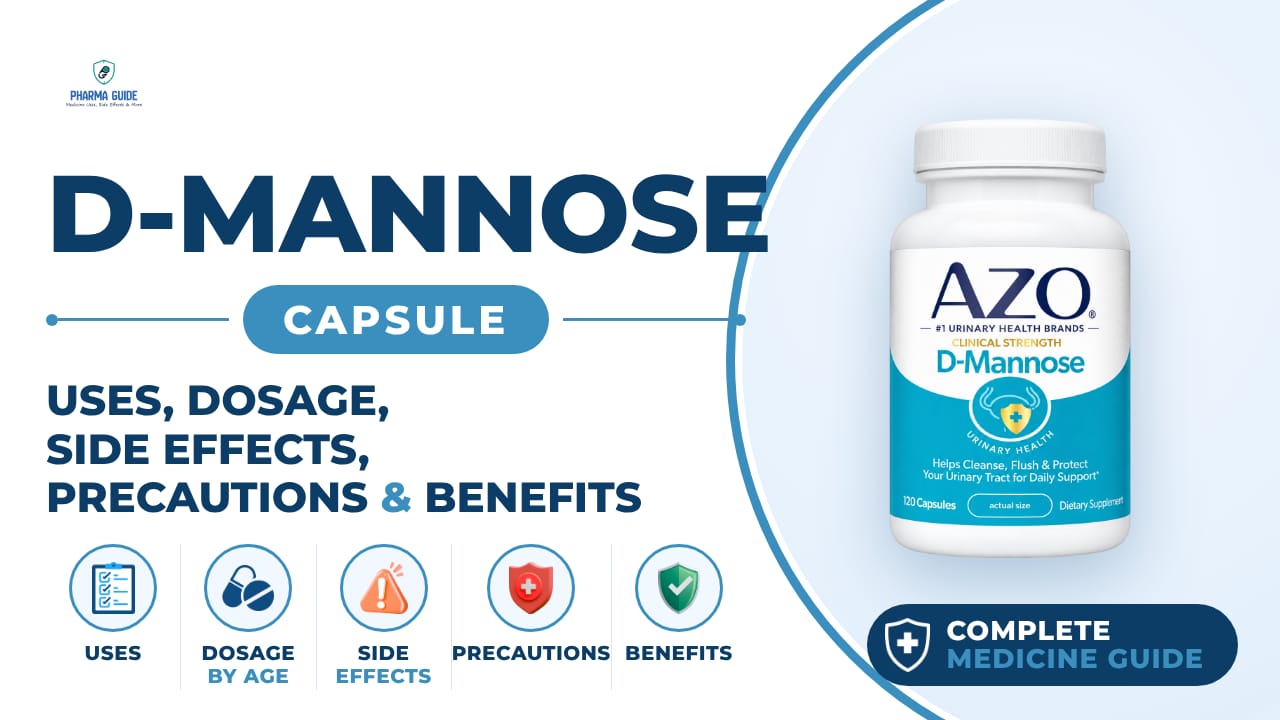
| Generic name | D-mannose |
|---|---|
| Drug class | Vitamins and Supplements |
| Forms | Capsule, Powder |
Quick overview
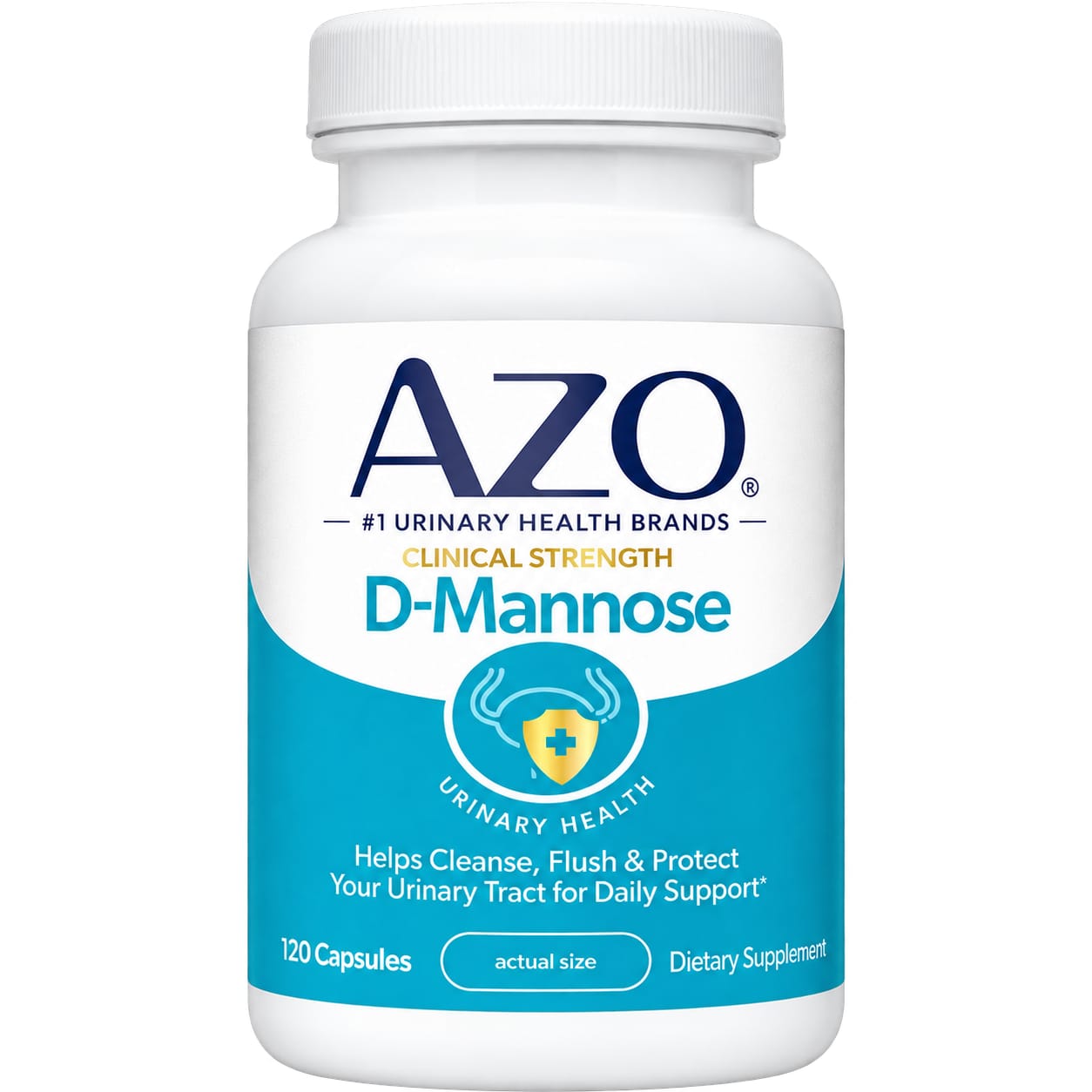
D-Mannose Capsule contains D-mannose, a simple sugar available over-the-counter as a dietary supplement, classified under Vitamins and Supplements. It is commonly used for urinary tract health and sometimes for recurrent urinary tract infections, though its benefits for this use are not well defined. It is also used for a very rare genetic condition called MPI-CDG. It is available as capsules and powder.
What is D-Mannose Capsule
D-mannose is a simple sugar that is available over-the-counter as a dietary supplement. It is naturally found in some fruits and vegetables, like apples, grapes, watermelon, and cranberries.
D-Mannose Capsule uses
- Kidney and bladder infections (urinary tract infections or UTIs), although its benefits are not well defined
- A very rare, genetic condition called carbohydrate-deficient glycoprotein syndrome type 1b (MPI-CDG)
- Marketed for urinary-tract health
- Sometimes used in attempts to prevent recurrent UTIs
Benefits of D-Mannose Capsule
- May help stop bacteria from sticking to the walls of the urinary tract, which could reduce the risk of UTIs
- May help reduce certain symptoms in people with the rare genetic condition MPI-CDG
- May act as a prebiotic that feeds helpful gut bacteria
- Generally simple to take as a supplement
How D-Mannose Capsule works
D-mannose is a simple sugar found naturally in some fruits and vegetables. In animals, it can block bacteria from attaching to the bladder wall, which may lower the risk of urinary tract infections, but it may not work the same way in people. The body also needs small amounts of D-mannose to work properly, usually making it from other sugars like fructose; people with a rare genetic condition called MPI-CDG cannot do this, and taking D-mannose may help with some of their symptoms.
D-Mannose Capsule dosage
Read and follow the directions on the specific product you are taking, or take it as recommended by your health care provider. Do not take double or extra doses, even if you miss a dose. People may take it to prevent UTIs for up to about six months, though there isn't a standard method for doing this.
| Age group | Dose |
|---|---|
| Under 17 years | No established standard dose; use only with pediatric clinician advice |
| 18–39 years | 500–2,000 mg/day |
| 40–64 years | 500–2,000 mg/day |
Available forms and strengths
- Capsule
- Powder
Side effects of D-Mannose Capsule
Common
- Diarrhea
- Burning in the vagina
- Bloating
- Dizziness
- Nausea
- Loose stools
- Skin rash
Serious
- Breathing problems or wheezing
- Racing heart
- Fever or general ill feeling
- Swollen lymph nodes
- Swelling of the face, lips, mouth, tongue, or throat
- Trouble swallowing or throat tightness
- Itching or skin rash
- Hives
- Nausea or vomiting
- Dizziness, feeling lightheaded, or fainting
- Stomach cramps
- Joint pain
- Kidney infections (pyelonephritis)
- Blood infection (urosepsis)
Warnings and precautions
- It is not known if or how D-mannose could affect pregnancy or harm a fetus. Tell your health care provider if you are pregnant or plan to become pregnant. Some sources advise avoiding use during pregnancy due to lack of research.
- It is not known if D-mannose passes into breast milk. Tell your health care provider if you are breastfeeding or plan to breastfeed.
- Tell your health care provider if you have kidney problems, and be aware that in high doses, D-mannose might harm the kidneys.
- It is unknown if drinking alcohol will affect D-mannose.
- D-mannose is not generally expected to impair driving.
- People with diabetes should be cautious, as D-mannose may make blood sugar control more difficult.
- If you have symptoms of a kidney or bladder infection (UTI), call your health care provider, since it is not clear if D-mannose can help treat a UTI.
- D-mannose does not seem to help prevent UTIs if you get them regularly, so talk to your provider about the best ways to prevent them.
- The FDA has not reviewed D-mannose for safety and effectiveness, and has not tested products to confirm their labeled ingredients.
Storage
- Store D-mannose according to the product label
- Most dietary supplements should be kept in a cool, dry location that is out of the reach of children and pets and not in direct sunlight
When to see a doctor
- Stop taking D-mannose and get help right away if you have symptoms of a serious allergic reaction, such as breathing problems, swelling of the face or throat, or hives. If you or someone else has taken too much D-mannose, get medical help right away or contact a poison control center.
Alternatives
- Cranberry capsules
Watch the video
FAQs
What is D-Mannose Capsule used for?
It is used for urinary tract health and sometimes to try to prevent recurrent UTIs, though benefits for this are not well defined. It is also used for a rare genetic condition called MPI-CDG.
How does D-Mannose work?
D-mannose is a simple sugar that may help stop bacteria from sticking to the walls of the urinary tract, which could reduce UTI risk, though it may not work the same way in people as in animals. It can also help with symptoms in people with MPI-CDG, who cannot make enough D-mannose naturally.
What is the dosage of D-Mannose Capsule?
Adults aged 18 to 64 may take 500 to 2,000 mg per day, following product directions or a health care provider's recommendation. People may take it for up to about six months to help prevent UTIs, though there isn't a standard method for doing this.
What are the common side effects of D-Mannose Capsule?
Common side effects include diarrhea, burning in the vagina, bloating, dizziness, nausea, loose stools, and skin rash.
Can D-Mannose be taken during pregnancy?
It is not known if or how D-mannose could affect pregnancy or harm a fetus, and some sources advise avoiding its use during pregnancy due to lack of research.
General information, not medical advice
Your prescriber and the leaflet in your pack know your situation. This page does not.
- Follow your prescriber and the leaflet
- Don't start, stop, or change a dose on your own
- Doses and warnings differ by country and product
Sources
Video
Related medicines
Thiamine (Vitamin B1) Tablet: Uses, Dosage, Side Effects, Precautions and Alternates
Vitamins and Supplements
Thiamine (Vitamin B1) Tablet prevents and treats B1 deficiency, beriberi, and Wernicke-Korsakoff syndrome. Learn uses, dosage, side effects, and precautions.
Ashwagandha KSM-66 Capsule: Uses, Dosage, Side Effects, Precautions and Alternates
Vitamins and Supplements
Ashwagandha KSM-66 Capsule is a root-extract supplement used for stress, anxiety, sleep trouble, and muscle recovery. Learn dosage, side effects, and