
Safety
General information, not medical advice
Your prescriber and the leaflet in your pack know your situation. This page does not.
- Follow your prescriber and the leaflet
- Don't start, stop, or change a dose on your own
- Doses and warnings differ by country and product
Actovegin Tablet: Uses, Dosage, Side Effects, Precautions and Alternates
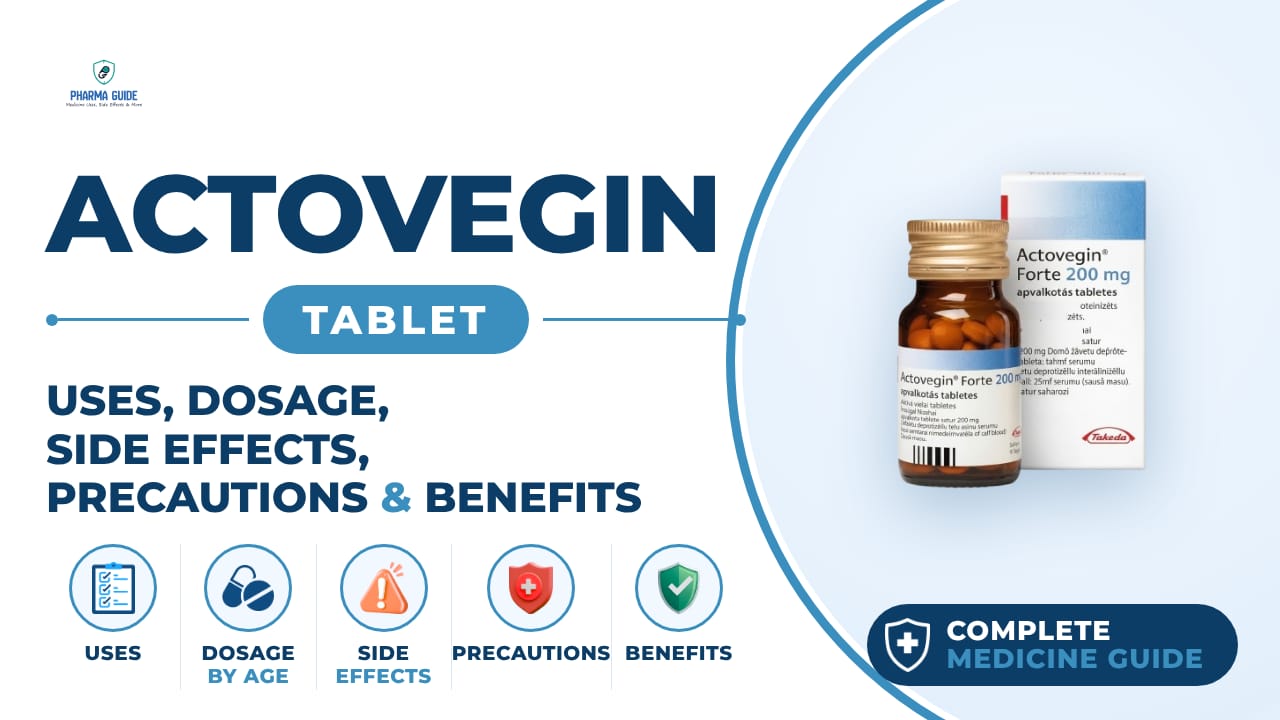
| Generic name | Deproteinized calf blood hemoderivative |
|---|---|
| Drug class | Tissue regeneration stimulant |
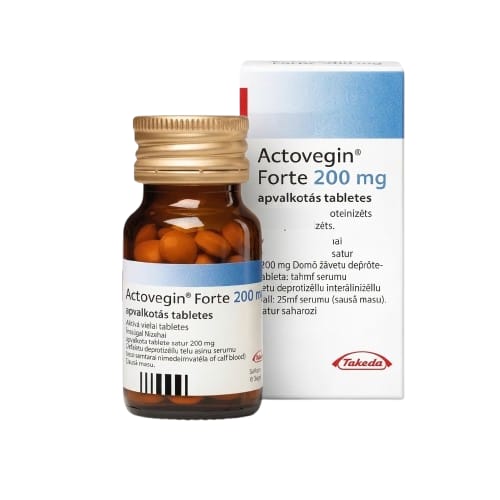
| Forms | Tablet, Capsule, Injection solution (ampoules), Gel, Cream |
Quick overview
Actovegin Tablet (deproteinized calf blood hemoderivative) is a tissue regeneration stimulant used in some countries to support circulation and tissue healing. It may be used for peripheral circulation disorders, diabetic polyneuropathy, and certain cognitive symptoms after stroke or related to dementia, depending on local approval. It is not approved for use in the United States or Canada. It should be used exactly as prescribed by a doctor or pharmacist.
What is Actovegin Tablet
Actovegin is a highly filtered extract taken from calf blood. It is purified so it contains no proteins or disease-causing particles, but keeps small natural substances like amino acids, electrolytes, sugars, and other building blocks found in blood. It is used in some countries to support circulation and tissue healing, though it is not approved for use in the United States or Canada.
Actovegin Tablet uses
- Peripheral circulation disorders, in countries where approved.
- Diabetic polyneuropathy, in countries where approved.
- Post-stroke cognitive impairment, in certain treatment settings.
- Dementia-related cognitive symptoms, where included in local product information.
Benefits of Actovegin Tablet
- May support peripheral circulation in selected patients.
- May help improve walking distance in some patients with peripheral arterial disease.
- May help manage certain symptoms of diabetic polyneuropathy.
- May support recovery of selected cognitive symptoms after stroke.
- May improve some functional outcomes in specific conditions, although evidence varies.
How Actovegin Tablet works
Actovegin is thought to help cells take in more glucose (sugar) and oxygen from the blood. This extra fuel and oxygen may help cells produce more energy, which could support tissue repair and function. It may also act on pathways involved in inflammation and nerve or blood vessel health.
Actovegin Tablet dosage
Tablets/capsules are typically taken on an empty stomach, several hours after eating. In one study, capsules were taken three times a day for a week-long course. Patients should not open or break the capsule before swallowing it. Injectable forms (given by a doctor) are used for more severe conditions needing faster effects, while capsules are used for milder, ongoing treatment.
| Age group | Dose |
|---|---|
| Under 18 years | Not recommended |
| 18–64 years | 400 mg, 3 times/day |
| 65+ years | 400 mg, 3 times/day |
Available forms and strengths
- Tablet
- Capsule
- Injection solution (ampoules)
- Gel
- Cream
Side effects of Actovegin Tablet
Common
- Mild nausea
- Stomach discomfort
- Headaches
- General weakness
- Dizziness
Serious
- Allergic reactions including hives (urticaria) and flushing
- Fever related to drug reaction
- Anaphylactic shock (a severe, life-threatening allergic reaction) reported in at least one patient
- Agitation or tremor
- Loss of consciousness
Warnings and precautions
- A severe, life-threatening allergic reaction (anaphylactic shock) affecting multiple organs has happened in at least one person after receiving this medicine by injection.
- This medicine is not approved for sale or use in the United States or Canada.
- Taking more than a certain amount of this medicine by injection, or repeating injections too close together, is against international anti-doping rules for athletes.
- In a study of this medicine, people were told to avoid alcohol before testing, though this was a study rule rather than a stated medical warning about combining it with the drug.
Storage
- Store at 25°C or below.
- Keep in the original packaging, protected from light.
- Keep out of reach of children.
- Do not use after the expiry date.
When to see a doctor
- Get emergency medical help right away if you have signs of a severe allergic reaction, such as widespread rash, swelling, trouble breathing, or sudden organ problems, especially after an injection of this medicine.
- Tell your doctor if you notice fever, skin rash or hives, severe weakness, dizziness, loss of consciousness, agitation, tremor, or ongoing stomach problems like nausea, vomiting, or diarrhea while taking this medicine.
Alternatives
- Duloxetine
- Gabapentin
- Amitriptyline
Watch the video
FAQs
What is Actovegin Tablet used for?
It is used for peripheral circulation disorders, diabetic polyneuropathy, and certain cognitive symptoms after stroke or related to dementia, depending on local approval.
Is Actovegin Tablet approved in the United States?
No, Actovegin is not approved for use in the United States or Canada.
What is the typical dosage of Actovegin Tablet for adults?
For adults aged 18-64 and those 65 and older, the typical dose is 400 mg taken three times a day.
How should Actovegin Tablet be taken?
Tablets or capsules are typically taken on an empty stomach, several hours after eating, and should not be opened or broken before swallowing.
What are the serious side effects of Actovegin Tablet?
Serious side effects include allergic reactions such as hives and flushing, fever related to drug reaction, anaphylactic shock, agitation or tremor, and loss of consciousness.
General information, not medical advice
Your prescriber and the leaflet in your pack know your situation. This page does not.
- Follow your prescriber and the leaflet
- Don't start, stop, or change a dose on your own
- Doses and warnings differ by country and product
Sources
Video
Related medicines

Injectafer Injection: Uses, Dosage, Side Effects, Precautions and Alternates
Iron products
Injectafer (ferric carboxymaltose) treats iron deficiency anemia and heart failure-related iron deficiency via IV. Learn uses, dosage, side effects, and

Gliclazide Tablet: Uses, Dosage, Side Effects, Precautions and Alternates
Sulfonylurea (hypoglycemic/antidiabetic agent)
Gliclazide Tablet is a sulfonylurea for type 2 diabetes that boosts insulin release. Learn about dosage, side effects, warnings, and precautions.