
Safety
General information, not medical advice
Your prescriber and the leaflet in your pack know your situation. This page does not.
- Follow your prescriber and the leaflet
- Don't start, stop, or change a dose on your own
- Doses and warnings differ by country and product
Acular Eye Drops: Uses, Dosage, Side Effects, Precautions and Alternates
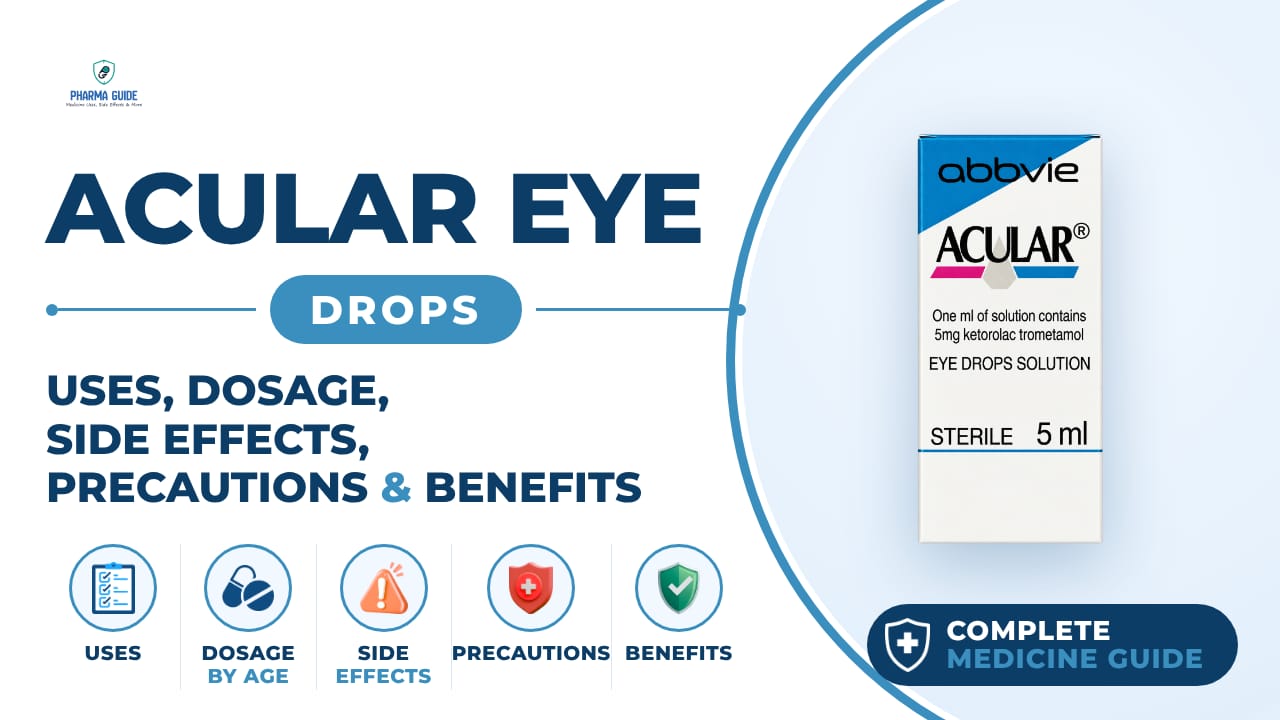
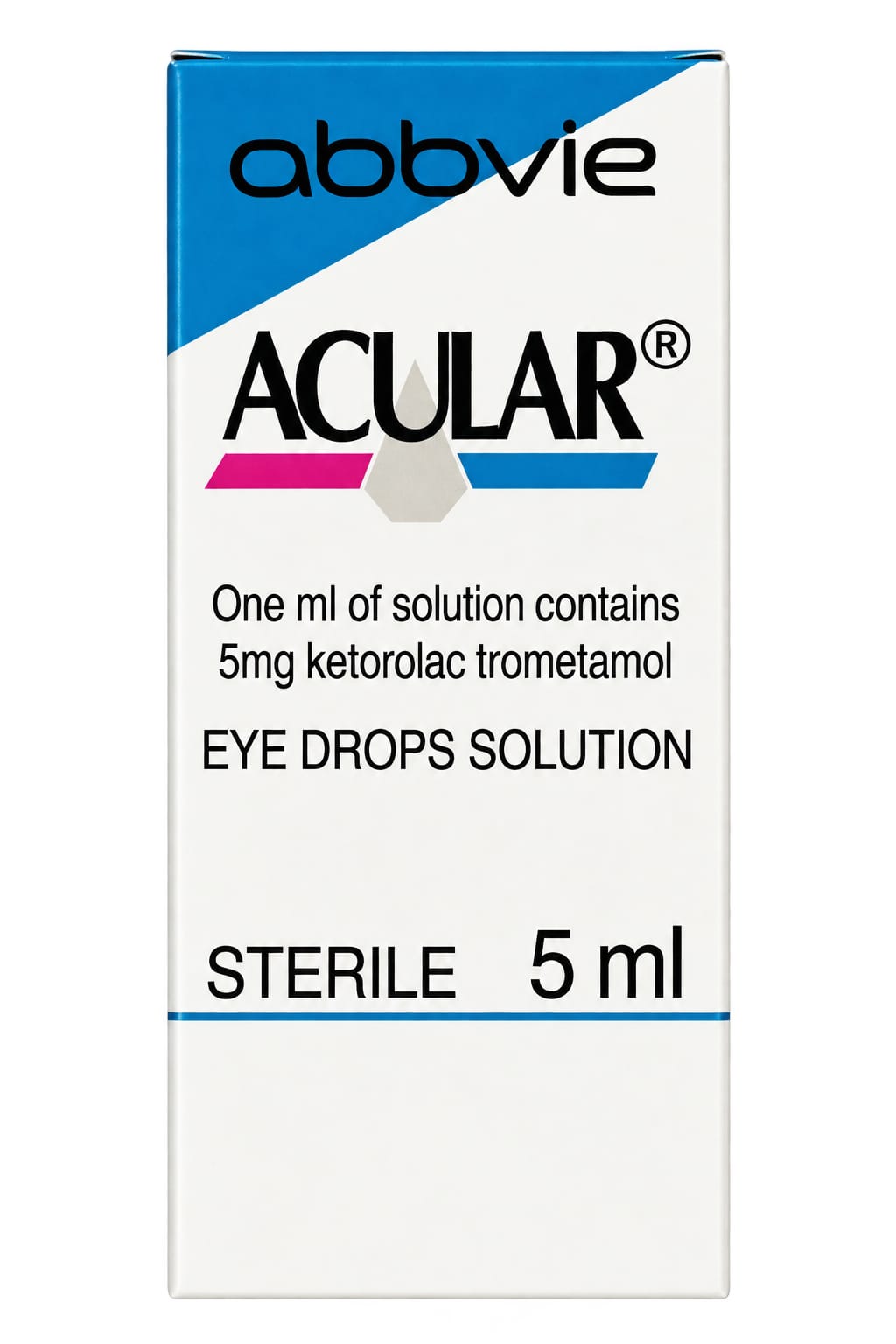
| Generic name | Ketorolac tromethamine (ketorolac ophthalmic) |
|---|---|
| Drug class | Ophthalmic nonsteroidal anti-inflammatory drug (NSAID) |
| Forms | Ophthalmic solution (eye drops) 0.4%, Ophthalmic solution (eye drops) 0.5% |
Quick overview
Acular Eye Drops contain ketorolac tromethamine, an ophthalmic nonsteroidal anti-inflammatory drug (NSAID). This prescription eye drop relieves eye itching caused by allergies and reduces pain, burning, stinging, and swelling following certain eye surgeries. It works by blocking substances in the body that cause pain and inflammation in the eye.
What is Acular Eye Drops
Acular is a prescription eye drop containing ketorolac tromethamine, an NSAID used to relieve eye itching from allergies and to reduce pain and swelling after certain eye surgeries.
Acular Eye Drops uses
- Relieves eye itching caused by seasonal allergic conjunctivitis
- Reduces swelling, pain, burning, and stinging after cataract surgery
- Reduces pain, burning, and stinging after corneal refractive surgery
- Treats inflammation following cataract surgery
Benefits of Acular Eye Drops
- Relieves eye itching, redness, and irritation from seasonal allergies
- Decreases pain, burning, and stinging after eye surgery
- Reduces visible signs of eye inflammation after cataract surgery
- Provides localized treatment through eye-drop administration
How Acular Eye Drops works
Ketorolac blocks substances in the body called prostaglandins that cause pain and swelling, which helps reduce inflammation and discomfort in the eye.
Acular Eye Drops dosage
Follow all directions on your prescription label and do not use more or less than recommended. Wash your hands before using the eye drops. Tilt your head back, pull down the lower eyelid to make a small pocket, and place a drop without letting the dropper tip touch your eye or any surface.
After applying a drop, close your eyes for a couple of minutes with your head tipped down, and gently press a finger to the inner corner of the eye for about a minute. If more than one drop is needed, wait several minutes between drops. Wait at least several minutes before using any other eye drops your doctor has prescribed.
Do not wear contact lenses while using this medicine; remove soft contact lenses before use and wait at least 15 minutes before reinserting them if advised to use them at all. If using after surgery on one eye only, use the drops only in that eye.
For cataract surgery, drops are typically started before surgery and continued for a period afterward; for corneal refractive surgery, drops are used for a short period following surgery, as directed by your doctor. Do not use the drops if the liquid has changed color or has particles in it. If using single-use vials, use each vial for one eye only and throw it away after use, even if some medicine is left.
| Age group | Dose |
|---|---|
| Under 2 years | Safety and effectiveness not established; no approved dosage |
| 2–17 years | 1 drop in the affected eye(s), 4 times daily, under ophthalmologist supervision |
| 18–74 years | 1 drop in the affected eye(s), 4 times daily |
| 75 years and older | 1 drop in the affected eye(s), 4 times daily, with careful monitoring of eye health |
Available forms and strengths
- Ophthalmic solution (eye drops) 0.4%
- Ophthalmic solution (eye drops) 0.5%
Side effects of Acular Eye Drops
Common
- Temporary burning, stinging, or mild pain when the drops are put in
- Blurred vision (usually brief)
- Watery eyes, redness, or eye irritation
- Swollen or puffy eyelids
- Headache
- Fluid buildup in the eye
Serious
- Severe burning, stinging, or itching of the eyes
- A wound in the eye that will not heal
- Eye pain, redness, or watering that doesn't go away
- Vision changes or increased sensitivity to light
- White patches on the eyes
- Crusting or drainage from the eyes
- Signs of a serious allergic reaction such as hives, trouble breathing, or swelling of the face, lips, tongue, or throat
- Signs of bleeding, such as bruising or bleeding that takes a long time to stop
- Corneal thinning, erosion, perforation, or ulceration
- Bronchospasm (shortness of breath) or worsening asthma symptoms
Warnings and precautions
- This medicine may slow down or delay healing of wounds in the eye, especially if used with steroid eye drops.
- People allergic to aspirin or other NSAIDs may also react to this medicine, which can cause serious breathing problems, especially in people with a history of asthma.
- This medicine can increase bleeding in the eye, especially during eye surgery, and should be used carefully by people with bleeding disorders or those taking blood thinners.
- Continued use can cause serious corneal problems such as thinning, erosion, ulceration, or perforation, which can threaten eyesight.
- Letting the dropper tip touch the eye or any surface can contaminate the solution and lead to serious eye infections and vision loss.
- Do not wear contact lenses while using this medicine.
- It is not known whether this medicine can harm an unborn baby, and it is not recommended during pregnancy, especially late in pregnancy. Tell your doctor if you are or may become pregnant.
- It is not known whether this medicine passes into breast milk. Tell your doctor if you are breastfeeding so they can advise you.
- No specific renal dose adjustment is established for ophthalmic ketorolac. Patients with significant kidney disease should have their medications reviewed by a healthcare professional.
- No routine hepatic dose adjustment is established. Patients with significant liver impairment require individualized medical assessment.
- It is not known if drinking alcohol affects this medicine.
- This medicine can cause blurred vision, so do not drive or use heavy machinery until your vision is clear.
Storage
- Store at room temperature away from moisture, heat, and light
- Do not freeze
- Keep the bottle tightly closed when not in use
- If vials come in a foil pouch, store them inside the pouch and fold the ends closed
- Store in a cool, dry place and protect from light
- Discard unused solution 28 days after opening
- Keep out of reach and sight of children
When to see a doctor
- Get emergency help right away if you have signs of a serious allergic reaction, such as hives, difficulty breathing, or swelling of the face, lips, tongue, or throat.
- Call your doctor right away if you have severe burning, stinging, or itching of the eyes; a wound that won't heal; eye pain, redness, or watering; vision changes or light sensitivity; white patches on the eye; or crusting or drainage from the eyes.
- Tell your healthcare provider right away if you notice signs of bleeding, such as bruising or bleeding that takes a long time to stop.
- If you think someone has swallowed the medication, seek emergency medical attention or contact your local poison control center right away.
- Contact your healthcare provider right away if you have an eye infection, eye injury, vision changes, or need eye surgery.
Alternatives
- Bromfenac Ophthalmic Solution
- Nepafenac Ophthalmic Suspension
- Acuvail
- Acular LS
Watch the video
FAQs
What is Acular Eye Drops used for?
Acular is used to relieve eye itching caused by seasonal allergic conjunctivitis and to reduce pain, burning, stinging, and swelling after cataract surgery or corneal refractive surgery.
How does Acular Eye Drops work?
It contains ketorolac, which blocks prostaglandins that cause pain and swelling, helping reduce inflammation and discomfort in the eye.
What is the typical dosage for Acular Eye Drops?
For ages 2 and older, the usual dose is 1 drop in the affected eye(s) 4 times daily, with younger patients supervised by an ophthalmologist and older adults monitored carefully.
Can I wear contact lenses while using Acular Eye Drops?
No, you should not wear contact lenses while using this medicine; soft lenses should be removed before application.
What are the serious side effects of Acular Eye Drops?
Serious side effects include severe eye burning or itching, a wound that won't heal, vision changes, light sensitivity, white patches on the eye, signs of bleeding, corneal thinning or perforation, and allergic reactions like swelling or trouble breathing.
General information, not medical advice
Your prescriber and the leaflet in your pack know your situation. This page does not.
- Follow your prescriber and the leaflet
- Don't start, stop, or change a dose on your own
- Doses and warnings differ by country and product
Sources
Video
Related medicines
Bromfenac Eye Drops: Uses, Dosage, Side Effects, Precautions and Alternates
ophthalmic nonsteroidal anti-inflammatory drug (NSAID)
Bromfenac Eye Drops treat pain, swelling, and redness after cataract surgery. Learn uses, dosage, side effects, warnings, and alternatives here.

Injectafer Injection: Uses, Dosage, Side Effects, Precautions and Alternates
Iron products
Injectafer (ferric carboxymaltose) treats iron deficiency anemia and heart failure-related iron deficiency via IV. Learn uses, dosage, side effects, and