
Safety
General information, not medical advice
Your prescriber and the leaflet in your pack know your situation. This page does not.
- Follow your prescriber and the leaflet
- Don't start, stop, or change a dose on your own
- Doses and warnings differ by country and product
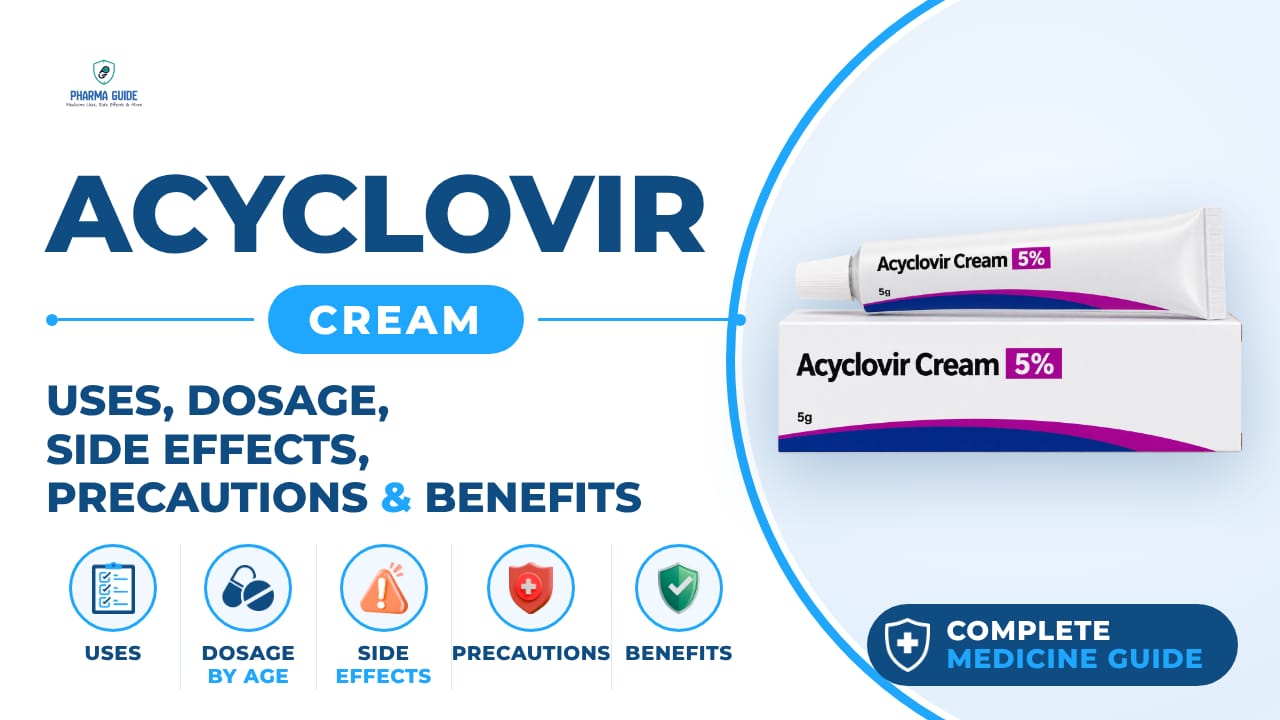
Acyclovir Cream: Uses, Dosage, Side Effects, Precautions and Alternates
| Generic name | Acyclovir |
|---|---|
| Drug class | Antiviral medication (synthetic nucleoside analogue) |
| Forms | Cream, Ointment, Buccal tablets |
Quick overview
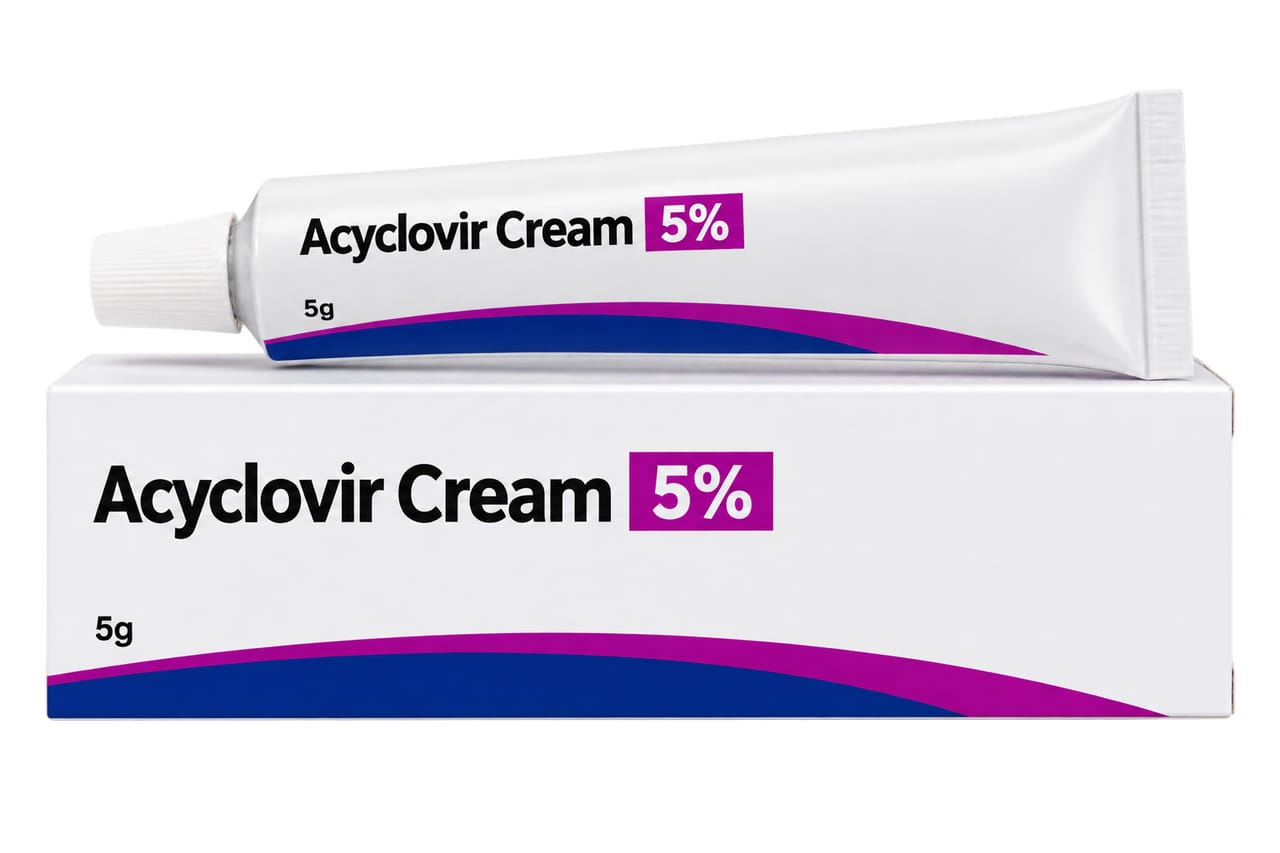
Acyclovir Cream is an antiviral medication applied to the skin to treat cold sores caused by the herpes simplex virus. It does not cure the infection or prevent it from spreading to others. It is used for cold sores, genital warts, shingles, and other herpes infections, and works by stopping the virus from spreading in the body.
What is Acyclovir Cream
Acyclovir cream is an antiviral medicine used on the skin to treat cold sores caused by the herpes simplex virus. It does not cure the infection or stop it from spreading to others. Its generic name is Acyclovir, and it belongs to the antiviral medication class, specifically a synthetic nucleoside analogue.
Acyclovir Cream uses
- Treat cold sores (fever blisters) on the face or lips
- Treat genital warts
- Treat shingles or certain other herpes infections
- Treat initial and recurrent herpes of the lips and face
Benefits of Acyclovir Cream
- Helps cold sore symptoms improve faster when used at the first sign of an outbreak
How Acyclovir Cream works
Acyclovir works by stopping the herpes virus from spreading in the body, but it does not cure the infection or prevent future outbreaks.
Acyclovir Cream dosage
Use exactly as directed by your doctor, even if your symptoms improve. Apply to the skin only; do not take by mouth. Keep the cream out of your mouth, nose, and eyes. Wash your hands before and after applying the cream. Clean the affected area and dry it well before applying. Put a thin layer on the affected skin. Use at the first sign of a cold sore, such as tingling, redness, itching, or a bump. Avoid putting the cream on healthy or unaffected skin. Do not rub the cold sore, as this may make it worse or spread it to nearby areas. Rub the cream into the skin until it disappears and leave the area uncovered unless your doctor says otherwise. Do not apply other skin products, such as soaps, cosmetics, sunscreen, or lip balm, to the area unless your doctor approves. Avoid bathing, showering, or swimming right after applying the cream so it is not washed off. If you miss a dose, apply it as soon as you remember, but skip it if it is almost time for the next dose; do not apply extra to make up for a missed dose. There are no special food or drink restrictions while using this medicine.
| Age group | Dose |
|---|---|
| Under 12 years | Not established; use only on medical advice |
| 12–17 years | Apply a thin layer 5 times daily for 4 days |
| Adults ≥18 years | Apply a thin layer 5 times daily for 4 days |
Available forms and strengths
- Cream
- Ointment
- Buccal tablets
Side effects of Acyclovir Cream
Common
- Skin irritation
- Burning or stinging
- Itching
- Dry or cracked lips
- Flakiness of the skin
- Dry skin
- Peeling
- Redness, swelling, or irritation where applied
Serious
- Signs of an allergic reaction, such as rash, hives, itching, or red, swollen, blistered, or peeling skin
- Fever with skin reactions
- Wheezing, tightness in the chest or throat, or trouble breathing, swallowing, or talking
- Unusual hoarseness
- Swelling of the mouth, face, lips, tongue, or throat
- Difficulty breathing or swallowing
- Swelling of the hands, feet, ankles, or lower legs
Warnings and precautions
- This cream does not cure herpes infections and will not stop genital herpes from spreading to others. Avoid any sexual contact when sores or other signs of genital herpes are present, and always use a latex or polyurethane condom. This cream will not cure cold sores. Do not apply the cream to unaffected skin or to genital herpes sores; use it only where a cold sore has formed or seems likely to form. People with weakened immune systems, such as those with HIV, AIDS, or a bone marrow transplant, should consult a doctor before using this product. Do not use other creams, ointments, or skin products such as soaps, cosmetics, sunscreen, or lip balm on the treated area unless your doctor approves, as this may affect how the cream works. Talk to your doctor if you do not feel better or feel worse after 4-5 days of treatment.
- Tell your doctor if you are pregnant or plan to become pregnant. The cream may be used only if your doctor has weighed the need for it against possible risks to the baby.
- The cream may be used while breastfeeding if you follow the instructions for use in the leaflet, but talk to your doctor first.
- For external use only. Do not swallow or apply inside the mouth.
- Avoid sexual/oral contact while active herpes lesions are present; the cream does not prevent transmission of herpes.
- Apply only to the affected external skin/lip area; avoid unnecessary contact with surrounding skin.
- This medicine does not affect your ability to drive or use machines.
Storage
- Store at room temperature. Do not freeze.
- Protect from heat.
- Keep out of the reach of children and pets.
- Store below 25°C.
- Keep out of the sight and reach of children.
- Keep the medication in the container it came in, with the cap on and tightly closed.
- Store away from excess heat and moisture, not in the bathroom.
- Never leave this medication in your car in cold or hot weather.
- Throw away unused or expired medicine safely; do not flush down the toilet or pour down the drain unless told to do so. Ask your pharmacist about take-back programs in your area.
When to see a doctor
- Get medical help right away if you notice signs of a serious allergic reaction, such as rash, hives, itching, swollen or blistered skin, wheezing, tightness in the chest or throat, or trouble breathing, swallowing, or talking.
- Call your doctor immediately if you have hives, rash, itching, trouble breathing or swallowing, swelling of the face, throat, lips, eyes, hands, feet, ankles, or lower legs, or hoarseness.
- If you think someone has taken too much of this medicine, contact your local poison control center or get medical help right away, and be ready to explain what was taken, how much, and when.
- If your symptoms do not improve or get worse during treatment, call your doctor.
Alternatives
- Zovirax, Xerese,
- Sitavig
- APO-Acyclovir
- TARO-Acyclovir
Watch the video
FAQs
What is Acyclovir Cream used for?
It is used to treat cold sores (fever blisters) on the face or lips, genital warts, shingles, and other herpes infections, including initial and recurrent herpes of the lips and face.
Does Acyclovir Cream cure herpes?
No, it does not cure the infection or stop it from spreading to others. It only helps stop the virus from spreading in the body and can help symptoms improve faster when used at the first sign of an outbreak.
How should Acyclovir Cream be applied?
Clean and dry the affected area, then apply a thin layer to the skin only, rubbing it in until it disappears. Use at the first sign of a cold sore, such as tingling, redness, itching, or a bump, and avoid applying it to healthy or unaffected skin.
What is the recommended dosage for Acyclovir Cream?
For ages 12 and older, including adults, apply a thin layer 5 times daily for 4 days. Use in children under 12 is not established and should only be done on medical advice.
What are the common side effects of Acyclovir Cream?
Common side effects include skin irritation, burning or stinging, itching, dry or cracked lips, flakiness, dry skin, peeling, and redness, swelling, or irritation where applied.
General information, not medical advice
Your prescriber and the leaflet in your pack know your situation. This page does not.
- Follow your prescriber and the leaflet
- Don't start, stop, or change a dose on your own
- Doses and warnings differ by country and product
Sources
Video
Related medicines

Injectafer Injection: Uses, Dosage, Side Effects, Precautions and Alternates
Iron products
Injectafer (ferric carboxymaltose) treats iron deficiency anemia and heart failure-related iron deficiency via IV. Learn uses, dosage, side effects, and

Gliclazide Tablet: Uses, Dosage, Side Effects, Precautions and Alternates
Sulfonylurea (hypoglycemic/antidiabetic agent)
Gliclazide Tablet is a sulfonylurea for type 2 diabetes that boosts insulin release. Learn about dosage, side effects, warnings, and precautions.