
Safety
General information, not medical advice
Your prescriber and the leaflet in your pack know your situation. This page does not.
- Follow your prescriber and the leaflet
- Don't start, stop, or change a dose on your own
- Doses and warnings differ by country and product
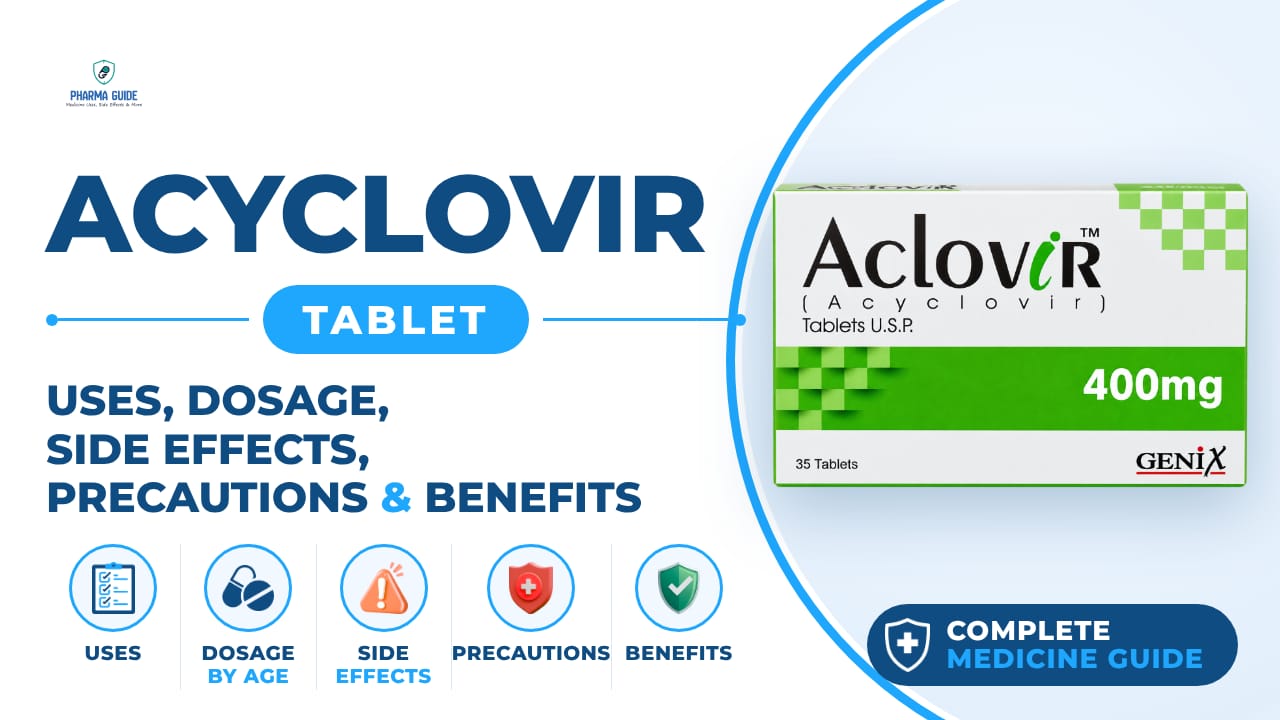
Acyclovir Tablet: Uses, Dosage, Side Effects, Precautions and Alternates
| Generic name | Acyclovir |
|---|---|
| Drug class | Antiviral (synthetic purine nucleoside analogue) |
| Forms | Tablet, Suspension, Capsule, Solution, Injection |
Quick overview
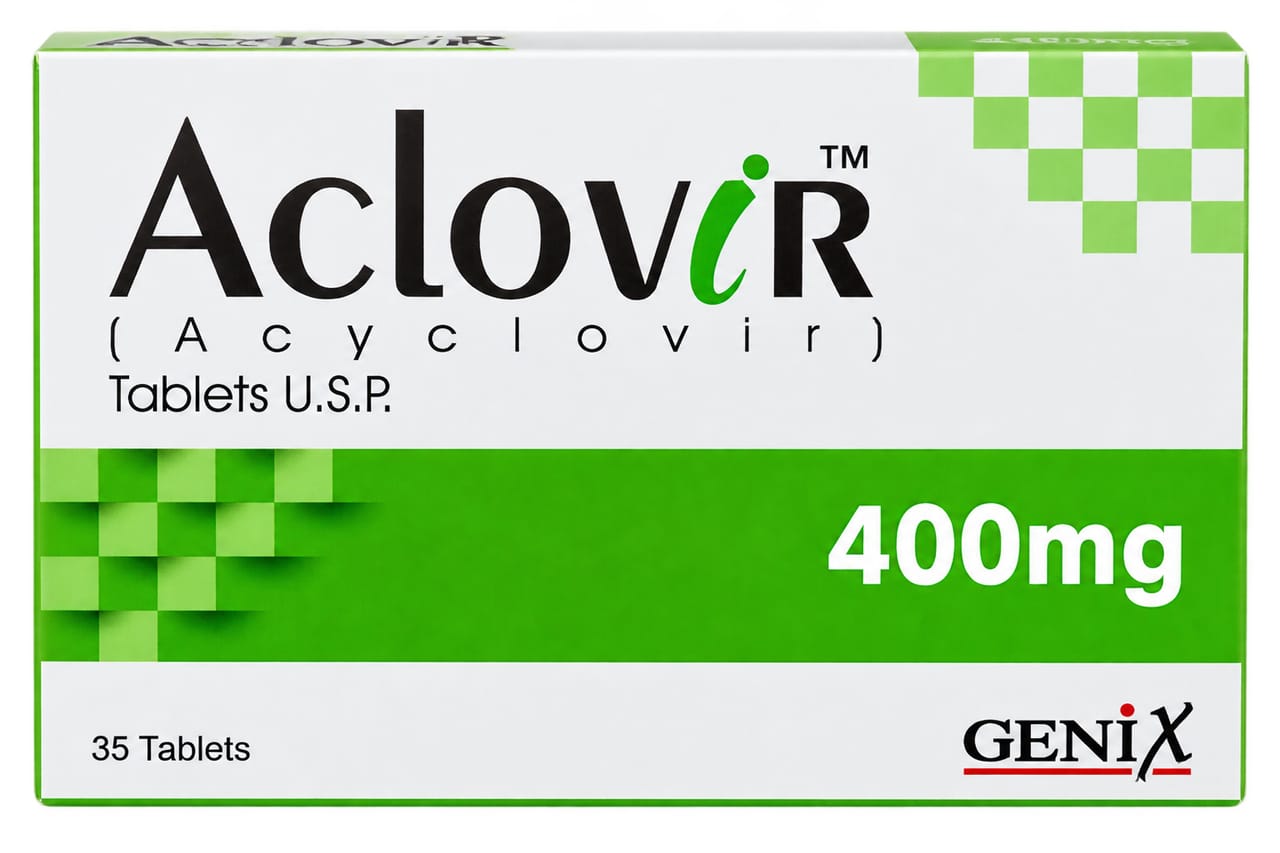
Acyclovir Tablet contains the antiviral medicine acyclovir, a synthetic purine nucleoside analogue. It is used to treat infections caused by herpes viruses, including shingles, genital herpes, and chickenpox. It works by blocking the virus from copying its DNA, helping lesions heal faster while leaving healthy cells unaffected. It is available as a tablet, along with other forms such as suspension, capsule, and injection.
What is Acyclovir Tablet
Acyclovir is an antiviral medicine used to treat infections caused by herpes viruses. It comes as a tablet taken by mouth, as well as other forms like suspension, capsule, and injection.
Acyclovir Tablet uses
- Treatment of shingles (herpes zoster) infections
- Treatment of initial episodes and management of recurrent episodes of genital herpes
- Treatment of chickenpox (varicella)
Benefits of Acyclovir Tablet
- Shortens the duration of acute genital herpes infection and speeds lesion healing
- Reduces the frequency and severity of recurring genital herpes episodes
- Shortens time to scabbing, healing, and pain relief in shingles
- Reduces new lesion formation and duration of viral shedding in shingles
- Shortens healing time and reduces the number of lesions in chickenpox
- Helps relieve pain and discomfort and helps sores heal faster
How Acyclovir Tablet works
Acyclovir gets converted by an enzyme in the herpes virus into an active form that blocks the virus from copying its DNA, stopping it from multiplying, while it does not affect healthy, uninfected cells.
Acyclovir Tablet dosage
Start taking this medicine as soon as possible after the first sign of rash or blisters, usually within one day. You may take this medicine with or without food. The tablets should be taken with a sufficient amount of fluid, preferably after meals. If using the oral suspension, shake well before using and use a marked measuring device rather than a household spoon. Drink extra fluids so you pass more urine while using this medicine to help protect your kidneys. Keep using this medicine for the full course of treatment even if you begin to feel better; do not stop without checking with your doctor. If you miss a dose, take it as soon as possible, but skip it if it is almost time for your next dose; do not double doses. Children over the age of 2 are generally given the adult dose; children under 2 are given a reduced dose determined by the doctor. Elderly patients should make sure they drink enough fluids, especially when taking large doses.
| Age group | Dose |
|---|---|
| Under 2 years | Specialist-directed dosing |
| 2–11 years | 20 mg/kg 4 times daily — maximum 800 mg per dose |
| 12–17 years | 200 mg 5 times daily |
| Adults ≥18 years | 200 mg 5 times daily |
Available forms and strengths
- Tablet
- Suspension
- Capsule
- Solution
- Injection
Side effects of Acyclovir Tablet
Common
- Nausea
- Vomiting
- Diarrhea
- Headache
- Dizziness
- Abdominal pain
- Itching
- Skin rash (including sensitivity to light)
- Weakness
- Fever
- Malaise
- General feeling of discomfort or illness
Serious
- Kidney failure
- Thrombotic thrombocytopenic purpura/hemolytic uremic syndrome (a serious blood disorder)
- Anaphylaxis (severe allergic reaction)
- Angioedema (swelling of the face, lips, tongue, or throat)
- Seizures
- Confusion, hallucinations, agitation, coma
- Stevens-Johnson syndrome and toxic epidermal necrolysis (severe skin reactions)
- Acute generalized exanthematous pustulosis (AGEP)
- Drug reaction with eosinophilia and systemic symptoms (DRESS)
- Blood in urine or stool
- Unusual bleeding or bruising
- Yellow eyes or skin (jaundice)
- Decreased urination or increased thirst
- Low blood cell counts (anemia, low white blood cells, low platelets)
- Liver problems including hepatitis
Warnings and precautions
- This medicine is meant to be swallowed, not used in any other way.
- Kidney failure, sometimes fatal, has occurred with this medicine.
- A serious blood disorder called thrombotic thrombocytopenic purpura/hemolytic uremic syndrome, which has been fatal, has occurred in patients with weakened immune systems taking this medicine.
- This medicine does not cure genital herpes and it is not known whether it prevents spreading the infection to others.
- Avoid contact with sores or intercourse when symptoms are present, since herpes can also spread without symptoms.
- Special caution is needed in people with weakened immune systems, kidney problems, in elderly patients, or if dehydrated.
- Talk to your doctor before using this medicine if you are pregnant or think you may be pregnant.
- If treatment is needed during pregnancy, the potential risks and benefits must be weighed, though standard doses are unlikely to harm the baby.
- Acyclovir passes into breast milk.
- One source says breastfeeding during treatment is not recommended, while another says studies suggest minimal risk to the infant.
- Talk to your doctor before breastfeeding while taking this medicine.
- Special caution is needed if you have kidney problems, as your dose may need to be adjusted.
- Make sure you drink enough fluids.
- This medicine is not expected to significantly affect your ability to drive or operate machinery, but you should consider how your illness and its symptoms affect you, and avoid activities requiring alertness if needed.
Storage
- Store at 20° to 25°C (68° to 77°F)
- Protect from moisture
- Keep this and all medication out of the reach of children
- Do not store at a temperature above 25°C
- Do not use this medication after the expiration date marked on the box
- Do not throw away any medications with wastewater or household waste; ask your pharmacist how to dispose of medications you no longer need
- Store the medicine in a closed container at room temperature, away from heat, moisture, and direct light; keep from freezing
When to see a doctor
Get medical help right away if you notice black or tarry stools, blood in urine, confusion, decreased or increased urination, difficulty speaking, fever, pale skin, small red spots on skin, seizures, stomach pain, swelling of the face or limbs, unusual bleeding or bruising, or yellowing of the eyes or skin.
Contact your doctor right away if you have blood in urine, reduced urination, increased thirst, back or side pain, loss of appetite, nausea, vomiting, swelling of the face or limbs, trouble breathing, or weight gain, as these may signal serious kidney problems.
Seek medical help right away for signs of a serious skin reaction, including skin blistering, peeling, or loosening, fever, mouth sores, sore throat, swollen glands, chest pain, trouble breathing, or unusual tiredness.
If you suspect you have taken too much of this medicine or your side effects seem worse than expected, seek medical attention.
Alternatives
- Valacyclovir tablets
- Famciclovir tablets
- Foscarnet injection
Watch the video
FAQs
What is Acyclovir Tablet used for?
It is used to treat shingles (herpes zoster), initial and recurrent episodes of genital herpes, and chickenpox (varicella).
How does Acyclovir Tablet work?
It is converted by an enzyme in the herpes virus into an active form that blocks the virus from copying its DNA, stopping it from multiplying, without affecting healthy, uninfected cells.
What is the adult dosage of Acyclovir Tablet?
Adults 18 years and older generally take 200 mg five times daily, started as soon as possible after the first sign of rash or blisters.
What are the common side effects of Acyclovir Tablet?
Common side effects include nausea, vomiting, diarrhea, headache, dizziness, abdominal pain, itching, skin rash, weakness, fever, and malaise.
Can Acyclovir Tablet be taken during pregnancy or breastfeeding?
You should talk to your doctor before using it during pregnancy, though standard doses are unlikely to harm the baby. For breastfeeding, sources differ on risk, so discuss with your doctor before use.
General information, not medical advice
Your prescriber and the leaflet in your pack know your situation. This page does not.
- Follow your prescriber and the leaflet
- Don't start, stop, or change a dose on your own
- Doses and warnings differ by country and product
Sources
- FDA/DailyMed - Acyclovir Tablet, Golden State Medical Supply, Inc. (Revised 9/2024)
- Package leaflet: Acic 200 mg tablets, Sandoz d.d. (Revised July 2017)
- Mayo Clinic - Acyclovir (oral route, intravenous route)
Video
Related medicines

Injectafer Injection: Uses, Dosage, Side Effects, Precautions and Alternates
Iron products
Injectafer (ferric carboxymaltose) treats iron deficiency anemia and heart failure-related iron deficiency via IV. Learn uses, dosage, side effects, and

Gliclazide Tablet: Uses, Dosage, Side Effects, Precautions and Alternates
Sulfonylurea (hypoglycemic/antidiabetic agent)
Gliclazide Tablet is a sulfonylurea for type 2 diabetes that boosts insulin release. Learn about dosage, side effects, warnings, and precautions.