
Safety
General information, not medical advice
Your prescriber and the leaflet in your pack know your situation. This page does not.
- Follow your prescriber and the leaflet
- Don't start, stop, or change a dose on your own
- Doses and warnings differ by country and product
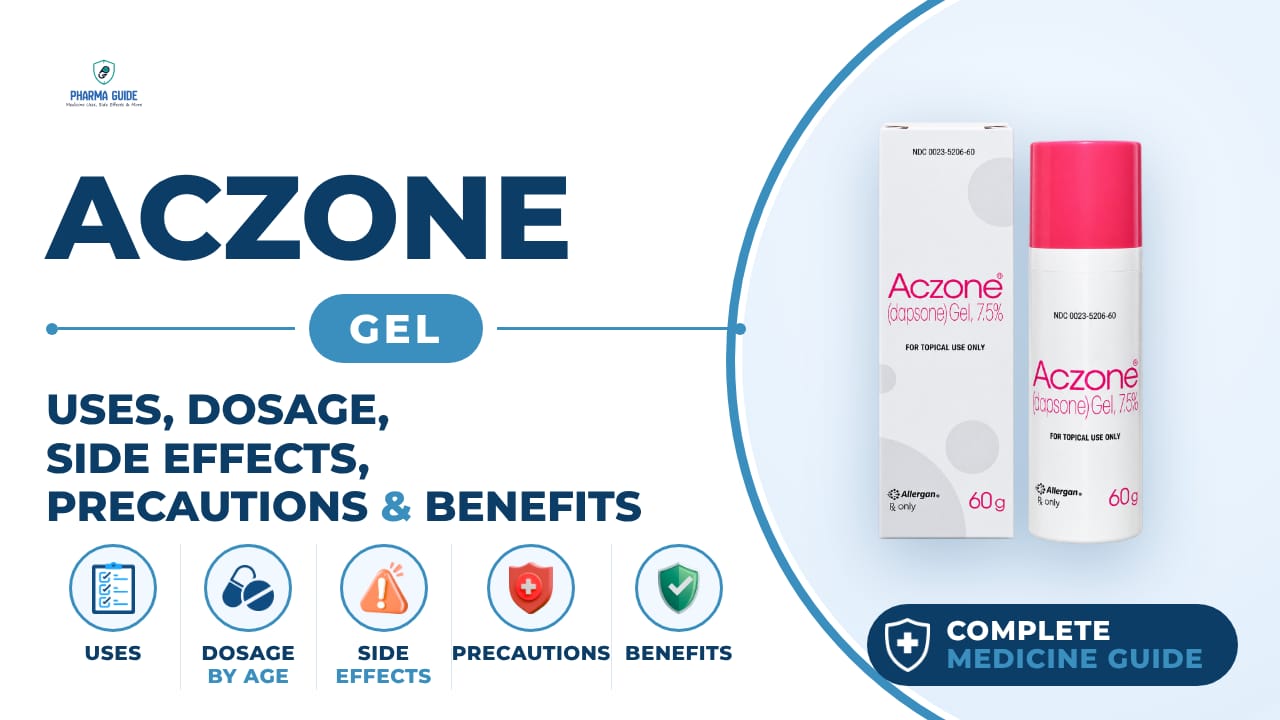
Aczone Gel: Uses, Dosage, Side Effects, Precautions and Alternates
| Generic name | Dapsone |
|---|---|
| Drug class | Sulfone |
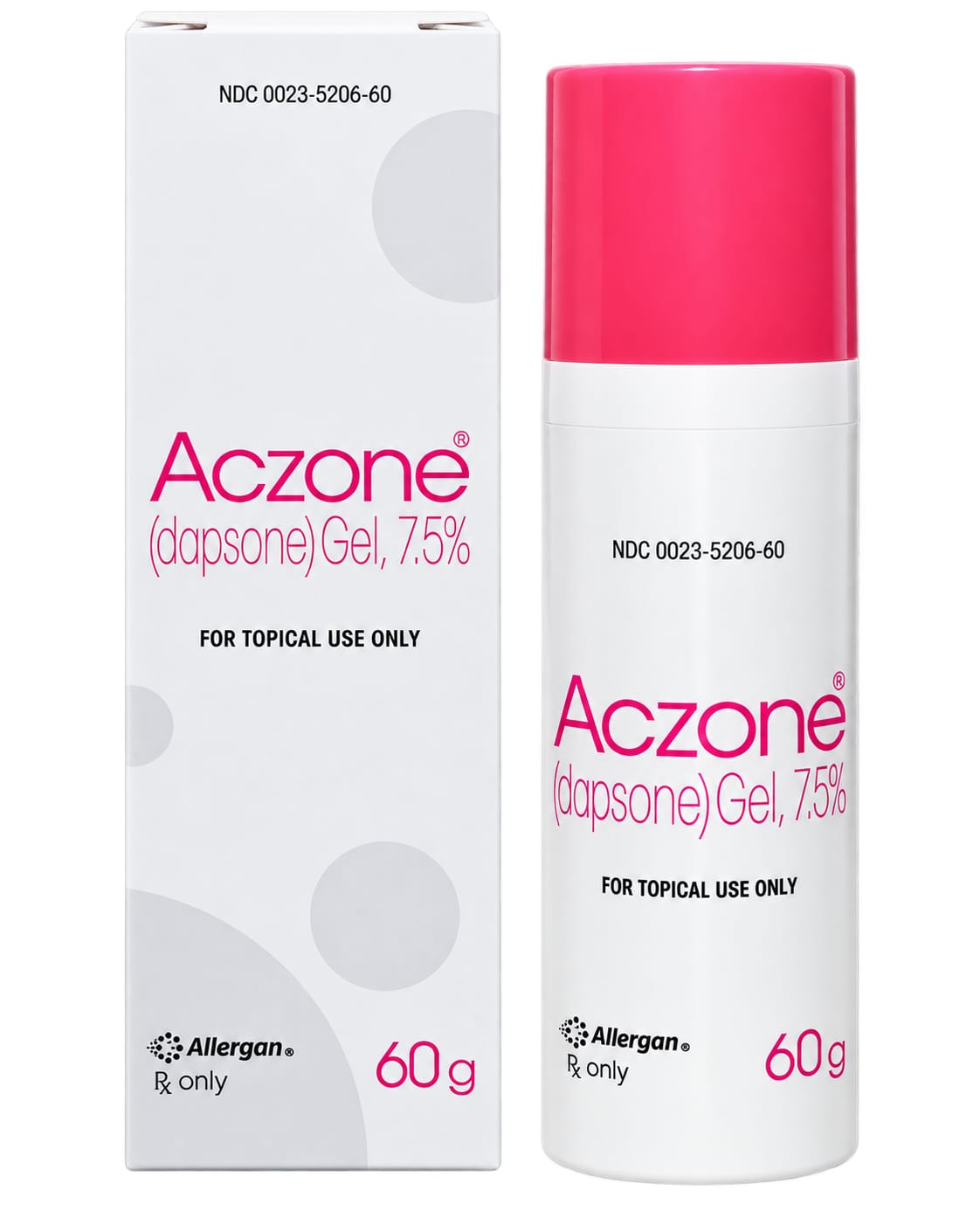
| Forms | Gel, 7.5% |
Quick overview
Aczone Gel is a prescription topical medicine containing dapsone, used to treat acne vulgaris in people 9 years of age and older. It belongs to the sulfone drug class and is thought to work through anti-inflammatory and antimicrobial actions in the skin. It is applied once or twice daily depending on the strength prescribed, and is for use on the skin only.
What is Aczone Gel
Aczone Gel is a prescription medicine applied to the skin to treat acne in people 9 years and older. It contains the active ingredient dapsone, which has anti-inflammatory and antimicrobial properties.
Aczone Gel uses
- Topical treatment of acne vulgaris (pimples and blemishes) in patients 9 years of age and older
Benefits of Aczone Gel
- Acne Treatment: Helps treat inflammatory acne.
- Bacterial Control: Helps reduce acne-associated bacteria.
- Inflammation Reduction: Helps reduce redness and inflammatory lesions.
- Pimple Control: Helps reduce the formation of new acne lesions.
- Topical Treatment: Acts directly on the skin with limited systemic exposure.
How Aczone Gel works
The exact way this gel works for acne isn't fully known, but it's thought to help reduce acne-causing microbes and calm inflammation in the skin.
Aczone Gel dosage
For use on the skin only — do not use in the mouth, eyes, or vagina. Gently wash and pat dry the skin before applying. Apply a thin layer to the entire face once daily; a thin layer may also be applied to other affected areas. Rub in gently and completely until absorbed, then wash your hands after applying.
Avoid applying to areas not affected by acne; if applied by accident, wash it off. Use at the same time each day; if you miss a dose, apply it at the next scheduled time and do not double up. If there is no improvement after 12 weeks of use, talk to your doctor about whether to continue treatment.
Do not leave the container lid off for any length of time, to avoid contaminating the gel. This medicine has not been studied in children under 9 years of age.
| Age group | Dose |
|---|---|
| 9–11 Years | Dapsone 5% gel: apply a thin layer twice daily or as prescribed |
| 12–17 Years | Dapsone 5% gel: apply a thin layer twice daily; 7.5% gel is generally applied once daily |
| Adults (18+ Years) | 5% gel twice daily or 7.5% gel once daily, depending on formulation |
Available forms and strengths
- Gel, 7.5%
Side effects of Aczone Gel
Common
- Dryness of the skin where applied
- Itching of the skin where applied
- Pain
- Redness (erythema)
- Stinging or burning of the skin
- Scaling of the skin
- Oily skin
Serious
- Methemoglobinemia (a blood disorder that lowers the oxygen your blood carries) — signs include grey or blue color in the lips, nail beds, or inside the mouth, shortness of breath, headache, tiredness, or dizziness
- Hemolytic anemia (breakdown of red blood cells), more of a risk for people with G6PD deficiency — signs include back pain, dark brown urine, shortness of breath, fever, tiredness or weakness, and yellow or pale skin
Warnings and precautions
- Do not use if you have a blood condition called methemoglobinemia that reduces how much oxygen your blood carries.
- Avoid using on broken skin.
- Tell your doctor if you have G6PD deficiency (a lack of a protective enzyme in red blood cells) or a blood disease that breaks down red blood cells, such as hemolytic anemia, since you may be more prone to side effects.
- Avoid using this medicine together with oral dapsone or antimalarial medicines, as this can increase the risk of red blood cell breakdown.
- Using benzoyl peroxide acne products at the same time may cause temporary yellow or orange discoloration of the skin or facial hair.
- Keep away from the eyes, eyelids, mouth, and mucous membranes. If it gets in your eyes, rinse with plenty of cool water.
- It isn't known if this medicine can harm an unborn baby. Tell your doctor if you are pregnant or planning to become pregnant; use during pregnancy is not recommended. If you become pregnant while using it, stop and tell your doctor right away.
- It isn't known whether this medicine passes into breast milk in a way that could harm a nursing baby. You and your doctor should decide whether you will use this medicine or breastfeed.
- Tell your doctor about kidney disease, particularly if prolonged treatment is planned.
- Inform your doctor if you have significant liver disease.
Storage
- Store at room temperature 68°F to 77°F (20°C to 25°C)
- Protect from freezing
- Keep in a cool place below 25°C; do not refrigerate or freeze
- Store in a cool, dry place away from moisture, heat, or sunlight — do not store in the bathroom, near a sink, in the car, or on window sills
- Keep out of the reach of children
- Discard any remaining gel 14 weeks after the date you opened it
- If your doctor says you no longer need this medicine or it is out of date, take it to a pharmacy for safe disposal
- Do not use if the expiry date has passed
When to see a doctor
- Stop using the gel and get medical help right away if your lips, nail beds, or the inside of your mouth turn grey or blue, or if you have shortness of breath, headache, tiredness, or dizziness — these can be signs of a serious blood oxygen problem.
- Stop using the gel and tell your doctor right away if you notice back pain, dark brown urine, shortness of breath, fever, tiredness or weakness, or yellow or pale skin — these can be signs of red blood cell breakdown.
- If the gel accidentally gets in your eyes, rinse right away with large amounts of cool water and contact your doctor if you're concerned.
- If the gel is accidentally swallowed, contact your doctor, call your local poison control center, or go to the nearest hospital emergency department right away, even if there are no obvious symptoms.
Alternatives
- Adapalene Gel
- Benzoyl Peroxide Gel
- Azelaic Acid
- Clindamycin + Benzoyl Peroxide
Watch the video
FAQs
What is Aczone Gel used for?
Aczone Gel is a prescription topical medicine used to treat acne vulgaris (pimples and blemishes) in people 9 years of age and older.
How do you apply Aczone Gel?
Wash and pat dry the skin, then apply a thin layer to the entire face once or twice daily depending on strength; a thin layer may also be applied to other affected areas. Rub in gently until absorbed and wash your hands afterward. It is for use on the skin only.
What are the common side effects of Aczone Gel?
Common side effects include dryness, itching, pain, redness, stinging or burning, scaling, and oily skin at the application site.
What serious side effects should I watch for with Aczone Gel?
Serious side effects include methemoglobinemia, signaled by grey or blue lips, nail beds, or inside the mouth, shortness of breath, headache, tiredness, or dizziness, and hemolytic anemia, signaled by back pain, dark brown urine, fever, weakness, or yellow or pale skin.
How should Aczone Gel be stored?
Store at room temperature between 68°F and 77°F (20°C to 25°C), protect from freezing, keep away from moisture, heat, and sunlight, and discard any remaining gel 14 weeks after opening.
General information, not medical advice
Your prescriber and the leaflet in your pack know your situation. This page does not.
- Follow your prescriber and the leaflet
- Don't start, stop, or change a dose on your own
- Doses and warnings differ by country and product
Sources
Video
Related medicines
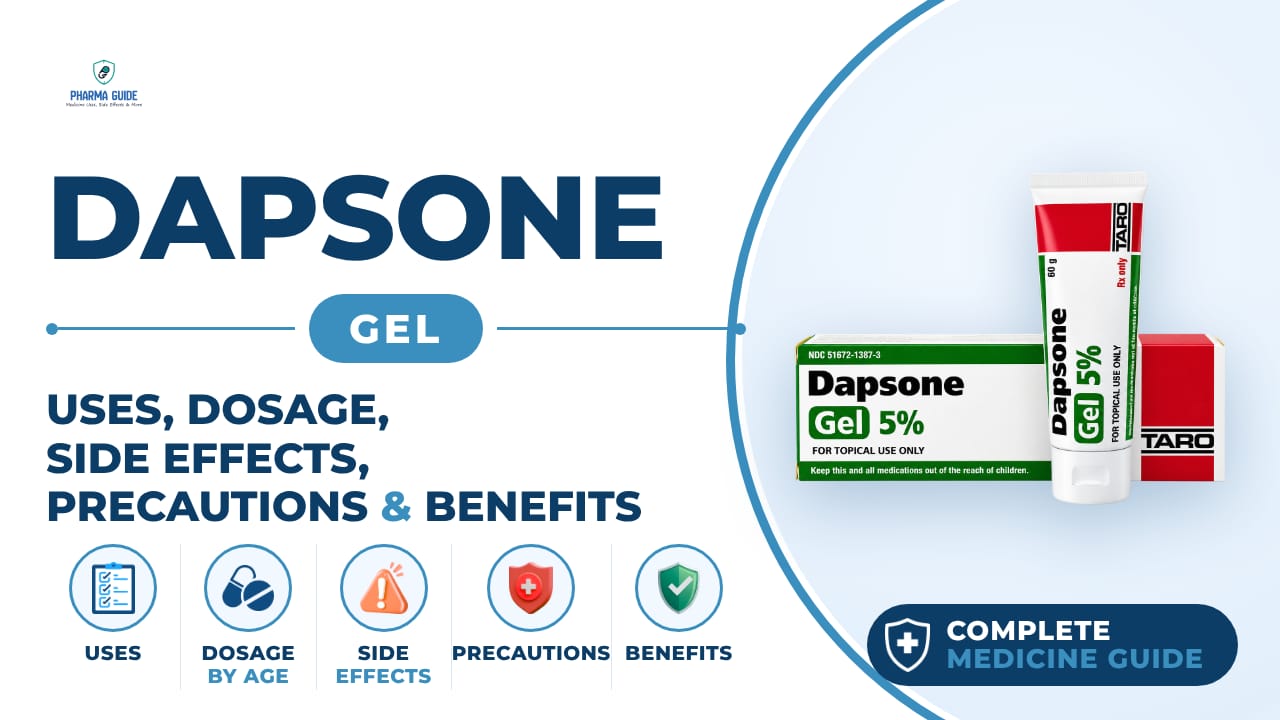
Dapsone Gel: Uses, Dosage, Side Effects, Precautions and Alternates
Sulfone
Dapsone Gel is a topical prescription treatment for acne vulgaris that reduces inflammatory lesions and redness. Learn dosage, side effects, and warnings.

Injectafer Injection: Uses, Dosage, Side Effects, Precautions and Alternates
Iron products
Injectafer (ferric carboxymaltose) treats iron deficiency anemia and heart failure-related iron deficiency via IV. Learn uses, dosage, side effects, and