
Safety
General information, not medical advice
Your prescriber and the leaflet in your pack know your situation. This page does not.
- Follow your prescriber and the leaflet
- Don't start, stop, or change a dose on your own
- Doses and warnings differ by country and product
Dapsone Gel: Uses, Dosage, Side Effects, Precautions and Alternates
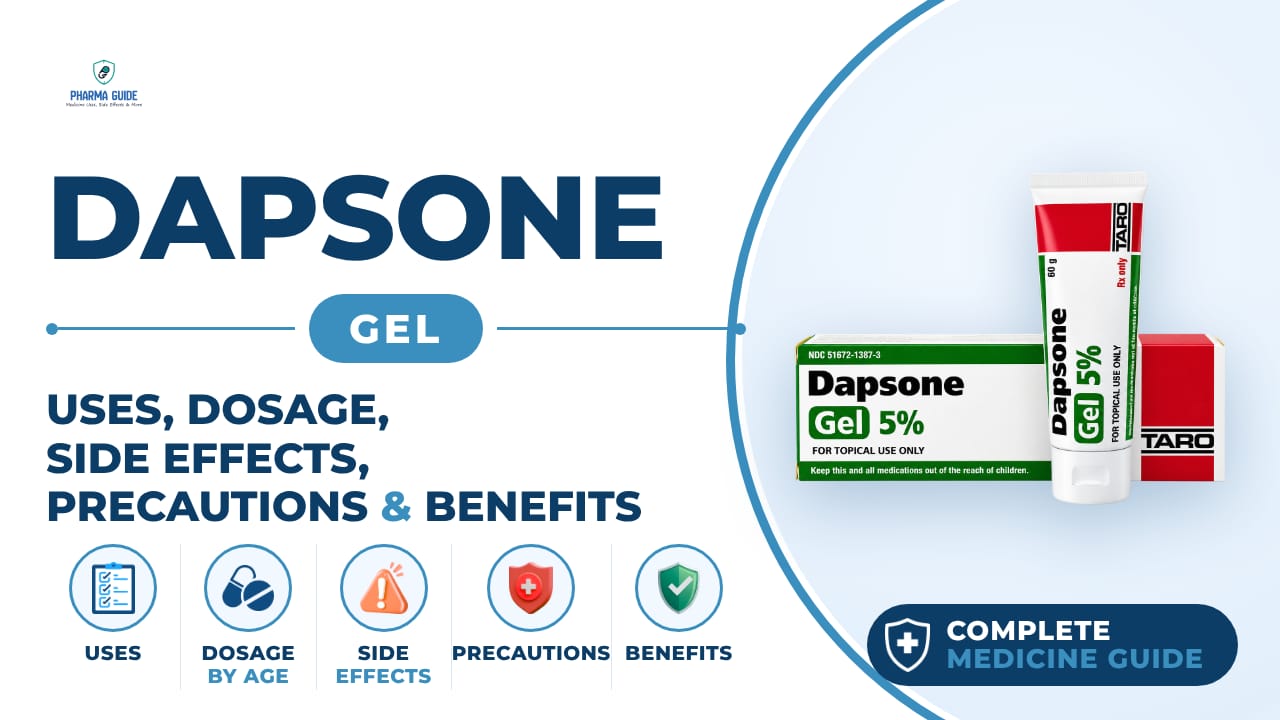
| Generic name | Dapsone |
|---|---|
| Drug class | Sulfone |
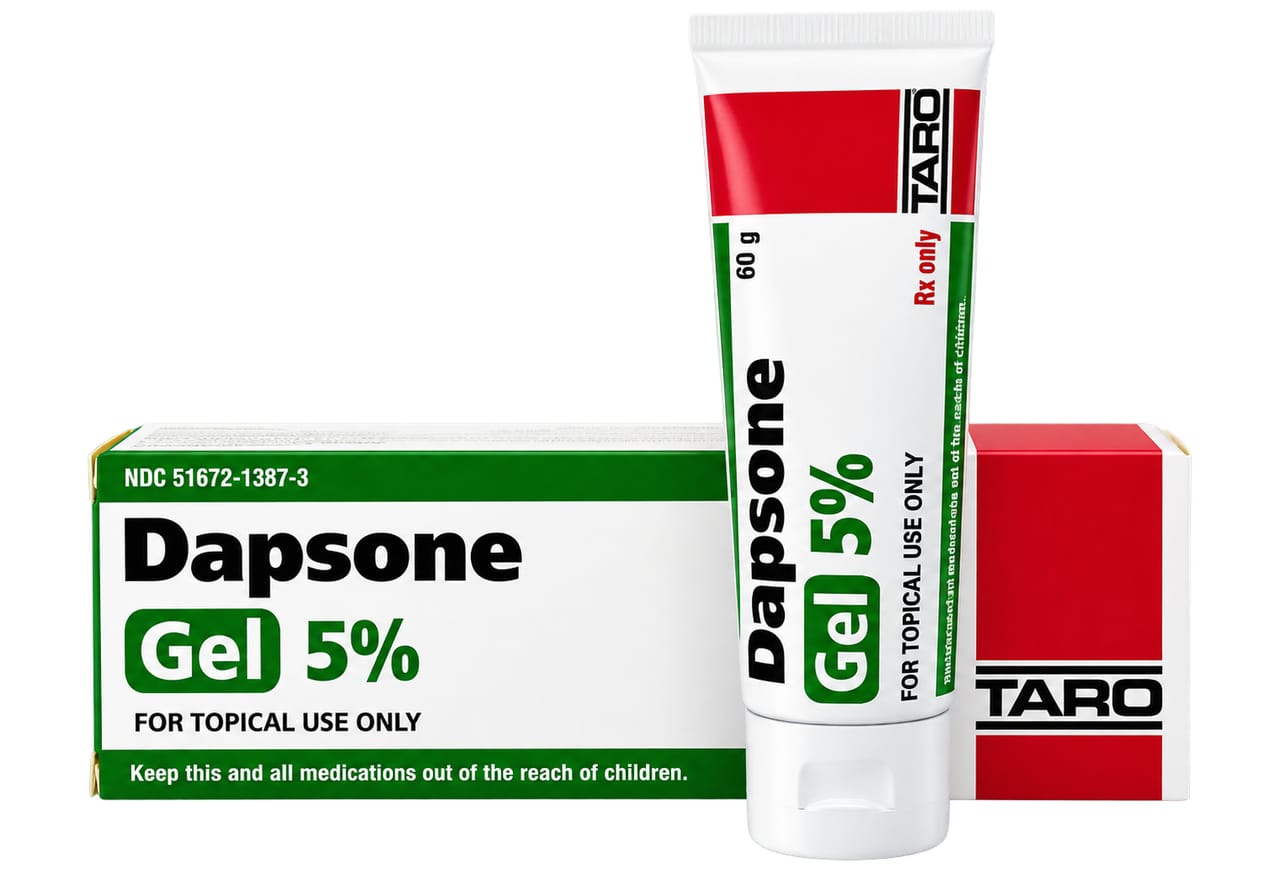
| Forms | Gel, 5% |
Quick overview
Dapsone Gel is a prescription topical medicine containing dapsone, a sulfone, used to treat acne vulgaris. It is applied directly to the skin to help reduce inflammatory acne lesions and acne-related redness and inflammation. It is available in different strengths and application schedules depending on age and the formulation prescribed.
What is Dapsone Gel
Dapsone Gel is a prescription medicine applied to the skin to treat acne vulgaris. It contains dapsone, a sulfone, in a gel base.
Dapsone Gel uses
- Topical treatment of acne vulgaris
- Treats acne vulgaris
- Helps reduce inflammatory acne lesions
- Helps reduce acne-related redness and inflammation
Benefits of Dapsone Gel
- Reduces inflammatory and non-inflammatory acne lesions
- Topical form has much lower body-wide drug exposure than oral dapsone pills, lowering the risk of serious internal side effects
- Generally well tolerated across different skin types and age groups 12 and older
- Provides topical acne treatment
- Can reduce inflammatory pimples
- Available in once-daily and twice-daily formulations
How Dapsone Gel works
It is not known exactly how dapsone gel works to treat acne.
Dapsone Gel dosage
For use on the skin only. Do not use in or on the mouth, eyes, or vagina. Gently wash the affected skin and pat it dry before applying. Apply a thin layer to the acne-affected areas twice a day, in the morning and evening. Rub the gel in gently and completely; it may feel gritty and you may see particles in the gel. Put the cap back on the tube and close it tightly after each use. Wash your hands after applying.
If there is no improvement after 12 weeks of use, talk to your doctor about whether to continue treatment. If you miss an application, apply it as soon as you remember, but if it is almost time for the next dose, skip the missed one and go back to your normal schedule. Do not apply twice to make up for a missed dose. This medicine has not been studied for use in children under 12 years of age.
| Age group | Dose |
|---|---|
| Under 9 years | Safety and effectiveness are not established for dapsone gel 7.5% |
| 9–11 years | 7.5% gel: apply a thin layer once daily to acne-affected areas |
| 12–17 years | 7.5% gel: apply once daily; 5% gel: typically apply a thin layer twice daily |
| 18–39 years | 7.5% gel once daily or 5% gel twice daily, depending on the prescribed formulation |
Available forms and strengths
- Gel, 5%
Side effects of Dapsone Gel
Common
- Oiliness/peeling of the skin
- Dryness of the skin
- Redness (erythema) at the application site
- Itching (pruritus) at the application site
- Mild burning at the application site
- Temporary yellow or orange skin discoloration if used with benzoyl peroxide
Serious
- Methemoglobinemia (signs include slate grey or bluish color of lips, nail beds, or inside the mouth)
- Hemolytic anemia, especially in people with G6PD deficiency (signs include back pain, shortness of breath, tiredness or weakness, dark brown urine, fever, yellow or pale skin)
- Severe allergic reaction (rash, swelling of face/lips/mouth, difficulty breathing)
- Facial swelling
- Depression or psychosis (reported in clinical trials)
- Severe pharyngitis, abdominal pain, severe vomiting, pancreatitis (reported serious adverse events in trials)
Warnings and precautions
- Methemoglobinemia, a blood condition requiring hospitalization in some cases, has been reported with this medicine. People with G6PD deficiency or certain inherited blood conditions are more likely to be affected. Stop use and get immediate medical help if signs of grey or blue skin color occur.
- People with G6PD deficiency using this gel have developed laboratory signs suggestive of red blood cell breakdown (hemolysis).
- Avoid using this medicine along with oral dapsone or antimalarial medicines, because of the increased chance of red blood cell breakdown.
- Using benzoyl peroxide at the same time as this gel can cause a temporary yellow or orange discoloration of the skin and facial hair.
- This gel is for use on the skin only. It should not be used in or near the mouth, eyes, or vagina.
- There is no information confirming whether this medicine harms an unborn baby. Use during pregnancy only if your doctor decides the potential benefit justifies the potential risk.
- It is not known if topical dapsone passes into breast milk, but oral dapsone does pass into milk and could harm a nursing baby. Talk to your doctor about whether to breastfeed or use this medicine.
- No routine kidney-specific dose adjustment is generally required for topical treatment. No standard liver-specific dose adjustment is established.
- No important direct interaction with topical dapsone is generally expected with alcohol. Topical dapsone does not normally impair driving.
Storage
- Store at controlled room temperature, 20°-25°C (68°-77°F), with excursions permitted to 15°-30°C (59°-86°F).
- Protect from freezing.
- Protect from light; return tube to its original carton after application (where specified).
- Keep out of the reach of children.
When to see a doctor
- Stop using this medicine and get medical help right away if your lips, nail beds, or the inside of your mouth turn grey or blue.
- Stop using this medicine and tell your doctor right away if you notice signs of red blood cell breakdown, such as back pain, shortness of breath, tiredness or weakness, dark brown urine, fever, or yellow or pale skin.
- Get urgent medical help if you accidentally swallow this medicine.
Alternatives
- Adapalene
- Tretinoin
- Azelaic acid
- Clindamycin topical
Watch the video
FAQs
What is Dapsone Gel used for?
Dapsone Gel is a prescription topical medicine used to treat acne vulgaris. It helps reduce inflammatory acne lesions and acne-related redness and inflammation.
How should Dapsone Gel be applied?
Wash the affected skin and pat it dry, then apply a thin layer to acne-affected areas twice a day, in the morning and evening, rubbing it in gently and completely. It is for use on the skin only and should not be used in or on the mouth, eyes, or vagina.
What happens if I miss a dose of Dapsone Gel?
If you miss an application, apply it as soon as you remember, but if it is almost time for the next dose, skip the missed one and return to your normal schedule. Do not apply twice to make up for a missed dose.
What are the serious side effects of Dapsone Gel?
Serious side effects include methemoglobinemia (signs like grey or bluish lips, nail beds, or inside the mouth), hemolytic anemia especially in people with G6PD deficiency, severe allergic reaction, facial swelling, and reported depression or psychosis.
Can Dapsone Gel be used with benzoyl peroxide?
Using benzoyl peroxide at the same time as Dapsone Gel can cause temporary yellow or orange discoloration of the skin and facial hair.
General information, not medical advice
Your prescriber and the leaflet in your pack know your situation. This page does not.
- Follow your prescriber and the leaflet
- Don't start, stop, or change a dose on your own
- Doses and warnings differ by country and product
Sources
Video
Related medicines
Aczone Gel: Uses, Dosage, Side Effects, Precautions and Alternates
Sulfone
Aczone Gel (dapsone) treats acne in people 9 and older. Learn dosage, side effects, warnings, and precautions for safe use of this topical gel.

Injectafer Injection: Uses, Dosage, Side Effects, Precautions and Alternates
Iron products
Injectafer (ferric carboxymaltose) treats iron deficiency anemia and heart failure-related iron deficiency via IV. Learn uses, dosage, side effects, and