
Safety
General information, not medical advice
Your prescriber and the leaflet in your pack know your situation. This page does not.
- Follow your prescriber and the leaflet
- Don't start, stop, or change a dose on your own
- Doses and warnings differ by country and product
Adalat Tablet: Uses, Dosage, Side Effects, Precautions and Alternates
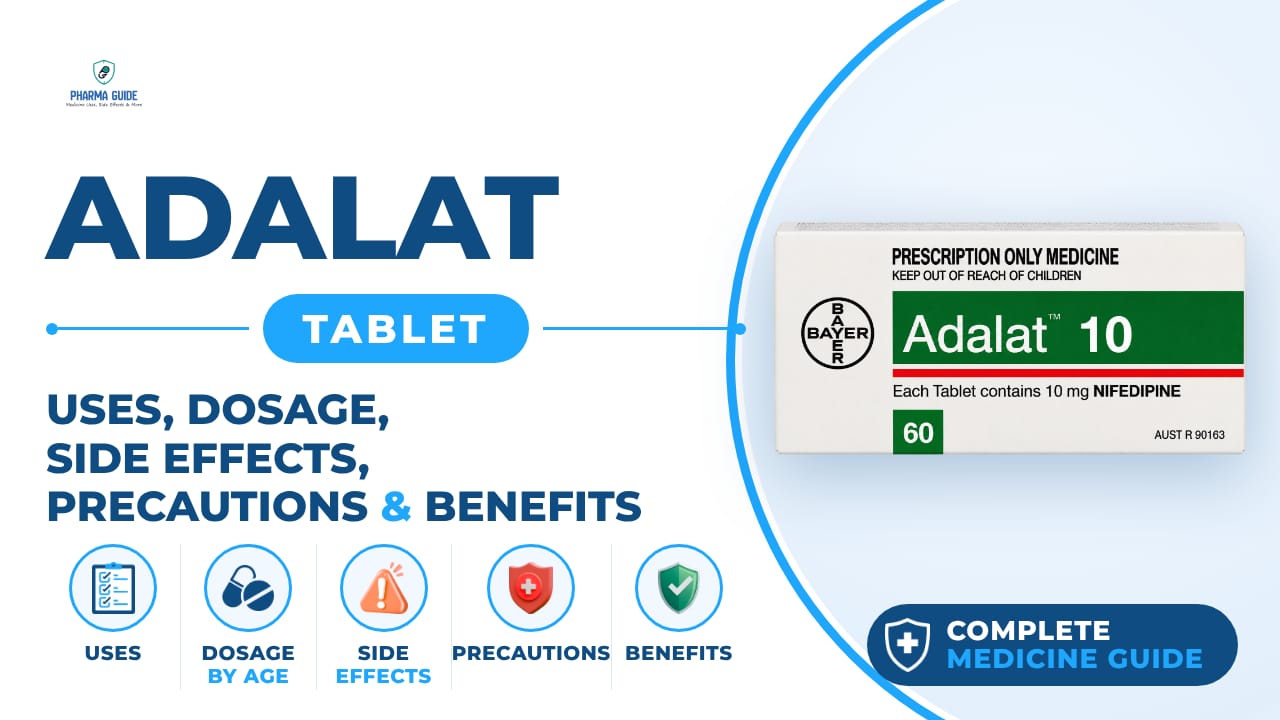
| Generic name | Nifedipine |
|---|---|
| Drug class | Calcium channel blocker |
| Forms | Tablet (extended release), Capsule |
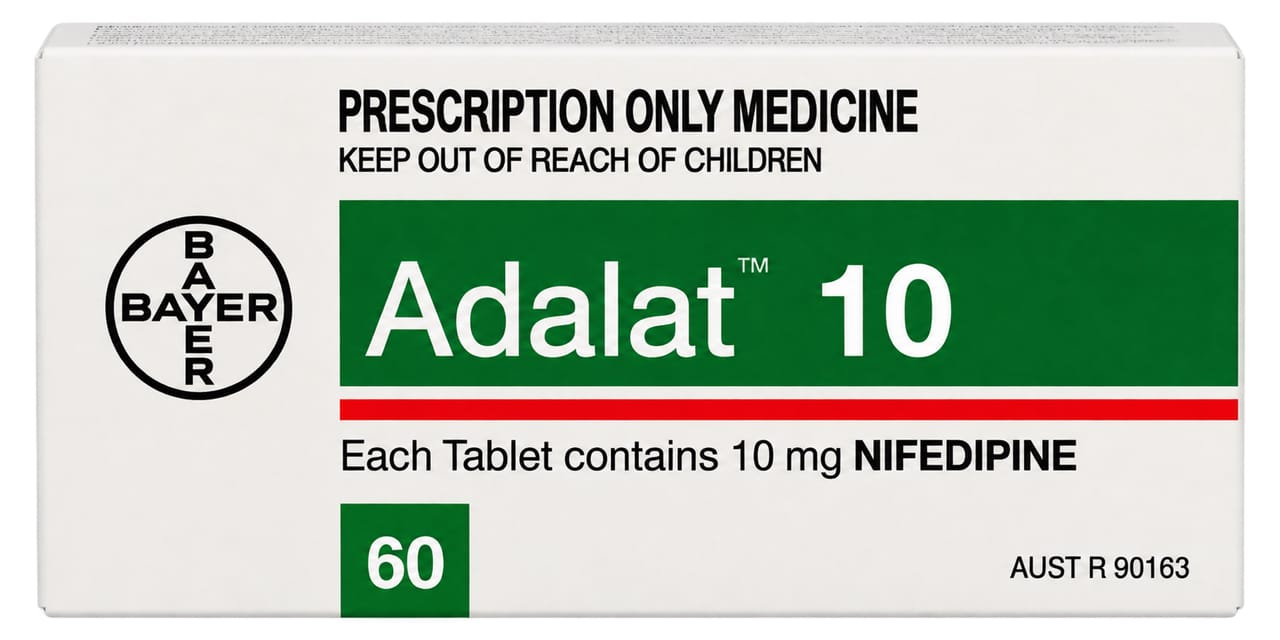
Quick overview
Adalat Tablet contains nifedipine, a calcium channel blocker. It is used to treat high blood pressure, manage chronic stable angina, and help prevent Raynaud's Phenomenon. It works by opening up blood vessels in the body, which lowers blood pressure and improves the supply of blood and oxygen to the heart. It is available as an extended release tablet and as a capsule.
What is Adalat Tablet
Adalat is a medicine that contains nifedipine, which belongs to a group of medicines called calcium channel blockers.
Adalat Tablet uses
- Treating high blood pressure (hypertension)
- Managing chronic stable angina (chest pain)
- Prevention of Raynaud's Phenomenon
Benefits of Adalat Tablet
- Lowers high blood pressure
- Reduces chest pain from angina
- Improves the supply of blood and oxygen to the heart
How Adalat Tablet works
Adalat works by opening up blood vessels in the body. This lowers blood pressure and improves the supply of blood and oxygen to the heart.
Adalat Tablet dosage
Swallow the tablets whole with some liquid, either with or without a meal. Do not break or chew the tablets. The tablets are usually taken every 12 hours. This medicine is not recommended for children. Do not stop taking the tablets unless your doctor tells you to.
If you miss a dose, take it as soon as you remember, then continue as normal for the next dose; if it is almost time for your next dose, skip the missed one and do not double up.
Avoid grapefruit or grapefruit juice while taking this medicine.
| Age group | Dose |
|---|---|
| Under 18 years | Doctor/specialist supervision required |
| 18 years & older | 30 mg once daily initially |
| Adults | 30–60 mg once daily; may be adjusted by doctor |
| Older adults | 30 mg once daily initially, with gradual adjustment |
Available forms and strengths
- Tablet (extended release)
- Capsule
Side effects of Adalat Tablet
Common
- Headache
- Dizziness
- Fast or irregular heartbeats
- Nausea (feeling sick)
- Flushing (warmth, redness, or tingly feeling)
- Constipation
- Generally feeling unwell
- Unusual tiredness or weakness
- Swelling, including of the arms, ankles, or legs
- Heartburn
Serious
- Chest pain that is new or worsening
- Rash, itching or hives on the skin
- Swelling of the face, lips, tongue, or other parts of the body
- Shortness of breath, wheezing, or trouble breathing
- Signs of liver problems such as yellowing of the skin and/or eyes (jaundice)
- Signs of frequent infections such as fever, severe chills, sore throat or mouth ulcers
- Pounding heartbeats or fluttering in the chest
- A light-headed feeling, like you might pass out
- Purple/brown discolouration of the skin or redness, flaking and itching of the skin
- Rash or blistering of the skin when exposed to sunlight
Warnings and precautions
- Do not take this medicine if you have very low blood pressure due to a failing heart (cardiogenic shock), or if you have had a heart attack within the last week or so.
- Do not take this medicine together with rifampicin, an antibiotic used for tuberculosis and other serious infections.
- Do not stop taking this medicine or change your dose without checking with your doctor, since stopping suddenly may make your condition worse.
- Avoid grapefruit or grapefruit juice while taking this medicine, as it can change how the medicine lowers your blood pressure.
- You may have more severe or frequent episodes of angina when you first start this medicine or when your dose changes.
- If you are on a beta-blocker medicine, do not stop it suddenly; your doctor will need to taper the dose, since stopping quickly can cause serious heart problems that this medicine will not prevent.
- If you need surgery, tell your surgeon ahead of time that you are using this medicine, as you may need to stop it for a short time before the operation.
- Do not take this medicine if you are pregnant, as it may affect your developing baby.
- Do not breastfeed while taking this medicine, since the active ingredient passes into breast milk and may affect your baby.
- Tell your doctor if you have kidney disease, since this medicine should be used with caution and may need close monitoring in people with kidney problems.
- Tell your doctor if you have liver disease. This medicine should be used with caution in people with liver problems, and your doctor may need to monitor your liver function.
- Avoid drinking alcohol while taking this medicine, as its interaction with alcohol is not well known and alcohol may increase dizziness.
- Be careful driving or operating machinery until you know how this medicine affects you, since it may cause dizziness or fainting, especially when starting treatment, changing dose, or drinking alcohol.
Storage
- Keep your tablets in the pack until it is time to take them.
- Keep the medicine in a cool dry place where the temperature stays below 25°C.
- Do not store it or any other medicine in the bathroom, near a sink, or on a window-sill.
- Do not leave it in the car. Heat and damp can destroy some medicines.
- Keep the tablets where children cannot reach them.
- If your doctor tells you to stop taking Adalat or the expiry date has passed, ask your pharmacist what to do with any tablets left over.
When to see a doctor
Get emergency medical help if you have signs of an allergic reaction such as hives, difficulty breathing, or swelling of your face or throat.
Call your doctor right away if you have worsening chest pain, pounding or fluttering heartbeats, a light-headed feeling like you might pass out, swelling in your hands or lower legs, or stomach pain with yellowing of the skin or eyes.
If you think you or someone else may have taken too much of this medicine, get emergency medical help right away, even if there are no symptoms.
Stop taking this medicine and tell your doctor immediately or go to the emergency department if you develop chest pain, a skin rash or hives, swelling of the face, lips or tongue, difficulty breathing, or signs of liver problems like yellowing skin or eyes.
Alternatives
- Calbloc 10 MG Capsule
- Calcigard 10 MG Capsule
- Cardules 10 MG Capsule
- Depicor 10 MG Capsule
- Depin 10 MG Capsule
- Procardia
- Procardia XL
- Nifedical XL
- Nifediac CC
- Afeditab CR
Watch the video
FAQs
What is Adalat Tablet used for?
Adalat Tablet is used for treating high blood pressure, managing chronic stable angina (chest pain), and preventing Raynaud's Phenomenon.
How does Adalat Tablet work?
Adalat works by opening up blood vessels in the body, which lowers blood pressure and improves the supply of blood and oxygen to the heart.
How should I take Adalat Tablet?
Swallow the tablets whole with some liquid, with or without a meal, without breaking or chewing them. They are usually taken every 12 hours, and you should not stop taking them unless your doctor tells you to.
Can I drink grapefruit juice while taking Adalat Tablet?
No, you should avoid grapefruit or grapefruit juice while taking this medicine, as it can change how the medicine lowers your blood pressure.
What are the common side effects of Adalat Tablet?
Common side effects include headache, dizziness, fast or irregular heartbeats, nausea, flushing, constipation, feeling unwell, tiredness, swelling, and heartburn.
General information, not medical advice
Your prescriber and the leaflet in your pack know your situation. This page does not.
- Follow your prescriber and the leaflet
- Don't start, stop, or change a dose on your own
- Doses and warnings differ by country and product
Sources
Video
Related medicines
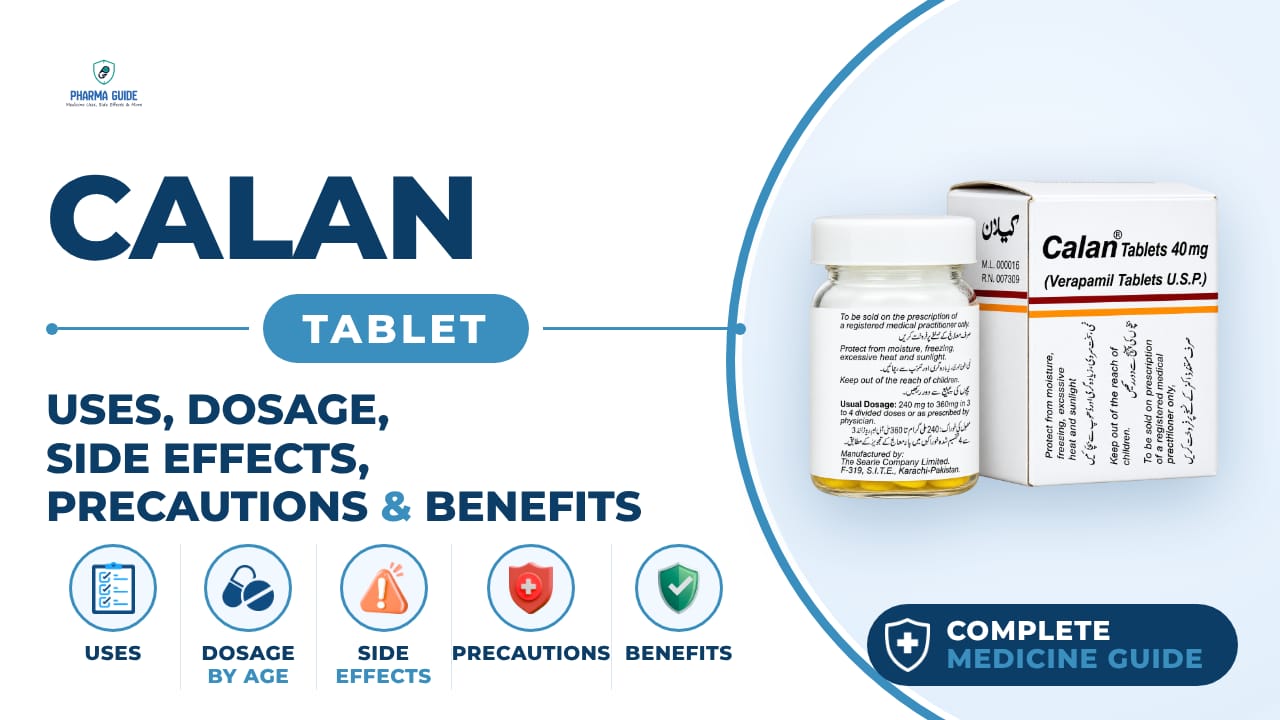
Calan Tablet: Uses, Dosage, Side Effects, Precautions and Alternates
Calcium channel blocker
Calan Tablet (verapamil) treats high blood pressure, angina, and irregular heart rhythms by relaxing blood vessels and slowing heart conduction. Learn uses,
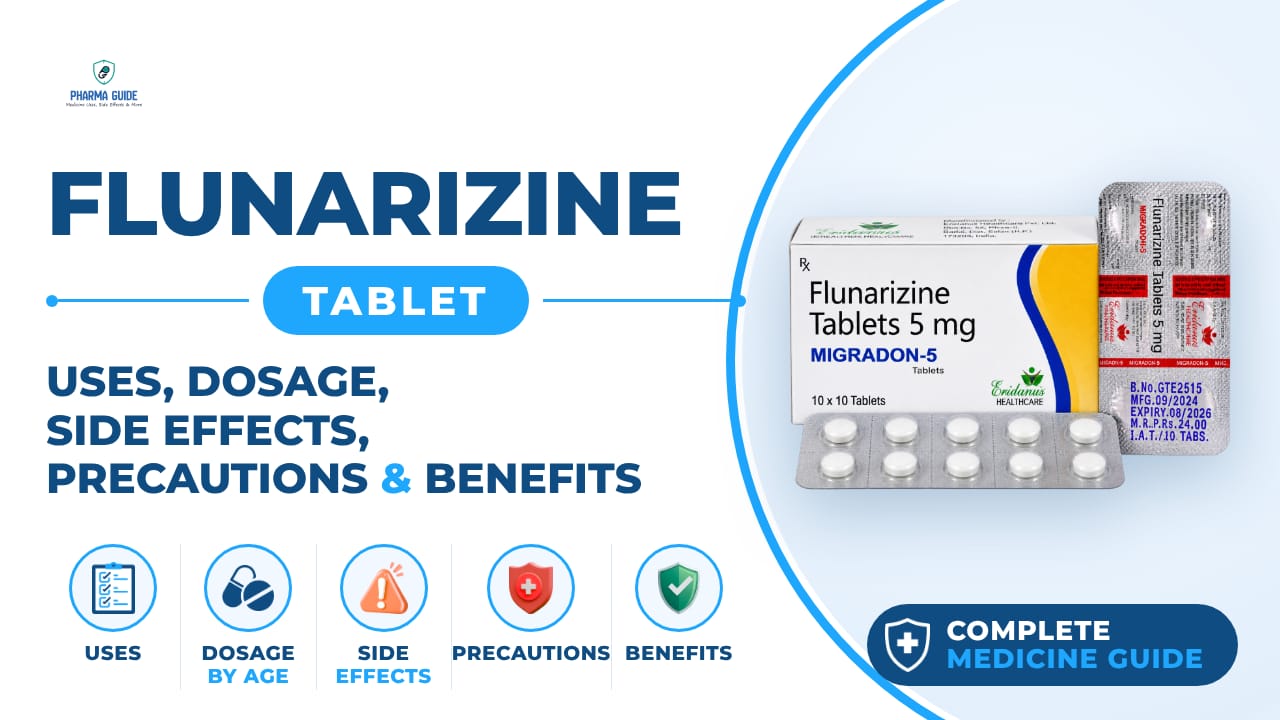
Flunarizine Tablet: Uses, Dosage, Side Effects, Precautions and Alternates
Calcium channel blocker
Flunarizine Tablet prevents migraine and treats vertigo by relaxing blood vessels. Learn its dosage, benefits, side effects, and precautions.