
Safety
General information, not medical advice
Your prescriber and the leaflet in your pack know your situation. This page does not.
- Follow your prescriber and the leaflet
- Don't start, stop, or change a dose on your own
- Doses and warnings differ by country and product
Calan Tablet: Uses, Dosage, Side Effects, Precautions and Alternates
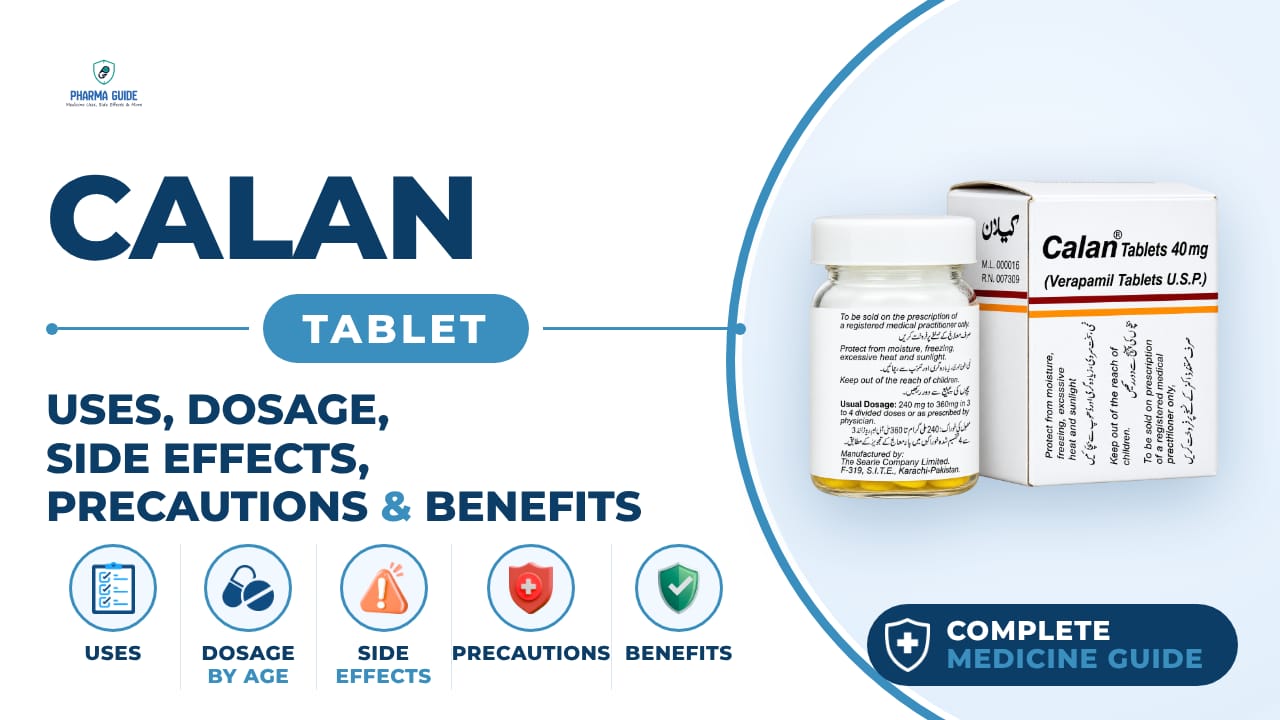
| Generic name | Verapamil |
|---|---|
| Drug class | Calcium channel blocker |
| Forms | Tablet, Injectable (intravenous) form |
Quick overview
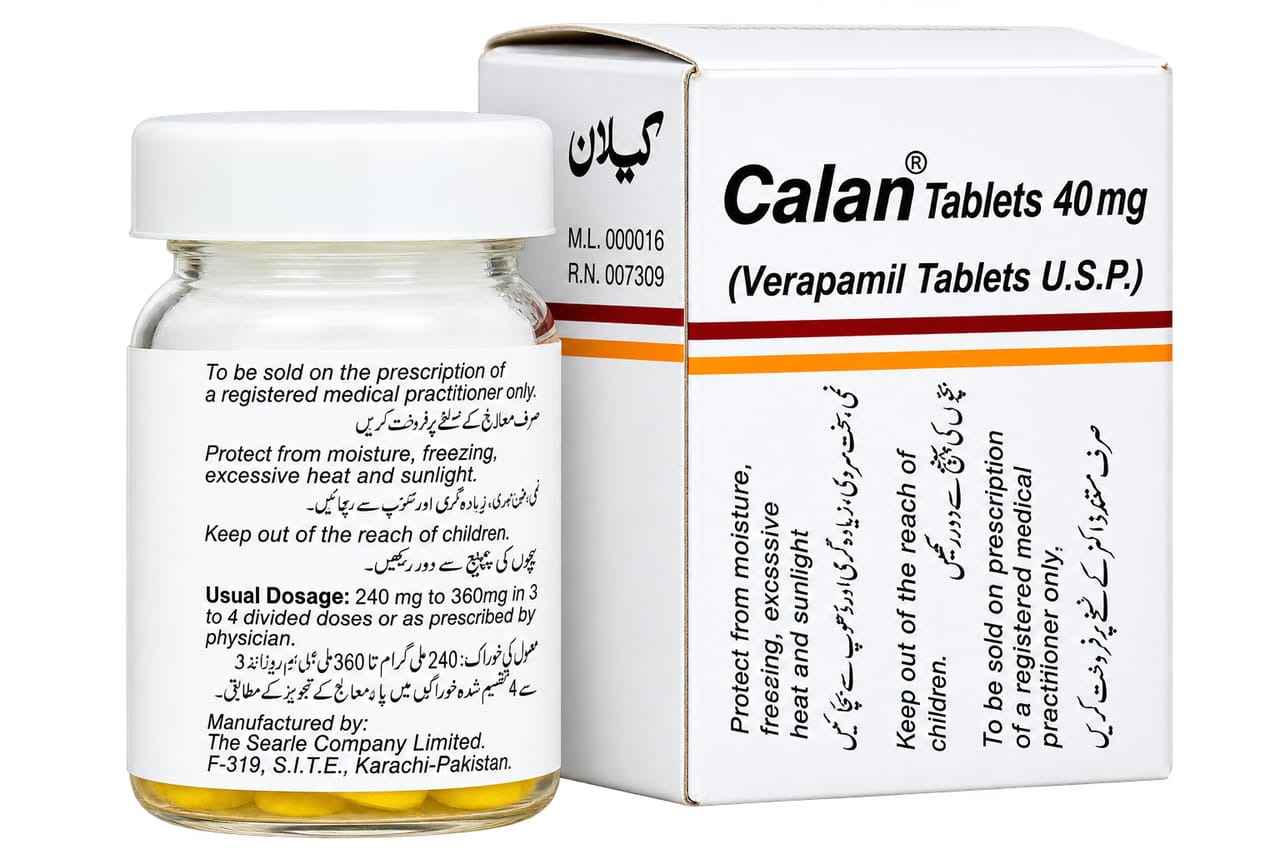
Calan Tablet contains verapamil, a calcium channel blocker used to treat high blood pressure, angina (chest pain), and certain heart rhythm disorders. It works by relaxing blood vessels and slowing the heart's electrical conduction system. It is available as a tablet and as an injectable form, and should be used exactly as prescribed by a doctor.
What is Calan Tablet
Calan is a calcium channel blocker tablet. It is used to treat high blood pressure, angina (chest pain), and certain heart rhythm disorders.
Calan Tablet uses
- Treating high blood pressure (hypertension)
- Managing chronic stable angina and chest pain
- Controlling supraventricular arrhythmias like atrial fibrillation
- Preventing exercise induced angina episodes
- Managing certain fast or irregular heart rhythms
- Treatment and prevention of chest pain and increased heart rate associated with Wolff-Parkinson-White Syndrome
Benefits of Calan Tablet
- Relaxes and widens blood vessels to lower blood pressure
- Reduces the heart's oxygen demand during physical activity
- Helps prevent chest pain triggered by exertion or stress
- Slows abnormal electrical signals passing through the heart
How Calan Tablet works
Calan works by blocking calcium from entering the muscle cells of the heart and blood vessel walls. This relaxes and widens the blood vessels, which lowers blood pressure and reduces the heart's workload. It also slows the heart's electrical conduction system, which helps control certain irregular heart rhythms.
Calan Tablet dosage
Follow all directions on your prescription label and do not change your dose without talking to your doctor. Do not crush, chew, or break an extended-release tablet or capsule; swallow it whole. If you have trouble swallowing an extended-release capsule whole, ask your doctor or pharmacist if you can open it and sprinkle the medicine into applesauce, then swallow right away without chewing. Take it at the same time each day for consistent blood levels. Take with food if it causes stomach upset. Do not stop using this medicine suddenly without talking to your doctor, as this may make your condition worse. Keep taking this medicine even if you feel well, especially for high blood pressure, since it often has no symptoms. Tell your surgeon ahead of time if you are using this medicine and need surgery. The lowest oral dose should be used for elderly patients.
Use exactly as prescribed by your doctor or pharmacist.
Available forms and strengths
- Tablet
- Injectable (intravenous) form
Side effects of Calan Tablet
Common
- Constipation
- Headache
- Dizziness
- Abnormal liver function tests
- Cough
- Rash
- Stomach disturbances
- Swelling in the ankles or feet
- Skin reactions
- Tremors
- Fatigue
- Low blood pressure
- Nausea
- Flushing
- Slow heart rate
Serious
- Signs of an allergic reaction: hives, difficulty breathing, swelling of face, lips, tongue, or throat
- Chest pain, fast or slow heart rate
- A light-headed feeling, like you might pass out
- Shortness of breath (even with mild exertion), swelling, rapid weight gain
- Lung problems: anxiety, sweating, pale skin, wheezing, gasping for breath, cough with foamy mucus
- Liver problems: loss of appetite, upper stomach pain, tiredness, easy bruising or bleeding, dark urine, clay-colored stools, jaundice
Warnings and precautions
- Do not use this medicine if you have a serious heart condition such as sick sinus syndrome or AV block (unless you have a pacemaker), severe heart failure, slow heartbeats that have caused fainting, or certain heart rhythm disorders of the atrium. Avoid getting up too fast from sitting or lying down, as you may feel dizzy.
- Get up slowly to prevent a fall. Grapefruit and grapefruit juice may interact with this medicine and lead to potentially dangerous effects.
- Discuss grapefruit products with your doctor. This medicine can worsen certain heart rhythm problems and should be avoided in patients with advanced heart block. This medicine is not recommended for patients with severe heart problems or severe blood pressure disorders.
- It is not known whether this medicine will harm an unborn baby. The effects during pregnancy are undetermined, so caution is advised. Tell your doctor if you are pregnant or plan to become pregnant.
- This medicine can pass into breast milk and may cause side effects in the nursing baby. It is not recommended during breastfeeding.
- Tell your doctor if you have kidney disease, as this medicine is not suggested for patients with kidney impairment.
- Tell your doctor if you have liver disease. Liver impairment requires dose adjustment, and this medicine is not suggested for patients with liver impairment.
- Drinking alcohol can further lower your blood pressure and may increase certain side effects of this medicine.
- This medicine may impair your thinking or reactions. Be careful if you drive or do anything that requires you to be alert.
Storage
- Store at room temperature away from moisture, heat, and light.
- Store the oral form of this medicine at room temperature (18-25 Celsius). Please keep away from excessive light, moisture, and children.
- Store below 30 degrees Celsius in a cool, dry place.
- Keep the tablets in their original blister pack until use.
- Protect from direct sunlight and moisture.
- Keep out of reach of children.
- Discard any expired or unused tablets safely.
When to see a doctor
Get emergency medical help if you have signs of an allergic reaction such as hives, difficulty breathing, or swelling of your face, lips, tongue, or throat. Seek emergency medical attention if you think you have taken too much of this medicine, as an overdose can be fatal. Seek medical help right away if you experience shortness of breath.
Alternatives
- Metoprolol
- Nifedipine
- Amlodipine
- Diltiazem
Watch the video
FAQs
What is Calan Tablet used for?
Calan Tablet is used to treat high blood pressure, chronic stable angina, supraventricular arrhythmias like atrial fibrillation, exercise-induced angina, and fast or irregular heart rhythms, including those associated with Wolff-Parkinson-White Syndrome.
How does Calan Tablet work?
Calan works by blocking calcium from entering muscle cells of the heart and blood vessel walls, which relaxes and widens blood vessels to lower blood pressure, reduces the heart's workload, and slows the heart's electrical conduction system to control irregular rhythms.
Can I drink grapefruit juice while taking Calan Tablet?
Grapefruit and grapefruit juice may interact with Calan Tablet and lead to potentially dangerous effects, so you should discuss grapefruit products with your doctor.
What are the common side effects of Calan Tablet?
Common side effects include constipation, headache, dizziness, abnormal liver function tests, cough, rash, stomach disturbances, swelling in the ankles or feet, tremors, fatigue, low blood pressure, nausea, flushing, and slow heart rate.
Is Calan Tablet safe during pregnancy and breastfeeding?
It is not known whether Calan will harm an unborn baby, so caution is advised and you should tell your doctor if pregnant or planning pregnancy. The medicine can pass into breast milk and is not recommended during breastfeeding.
General information, not medical advice
Your prescriber and the leaflet in your pack know your situation. This page does not.
- Follow your prescriber and the leaflet
- Don't start, stop, or change a dose on your own
- Doses and warnings differ by country and product
Sources
Video
Related medicines
Flunarizine Tablet: Uses, Dosage, Side Effects, Precautions and Alternates
Calcium channel blocker
Flunarizine Tablet prevents migraine and treats vertigo by relaxing blood vessels. Learn its dosage, benefits, side effects, and precautions.
Amlong Tablet: Uses, Dosage, Side Effects, Precautions and Alternates
Calcium Channel Blocker
Amlong Tablet (amlodipine) treats high blood pressure and angina by relaxing blood vessels. Know its uses, dosage, side effects, and precautions.