
Safety
General information, not medical advice
Your prescriber and the leaflet in your pack know your situation. This page does not.
- Follow your prescriber and the leaflet
- Don't start, stop, or change a dose on your own
- Doses and warnings differ by country and product
Adapalene + Benzoyl Peroxide Gel: Uses, Dosage, Side Effects, Precautions and Alternates
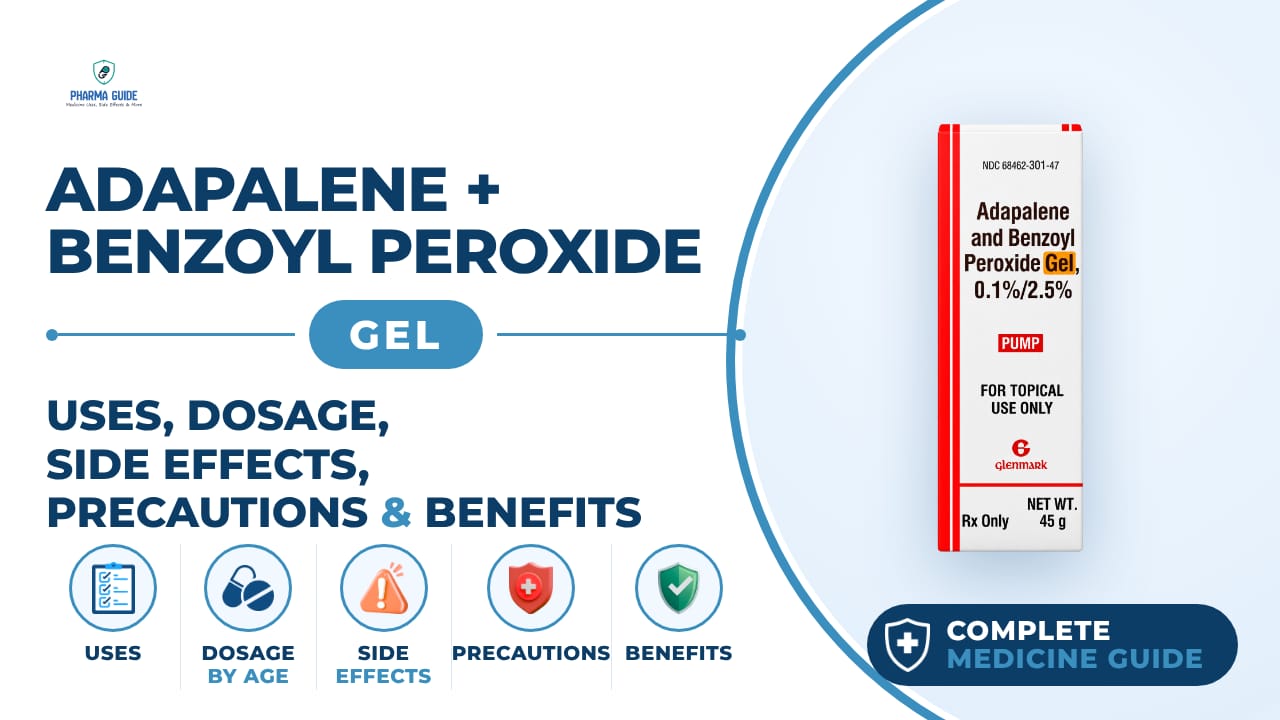
| Generic name | adapalene/benzoyl peroxide topical |
|---|---|
| Drug class | acne agent, retinoid |
| Forms | Gel/Jelly |
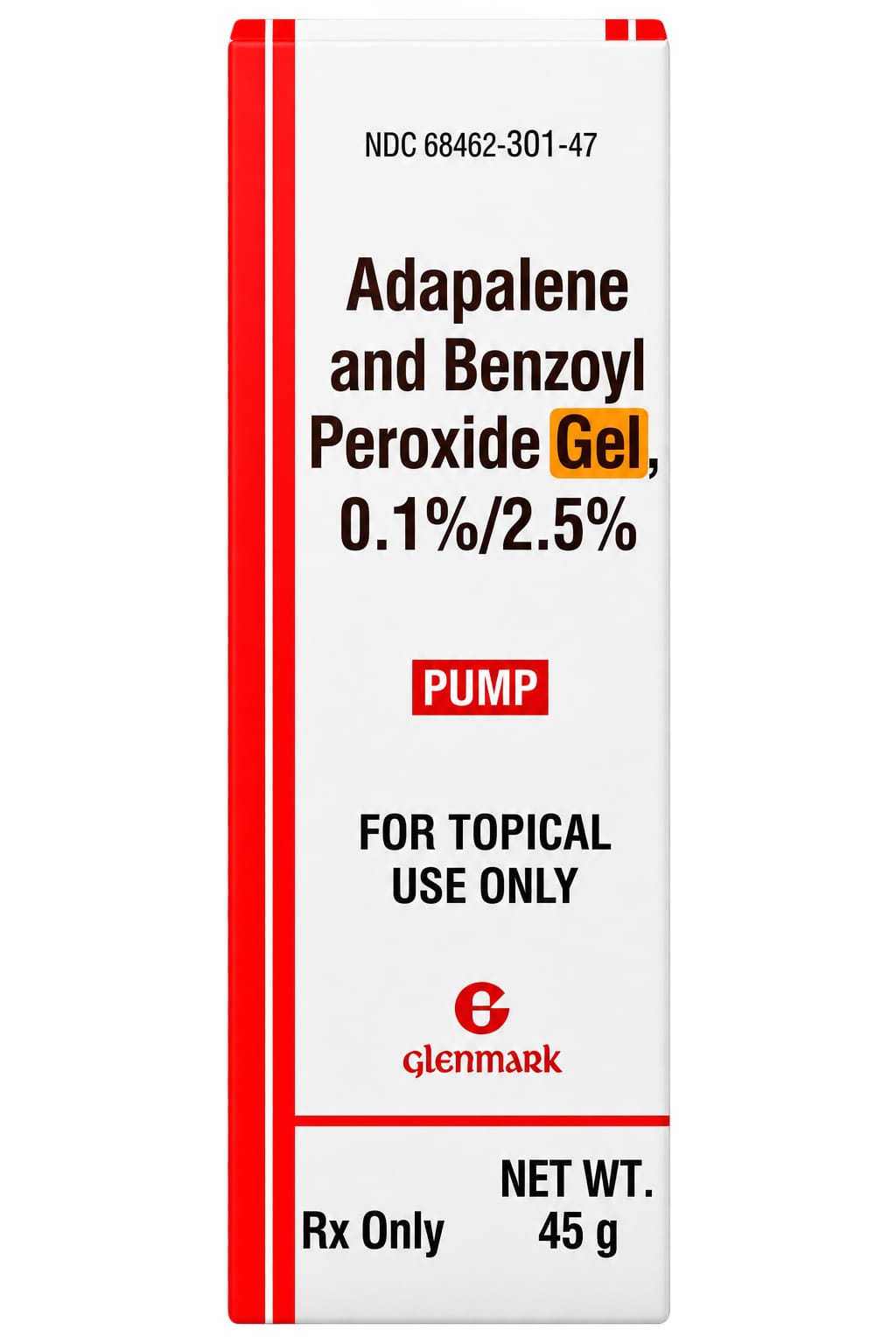
Quick overview
Adapalene + Benzoyl Peroxide Gel is a prescription topical medicine that combines a retinoid with an antiseptic to treat acne vulgaris on the face, chest, shoulders, and back. It works by normalizing skin cell turnover and killing acne-causing bacteria, and it is applied once daily as a thin layer to affected skin. Common side effects include dryness, redness, and irritation, while serious reactions such as allergic responses require immediate medical attention.
What is Adapalene + Benzoyl Peroxide Gel
This is a prescription gel medicine that combines two ingredients to treat acne: adapalene, a retinoid, and benzoyl peroxide, an antiseptic that fights bacteria.
Adapalene + Benzoyl Peroxide Gel uses
- Treats acne vulgaris, a common skin condition that causes blackheads, whiteheads, pimples, and other breakouts on the face, chest, shoulders, and back.
- Supports improvement in acne-affected facial skin.
- Can treat acne on the chest and back when prescribed.
- Helps reduce the formation of new acne lesions.
Benefits of Adapalene + Benzoyl Peroxide Gel
- Clears blackheads, whiteheads, pimples, and inflamed bumps on the face, chest, or back
- Helps normalize skin cell turnover so pores don't get clogged
- Kills acne-causing bacteria and reduces redness and swelling
- Combines two actions so it may work faster against several causes of acne than either ingredient alone
How Adapalene + Benzoyl Peroxide Gel works
Adapalene helps control skin cell growth and reduces swelling to prevent acne, while benzoyl peroxide kills acne-causing bacteria and helps clear away dead skin cells so pores stay open.
Adapalene + Benzoyl Peroxide Gel dosage
For use on the skin only; do not swallow it or get it in your eyes, nose, mouth, or vagina. Wash your hands with soap and water before and after applying the medicine. Before applying, wash the affected skin area with water and a mild soap, rinse well, and pat dry.
Apply a small amount as a thin layer to each affected area and gently rub it in; it is not meant to be used as a spot treatment. Use it at the same time every day, as directed, and do not use it more often than prescribed. Let the medicine dry completely before getting dressed or applying sunscreen.
Do not use on cuts, scrapes, sunburned skin, or skin with eczema. If it gets in your eyes or on your lips, mouth, or vagina, rinse the area right away with water.
It may take several weeks to months of daily use before your skin starts to look better; acne may appear to get worse before it improves. May be used in children as young as 9 years for certain conditions, with precautions, but use in children should be guided by your care team.
If you miss a dose, apply it as soon as you remember, but if it is almost time for your next dose, skip the missed one and go back to your regular schedule — do not double up.
| Age group | Dose |
|---|---|
| Under 9 years | Safety and effectiveness not established; no FDA-approved dosage |
| 9–64 years | 0.1%/2.5% gel once daily; 0.3%/2.5% strength not approved |
| 65–74 years | 0.1%/2.5% or 0.3%/2.5% gel once daily, with skin-tolerance monitoring |
| 75 years and older | No separate age-specific dosage; once-daily application if prescribed, with careful monitoring |
Available forms and strengths
- Gel/Jelly
- 0.1%/2.5%
- 0.3%/2.5%
Side effects of Adapalene + Benzoyl Peroxide Gel
Common
- Dry, scaling, or peeling skin
- Redness or mild irritation
- Stinging, warmth, or a burning feeling where applied
- Skin swelling or contact dermatitis
- Sensitivity to light
- Change in skin color
Serious
- Severe allergic reaction: rash, itching, hives, swelling of the face, lips, tongue, or throat, trouble breathing or swallowing
- Severe burning, crusting, blistering, or peeling of treated skin that continues or gets worse
- Severe redness or swelling of the skin
- Skin pain or severe sunburn, blistering, or swelling after sun exposure
Warnings and precautions
- This medicine should not be used on sunburned skin or skin affected by eczema.
- This medicine can make your skin more sensitive to sunlight, wind, and cold weather. Use sunscreen, wear protective clothing, and avoid sunlamps or tanning beds.
- Avoid using other skin products that can dry or irritate your skin, such as rough cleansers, hair-removal products, or items containing alcohol, astringents, spices, or lime, and avoid waxing on treated skin.
- This medicine may bleach or discolor clothing, towels, and hair.
- Do not use other acne products on the same skin areas unless your care team tells you to use both.
- It isn't known if this medicine could affect pregnancy or harm an unborn baby. Tell your health care provider if you are pregnant or planning to become pregnant so they can advise you.
- It isn't known if this medicine passes into breast milk. If your provider says it's okay to use while breastfeeding, use it for the shortest time possible and avoid applying it to the nipple or the area around it.
- No routine renal dose adjustment is established. Systemic absorption is generally low with appropriate topical use.
- No routine hepatic dose adjustment is established. Patients with significant liver disease should have their treatment reviewed.
- There are no known interactions between this medicine and alcohol.
- Adapalene/Benzoyl Peroxide Gel is not generally associated with sedation or impaired alertness.
Storage
- Store at room temperature between 20 and 25 degrees C (68 and 77 degrees F)
- Protect from light
- Keep the container tightly closed
- Keep from freezing
- Keep out of the reach of children and pets
- Do not keep outdated medicine or medicine no longer needed
- Take the medication to a medication take-back program; check with your pharmacy or law enforcement to find a location
- If you cannot return the medication, check the label or package insert to see if it should be thrown out in the garbage or flushed down the toilet; if unsure, ask your care team. If safe to throw away, take it out of its container, mix with cat litter, dirt, coffee grounds, or similar substance, seal in a bag or container, and put it in the trash
When to see a doctor
- Stop using the medicine and get medical help right away if you notice signs of a serious allergic reaction, such as rash, itching, hives, or swelling of the face, lips, tongue, or throat, trouble breathing, or a racing heartbeat.
- Tell your care team right away if you notice burning, itching, crusting, or peeling of the treated skin.
- Tell your health care provider right away if skin reactions last longer than four weeks or get worse, since you may need to stop using the medicine.
- If you think you've used too much of this medicine, contact a poison control center or go to an emergency room right away.
Alternatives
- Benzoyl Peroxide Gel
- Adapalene Gel
- Epiduo Forte
- Epiduo
Watch the video
FAQs
How often should I apply Adapalene + Benzoyl Peroxide Gel?
Apply a thin layer once daily to affected areas at the same time each day, as directed by your care team.
How long does it take for Adapalene + Benzoyl Peroxide Gel to work?
It may take several weeks to months of daily use before your skin starts to look better, and acne may appear to get worse before it improves.
What are the common side effects of Adapalene + Benzoyl Peroxide Gel?
Common side effects include dry, scaling, or peeling skin, redness or irritation, stinging or burning, skin swelling, light sensitivity, and changes in skin color.
Can Adapalene + Benzoyl Peroxide Gel be used by children?
It may be used in children as young as 9 years for certain conditions with precautions, but use should be guided by your care team.
What should I avoid while using Adapalene + Benzoyl Peroxide Gel?
Avoid sunburned skin, eczema-affected skin, rough cleansers, hair-removal products, alcohol- or astringent-containing products, waxing on treated skin, and sun exposure without protection.
General information, not medical advice
Your prescriber and the leaflet in your pack know your situation. This page does not.
- Follow your prescriber and the leaflet
- Don't start, stop, or change a dose on your own
- Doses and warnings differ by country and product
Sources
Video
Related medicines
Isotretinoin Capsule: Uses, Dosage, Side Effects, Precautions and Alternates
acne agent, retinoid
Isotretinoin Capsule treats severe nodular acne unresponsive to other treatments. Learn about dosage, side effects, warnings, and safety precautions.

Injectafer Injection: Uses, Dosage, Side Effects, Precautions and Alternates
Iron products
Injectafer (ferric carboxymaltose) treats iron deficiency anemia and heart failure-related iron deficiency via IV. Learn uses, dosage, side effects, and