
Safety
General information, not medical advice
Your prescriber and the leaflet in your pack know your situation. This page does not.
- Follow your prescriber and the leaflet
- Don't start, stop, or change a dose on your own
- Doses and warnings differ by country and product
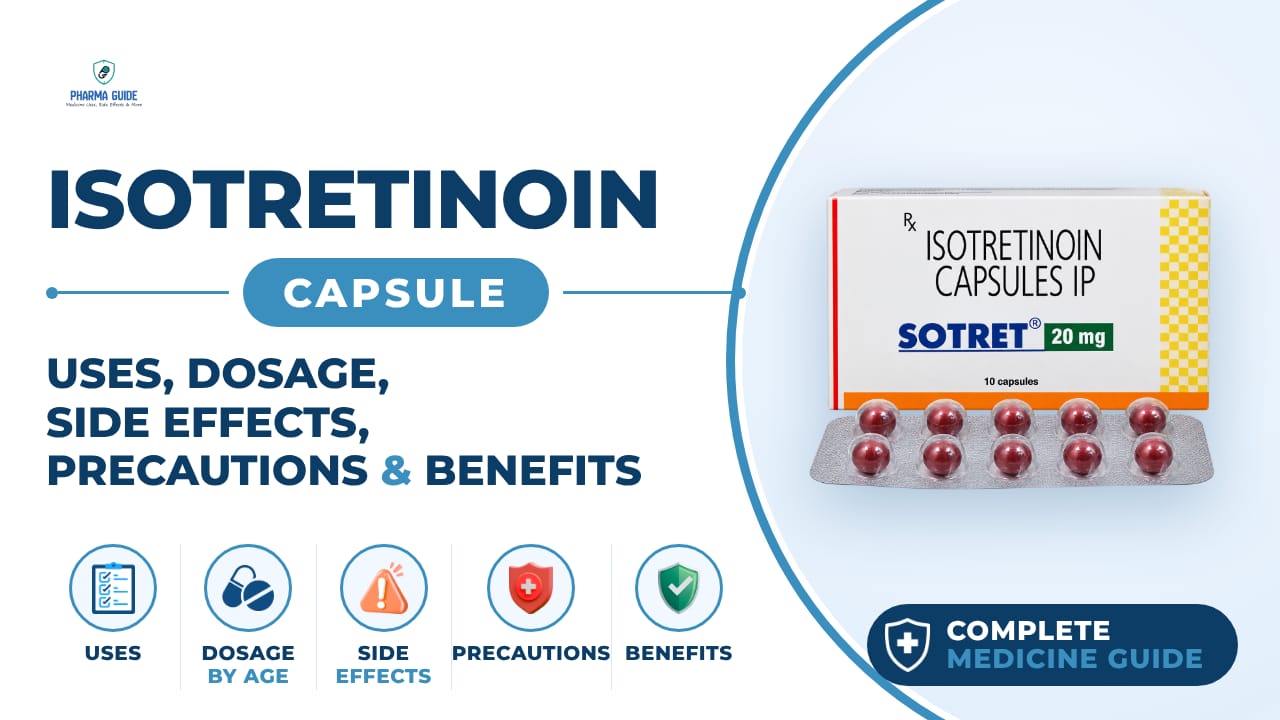
Isotretinoin Capsule: Uses, Dosage, Side Effects, Precautions and Alternates
| Generic name | isotretinoin |
|---|---|
| Drug class | acne agent, retinoid |
| Forms | Capsule, liquid filled, Tablet, Gel |
Quick overview
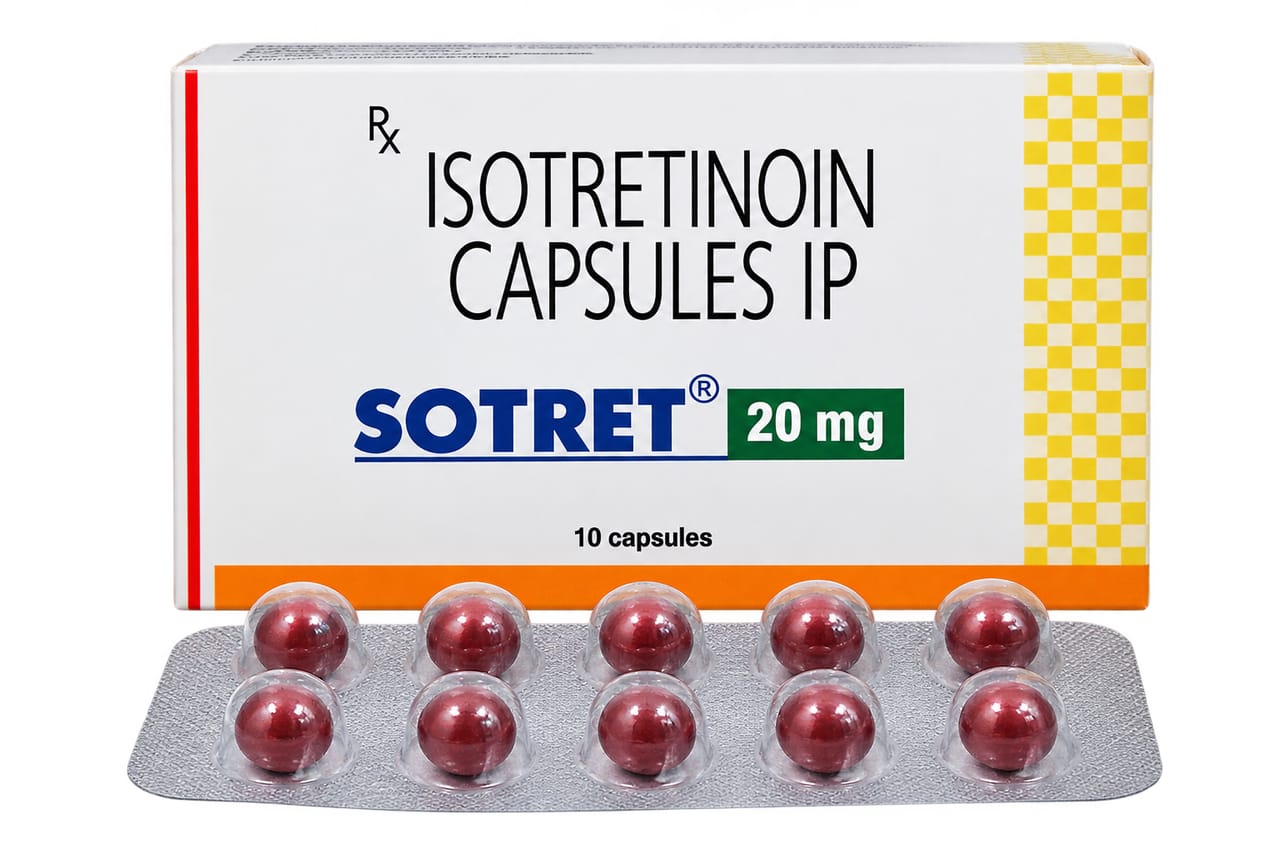
Isotretinoin Capsule (isotretinoin) is an acne agent and retinoid taken by mouth to treat the most severe form of acne (nodular acne) that has not cleared up with other treatments, including antibiotics. It is only available through a special safety program because it can cause serious side effects, including birth defects. It works by reducing oil production and skin inflammation.
What is Isotretinoin Capsule
Isotretinoin is a medicine related to vitamin A that is taken by mouth to treat the most severe form of acne (nodular acne) that has not cleared up with other treatments, including antibiotics. It is only available through a special safety program because it can cause serious side effects, including birth defects.
Isotretinoin Capsule uses
- Severe acne treatment
- Treats cystic and nodular acne
- Used for acne that has not improved with other treatments
- Reduces excess oil (sebum) production
- Reduces new acne lesions and skin inflammation
Benefits of Isotretinoin Capsule
- Can clear or greatly reduce severe nodular acne
- Fewer breakouts can mean fewer acne scars
- Most people find their skin stays clear for several years after finishing treatment
How Isotretinoin Capsule works
Isotretinoin reduces the amount of oil (sebum) your skin glands make, which helps stop pores from clogging. It also reduces the skin inflammation that causes redness and swelling with acne.
Isotretinoin Capsule dosage
Take the capsule with a meal or a drink that has some fat in it (like milk, butter, or oil), unless your doctor tells you otherwise, because this helps your body absorb the medicine. Swallow the capsule whole with a full glass of liquid; do not chew, crush, split, or suck on it, because this can hurt the tube connecting your mouth to your stomach. If you miss a dose, just skip it; do not take two doses at the same time to make up for it. Your acne may get worse for a short time when you first start treatment before it gets better. This medicine is not recommended for children under 12 years of age. Elderly patients may be more likely to have serious side effects, so extra caution is advised.
| Age group | Dose |
|---|---|
| Under 12 years | Not recommended |
| 12–17 years | 20 mg, once/day |
| 18–60 years | 20 mg, once/day |
| 60+ years | 20 mg, once/day |
Available forms and strengths
- Capsule, liquid filled
- Tablet
- Gel
Side effects of Isotretinoin Capsule
Common
- Dry skin
- Chapped or cracked lips
- Dry eyes
- Dry nose that may lead to nosebleeds
- Bone, joint, or muscle pain, especially after exercise
- Increased skin sensitivity to sunlight
- Thinning hair
- Trouble seeing at night
- Mild headache
- Stomach upset
Serious
- Birth defects, miscarriage, premature birth, or death of the baby if taken during pregnancy
- Depression, psychosis, suicidal thoughts, or suicide attempts
- Increased pressure in the brain causing bad headache, blurred vision, dizziness, nausea, vomiting, or seizures, which can lead to permanent vision loss
- Serious skin reactions including rash with fever, blistering or peeling skin, or sores in the mouth, nose, eyes, or genitals
- Liver, pancreas, bowel, or esophagus damage causing severe stomach or chest pain, trouble swallowing, new or worsening heartburn, diarrhea, rectal bleeding, yellowing of skin or eyes, or dark urine
- Severe muscle weakness, which can be a sign of serious muscle damage (rhabdomyolysis)
- Hearing loss or ringing in the ears, which may be permanent
- Vision problems, including corneal clouding, dry painful eyes, or trouble seeing at night, which may be permanent
- High cholesterol or triglycerides in the blood
- Serious allergic reactions including hives, swollen face or mouth, or trouble breathing
- High blood sugar or diabetes
- Decreased red and white blood cells causing trouble breathing, fainting, or weakness
- Inflammatory bowel disease with bloody or severe diarrhea and severe stomach pain
- Stopped bone growth in teenagers who are still growing
Warnings and precautions
- Isotretinoin can cause birth defects, miscarriage, death of the baby, or premature birth if taken during pregnancy, even after a single dose.
- It is only available to patients enrolled in a strict safety program that requires birth control and pregnancy testing.
- Women who can become pregnant must use two forms of birth control starting one month before treatment, during treatment, and for one month after stopping, and must have pregnancy tests before and during treatment.
- Isotretinoin may cause serious mental health problems including depression, psychosis, and suicidal thoughts or actions.
- Do not take vitamin A supplements while on isotretinoin, since this can increase your risk of side effects.
- Do not have cosmetic skin procedures like waxing, dermabrasion, or laser treatments while taking isotretinoin and for at least 6 months after stopping, because they can increase your chance of scarring.
- Do not donate blood while taking isotretinoin and for one month after stopping, because if the blood is given to a pregnant person, it could harm their baby.
- Avoid sunlight and tanning beds as much as possible, since isotretinoin can make your skin more sensitive to light and prone to sunburn.
- Never share isotretinoin with anyone else, even if they have similar symptoms, because it can cause birth defects and other serious health problems.
- Isotretinoin should not be used while breastfeeding because it is not known if it passes into breast milk and could harm the baby.
- Isotretinoin should be used with caution if you have kidney disease, since the medicine may build up in the body more because it leaves the body more slowly.
- Isotretinoin should be used with extreme caution if you have liver problems, as it can raise liver enzymes and cause liver inflammation (hepatitis). Your doctor may order blood tests to monitor your liver.
- Avoid drinking much alcohol while taking isotretinoin because it can affect the liver and may cause unpleasant effects like rapid heartbeat, skin flushing, tingling, nausea, and vomiting.
- Isotretinoin can reduce your ability to see at night. Do not drive at night or operate machinery until you know how the medicine affects your vision.
Storage
- Store isotretinoin capsules at 68° to 77°F (20° to 25°C)
- Protect from light
- Keep out of the reach of children
- Can be exposed to temperatures between 59°F and 86°F (15°C and 30°C) for shorter periods, such as during transport
- Store in a cool, dry place
- Do not keep outdated medicine or medicine no longer needed
- Ask your healthcare professional how to dispose of any unused medicine
When to see a doctor
- Stop taking isotretinoin and call your doctor right away if you notice signs of depression or psychosis, such as sadness, crying spells, loss of interest in activities, sleep changes, irritability, trouble concentrating, feelings of worthlessness, or thoughts of hurting yourself
- Stop taking isotretinoin and call your doctor right away if you get a bad headache, blurred vision, dizziness, nausea or vomiting, or seizures, as these can be signs of increased brain pressure
- Stop using isotretinoin and call your doctor right away if you develop red or inflamed eyes, a rash with fever, blisters on your legs, arms, or face, sores in your mouth, throat, nose, or eyes, or if your skin begins to peel
- Stop taking isotretinoin and call your doctor if you get severe stomach, chest, or bowel pain, trouble or pain when swallowing, new or worsening heartburn, diarrhea, rectal bleeding, yellowing of your skin or eyes, or dark urine, as these may be signs of organ damage
- Stop isotretinoin and call your doctor right away if you have muscle weakness, since this can be a sign of serious muscle damage
- Stop using isotretinoin and call your doctor if your hearing gets worse or you notice ringing in your ears, since hearing loss may be permanent
- Stop taking isotretinoin and call your doctor right away if you have any vision problems or painful, constant eye dryness
- Stop taking isotretinoin and get emergency care right away if you develop hives, a swollen face or mouth, or trouble breathing. Call your doctor if you get fever, rash, or red patches or bruises on your legs
- Call your doctor if you have trouble breathing, feel faint, or feel weak, as these may be signs of low blood cell counts
- If you have unprotected sex, get pregnant, or miss your period while taking isotretinoin, stop taking it and call your doctor right away
- If you take too much isotretinoin, call your doctor or a poison control center right away
Alternatives
- Doxycycline
- Adapalene
- Tretinoin
Watch the video
FAQs
What is Isotretinoin Capsule used for?
Isotretinoin Capsule treats severe nodular acne that has not cleared up with other treatments, including antibiotics. It reduces oil production and skin inflammation.
How should I take Isotretinoin Capsule?
Take the capsule with a meal or drink containing some fat to help absorption. Swallow it whole with a full glass of liquid; do not chew, crush, split, or suck on it.
What are the serious side effects of Isotretinoin Capsule?
Serious side effects include birth defects if taken during pregnancy, depression or suicidal thoughts, increased brain pressure, serious skin reactions, liver or pancreas damage, hearing loss, and vision problems.
Can I drink alcohol while taking Isotretinoin Capsule?
Avoid drinking much alcohol while taking isotretinoin because it can affect the liver and may cause unpleasant effects like rapid heartbeat, skin flushing, tingling, nausea, and vomiting.
Why is Isotretinoin Capsule only available through a special program?
It is only available through a strict safety program because it can cause serious birth defects, so women who can become pregnant must use two forms of birth control and have pregnancy testing before and during treatment.
General information, not medical advice
Your prescriber and the leaflet in your pack know your situation. This page does not.
- Follow your prescriber and the leaflet
- Don't start, stop, or change a dose on your own
- Doses and warnings differ by country and product
Sources
Video
Related medicines
Adapalene + Benzoyl Peroxide Gel: Uses, Dosage, Side Effects, Precautions and Alternates
acne agent, retinoid
Adapalene + Benzoyl Peroxide Gel treats acne vulgaris on the face, chest, and back. Learn how it works, dosage, side effects, and precautions.

Injectafer Injection: Uses, Dosage, Side Effects, Precautions and Alternates
Iron products
Injectafer (ferric carboxymaltose) treats iron deficiency anemia and heart failure-related iron deficiency via IV. Learn uses, dosage, side effects, and