
Safety
General information, not medical advice
Your prescriber and the leaflet in your pack know your situation. This page does not.
- Follow your prescriber and the leaflet
- Don't start, stop, or change a dose on your own
- Doses and warnings differ by country and product
Adapalene Cream: Uses, Dosage, Side Effects, Precautions and Alternates
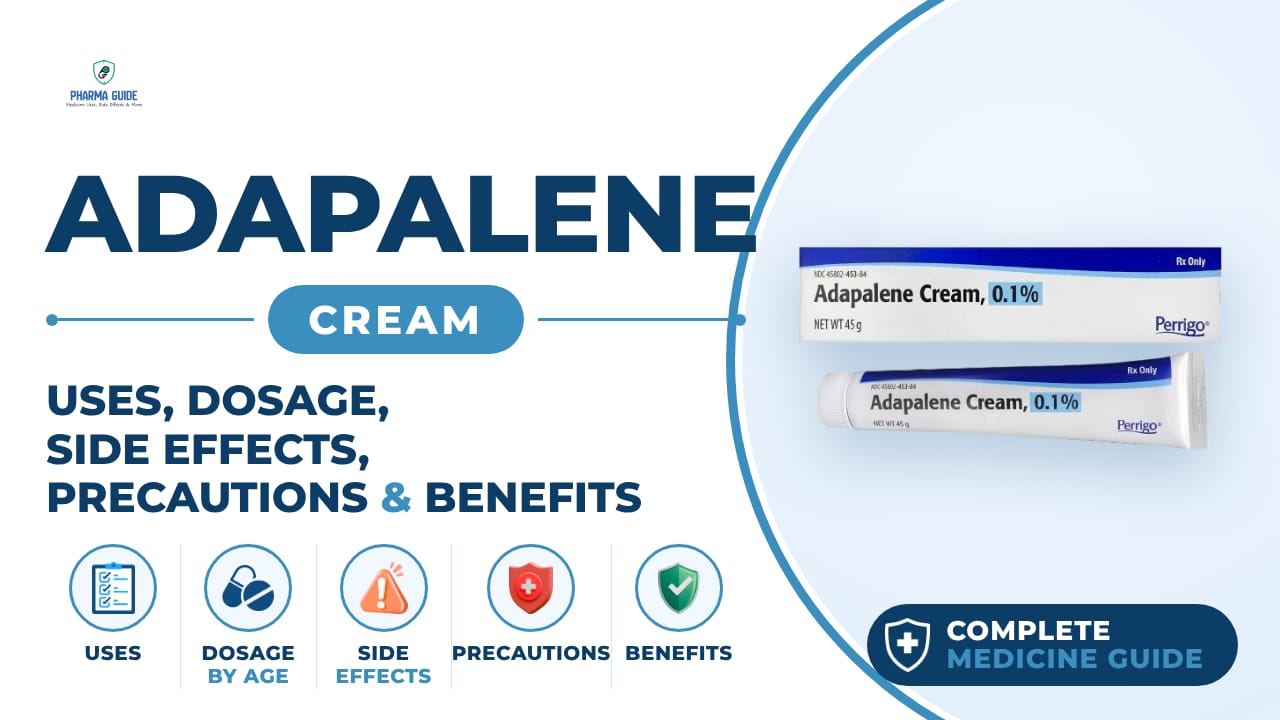
| Generic name | Adapalene |
|---|---|
| Drug class | Retinoid (topical, third-generation) |
| Forms | Cream, Gel, Lotion, Solution (liquid) |
Quick overview
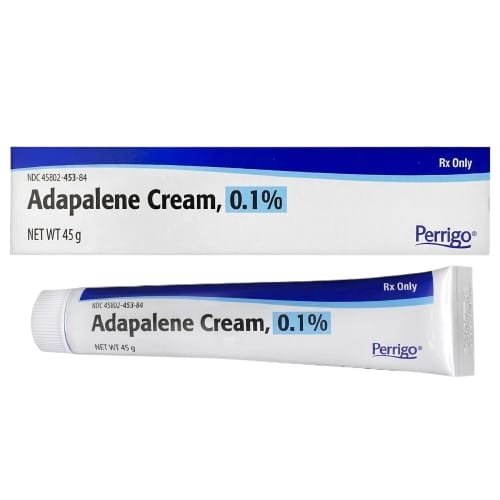
Adapalene Cream (generic name: Adapalene) is a third-generation topical retinoid made from vitamin A, used on the skin to treat acne. It comes in gel, cream, lotion, and solution forms, with some strengths available over the counter and others by prescription. It is applied once daily to help reduce acne breakouts, unclog pores, and improve skin texture over time.
What is Adapalene Cream
Adapalene is a topical retinoid medicine, made from vitamin A, that is used on the skin to treat acne. It comes in gel, cream, lotion, and solution forms, with some strengths available over the counter and others by prescription.
Adapalene Cream uses
- Acne vulgaris
- Blackheads
- Whiteheads
- Mild to moderate acne
- Clogged pores associated with acne
Benefits of Adapalene Cream
- Helps reduce acne breakouts.
- Helps prevent new pimples from forming.
- Helps unclog pores.
- Helps improve skin texture.
- Helps reduce blackheads and whiteheads.
How Adapalene Cream works
Adapalene works by changing how skin cells grow and shed, which stops pores from getting clogged with dead skin cells and oil. It also reduces swelling and inflammation in the skin.
Adapalene Cream dosage
Apply to a clean, dry face once a day, usually at bedtime. Gently wash the skin with a mild, non-abrasive soap or cleanser and pat dry before applying. Apply a thin layer over the entire affected area, not just on individual spots. Avoid getting the medicine in your eyes, nose, mouth, or other mucous membranes. Do not apply to skin that is sunburned, broken, or affected by eczema until it has healed.
A brief warm or stinging feeling after applying is normal and should pass on its own. Using more medicine or applying it more often than directed will not improve results and may irritate the skin. Acne may appear to worsen during the first few weeks as hidden pimples come to the surface; continue treatment unless your doctor advises otherwise. It may take 8 to 12 weeks or longer to see the full benefit.
Avoid waxing treated skin and avoid other irritating skin products such as harsh soaps, exfoliants, or alcohol-based products while using this medicine. Use sunscreen and protective clothing during the day since the medicine can make skin more sensitive to sunlight.
| Age group | Dose |
|---|---|
| Under 18 years | Not recommended |
| 18–64 years | Apply thin layer, once/day |
| 65+ years | Apply thin layer, once/day |
Available forms and strengths
- Cream
- Gel
- Lotion
- Solution (liquid)
Side effects of Adapalene Cream
Common
- Dryness
- Scaling or peeling
- Mild burning or stinging
- Redness of the skin
- Itching
- Skin discomfort or pain at the application site
- Increased sensitivity to sunlight and sunburn
- A brief warm sensation right after applying
- Temporary worsening of acne
Serious
- Severe skin irritation, redness, peeling, or dryness (sometimes called retinol burn)
- Severe sunburn
- Eye redness, watering, or infection (conjunctivitis)
- Eyelid swelling
- Skin discoloration
- Signs of a serious allergic reaction, such as hives, itching, difficulty breathing, or swelling of the eyes, face, lips, tongue, or throat
Warnings and precautions
- Do not apply adapalene to skin that is sunburned, has cuts or abrasions, or is affected by eczema until it has healed.
- Avoid unnecessary sun exposure and tanning beds, and use sunscreen and protective clothing, since adapalene can make skin more sensitive to light.
- Do not use hot wax hair removal on skin being treated with adapalene, as it can increase the risk of skin damage.
- Tell your doctor about all other skin care products you use, since many can irritate the skin further when combined with adapalene.
- Adapalene is not generally recommended during pregnancy. It should only be used if your doctor decides the benefits outweigh the possible risks to the baby.
- Adapalene may be used while breastfeeding if your doctor thinks it's needed, but it should not be applied to the nipple or breast area, and the baby's skin should not touch treated skin.
- Avoid contact with the eyes, lips, and inside of the nose. Avoid harsh cleansers, scrubs, and irritating skincare products.
- It isn't known how adapalene interacts with alcohol, so check with your doctor before drinking.
- Consult a healthcare professional before use during pregnancy.
Storage
- Keep this medication in the container it came in, tightly closed, and out of reach of children.
- Store it at room temperature and away from excess heat and moisture (not in the bathroom).
- Dispose of unneeded medications in a way so that pets, children, and other people cannot take them. Do not flush this medication down the toilet. Use a medicine take-back program.
When to see a doctor
- Get emergency medical help right away if you have signs of a severe allergic reaction, such as swelling of the face, lips, eyes, or throat, hives, chest pain, or trouble breathing.
- Call your doctor if you have severe or ongoing redness, burning, stinging, or pain where you applied the medicine.
- If someone swallows this medicine, contact your local poison control center or go to an emergency room right away.
Alternatives
- Benzoyl Peroxide Gel
- Tazarotene Cream
- Tretinoin Cream
Watch the video
FAQs
How often should Adapalene Cream be applied?
It is applied once a day, usually at bedtime, as a thin layer over the entire affected area on clean, dry skin.
How long does it take for Adapalene Cream to work?
It may take 8 to 12 weeks or longer to see the full benefit, and acne may appear to worsen during the first few weeks as hidden pimples surface.
Can Adapalene Cream be used during pregnancy?
Adapalene is not generally recommended during pregnancy and should only be used if a doctor decides the benefits outweigh the possible risks to the baby.
What are the common side effects of Adapalene Cream?
Common side effects include dryness, scaling or peeling, mild burning or stinging, redness, itching, and increased sensitivity to sunlight.
Can Adapalene Cream be used while breastfeeding?
It may be used while breastfeeding if a doctor thinks it's needed, but it should not be applied to the nipple or breast area, and the baby's skin should not touch treated skin.
General information, not medical advice
Your prescriber and the leaflet in your pack know your situation. This page does not.
- Follow your prescriber and the leaflet
- Don't start, stop, or change a dose on your own
- Doses and warnings differ by country and product
Sources
Video
Related medicines

Injectafer Injection: Uses, Dosage, Side Effects, Precautions and Alternates
Iron products
Injectafer (ferric carboxymaltose) treats iron deficiency anemia and heart failure-related iron deficiency via IV. Learn uses, dosage, side effects, and

Gliclazide Tablet: Uses, Dosage, Side Effects, Precautions and Alternates
Sulfonylurea (hypoglycemic/antidiabetic agent)
Gliclazide Tablet is a sulfonylurea for type 2 diabetes that boosts insulin release. Learn about dosage, side effects, warnings, and precautions.